
Best website design examples, and what they get right for Dubai and UAE businesses
What well known sites such as GOV.UK, u.ae, RTA, Apple and Stripe get right, and how to turn those qualities into a brief.
Read the articleMobile Apps
What a parcel and courier operation in Dubai needs from its apps: booking, address capture, dispatch, proof of delivery, cash reconciliation, driver tracking and the RTA and postal rules that decide what the system must record.
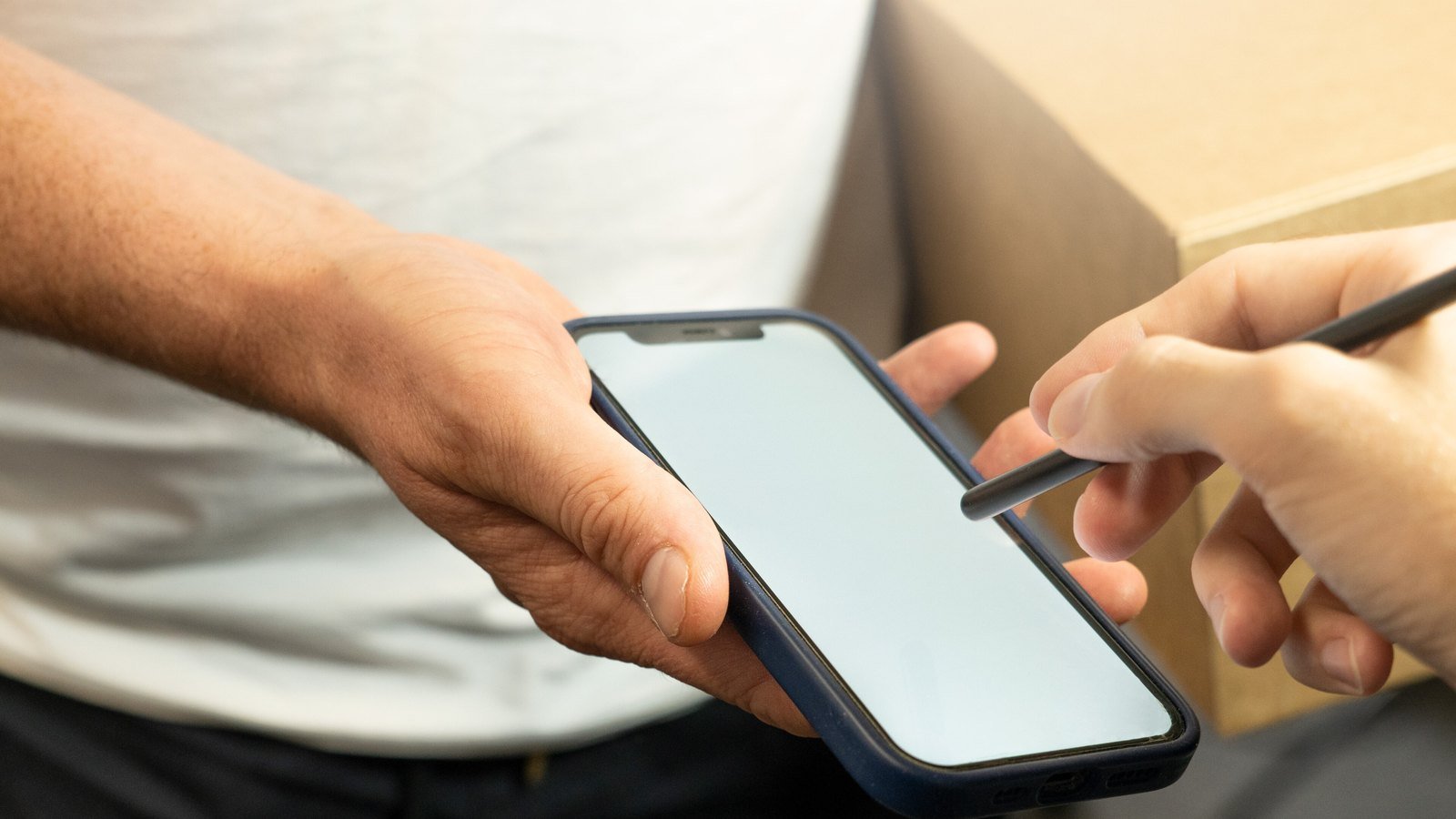
Delivery app development in Dubai for a parcel or courier business comes down to three hard problems: finding the door, proving the handover and settling the cash. The screens customers see are the easy part. What decides the outcome is how the system captures an address in a city where many buildings are known by name, how a driver records a delivery when the signal drops, and how the office reconciles cash collected on the doorstep.
A courier app is also regulated software. The Roads and Transport Authority expects delivery establishments in Dubai to link their systems to its own and keep order data, and delivery services in the UAE need the right licence. This guide covers the apps involved, the parcel features that matter and the questions to settle first, as of October 2026.
Key points
When people say “a delivery app” they picture a moving dot on a map. Any delivery app development in Dubai for a courier should name each product separately in the scope, so nothing is assumed.
The person booking is often not the person receiving. A shop books a pickup; the recipient needs only a tracking link, a way to reschedule and a way to confirm their location. Many recipients will never install anything, so that journey should work in a mobile web page opened from an SMS or WhatsApp message. The installed app earns its place with frequent senders.
The driver app is the most used product in the system. It shows the route, scans parcels at pickup and handover, captures proof, records failed attempts and collects cash. A driver repeats each action dozens of times a shift, often in heat and with one hand, so every tap counts.
Dispatchers need a web console: a live map of drivers, a queue of unassigned jobs, tools to move stops between routes, and exceptions surfaced before customers complain. Most operational logic lives here.
Business customers send the volume. They want bulk shipment upload, label printing and status in their own systems, through a portal for small shops and an API for larger ones.
A common problem we see is a delivery app development brief in Dubai that funds the customer app and treats dispatch as an admin panel for later. In courier work the console and driver app carry the business, and a simple tracking page can serve recipients at launch. Our guide to an MVP mobile app in the UAE covers how to cut scope safely.
Ask ten Dubai recipients for their address and you get ten formats: a tower and flat number, a villa in a community, a landmark, a pin near the gate, or a Makani number. A courier app has to accept all of them and turn each into a stop a driver can reach.
Makani is the official geo addressing system in the Emirate of Dubai, developed by the GIS Center at Dubai Municipality. According to the Makani site, a Makani number is a ten digit number that points to a building’s entrance, and it complements the traditional address rather than replacing it. Dubai Municipality has also extended Makani to units inside buildings, with short codes on plates for homes, shops and offices, and lists delivery services among the intended uses.
For delivery app development in Dubai, that points to a layered address model rather than one text box:
Drivers should be able to correct a pin on arrival and save it against that address. Those corrections become the most valuable data a courier owns, a private map of where doors really are, and good delivery app development in Dubai turns them into fewer calls on every repeat stop. Weak addresses from merchants, such as only “Dubai Marina”, should be flagged at booking and the recipient asked to confirm a pin by message.
Route optimisation is the feature buyers ask about most and understand least. A last mile delivery app in Dubai has to respect constraints a pure distance calculation ignores: delivery windows, parcels that only fit in a van, drivers starting from different hubs, cash limits per driver, and a daily cutoff for new pickups. Scope dispatch as three separate jobs:
Buying a routing engine through an API is usually more sensible than building one. In delivery app development for Dubai couriers, the custom work is in the rules around it: zones, vehicle types, cutoffs and dispatcher overrides. Treat merchant pickups as stops with their own scan step, so a parcel is tracked from the moment it leaves the shop.
Drivers lose signal more often than office staff expect: in basement car parks, service corridors, warehouses and tower lifts. A driver app that freezes offline will be abandoned for paper or personal WhatsApp within a week, so offline mode is a core requirement of delivery app development in Dubai, not a later improvement.
Offline mode means the route, stops, recipient details and parcel list are stored on the device at the start of the shift. Scans, photos, signatures and status changes are saved locally with a timestamp, then sent in order when the connection returns. The server must accept late events without overwriting newer ones, a decision that shapes the whole data model.
Proof of delivery is what you show when a recipient says a parcel never arrived. The options are a photo at the door, a signature on screen, a one time code sent to the recipient and read back to the driver, or an ID check for high value items. Delivery app development in Dubai should let the merchant or shipment type decide which proof is required.
Store each proof with the time, the device location and the driver. Compress photos on the phone so uploads work on a weak connection, and decide who can see them and for how long, because a doorway photo can show the inside of a home.
Failed attempts are where courier margins disappear. Offer a short list of reasons, such as no answer, wrong address, access refused by security or reschedule requested, and require evidence for some, like a call log entry. Free text alone makes reporting impossible.
Each reason should trigger the next step: a wrong address sends a message asking for a new pin, a reschedule offers slots, and after the attempts your terms allow, the shipment returns to sender. If one community produces most failures, the problem is usually access, and the reason codes built during delivery app development in Dubai are how you see it.
Cash on delivery turns every driver into a small cash office. Courier app development in the UAE that treats COD as a checkout option and nothing more will produce disputes within the first month.
The system needs a running cash ledger per driver. Each delivered COD shipment adds the amount collected; each handover at the hub subtracts it. At the end of a shift the cashier closes the ledger against cash received, and any difference is recorded against the driver and shipments involved. Card payments on a portable terminal or by payment link follow the same logic through the payment provider.
Merchants care most about when their COD money arrives, so a merchant view belongs in the first release of any delivery app development in Dubai. A portal showing collected, in transit and paid out, per shipment, removes most finance calls. Our guide to ecommerce delivery and returns in the UAE covers the store side of COD; the courier side is the ledger.
A driver tracking app in Dubai serves two audiences. The recipient wants an arrival estimate and to see the vehicle approach in the final minutes. The dispatcher wants every driver, all shift. Nobody needs a driver’s location after the shift ends, and delivery app development in Dubai should build that limit in from day one.
On Android, continuous location runs as a foreground service. Android’s documentation lists the location foreground service type for long running navigation and location sharing, and says it cannot start while the app is in the background without background location permission. Google Play’s background location policy allows it only for core functionality, requires a prominent disclosure before the permission prompt, and requires a declaration in Play Console. It also notes that delivery tracking for users, as opposed to drivers, can usually use foreground access.
The UAE Government Portal describes the federal Personal Data Protection Law, in force since 2 January 2022, as prohibiting processing of personal data without the owner’s consent, subject to exceptions, and giving people the right to correct data and to restrict or stop processing. It also lists the DIFC’s separate data protection law. Location trails, addresses and doorway photos all concern identifiable people, so design on that basis:
This is not legal advice. How data protection law applies to employees, contracted drivers and recipients depends on your licence, contracts and place of registration. Confirm your approach with a qualified adviser before launch.
Regulation decides part of the data model, so read it before the specification is signed.
The RTA’s technical manual on managing delivery services through electronic platforms and smart applications applies to establishments delivering items such as food, electronics and consumables through websites, apps or social media, and lists parcels and letters among the activities they identify. As of October 2026, the parts that reach into a courier app are these:
For delivery app development in Dubai, that means a full order export, a driver and vehicle register with permit details, a record of which subcontracted fleet carried each shipment, and screens designed for use at a stop, not while moving. Confirm with RTA how system linking works for your permit before the build.
The UAE Government Portal explains that a Postal Sector Regulatory Committee, formed by Cabinet decision, proposes postal sector regulations, and that providing postal or delivery services without the required licence is prohibited. It places this under Federal Decree Law No. 21 of 2019 on Emirates Post Group Company. Your licensing adviser decides the category; the app should let you show the licence number and permitted services, and update them without a new release.
Merchants judge a courier by how easily shipments flow from their store into its system, so logistics and delivery app development in Dubai includes an integration layer many first briefs leave out.
The minimum is a documented API to create shipments, fetch labels, cancel and read status, plus webhooks for picked up, out for delivery, delivered, failed and returned. Keep status names few and stable. A serviceability endpoint, answering whether you deliver to an area and by when, saves sales staff repeating themselves.
Smaller UAE merchants mostly run hosted stores or WordPress, so plugins for the platforms they use matter more than a perfect API nobody connects to. Build the API first, then thin plugins for Shopify stores and WooCommerce. Larger accounts with their own ERP need an integration project and a sandbox for test shipments.
Status updates by WhatsApp need approved templates and an opt in recorded at booking; see WhatsApp API integration. The public site, tracking page and quote forms are covered on our logistics website design page.
These questions are specific to parcel work. A team that answers them clearly has thought about your operation, not only your screens.
Judge any delivery app development proposal in Dubai on the dispatch console and driver app first, because they decide cost per stop. Budget questions are best answered against a written scope; our guide to mobile app cost in the UAE explains the variables, and our mobile app development service in Dubai page covers how we run a full build.
Digital Marketing Dubai builds the apps, portals and websites around courier and ecommerce operations, in Arabic and English. Send us your current process, even if it lives in spreadsheets and WhatsApp groups, and we will reply with a written fixed price proposal within 45 minutes during business hours.
Straight answers
No, and most will not. A tracking link sent by SMS or WhatsApp that opens a mobile web page can show status, let the recipient confirm a pin and reschedule. Keep the installed app for frequent senders who book pickups and want a shipment history.
It can store and search them as a separate address field, and drivers can use the number to find the building entrance. Treat it as one layer of the address alongside the pin, building name and unit, because many recipients will not know their number.
It depends on the shipment. A doorstep photo suits low value parcels left with consent, a one time code suits high value items handed over in person, and a signature suits business deliveries. Let the merchant or service type set the method rather than fixing one for everything.
Usually not. Licensed routing engines handle the distance and sequencing maths well, and the custom work is in your zones, vehicles, cutoffs and dispatcher overrides. Building those rules on top of a proven engine is normally the faster and safer path.
The app itself is not licensed, but the delivery activity is. The RTA technical manual describes a permit for establishments managing delivery through electronic platforms, and federal rules prohibit delivery services without the required licence. Settle your licensing first, then build the records the authorities expect.
Sources
Fixed price, in writing
Got it. Your quote is being written now.
In business hours you will have it within 45 minutes. Check your inbox for the confirmation.
Keep reading

What well known sites such as GOV.UK, u.ae, RTA, Apple and Stripe get right, and how to turn those qualities into a brief.
Read the article
Registrar, DNS and hosting are three separate things. Here is which ones a UAE business should hold, and what the .ae rules say.
Read the article
When a breadcrumb trail earns its place on a UAE website, and how to design, mark up and translate it properly.
Read the article