
Plan comparison on the telecom website
Speed, data limits, contract length and what is genuinely included, laid out so a buyer can compare two plans without calling to ask.
Web Design by Industry
IT telecom website design in Dubai for providers, resellers and system integrators: plan and coverage pages that answer real questions, a support portal visitors can actually use, and marketing pages that state licensed status accurately.
An IT company, telecom reseller or system integrator selling in Dubai usually has a technical buyer on one side and a compliance minded one on the other, and the website has to satisfy both without turning into either a brochure or a spec document nobody reads. IT telecom website design in Dubai needs plan and service pages that a decision maker can actually compare, alongside the licensing clarity a UAE buyer increasingly checks for before signing.
Our general web design and website development pages cover the shared foundations; what follows is what changes for a business selling connectivity, hosting, hardware, managed IT services or systems integration work.
What the site has to do
A telecom or IT buyer compares providers on specifics, so vague service pages cost enquiries.
Speed, data limits, contract length and what is genuinely included, laid out so a buyer can compare two plans without calling to ask.
Where connectivity or on site service is location dependent, a clear way to check or enquire about availability at a specific address.
Existing customers need a way to raise a fault, check usage or view an invoice that is separate from the marketing site’s contact form.
A single “IT services” page tells a buyer nothing. Separate pages for network infrastructure, cloud migration, managed IT and hardware supply let a buyer land on the page that answers their actual question first.
Where an integrator resells or deploys named vendor hardware or software, a page per vendor line lists what is supported, what is configured, and what genuinely documented partnership status exists.
Basic, standard and enterprise support tiers described with what each actually covers, since a buyer choosing between tiers needs the differences spelled out, not implied by price alone.
Buyer comparison
Vague phrases like “enterprise grade” or “reliable connectivity” tell a buyer nothing they can act on. A page that states actual speeds, uptime commitments you can stand behind, contract terms and what support is included lets a buyer shortlist you honestly. IT telecom website design in Dubai works better when technical detail sits on the page itself, not behind a “contact us for a quote” wall that adds friction before trust is established.
Where pricing genuinely varies by scale or specification, the site should say so plainly and route the visitor to a scoped quote rather than hiding every number behind a generic call to action that tells a buyer nothing about what happens next.
Who signs off
Two quite different people usually own the decision to build or rebuild an IT or telecom website, and the site has to work for both. At a reseller or integrator, the founder or sales director is measured on pipeline: enquiries that turn into a scoped proposal, and a website that fails to generate specific, qualified questions is failing at the one job it has. At a provider large enough to have a marketing function, the buyer is often measured on cost per lead and how many of those leads a sales team can actually close, which pushes the brief toward comparison pages and plan clarity rather than broad brand messaging.
A third figure appears once the deal size grows: the enterprise buyer’s own procurement or IT lead, who is not the one being sold to on the homepage but the one who will actually read the specification pages, the SLA terms and the security posture of the provider before recommending them internally. Their first questions are usually about uptime commitments, what is included at each support tier, whether the provider has worked with a business their size before, and how a fault gets escalated once a contract is signed. A site that only speaks to the person clicking “get a quote” and never to the person who has to defend that recommendation to their own manager loses enterprise deals it never even realised it was competing for. That is the gap good IT telecom website design in Dubai is built to close.
Long sales cycles
Selling connectivity, managed IT or a systems integration project to a Dubai enterprise rarely closes on a single visit. A first search often happens weeks or months before a contract is signed, and the site has to support a buyer who returns two or three times, often bringing in a colleague, before a proposal is even requested. That means specification detail, case studies and a document library matter more here than on a typical local service site, since a procurement team building an internal business case needs material it can forward, not just a page it read once.
A request for proposal or tender response is a common route into a larger IT or telecom contract in Dubai, and a telecom website built with a proper document library and clear specification pages shortens that process considerably. Our B2B website design page covers document libraries and request for quote flows in more depth, since the same buying committee pattern applies here.
Regulatory angle, not legal advice
Telecommunications in the UAE sits under the Telecommunications and Digital Government Regulatory Authority. TDRA’s own services listing confirms that operating a public telecommunications network or providing subscribers with telecommunication services requires a licence issued by TDRA. In practice, a public telecommunications licence is held by a very small number of operators: TDRA’s own announcement of its most recent renewal states that the renewed public telecommunications licences of the UAE’s two network operators run “from 9 August 2026 until 8 August 2046, replacing the licences issued in 2006”, which is a useful reminder that almost no reseller, integrator or IT service provider holds this specific licence themselves.
Most businesses this page is written for are not network operators, and the website should not read as if they are. TDRA runs separate services that fit these roles more accurately: a Register Telecom Supplier service for “manufacturers and suppliers wishing to trade in telecommunications equipment in the UAE”, relevant to hardware resellers and integrators, and an NOC for Practicing E-Activity, which TDRA describes as covering “individuals and businesses that wish to practice an activity of an economic nature on the Internet in the UAE, through websites, applications or social media accounts”, relevant to almost any IT or telecom business selling or taking enquiries through its own site. TDRA also runs an SMS Spam reporting service, worth knowing about before any marketing message campaign goes out.
None of this is legal advice. If your business provides, resells or markets telecom services, confirm your licensing position and marketing message rules with TDRA before the site or any campaign goes live, and be precise about your role on the website: a licensed network operator, a registered equipment supplier, an authorised reseller of an operator’s services and an independent IT integrator are four different things, and stating the wrong one is the kind of claim a careful enterprise buyer checks before signing.
Most businesses reading this page sell telecom services without operating a network themselves, which usually means trading under an authorised reseller agreement with one of the UAE’s two licensed public telecommunications operators, or supplying and supporting connectivity hardware around a connection someone else provides. That relationship is contractual, defined by the operator, and it can change: a reseller agreement can be scoped to specific plan types, specific regions, or a fixed term that renews rather than a permanent status, and a website line written when the agreement was first signed can quietly go stale as the terms change underneath it.
The practical fix is treating the “authorised reseller” statement the same way a finance site treats a licence disclosure: something checked and refreshed on a schedule, not written once at launch and left. Where a reseller agreement covers only certain plans or services, the website should say so rather than implying blanket authorisation, since an enterprise buyer running due diligence on a larger contract is exactly the kind of reader who checks this detail against the operator directly.
Coverage and SLA
A telecom or managed IT buyer wants two specific answers before they enquire: is this available where I am, and what happens when something breaks.
Good IT telecom website design in Dubai treats a coverage checker as essential, and it does not need to be complicated to be useful. A short form capturing an address, building or area, checked against a coverage map or a backend system where one exists, and routed to a clear next step when it is not, removes the single most common reason a visitor abandons a telecom enquiry: not knowing whether the service even reaches them. Where live coverage data is not available, an honest enquiry step that promises a confirmed answer, rather than a vague “contact us to find out”, still moves the visitor forward.
SLA content works best as a structured comparison rather than a paragraph of prose, since a buyer scanning for a specific figure should not have to read three sentences to find it.
| Support tier | What the page should state | What it should not invent |
|---|---|---|
| Response time | The actual commitment your business will stand behind, by tier | A generic “fast response” with no figure at all |
| Resolution target | How resolution time is defined and measured, if you measure it | An invented percentage uptime figure you cannot evidence |
| Escalation route | Who a customer reaches if a first response is missed | A promise of 24 hour or around the clock coverage you do not actually run |
Behind the site
Most of the content on a site like this changes on a schedule nobody in marketing controls.
Speed tiers, data allowances and contract terms that a sales or product team updates independently of any website release, so the site needs a way to reflect changes without a developer request each time.
Where coverage data exists in a backend system, keeping the public site in sync with it matters more here than almost any other industry, since a wrong answer sends a real engineer to the wrong address. Getting this right is a large part of what IT telecom website design in Dubai actually is.
A customer portal drawing on live support and billing data, kept behind a login and separated cleanly from the public marketing pages that search engines index.
For an integrator selling equipment, whether a specific model is currently available changes daily and is usually owned by a procurement or warehouse system, not the website itself.
Existing customer renewal timing that a sales team relies on for outreach, best pulled from a CRM rather than tracked manually against a spreadsheet.
Capability statements, compliance documents and past project references that need version control, since a tender response using an outdated document is a genuine risk on a larger contract.
Systems behind the site
Named systems worth planning for before design starts, since they shape what a template needs to hold.
Enquiry and RFQ forms posting directly into a CRM so a new lead lands with the right sales owner and the originating page attached, rather than sitting in a shared inbox someone checks once a day.
Where a customer portal shows invoices or usage, it needs a defined connection to whichever billing or operations support system already holds that data, rather than a second copy of it living on the website.
On an IT telecom website in Dubai, a support portal is usually a thin layer over an existing ticketing system, so the integration decision is which system, not whether to build one from scratch.
A public status page, separate from marketing pages, that a customer can check during an outage instead of calling in, reduces support load during the exact moment support is most stretched.
Where a customer portal exists alongside a separate billing system, single sign on keeps a returning customer from juggling two logins to check one invoice.
Live chat that recognises whether a visitor is asking a sales question or reporting a fault, and routes accordingly, works better here than one generic chat widget for everything.
Partner directories
Two different businesses on this page tend to need a directory page, for opposite reasons. A vendor or a larger provider that sells through resellers benefits from a public “find a partner” page, letting a buyer in a specific emirate or industry locate an authorised reseller near them rather than emailing head office and waiting for a referral. A reseller or integrator benefits from the reverse: a page naming which vendors it is authorised to sell and support, since a technical buyer comparing integrators checks exactly this before a shortlist call.
Either version only works if it is kept current. A directory listing a reseller who quietly stopped selling a product line, or a vendor page claiming a partnership status that lapsed at renewal, does more damage than no directory at all once a buyer notices the mismatch. The fields worth including are deliberately narrow: the partner’s name, the region or emirate they actually cover, which specific product lines or service categories they are authorised for, and a direct contact route, rather than a long marketing paragraph that ages badly.
The visitor’s journey
Almost every visit to an IT or telecom website in Dubai follows one of three journeys, and each one breaks at a specific, identifiable point.
| Journey | What the visitor is trying to do | Where it usually breaks |
|---|---|---|
| A residential or small business buyer comparing plans | Find a plan that fits their speed, budget and contract preference, and confirm it reaches their address | No side by side comparison, or a coverage question with no clear next step |
| An existing customer with a fault or a billing question | Reach a support queue fast, or check a ticket or invoice without calling | Routed into the same form as new sales enquiries, or no portal at all |
| A procurement or IT lead scoping a larger contract | Verify capability, licensing and reference deployments before recommending a supplier internally | Nothing to download or forward, and no way to confirm the provider’s actual role or licence status |
A visitor who cannot tell whether a service reaches their address, or whether the business is a licensed operator or an authorised reseller, does not ask. They leave.
What stops a buyer
Three patterns repeat across provider and integrator websites we review.
A buyer forced to open three separate PDFs to compare packages usually gives up. A comparison table on the page itself removes that friction and keeps the enquiry on your site, which is the point of a telecom website in Dubai that actually converts.
An existing customer with a fault does not want to fill in a sales enquiry form. A clearly signposted support route, separate from new business enquiries, reduces frustration and repeat contacts, and it is one of the fastest fixes we make on a telecom website once we see it happening.
A procurement lead who cannot find a specification sheet or capability statement to send a colleague either asks you to email one, which slows the process, or moves to a competitor whose telecom website in Dubai already had it.
Search behaviour on this site splits fairly cleanly by intent, and structuring the site for only one half loses the other. A research search reads like a question: what is the difference between a managed IT service and break fix support, how does business fibre differ from a standard package, what does a system integrator actually do that an in house IT team cannot. Someone typing that is usually early, comparing options rather than ready to sign, and wants a clear explanation rather than a quote form landing in their inbox.
A ready to buy search names the service and often the area: business internet Dubai, IT support company Dubai, network integrator UAE. Someone typing that is closer to a decision and wants a fast, specific route to a quote or a coverage check. On an IT telecom website, Dubai plan and service pages answer the research intent and are worth keeping even where they convert less directly, since a visitor who found a clear answer tends to come back when ready to buy. Coverage and enquiry pages answer the ready to buy intent and need to be reachable in one or two clicks from anywhere on the site. No search volume figures are quoted here, since we have not measured them for your specific plans, but this split between research search and ready to buy search holds consistently across the technology sites we build.
A third pattern sits alongside these two on the enterprise side: a named or role based search, someone typing the provider’s name alongside “review” or “case study”, or a job title plus “recommendation” while checking whether a shortlisted supplier is credible before a meeting. This is where a document library, a specification page and an honest, verifiable partner or licensing claim do quiet work that a homepage headline never will, since the visitor reading them has usually already decided you are worth a conversation and is now checking whether that instinct holds up.
Getting started
Building an IT telecom website in Dubai depends on documents and decisions that usually sit with a product, network or sales team rather than whoever briefs the website, and the biggest cause of delay is waiting on one of those documents rather than design revisions.
Self service
A share of the tickets a support team handles are questions a well written article answers directly, and an IT telecom website in Dubai is a good candidate for building a knowledge base deliberately rather than by accident.
How to set up a router, reset a device or read a first invoice, written specifically enough that a customer can follow it without calling, and searchable from both the support portal and general search engines.
Clear answers to the billing questions that generate the most repeat contacts, such as how a bill is calculated or what happens at the end of a contract term.
A record of past outages and what caused them builds more trust with a technical buyer than a page claiming faults never happen, since every provider has outages and pretending otherwise reads as evasive.
A knowledge base pays off unevenly: it takes real effort to write well and keep current, but the article that stops a hundred repeat tickets a year is worth more than most other content on the site, and it is worth treating as a real content project rather than an afterthought bolted onto the support portal.
Phasing
Launching a working core site on schedule beats launching every feature months late.
| Stage | What it usually includes |
|---|---|
| Phase one | Homepage, plan or service pages, a coverage or eligibility enquiry step, licensing status stated accurately, a single support contact route |
| Phase two | A full customer support portal with live ticket or invoice data, vendor and partner pages, a document library for tender material, a second language built out in full |
An IT telecom website in Dubai is not a brochure site that can sit unchanged for a year without much harm. A telecom or IT site cannot, because plans, coverage, support tiers and licensing status all move on schedules the website does not control, and content that goes stale here is not just outdated, it is the kind of mistake that sends a wrong answer to a real customer. The businesses that keep this working well tend to name one owner for each type of content before launch, not after: someone in product or sales who owns plan and pricing pages, someone in support who owns the status page and portal content, and someone who owns the licensing and reseller status lines specifically, since that one is the most consequential to get wrong.
Where a business already runs a CRM, a billing system or a ticketing tool, connecting the relevant page to that system removes the manual update step entirely for the content that changes most often, which is usually the better long term answer to staleness than a stricter editorial process alone. Where no such system exists yet, a simple quarterly review of plan pages, coverage claims and licensing statements catches most of what would otherwise drift.
This ownership question matters more for IT telecom website design in Dubai than for most other industries, and it is worth settling at the brief stage, not after launch, because it changes how the site itself is built. A plan page built to be edited by whoever last remembers the password behaves differently from one built with a proper content structure a product manager can update confidently, and the second option costs a little more at build time and saves a great deal more over the life of the site.
Arabic matters on a site like this in a specific, practical way rather than as a general statement. An enterprise procurement team reviewing a proposal internally often needs a specification summary or SLA terms available in Arabic to circulate alongside the English version, and a shortened Arabic page standing in for a full one reads as incomplete to that reader in exactly the meeting where it matters most. Consumer facing telecom plan pages, by contrast, usually need genuinely bilingual pricing and terms rather than a summary, since a residential customer comparing packages in Arabic deserves the same clarity as the English page.
A support portal is worth treating separately again. Where a support team actually works in both languages, a bilingual ticket interface is useful; where it does not, promising Arabic language support that is not genuinely staffed causes more frustration than offering English only and being clear about it.
What goes wrong
A pricing or plan page left unedited for months after the actual plans changed internally, so a visitor who calls to ask about a page they just read gets told it is no longer accurate.
A single generic contact form that cannot tell whether a submission is a new business enquiry or an existing customer with a fault, so both get the wrong priority applied to them.
Language that reads as if the business is a licensed network operator when it is actually an authorised reseller or an independent integrator, which is exactly the kind of overstated claim a careful enterprise buyer checks.
A site with no downloadable capability statement or specification sheet, so a procurement lead building an internal case has nothing concrete to attach to their own email.
Coverage described in broad terms across “Dubai and the UAE” with no way to confirm a specific address, which sends unqualified enquiries to a sales team that then has to do the checking a website step should have done.
A partner or certification badge displayed without a current agreement behind it, which is a fast way to lose credibility with a technical buyer who checks vendor partner directories directly.
Raw enquiry count is a weak measure on its own for an IT telecom website in Dubai, since a plan comparison page that generates ten unqualified enquiries a sales team has to filter is doing less useful work than a coverage checker that generates three fully qualified ones. A more useful pair of measures is how many enquiries include enough detail to scope a proposal without a follow up call, and how many coverage or eligibility checks are actually completed rather than abandoned partway through, since an abandoned coverage step usually points at exactly which question in the flow is losing people.
For a support portal, the equivalent measure is whether existing customers actually use it instead of calling anyway, which says more about whether the portal genuinely solves a problem than any traffic figure does. We do not publish invented benchmark numbers here, since a realistic target depends on your plans, your support model and your existing reputation in the Dubai market, and a number quoted without that context would not be honest.
For the enterprise side of the business, the more relevant measure sits further down the funnel than the website itself: how many document library downloads or request for proposal submissions actually convert into a scoped conversation, and how long that takes from first visit to signed contract. Tracking that properly usually means tagging where a lead first arrived and keeping that attribution alive as it moves through a CRM, since a long enterprise sales cycle makes it easy to lose track of which page or campaign actually started the relationship by the time a contract is finally signed months later.
How we build it
Plan structure and any backend integration are settled before visual design, since they define what the templates need to hold.
We map your plans, service tiers and any coverage or eligibility rules that affect how a visitor should be routed.
Where useful, the site connects to a ticketing, billing or CRM system so customer facing pages reflect live account information.
Templates are approved before development, with plan and service copy written to be specific rather than promotional filler.
Forms, portal links and any live data feeds are tested end to end, tracking is connected, and domain, hosting and CMS logins for the finished telecom website are handed to you in your own name, in Dubai as anywhere else we build.
Providers and integrators often sell to the same technical and procurement buyers as other sectors. Compare our work on cybersecurity websites, B2B websites and finance and insurance websites, or browse every sector on the web design by industry hub. For our dedicated IT support, cloud services and cyber security service pages, or account areas and portals more generally, our content management system, ecommerce solutions and UI and UX design pages cover the platform choices and enquiry flows behind them.
Selected work
Work across sectors, with the closest to this industry shown first. Every one is a live site, not a mockup.

Web app · Ticketing · UAE
The UAE cinema chain operated by Phars Film. Every screening, offer and payment in one place customers can use on a phone.
starcinemas.ae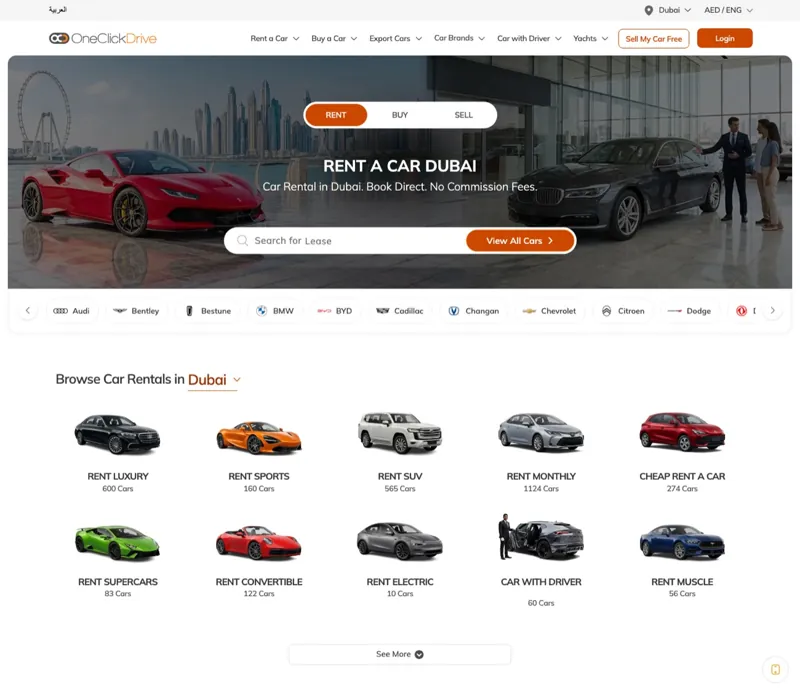
Platform · Car rental · UAE
A car rental marketplace where suppliers list fleets and renters compare and book, under real traffic.
oneclickdrive.com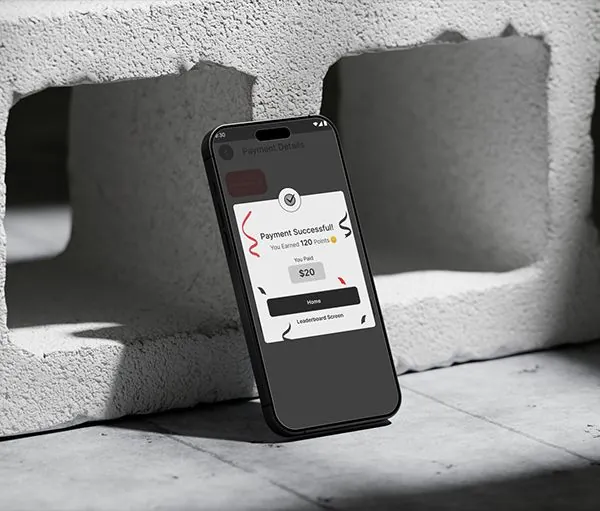
Mobile app · Fintech · United States
A fintech platform connecting merchants, customers and charities in a single payment flow.
purposepayment.comStraight answers
Where you already hold that data through a backend system, yes, we connect to it. Otherwise we build a clear enquiry step that captures location and requirement so your team can confirm coverage directly.
Providing telecommunication services in the UAE requires a licence from TDRA. This is not legal advice, so confirm your own licensing position with TDRA and tell us so the site states your role, whether licensed operator, authorised reseller or service provider, accurately.
Yes, a login area for tickets, invoices or usage detail can be built or connected to a support system you already use, kept separate from the public marketing pages.
Only if you can document them. We do not add partner or certification claims that cannot be verified, so send us the agreement or badge terms and we will reflect them accurately.
Every project gets a fixed written quote, scoped to your brief, sent within 45 minutes during business hours with no obligation. Plan complexity, integrations and a support portal are the main cost drivers.
Sources
Fixed price, in writing
Got it. Your quote is being written now.
In business hours you will have it within 45 minutes. Check your inbox for the confirmation.