
A dedicated Dubai event ticketing platform
Seat maps, ticket tiers, refunds and check in scanning are handled properly by a platform built for it, connected to your site rather than reinvented for one event.
Web Design by Industry
An event website in Dubai has one job on a deadline: sell the right tickets to the right date, then disappear once the event is over. We build event sites around that short, intense life, not around looking good in a portfolio.
Most websites are built to last for years. An event website in Dubai is built to be right for a few months, sell tickets under real pressure as the date approaches, and then either archive gracefully or come down. Event website design in Dubai has to accept that short life honestly: the schedule will change, speakers will be added late, and the site has to absorb those changes without a developer on standby for every edit.
This page sits under our wider web design by industry work. For the build itself see website development, and for driving traffic before the date see SEO services.
Ticketing
A ticket page that stalls in the last hour before a popular event sells out is the single worst outcome for an event website.
Seat maps, ticket tiers, refunds and check in scanning are handled properly by a platform built for it, connected to your site rather than reinvented for one event.
One clear page with dates, prices per tier and a single obvious button, so a visitor deciding in the last few days is not slowed down by unrelated content.
A clear on screen and emailed confirmation with the event date, venue and what to bring, since a nervous buyer often checks it more than once.
Permits
Organising an entertainment, sport, charity, religious or business event in Dubai with attendees beyond a private gathering generally needs a permit from Dubai’s Department of Economy and Tourism, applied for through their e-Permit portal. The department’s own guidance also notes that a ticketed event needs a separate ticketing permit, applied for only after the main event permit is approved, and that the application should go in well before ticket sales are meant to start.
None of this is something a website can substitute for, but good event website design in Dubai does shape itself around it. We plan the site so ticket sales can be switched on the moment approval comes through, rather than racing to build a ticket page after the fact once the paperwork clears.
The schedule
Speaker cancellations, timing shifts and added sessions are normal in the final weeks before an event. Event website design in Dubai treats the schedule as content your team edits directly, with sessions, speakers and rooms as separate reusable pieces, so a single change updates everywhere that speaker or session appears instead of being edited by hand in several places.
For multi day events, a printable or downloadable version of the schedule matters too, since attendees on site often want something that works without relying on a mobile signal inside a venue.
Exhibitors and sponsors
Larger events need exhibitor and sponsor content from dozens of contributors, none of whom should be editing the live site directly.
Exhibitors and speakers fill in a structured form with their bio, logo and session details, which your team reviews before it appears on the live site.
Sponsorship levels shown consistently, built from one content type so a change in tier or logo updates in one place rather than several.
After the event
Deciding the site’s ending before launch avoids an outdated ticket page sitting online months later.
| Approach | Good fit when |
|---|---|
| Archive with a thank you page and photos | Building an audience for a recurring event |
| Redirect to a save the date for next year | The event returns on a known future date |
| Take the page down after a set period | A one off event with no planned return |
Whichever you choose, the ticket buying pages should stop accepting sales the moment the event closes, even if the rest of the site stays live. Deciding this in advance is a small but easy detail to skip in event website design in Dubai, and it is one of the first things attendees notice when it is missed.
Getting started
The clearer the brief, the faster event website design in Dubai can move once dates and permits are confirmed.
Confirmed or provisional dates, venue, ticket tiers and whether the event repeats annually.
Where you are in the DET event permit and, if relevant, ticketing permit process, so we can plan the launch date realistically.
Which platform you plan to sell through, or whether you want us to recommend one that fits your event size.
A first list of confirmed names, with a plan for collecting the rest through a submission form.
The buyer
The person approving an event website design in Dubai is rarely the person who will use it. For a corporate conference it is usually a marketing manager or an events lead inside the organising company, reporting upward on registration numbers, exhibitor revenue and how the agenda looked next to last year’s. For an exhibition it is often an operations manager measured on hall utilisation and sponsor renewal, not on page views. Both will ask the same first question in a briefing: can the site be updated by their own team the week before doors open, or does every agenda change need a developer. A corporate events buyer wants a fast answer, a fixed structure and a clear route to hand editing over to whoever runs the WhatsApp group on event day.
Event website design in Dubai has to be briefed with that person’s own reporting line in mind, because the features that matter to a marketing manager (exhibitor revenue, sponsor logo placement, registration numbers by category) are different from the features that matter to an operations manager (floor plan accuracy, badge counts, vendor access lists).
The visitor
Three different visitors land on the same event website design in Dubai with three different jobs to finish, and a site built for only one of them loses the other two.
Checks the agenda against their own diary, confirms the venue and travel details, then buys a ticket or registers. They abandon at the point a session time looks unconfirmed or a venue address is missing a map link.
Wants stand pricing, stand size options and the deadline for submitting artwork and company details, usually before they will commit to a booth. A missing exhibitor prospectus is the single fastest way to lose this visitor to a competing show.
Wants to see where their logo will sit next to the size of audience the event actually reaches, and whether last year’s sponsors are still listed months after the event closed, which reads as an event that has lost momentum.
Good event website design in Dubai treats these three journeys as separate paths from the homepage rather than one generic “get involved” page, because a delegate who lands on an exhibitor prospectus by accident, or an exhibitor who lands on a delegate ticket page, both bounce within seconds. The agenda, the exhibitor pack and the sponsorship pack should each have their own address, their own call to action and their own short form, even when all three eventually reach the same team inbox.
Exhibitions and conferences
A conference or trade show needs several pages a one day ticketed event does not, because it is selling floor space and speaking slots as much as attendance.
A searchable list of exhibitors by hall, category or stand number, built as content the organiser can add to as bookings confirm, not as a static list frozen weeks before the show.
A floor plan that shows stand numbers and hall zones clearly on a phone screen, not a scanned PDF from the venue that nobody can zoom into on the show floor.
A conference agenda built from sessions, speakers and rooms as reusable pieces, so a room change updates every page that session appears on, including any printed or downloadable agenda.
Delegate and speaker data
An event website design in Dubai for a conference of any size ends up holding several kinds of changing data at once: registration records with ticket category and dietary or access needs, speaker bios and headshots that arrive in batches over several weeks, and exhibitor company details that get corrected right up to the deadline. Someone on the organising team needs to own each of these, because a registration form with no owner means dietary requirements collected for catering never reach the caterer, and a speaker bio submitted by email three times never makes it to the final version on the page.
For events that repeat annually, keeping last year’s delegate and speaker data archived but clearly separated from the current edition avoids the common mistake of a returning visitor finding two years of speakers mixed together on the same page.
Sponsor visibility
Sponsorship is usually sold in tiers, and each tier needs to translate into something a sponsor can actually point to on the live site, not just a slide in the sales deck.
| Tier | What typically sits on the site |
|---|---|
| Headline sponsor | Logo in the hero area, a dedicated profile page, mention in every agenda session block |
| Track or session sponsor | Logo against the specific track or session pages they are attached to |
| Supporting sponsor | Logo in a shared sponsor grid, grouped by tier rather than listed alphabetically |
| Media or community partner | Logo and a short description, often exchanged for promotion rather than a paid fee |
Whatever the tiers are called in the sales pack, event website design in Dubai should build them as one reusable sponsor content type with a tier field, so upgrading a sponsor mid campaign is one edit rather than a page rebuild.
Integrations
Very few event sites are built as a closed system. Most connect out to a handful of specialist tools rather than trying to replace them.
Handles payment, ticket types, refunds and check in scanning, connected to the site rather than rebuilt, since a specialist platform already solves seat maps and refund rules properly.
A room change or a delayed start reaches delegates fastest through a WhatsApp integration connected to the registration list, rather than an email nobody opens on the day.
Exhibitor enquiries and sponsor interest routed into a CRM your sales team already uses, so a stand enquiry does not sit unread in a shared inbox during the busiest weeks before the show.
Search behaviour
Searches for an event website design in Dubai fall into two clearly different moments. Weeks or months out, the searches are research: the event name plus “agenda”, “speakers” or “is it worth attending”, where a visitor is deciding whether to block the date at all. In the final week, the searches turn transactional: the event name plus “tickets”, “registration” or “venue directions”, where the visitor has already decided and wants the fastest possible route to a ticket or a map.
A site built only for the research phase, all agenda and speaker bios with a ticket link buried in a menu, loses the second group. A site built only for the transactional phase, all buy buttons with no agenda depth, never convinces the first group to commit. Both need their own clear path from the homepage.
The event name plus tickets is a different search from the event name plus agenda, and an event website design in Dubai has to answer both without making either visitor hunt for it.
What we need from you
The single biggest delay in event website design in Dubai is not the build, it is waiting for content that only the organiser can provide.
A provisional agenda changes constantly, which is normal, but at least a first confirmed version with speaker headshots is needed to build the page structure properly, not just placeholder text.
Vector logo files at the correct sponsor tier, since a low resolution logo pulled from a social media post looks poor once enlarged on a headline sponsor’s own profile page.
Parking, nearest metro station, accessible entrance information and hall numbering, which the venue can usually supply but rarely volunteers unless asked directly.
What each ticket tier actually includes, from catering to session recordings, agreed internally before it appears on a public page, so support does not spend launch week answering the same question by email.
Phasing
An event website design in Dubai rarely needs every feature for the first edition to launch successfully.
| Phase | Typically includes |
|---|---|
| Phase one, before the first ticket sale | Agenda, ticketing connection, venue page, a basic sponsor grid |
| Phase two, once the event has run once | Exhibitor self service portal, mobile agenda app or lead retrieval, past edition archive, multi year speaker search |
A dedicated event app for lead retrieval or offline agenda access is usually a phase two decision once the organiser knows the event will repeat, rather than a first edition requirement.
Arabic
Government linked conferences, trade shows aimed at the wider GCC market and community events all tend to need Arabic content specifically, where a generic corporate site might not.
A bilingual event website design in Dubai needs the registration form itself working in Arabic with proper right to left layout, not only the marketing pages around it, since a delegate filling in their own name and company details in Arabic expects the form to read correctly, and badge printing that mixes English and Arabic name order incorrectly is a visible, embarrassing mistake on the day. Where an event draws government attendees or is co-hosted with a government entity, Arabic is often expected as the primary language of the invitation and agenda, with English as the second.
Common mistakes
These are not one off errors, they recur across corporate event and exhibition sites we are asked to fix.
A PDF agenda cannot be searched, filtered or corrected in minutes when a speaker drops out, and it is the single most common reason an events team is still emailing corrections the night before doors open.
A sponsor grid nobody removes after the event closes tells the next prospective sponsor that the organiser has moved on, or worse, that the event did not run again.
Measuring it
The numbers that matter to an events team are rarely the same ones a general website report leads with.
Registrations against ticket page visits shows whether the ticket page itself is the problem or whether the traffic reaching it is simply the wrong audience. Exhibitor and sponsor enquiries against prospectus downloads shows whether the pack itself is convincing once someone opens it. For a repeat event, returning visitor numbers against last year’s registered delegate count is one of the clearest signals that the event, and the site behind it, is actually building an audience rather than starting from zero every year. None of these numbers replace a straightforward conversation with the organiser about whether the event met its own attendance target, but they show where in the funnel an event website design in Dubai is helping or losing people.
Corporate events
Not every event website design in Dubai is public facing. A product launch, a partner conference or an internal company town hall often needs a site, or a password protected section of one, that is never meant to be found in search results at all. The brief here is different from a public exhibition: the audience is a known list rather than an open crowd, so the priority shifts from search visibility to a clean invitation flow, RSVP tracking against that guest list, and a run of show page the events team can check on a phone backstage.
We treat these as the same underlying build as a public conference, just with the registration step swapped for an invitation check against a guest list, and the public agenda swapped for a run of show only the organising team can see.
Check in on the day
The registration data collected on the website is only useful on event day if it reaches whatever check in system the venue or a hired supplier is using.
A QR code sent with the registration confirmation, scanned at the door against the registration list, is the simplest approach for most conferences and needs no extra hardware beyond a scanner app.
Badges printed on site or in advance need clean, correctly formatted data from the registration form, including the Arabic name order where relevant, exported in the format the badge printing supplier actually asks for.
Larger exhibitions often offer exhibitors a lead retrieval app or scanner that reads a delegate’s badge, a service usually run by the venue or a specialist supplier rather than built as part of the website itself.
After the session
What happens to session content after the event closes says as much about the organiser as the event itself did.
Session recordings or slide decks, where speakers have agreed to share them, published against the original agenda page rather than as a separate unlinked archive nobody finds.
A small set of genuinely useful photos, venue atmosphere and audience size rather than a hundred near identical crowd shots, does more to sell next year’s edition than any description of the event.
A short post event survey linked from the thank you page, since response rates fall fast once attendees are more than a day removed from the event.
Multi day and hybrid
A single day event’s agenda is simple: a list of sessions in order. A multi day conference, or one running in person and online at once, needs the agenda filtered by day and by format, with the streaming link for online sessions kept separate from the physical room number for in person ones, so a remote attendee is never sent a room number and a physical attendee is never sent a streaming link by mistake. Time zones matter here too, since a hybrid event’s online audience is rarely limited to the UAE, and a schedule shown only in Gulf Standard Time confuses an international remote audience checking it against their own calendar.
An event that returns every year builds real value in its own history, but only if the site is built to keep it. Treating each year’s agenda, speakers and photos as a properly dated archive rather than overwriting last year’s content the moment a new edition is confirmed means a returning delegate can see how the event has grown, a prospective sponsor can see who has spoken in past years, and next year’s build starts from a working template rather than a blank page. This is one of the clearest long term advantages of proper event website design in Dubai over a rebuilt from scratch site every single year, and it is also one of the easiest things to skip under launch pressure, which is exactly why it needs agreeing before the first edition goes live rather than after the second one has already lost its archive.
The registration form
A registration form copied from a generic contact form template collects too little for the organiser and asks too much of the delegate at the same time, which is a strange combination but a common one.
Whether the person is a delegate, exhibitor staff, media or a VIP guest should be the first question, since it changes every field that follows and often the price shown next.
A single open field for dietary requirements and accessibility needs, passed on to catering and venue teams directly, works better than a long list of tick boxes that misses whatever a delegate actually needs to say.
Asking whether a delegate prefers confirmation and updates by email or WhatsApp, and honouring that choice consistently, avoids the common failure of a change reaching a delegate through the wrong channel two days before the event.
Access at the venue
Step free access, accessible parking, an accessible entrance separate from the main queue and a quiet room for a busy exhibition hall are details a delegate with access needs should be able to check on the event website before they register, not discover by emailing the organiser and waiting for a reply. Event website design in Dubai that treats this as a standard field on the venue page, confirmed with the venue directly rather than assumed, avoids a delegate arriving to find the accessible entrance they were told about does not exist for that particular hall.
Choosing a platform
Every ticketing platform claims to do the same things. The differences that matter show up once an event is actually running.
Whether a delegate can transfer their own ticket to a colleague without emailing the organiser, and how a refund is processed if the event date changes, varies significantly between platforms and is worth checking before committing.
Some platforms offer a proper embed that keeps a visitor on the event website design in Dubai through checkout, others redirect fully to an external page, which affects how consistent the buying experience feels.
Whether registration data exports in a format that matches what the badge printer, the caterer and the CRM each expect, rather than a generic spreadsheet that needs reworking by hand before anyone can use it.
Postponement and cancellation are the two outcomes every organiser hopes never to plan for, and the two that cause the most damage to trust when the website has nothing prepared for them. A clear, plainly written note on the ticket page about how a postponement or cancellation is handled, whether tickets transfer automatically to a new date or a refund process begins, costs almost nothing to add before launch and saves a genuinely difficult week of individual emails if the worst happens. This is not a substitute for the actual terms your ticketing platform or your own advisor sets, only a statement that visitors can find it before they buy rather than only after something has gone wrong.
A delegate who cannot tell whether their ticket transfers to a new date if the event is postponed will assume the worst, and assume it in public, long before they email to ask.
Multiple venues
A conference series, a roadshow or an annual exhibition rarely stays in the same hall every year, and the site should not assume it will.
Building the venue name, address and floor plan as content attached to each edition, rather than written directly into the page template, means a move to a new convention centre or a different hotel ballroom does not require rebuilding the whole agenda structure.
Keeping a past edition’s venue page live under its own dated address, rather than overwriting it with the new venue, avoids broken links from old confirmation emails and social posts still pointing at last year’s details.
Reporting upward
Once an event closes, the person who signed off the event website design in Dubai usually has to justify the budget to someone above them, and the numbers they reach for first are rarely the ones a generic analytics dashboard highlights. Registrations against the previous edition, exhibitor renewal rate, and how many delegates who registered actually attended are the figures that answer the question “should we do this again,” and a site built with clean, exportable registration data makes that report possible in an afternoon rather than a week of reconciling spreadsheets from three different sources.
This is one of the quieter reasons event website design in Dubai is worth getting right at the structural level from the first edition: the report an events manager has to write in the weeks after the event is only as easy as the data the site collected during it.
Getting a quote
The clearer the brief at the outset, the more accurately an event website design in Dubai can be quoted and scheduled against a fixed event date.
Because an event site works against a date that will not move, the scoping conversation matters more here than for most website builds. We ask about the expected scale of the event, whether it repeats annually, which ticketing platform is preferred or already in use, and how far along the DET permit process is, before giving a written, fixed price proposal scoped to that brief. A vague brief given weeks before a launch date under pressure is the single biggest risk to an event website going live late, more than any technical part of the build itself.
Community and charity events
Not every event covered by DET’s permit rules is a commercial conference. Charity fundraisers, religious gatherings and community festivals fall under the same permit description, and the website side of the brief is often simpler but no less important.
Where a page shows progress toward a fundraising target, the figure needs a clear source and an update schedule the organiser can actually keep to, since a total that visibly stops updating weeks before the event undermines trust faster than showing no total at all.
A free community event rarely needs seat maps or refund handling, just a headcount for catering or seating, which a simple form can capture without the overhead of a paid ticketing platform.
A charity or community organiser should still confirm their own permit position with DET directly, since the requirement is not lighter simply because no ticket is being sold, and this remains a question for the regulator, not for the website builder.
Related industries
Event website design in Dubai often overlaps with hospitality and travel bookings. See our pages for travel and tourism website design, wedding website design, and hotel website design.
Selected work
Work across sectors, with the closest to this industry shown first. Every one is a live site, not a mockup.
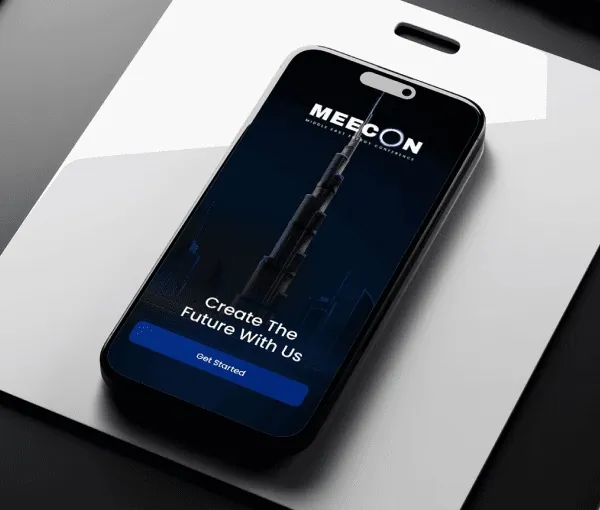
Mobile app · Events · UAE
A UAE conference platform replacing printed programmes and email chains for delegates and organisers.
meecon.ae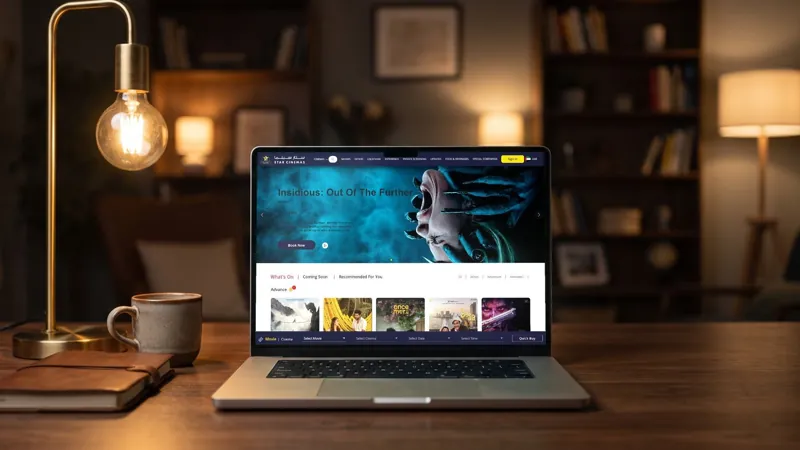
Web app · Ticketing · UAE
The UAE cinema chain operated by Phars Film. Every screening, offer and payment in one place customers can use on a phone.
starcinemas.ae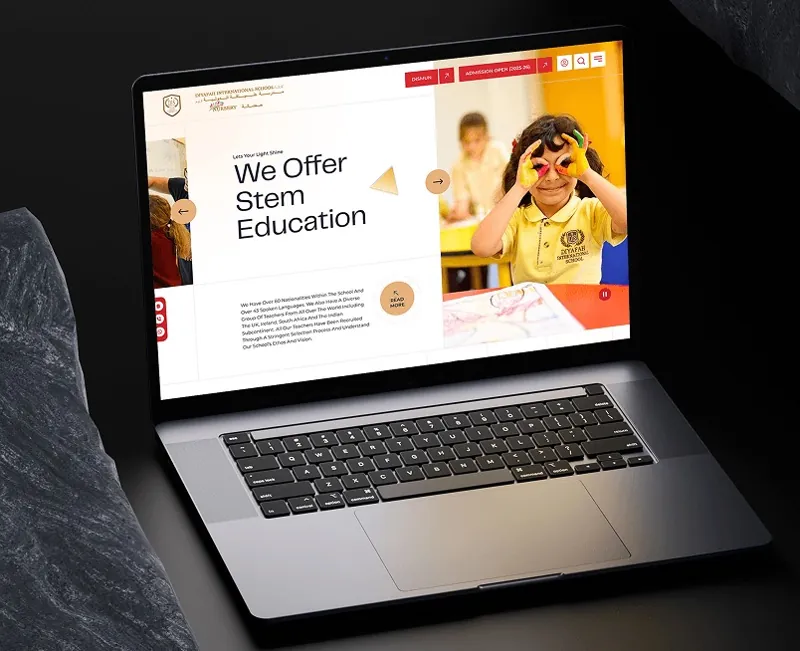
Website · Education · Dubai
One of Dubai's most diverse schools, 2,400+ students and 40+ nationalities, connected across campuses.
aldiyafah.comStraight answers
Usually through a ticketing platform connected to the site rather than a payment system built from scratch, since a specialist platform already handles seat maps, refunds and check in scanning better than a custom build would for a single event.
We agree this before launch. Some organisers want the page archived with a thank you message and photos, others want it removed once ticket sales close. Either way, the address should not quietly rot with an outdated date on it.
Yes, and it is worth planning for from the first build. A reusable structure means next year's edition can launch by updating dates, speakers and tickets rather than rebuilding the whole site.
That depends on your event type and is handled through Dubai's Department of Economy and Tourism, not through us. We can build the site in parallel with your permit application, but ticket sales should not start before approval is confirmed.
A simple submission form works well for this, collecting a bio, photo and session details for your team to review and publish, rather than giving every speaker direct access to edit the live site.
Sources
Fixed price, in writing
Got it. Your quote is being written now.
In business hours you will have it within 45 minutes. Check your inbox for the confirmation.