Design services in Dubai: working out which one you actually need
Branding, graphic design, UI and print are separate jobs. How to tell which you need, how to brief it, and what files you should receive.
Read the articleDesign Services · Graphic Design
The page to start on when you know a Dubai business needs design work but are not yet sure whether that means a logo, a brochure, an ad set, a social feed or something else, and what to have ready before you ask for a quote.
Graphic design in Dubai is not one job, it is a family of quite different crafts that happen to share the words “design” and “graphic”. A business that comes to us saying it needs graphic design usually means one specific, nameable thing: a leaflet for an exhibition stand, a set of paid ad creatives, a company stamp, a product catalogue, a signature on every staff email. This page exists for the moment before that specific thing has a name yet, to help a Dubai business work out which of our design services actually fits, and to explain the parts that are true of graphic design work generally, rather than repeating what each individual service page already covers.
If you already know exactly what you need, the fastest route is straight to that page: logo design, brand identity design, catalogue design, ad design, web banner design, packaging design, social media design, landing page design, email signature design or motion graphics. Everything below is about the parts that sit above all of them.
Who actually signs this off
The brief looks different depending on who is holding it, and that changes what a proposal needs to answer.
Usually approving everything personally, working from instinct about what looks right, and most sensitive to how quickly a first draft appears and whether it looks credible next to competitors they already have in mind.
Working to a brand already set by someone else, often reporting upward on whether the new material is consistent with existing guidelines, and judged on whether design work lands on time for a campaign date that does not move.
Asked to get a stamp, a signature or a set of forms designed as one task among many others, usually with no design background, and best served by a short brief and a fast, low friction approval step.
What you searched for
People who search a broad term like graphic design in Dubai are usually in one of two quite different situations, and the right next step is not the same for both.
You know something needs to look better or exist at all, but you have not yet decided whether that is a logo, a leaflet, a set of banners or a full identity. This page is written for exactly that stage, and the routing links throughout it are the fastest way out of it.
You want a leaflet, or a set of ad creatives, or a catalogue, and you are reading a general page to judge whether a studio understands the craft before you commit to a specific brief. For that, the sections below on file handover, approvals and what we ask you to supply are the useful part.
Print and digital
The same idea, say a product promotion, often needs to exist as both a printed piece and a digital one, and it is tempting to treat that as one design resized twice. In practice the two are built differently from the start. Print work is built in CMYK colour, at print resolution, with bleed and trim marks so a printer can cut right to the edge without a white sliver appearing, and text sits inside a safe margin so nothing important is trimmed off by a fraction of a millimetre of machine tolerance. Digital work is built in RGB colour, at screen resolution, and has to survive being viewed on a phone screen in bright sunlight in a Dubai car park just as easily as on a large monitor indoors.
Type sizing tells the same story from a different angle. A headline that reads comfortably on a full page leaflet held at arm’s length can disappear on a phone screen at the same relative proportions, and a paragraph of body copy that is perfectly legible printed at 9 points can feel cramped on a small screen where the reader is scrolling, not holding a still page. Designing both from one master file and then genuinely adapting each version, rather than mechanically resizing it, is what keeps a campaign looking deliberate across a shopfront, a phone feed and a printed handout.
File handover
The finished artwork is only useful to you for as long as you can open, edit and reprint it, and that depends entirely on which files you were given.
| File type | What it is | Why you need it, specifically |
|---|---|---|
| Native editable file | The original layered design file the design software actually saves | Without it, a future edit means rebuilding the design from a flat image, which no designer, including us, can do accurately |
| Print ready PDF or vector | A flattened, print ready export with bleed and colour set correctly | This is the file you hand straight to a printer, without them needing to touch the layout |
| High resolution image exports | PNG or JPG at full print or screen quality | For anywhere a native file cannot be opened, such as a supplier’s own upload portal |
| Web ready exports | Compressed, correctly sized images for the actual platform they will appear on | An oversized image slows a web page down; an undersized one looks soft when enlarged |
| Font list or outlined text | Either the exact typeface names used, or the type converted to outlines | A file that calls a font you do not own will not display correctly the next time it is opened |
Every finished piece of graphic design work we hand over includes a short index explaining which file in the pack is for which purpose, so nobody on your side has to guess which one to send to a printer, a developer or a colleague.
Changing agency
Nobody reads a file index carefully on delivery day, because the design already looks right on screen and the project feels finished. The moment it actually matters is much later: a new sign maker asks for a vector file and only a low resolution logo photograph exists; a new agency asks for the brand’s fonts and nobody kept the list; a colleague opens what they were told was the source file and finds it is a flattened image with no editable layers at all. None of that is unusual. It is simply what happens when a design project hands over the finished picture and quietly keeps the working files.
We build the file pack assuming you will eventually work with someone else, whether that is another studio, an in house designer you hire, or a printer neither of us has worked with before. That means editable source files, not only exports, and a plain explanation of what each one is for, delivered as part of the project rather than as a favour you have to request later.
Ownership
This is a legal question, not a design one, and it is worth understanding rather than assuming.
UAE copyright is set out in Federal Decree-Law No. 38 of 2021 on Copyright and Neighbouring Rights, which the Ministry of Economy and Tourism describes as protecting authors and creators of original intellectual and creative works, and which provides for the author or right holder to be compensated where their moral and financial rights are infringed. In plain terms, a created work has both an economic side, the right to use and reproduce it, and a moral side, the right to be recognised as its author and to object to changes that damage its integrity. For commissioned design work, the sensible position is to agree ownership of the economic rights in writing before the project starts, which is exactly what a written proposal is for, rather than leaving it to be assumed by either side afterwards.
This matters in practice the first time a business wants to reuse a design piece for something the original brief never mentioned, such as printing a leaflet’s artwork onto a much larger banner, or adapting a logo mark into packaging nobody discussed originally. A clear, written understanding of what was actually commissioned and paid for avoids that becoming a dispute rather than a simple follow on job.
A design is not really finished until the person who paid for it can open, edit and reuse it without calling anyone back.
Arabic and English
A large share of graphic design work for a Dubai business is bilingual from the outset, whether that is a shopfront sign, a printed menu, a form or a social post aimed at a mixed audience. Arabic is not simply English text translated and dropped into the same layout; it reads right to left, its letterforms connect differently depending on their position in a word, and a typeface chosen only for how the Latin alphabet looks in it can render the Arabic beside it thin, cramped or badly spaced.
The practical fix is designing both languages inside the same layout from the start, checking that Arabic headlines are not simply mirrored English ones, that line breaks fall in sensible places in both scripts, and that a native Arabic reader reviews the final copy before anything goes to print or goes live, since a spelling or grammar mistake on a printed sign is expensive to fix twice.
Scoping a request
The same six stages we use for every project apply to a single leaflet as much as a full campaign, just compressed.
What it is, where it will appear, and by when, matters more at this stage than what you think the service is called. We translate that into the right scope.
A fixed written quote scoped to your brief, sent within 45 minutes during business hours, setting out exactly what is included so there is nothing to negotiate later.
An agreed number of directions, based on how open or fixed the brief already is, rather than an unlimited stream of quick variations.
Feedback is gathered from everyone who needs to approve it before it comes back to us, so revisions address every comment once rather than in instalments.
The approved version is finalised into the full file pack, ready for a printer, a platform or a developer.
Because the source files are yours, adapting the same design for a new size or a new platform later is a smaller job, not a rebuild.
What we need from you
The single biggest cause of a slow first draft is not design time, it is waiting on these.
Your current logo files, brand colours and any guidelines that already exist, even informal ones, so new work does not accidentally drift from what your customers already recognise.
Final or near final copy in both languages where relevant. Design built around placeholder text has to be reflowed once real copy arrives, which costs a review cycle you did not need to spend.
A single person, or a small named group, with the authority to sign off. Feedback collected from five people separately, at different times, is the most common reason a simple project slows down.
Examples of what you like and dislike, including competitors, even if the reasons behind the reaction are hard to put into words at first.
The date the piece is actually needed by, not a padded version of it, so the review schedule is built around the true constraint rather than a guessed one.
For print, the printer or supplier you intend to use, if already chosen, since their exact size and file requirements shape the final export.
Licensing
A design can look identical and still be legally unusable, depending on what it was built from.
Most fonts and stock photography are licensed, not free to use however anyone likes, and the terms usually depend on how the finished piece is used: a licence covering a website banner does not automatically cover a printed billboard, and a licence for a limited print run does not automatically cover an unlimited one. We work inside licences that fit the way each design is actually being used, and where a client’s plan for a piece changes significantly after delivery, such as a leaflet design being scaled up into large format signage, that is worth checking against the original licence before production, rather than assuming it carries over.
The same caution applies to anything supplied by a client for us to include, such as a photograph found online or a font downloaded from an uncertain source. If we are not confident a supplied asset is properly licensed for the intended use, we say so before it goes into a finished design, rather than after.
Advertising and signage rules
Design intended purely for internal use, such as an office document, sits outside advertising regulation. The moment a piece is displayed publicly, whether as a shopfront sign, a billboard, a leaflet handed out in public or a vehicle wrap, it becomes an advertisement under Dubai law, and Decree No. 6 of 2020 sets out that no person may display an advertisement using an advertising medium without first obtaining a permit. Which authority issues that permit depends on where the advertisement sits: the relevant free zone authority for advertising within a free zone, the Roads and Transport Authority for advertising on rights of way, public transport and vehicles, the Department of Economy and Tourism for commercial outlet facades and printed leaflets or stickers, Dubai Civil Aviation Authority for aerial advertising, and Dubai Municipality for advertising on vacant land, buildings, coastal areas and water bodies.
The decree also sets a specific content requirement worth knowing before artwork is finalised: Arabic must be the advertisement’s main language, with the Arabic text occupying at least fifty percent of the advertising medium’s size and sitting in the upper section or on the right hand side, free of grammatical or spelling mistakes, and content overall must be accurate and must not conflict with public order or the traditions of the Emirate. We design public facing pieces with this in mind from the layout stage, rather than trying to fit an Arabic block into a design built only in English afterwards.
Summary of Dubai’s Decree No. (6) of 2020 Regulating Advertisements in the Emirate of Dubai, as published on the Dubai Legislation portal and read on 25 September 2026, and of the UAE’s copyright framework as summarised by the Ministry of Economy and Tourism. This is not legal advice; confirm current permit requirements with the issuing authority before a public advertisement goes into production.
Mistakes we see
Almost none of these are about taste. They are about how a request is set up.
Five people’s individual opinions, passed on separately as if they were one brief, force a designer to guess which comments actually matter and which cancel each other out.
Leaving out a rough old logo or a half finished guideline document because it feels embarrassing usually costs more time than sharing it, since new work then drifts from what customers already recognise.
Asking specifically for a brochure when the real goal, say generating enquiries at an event, might be better served by a landing page or a simple leaflet with a strong call to action.
A print deadline that depends on a courier, a printer’s own turnaround and a design review all fitting into the same week, discovered only once artwork is already in progress.
Sending Arabic copy for translation only after the English layout is finished, rather than designing both together, which usually means the layout has to be reworked once the Arabic arrives.
Assuming source files are automatically included without it being agreed anywhere in writing, then discovering only later, when they are needed, that they were never part of the scope.
Judging the result
Not every design piece is measured the same way, because they are not built for the same purpose.
| What was made | What tells you it worked |
|---|---|
| A leaflet or exhibition piece | Whether someone reading it for a few seconds at a stand or in a queue can tell what you do and what to do next |
| A catalogue or product sheet | Whether someone can find and compare the item they came looking for without needing to ask a question first |
| An ad creative | Whether it reads clearly at the size and speed people actually see it, on the device and platform it runs on |
| A company stamp or signature | Whether it looks correct and legible on every document and screen it appears on, small and large |
| A packaging design | Whether the product is identifiable on a shelf beside competitors, and the required information is genuinely legible |
We do not report invented engagement figures or promise a specific outcome for a design piece, because a design’s job depends entirely on where it appears and what it is competing against. What we do commit to is a piece built for the job you described, tested against the practical realities above before it is called finished.
Sizes worth knowing
None of these are fixed rules, and a supplier’s exact specification always takes priority, but knowing a sensible starting point saves a first draft from being built to entirely the wrong dimensions before anyone has checked.
| Piece | Common size | Note |
|---|---|---|
| Flyer | A5 or A4 | A5 suits handing out in person; A4 suits a counter display or a mailed piece |
| Roll up banner | Roughly 850mm by 2000mm | Check the exact stand hardware before finalising, since frames vary slightly between suppliers |
| Business card | 90mm by 50mm | The Dubai standard; some businesses request a rounded corner or a different finish |
| Instagram feed post | 1080px square or 1080 by 1350px portrait | Portrait uses more of the screen in a scrolling feed |
| Instagram or story format | 1080px by 1920px | Keep key text and logos away from the top and bottom, where interface elements sit |
| Company stamp artwork | Usually a 40mm circle | Supplied to the stamp maker at high resolution with type set to stay legible once inked |
These are working defaults, not universal standards. The final size for anything you order is always confirmed against your chosen printer, platform or stand supplier before production.
Revisions
A written proposal states how many rounds of review are included, and what counts as a round is worth understanding before work starts: a round is a single, consolidated set of feedback covering everyone who needed to comment, not one comment sent today and another sent next week on the same draft. Collected this way, most projects settle within the included rounds, because the designer is reacting to one clear picture of what needs to change rather than a slow trickle of individual notes.
Genuinely new direction, such as asking for a different concept entirely after one has already been approved, or adding a deliverable that was never part of the original brief, sits outside revisions and is scoped separately. We flag that distinction as soon as it comes up, rather than quietly absorbing it into the same round and running behind on the deadline as a result.
Existing brand guidelines
A large share of graphic design requests in Dubai are not for a new identity, they are for new material inside one that already exists.
A formal brand guideline document, however short, is the fastest way to keep new material consistent, and we work directly inside it rather than treating it as a loose suggestion.
Where only a logo and a rough sense of colour exist, we note the patterns already visible across your current material and keep new work consistent with them, flagging gaps worth formalising later.
Where guidelines are set centrally and cannot be changed locally, the brief is about applying them accurately to a local piece, such as a Dubai specific promotion, not reinterpreting them.
Seasonal work
A noticeable share of graphic design requests in Dubai cluster around fixed points in the calendar: Ramadan and Eid campaigns, UAE National Day material, a specific exhibition or trade show date, a retail sale weekend. None of those dates move to suit a design schedule, and the businesses that avoid a last minute scramble are the ones that brief the work several weeks ahead rather than the week before, since printers, stand builders and platforms all get busier around the same fixed dates as everyone else.
Where a piece has to be ready for a specific event, we ask for that date at the very start of scoping, before a single concept is drawn, so the review schedule and the production lead time are both built around a deadline that genuinely cannot slip.
Combining deliverables
Not every launch needs everything at once, but where several pieces share an audience and a moment, briefing them together usually produces a more consistent result than commissioning each one separately, weeks apart.
A leaflet, a set of social posts and a landing page built together, sharing one visual system, rather than three separate looks arriving at different times.
A stand banner, a leaflet to hand out and a follow up email signature designed as one set, so a visitor recognises the same look wherever they meet it next.
Packaging and the catalogue listing that describes it, built from the same photography and colour decisions rather than reconciled after the fact.
Ad creative, social posts and any printed material for the same period, briefed together so the offer reads identically everywhere a customer sees it.
Where deliverables genuinely do not share a moment, such as a company stamp needed this week and a rebrand planned for next year, keeping them as separate briefs is the more sensible route, since bundling unrelated work rarely saves anything beyond the convenience of one proposal document, and it can slow down the piece that was actually urgent.
A well designed leaflet does not fix a weak offer, and a sharp looking ad set does not repair a slow website it links through to. Graphic design in Dubai is one part of a wider effort, not a substitute for the other parts of it. Where a request arrives clearly aimed at solving a problem design alone cannot fix, for example a catalogue meant to compensate for a confusing product range, we say so as part of scoping, because a design brief that quietly tries to solve the wrong problem tends to disappoint everyone once it is finished, however well it was executed.
The same honesty applies to timelines. A concept a designer is proud of usually benefits from sitting for a day before final sign off, and a genuinely rushed review, done in the last hour before a print deadline, is where small mistakes such as a wrong phone number or an outdated address most often slip through. Where a schedule leaves no room for that pause, we say so plainly rather than pretending the risk is not there.
Legibility basics
Most of these are about the conditions the piece will actually be seen in, not abstract taste.
A pale colour scheme that looks elegant on a calibrated screen can wash out entirely on a phone in direct Dubai sunlight or on a poorly lit stand, so key text is checked at reduced contrast, not only at its best.
Any text that carries a phone number, a price or a call to action is checked at the smallest size it will realistically be viewed at, phone screen or exhibition floor distance, not the size it appears on a designer’s monitor.
A piece with three competing calls to action usually produces fewer responses than one with a single obvious one, so a busy layout is checked for what a reader is actually meant to do next.
Who actually does the work
For one defined deliverable rather than ongoing design time, these are the routes a Dubai business is usually weighing up, and each suits a different situation.
| Route | Where it fits well | What to watch for |
|---|---|---|
| A design studio, project by project | A defined brief with a deadline, where you want a written scope and a finished, handed over file pack | Choose one that hands over editable source files, not only exports, so the work is genuinely yours afterwards |
| An individual freelance designer | A very small, simple piece, or a business with time to manage the brief closely themselves | Continuity if that person is unavailable, and whether a proper file pack and licensing are part of what they deliver |
| An in house hire | A business with a steady, ongoing volume of design work, not a single project | Recruitment time, payroll and management overhead, which only pays off once the volume of work justifies it |
Where the real need turns out to be ongoing, not a single project, that comparison changes shape entirely: the question stops being which route delivers one finished piece, and becomes which route keeps a steady stream of everyday material moving without you managing every brief personally, week after week. That question is covered properly on our hire a graphic designer page rather than repeated here.
Once you know what the object actually is, the specific page is the better read: a symbol and wordmark start at logo design; the wider system of colour, type and guidelines around it sits under brand identity design; a printed product or service listing belongs on catalogue design; paid creative for social and display platforms sits under ad design and web banner design; a product’s shelf presence is packaging design; an ongoing feed of posts is social media design; a single page built to convert a click into an enquiry is landing page design; a consistent sign off block across your team is email signature design; and anything that needs to move rather than sit still belongs on motion graphics. Every one of these sits on the design services hub alongside the others.
If what you actually need is not a project but ongoing design time inside your business, month after month, that is a different question and a different page: see hire a graphic designer.
From the blog
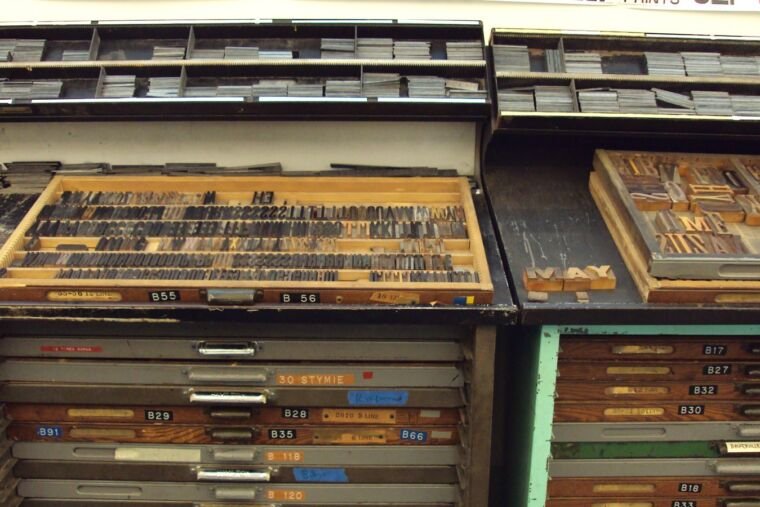
Branding, graphic design, UI and print are separate jobs. How to tell which you need, how to brief it, and what files you should receive.
Read the article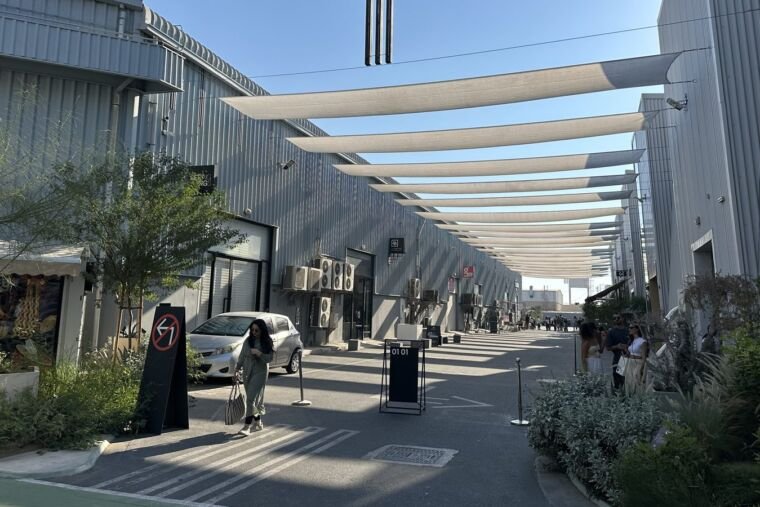
What an Arabic and English brand guide must settle in writing so printers, developers and writers in the UAE apply it the same way.
Read the article
What UAE trademark law protects and refuses, how registration with the Ministry of Economy and Tourism works, and what it means for your logo.
Read the articleStraight answers
Describe the object, not the discipline: a leaflet to hand out, a set of Instagram posts, a sign above a shop door. We match that to the right service and quote from there, so you never have to guess the correct name for what you need.
Yes. A single proposal can cover more than one deliverable, and it often costs less overall to scope them together because the visual groundwork carries across. Tell us everything you need up front and we will structure one proposal around it.
Yes, and for a launch that includes both, we usually design the core assets once and adapt them, so a leaflet and its matching social post share the same visual language instead of looking like two separate jobs.
You own the artwork and receive the working files for it, not only flattened exports. A design made only for us to reopen is a design you cannot fully use elsewhere, so the pack is built to leave your business with you.
We use fonts and stock assets under licences that cover the way they are used, and we tell you plainly when an asset's licence limits how it can be reused, such as for a different product or a much larger print run, so nothing is left as an assumption.
Sources
Fixed price, in writing
Got it. Your quote is being written now.
In business hours you will have it within 45 minutes. Check your inbox for the confirmation.