
Appointment booking
A booking widget tied to real availability where your system allows it, or a fast request form that clearly says when someone will confirm the time.
Web Design by Industry
Healthcare website design in Dubai for clinics, hospitals and practitioners, built around appointment booking, doctor profiles and advertising that stays inside DHA rules.
Healthcare website design in Dubai carries more weight than most service sites, because the visitor is often anxious, comparing several clinics quickly, and deciding based on how easy it is to book and how trustworthy the practice looks. A slow page or a contact form with no clear next step sends that visitor to the next clinic in the search results. Healthcare website design in Dubai has to make booking, specialty and doctor information findable within a couple of taps, on a phone, from a patient who may be reading in pain or under pressure.
This page covers the pages a Dubai clinic or hospital site needs, where DHA advertising rules touch the content, and what we ask for before a build starts.
It also covers what changes once a single clinic grows into a group of facilities under one brand, since the pages, the data and the people responsible for keeping it all current are genuinely different at that scale. Where a single practitioner or a single outpatient clinic needs one booking flow and one insurance list, a healthcare group needs those same things multiplied across several addresses, several teams and, in some cases, more than one regulator, and the site has to be built to carry that from the start rather than patched together later.
Core pages
A patient rarely browses a clinic site the way they browse a shop. They land looking for one answer, and healthcare website design in Dubai should get them to it fast.
A booking widget tied to real availability where your system allows it, or a fast request form that clearly says when someone will confirm the time.
A page per practitioner with specialty, qualifications and languages spoken, since patients often choose the doctor before they choose the clinic.
Clear, plainly written pages for each department or treatment area, written for a worried reader rather than a clinical audience.
A current, searchable list of accepted insurers, one of the first things a patient checks before calling.
Intake and history forms that can be completed before a visit, reducing time spent at reception.
Full bilingual pages, not a translated snippet, for a patient base that includes both Arabic and English speakers.
Advertising in mind
Medical advertising in the UAE is treated differently from most other industries, because the cost of an overstated claim is higher. Regulation of healthcare advertising in Dubai sits with the Dubai Health Authority, and the areas that tend to draw scrutiny are treatment outcomes, comparative or superlative claims about a practice, and images used to suggest a result. None of that is a substitute for reading the current DHA guidance yourself, and it changes, so this is written as a starting checklist, not legal advice.
The safer pattern we build towards is descriptive content: what a treatment involves, who performs it, and how to book a consultation to discuss suitability, rather than promises about the result a specific patient will get.
Accessible by design
A booking form is the single most important interaction on a healthcare website, and it has to work for every visitor, including one using a screen reader or typing with one hand.
| What we check | Why it matters here |
|---|---|
| Form labels and error messages a screen reader can announce | Some patients rely on assistive technology, and a form that fails silently loses the booking |
| Large touch targets and clear contrast | Many visitors are on a phone, sometimes an older parent booking on a family member’s behalf |
| A working path with no script errors | A broken booking step on a clinic site sends the visitor straight to a competitor |
The W3C’s Web Content Accessibility Guidelines set the standard reference for building forms and content that work across assistive technology, and we test patient facing forms against it rather than assuming they pass. Good healthcare website design in Dubai treats this as a checklist item at every stage of a build, not a fix applied after launch when a patient has already given up on a form.
Build and content
A healthcare build moves quickly once this information is ready.
Names, specialties, qualifications and photographs for every doctor or practitioner who should appear.
Whether you already use booking software we can connect to, or whether requests should route to reception.
The current panel of accepted insurers, and who updates it when it changes.
Who reviews advertising and content wording before it goes live, so DHA related edits do not stall a launch.
If the site will connect to a patient management system rather than just a booking calendar, we confirm what data can move automatically and what should stay inside that system for privacy reasons.
Most clinics we work with already run a booking or patient management system before the website exists, so a large part of healthcare website design in Dubai is deciding what that system exposes to the public site and what stays behind a login for staff only.
Development, hosting and handover are covered on our website development page, and booking flow and layout decisions sit under UI UX design. Once the site is live, SEO services covers ranking for specialty and treatment searches.
The buyer
A single practitioner approves their own site. A healthcare group spread across several facilities in Dubai works differently. Sign off usually sits with a group marketing director reporting into a general manager or a medical director, and a compliance or quality officer is often in the first meeting too, since one advertising claim on a shared template can affect every facility that uses it, not just one page.
What this buyer is measured on is rarely “does the homepage look right”. It is closer to how many booking requests each facility generates, how fast a newly licensed branch can go live, and whether the group’s insurance relationships are represented accurately once more than one location and more than one panel of accepted insurers is involved. Those are the questions that come up first, well before colour palettes.
Beyond a single clinic
A group site is answering a different question to a clinic site, because healthcare website design in Dubai at this scale has to sort visitors by facility as well as by specialty. The visitor is not just choosing whether to book, they are also working out which of your facilities to book at.
A map or list of every facility with address, opening hours and the specialties available at that address, so a patient in Deira is not shown a doctor who only sees patients in Al Barsha.
A specialty page that shows which of your facilities offer that department, rather than one department page that quietly assumes every location provides the same services.
A directory searchable by insurer and by facility, since a group frequently accepts an insurer at some locations and not others depending on when each facility joined the panel.
A login area where a returning patient can see appointment history, request a prescription repeat or release lab results, built to pull from whichever facility they were last treated at.
Short pages telling a doctor at one facility how to refer a patient to a specialist at another facility in the same group, with the information the receiving team needs.
One careers section covering clinical and support roles across every facility, filterable by location, rather than a separate careers page maintained per branch.
The visitor journey through a healthcare group site has an extra decision point that a single clinic site does not: which facility. A patient usually starts from a symptom or a specialty, not a location, so healthcare website design in Dubai for a group works best when it asks for the facility only once the specialty is known, showing the two or three closest locations that actually offer it rather than the entire group list. The point where this breaks down is familiar: a specialty page that links straight to a generic booking form with no facility selected, so the patient books, then gets a call back asking which branch they meant. That single extra step, done badly, is often the difference between a completed booking and an abandoned one.
A second drop off point is insurance. A patient checks whether their policy is accepted before they book, and if the group’s insurance information sits in one general paragraph rather than a facility specific list, patients who are unsure tend to call rather than book online, which defeats the purpose of the online journey in the first place.
Data that changes
A group site is only as trustworthy as its least recently updated facility page, so this is usually the largest ongoing job once the build is finished.
| Data | How often it changes | Who usually owns it |
|---|---|---|
| Doctor roster per facility | Weekly, as practitioners move between branches or leave | Each facility’s operations lead, reported to group marketing |
| Insurance and TPA panel per facility | Monthly, as insurers are added or dropped at specific locations | A group revenue cycle or insurance coordination team |
| Facility opening hours and capacity | Occasionally, around public holidays or new branch openings | Facility administration, confirmed centrally before publishing |
| Patient portal records | Continuous, synced from each facility’s own clinical system | IT, through an integration rather than manual entry |
Healthcare website design in Dubai for a group therefore needs an editing structure built around who actually holds each piece of information, not a single marketing user updating everything by hand across dozens of facility pages.
Integrations
A group’s website rarely stands alone, and good healthcare website design in Dubai starts by mapping what it should connect to before any page is drawn. It usually needs to connect to a hospital or clinic information system to show real doctor availability, to an insurance eligibility service so a patient can check their own policy rather than reading a static list, and to a patient portal layer if records, prescription requests or lab results are meant to be visible online. Each of these solves one job and no more: a booking connection shows a slot is free, it does not confirm a patient is eligible for that insurer, and an eligibility check does not replace the facility’s own verification when the patient actually arrives.
Payment for self pay consultations, WhatsApp or SMS reminder services and a group wide content management structure that lets one template update every facility page at once are the other integrations we are asked about most often. None of these are assumed. We confirm what a group already runs and connect to it, rather than replacing systems that already work.
Advertising permits
A group operating only in Dubai answers to one regulator. A group with a facility outside Dubai answers to two, and the website has to reflect that.
Within Dubai, medical advertising content sits with the Dubai Health Authority, covered on our wider hospital website design page in more detail. Where a healthcare group also runs a facility in another emirate, the Ministry of Health and Prevention’s own published service for issuing or renewing a licence for a health advertisement sets out a separate federal process for that content. A group site publishing the same treatment page across facilities in more than one emirate cannot assume one approval covers both.
This is not legal advice, and the practical risk for a group is less about a single page and more about a shared template used everywhere across a healthcare website design in Dubai that spans several emirates. A claim edited on a template because it was approved for the Dubai facility can quietly go live, unreviewed, on a Sharjah or Abu Dhabi facility page that answers to MOHAP instead. Confirming which regulator applies to which facility, before a shared template is approved, is worth doing once at the start of a build rather than facility by facility after launch.
A group website is only as trustworthy as its least recently updated facility page.
Search behaviour differs across the group journey too. A research stage search, something like “what does a cardiologist check in a first appointment”, is answered by a specialty page written for a worried reader rather than a clinical one. A ready to book search, something like a named facility plus “appointment” or a doctor’s name directly, is answered fastest by a facility or doctor page that leads straight to booking, not by a general homepage. Healthcare website design in Dubai for a group needs both kinds of pages built with a different job in mind: specialty pages that explain, and facility or doctor pages that convert, linked to each other rather than competing for the same search.
Content that goes missing
Each facility often has its own spreadsheet. Merging them, and resolving a doctor who appears at two locations under two slightly different titles, is the single most common delay we see in healthcare website design in Dubai for a group.
Without a facility by facility breakdown, a group’s insurance page either gets published too broadly or sits blank until someone checks every branch individually.
Advertising content across several facilities needs one person confirming it, since without one, review requests stall between marketing and each facility’s clinical lead.
Phasing
| Stage | What launches | What waits |
|---|---|---|
| Phase one | Facility locator, department directory, doctor profiles, a booking request form per facility | Live patient portal, direct clinical system booking |
| Phase two | Patient portal login, prescription repeat requests, real time availability from the clinical system | Newer facilities still awaiting DHA or MOHAP advertising approval |
| Ongoing | New facility pages as branches open or are acquired | Group wide rebrand of older facility pages, done in batches |
A portal that shows patient data is a bigger, slower build than a booking request form, so we treat it as a genuine second phase within healthcare website design in Dubai rather than something bundled into an initial launch date.
Arabic across the group
A single doctor’s profile can work with one careful bilingual page. A healthcare group serving patients across Dubai and the wider UAE needs Arabic content built the same way at every facility, department and doctor page, with right to left layout tested on the actual pages patients book from, not just the homepage. A group site where only the homepage is bilingual and every facility page beneath it drops back to English is a common gap in healthcare website design in Dubai, and it is usually the facility and doctor pages, the ones a patient actually needs when deciding where to book, that get missed.
The mistakes we see most often on existing Dubai healthcare group sites are rarely design mistakes. A newly acquired facility keeps its old branding and its old booking form for months after joining the group, so a patient moving between two of the group’s own locations sees two different websites. A doctor who has left one branch still appears on that facility’s page long after they have gone, because whoever updates the roster at that branch was never given access to the new site. An insurer dropped at one facility still shows as accepted there because the change was made group wide instead of per facility. None of these are difficult to fix individually, but they compound across a large site faster than a single clinic’s site ever would.
The single most common delay in a healthcare group brief is merging doctor lists that were never meant to be merged.
Measuring it
Total site traffic tells a group marketing director very little on its own.
What matters more is booking requests per facility, since a group site that performs well overall but poorly for one branch usually means that branch’s specialty and doctor pages need attention, not the homepage. Portal adoption, the share of returning patients who actually log in rather than call reception, is a second useful signal once a portal is live. Facility and department page performance individually, rather than site wide sessions, is what tells a group whether the structure built for multiple locations is actually doing its job. None of this is a promised outcome, and no specific result is promised by any healthcare website design in Dubai on its own. It is what we recommend a group track once the site is live, using their own analytics and booking data rather than any figure we would publish here.
Beyond the website
Some healthcare groups in Dubai eventually want a dedicated patient app on top of the website, usually once booking volume, portal use and repeat visits justify it. The website and the app answer different needs: the website is where a new patient researches a specialty and decides which facility to visit, while an app tends to serve existing patients who already know the group and want appointment history, reminders and prescription requests in one place without opening a browser each time. Building an app before the website’s booking flow and portal are working well is usually the wrong order, so we treat mobile app development as a later conversation once the core site is proven, not a parallel track from day one.
Where a group does commission an app, the two should share the same booking and patient data logic rather than being built as two separate systems that drift apart, since a patient rebooking through the app but managing insurance details on the website is a poor experience either way.
Retail alongside care
Some Dubai healthcare groups run a pharmacy or a wellness retail arm alongside clinical care, and this needs its own structure rather than being folded into the appointment booking flow.
Product catalogue, stock and checkout are an ecommerce job in their own right, built and maintained separately from the clinical booking pages so neither slows the other down.
Where a repeat prescription can be turned into a delivery order, that connection needs to route through the same patient verification as the portal, not a generic store login.
If pickup is only available at certain facilities, the store needs to know which stock sits where, rather than offering pickup at a branch that does not carry that item.
Corporate content
This section applies only to a healthcare group that is a public company or a majority owned subsidiary of a larger holding, and it has no equivalent on a single clinic or hospital site.
A patient never looks for a corporate governance page, but a shareholder, an analyst or a journalist does, and a healthcare group that is listed or part of a larger holding needs that content built and kept current separately from the patient facing site, usually under its own section rather than mixed into department pages. Board composition, links to regulatory filings and results announcements, and a contact route for investor relations are the common pieces, and none of them should compete for space with the appointment booking journey a patient is actually there for.
This content sits outside anything DHA or MOHAP advertising rules cover, since it is not describing a treatment, but it still needs to be accurate and kept current, which usually means routing it through the group’s own investor relations or corporate communications team rather than the marketing team that manages doctor and department pages.
Content review
On a single clinic site, one person usually checks a new page before it goes live. A healthcare group needs a workflow, because content is drafted by a marketing team that does not sit inside a clinic, described by a clinical lead who is not thinking about advertising rules, and published under a regulator, DHA or MOHAP depending on the facility, that neither of them checks day to day. Skipping a step in that chain is how an unreviewed claim ends up live, and it is rarely deliberate.
The pattern that works in practice is a short, fixed sequence: marketing drafts the page using only verified qualifications and factual service descriptions, the facility’s clinical lead confirms the clinical detail is accurate, and a named compliance contact signs off the advertising language specifically, against current guidance, before publishing. Healthcare website design in Dubai for a group should build this sequence into how the site is edited, not leave it as a verbal agreement that gets skipped once a marketing team is under deadline pressure.
Search behaviour across a healthcare group site is worth mapping directly to structure, because the two kinds of search a patient runs need two different pages, and building one page to serve both usually serves neither well. A research stage search, something like a condition name with “symptoms” or “treatment”, is best answered by a specialty page written to explain, with links onward to the facilities that treat it. A ready to book search, a facility name plus “appointment”, a doctor’s name, or “[specialty] near me”, is best answered by a facility or doctor page that leads straight into the booking flow, without the explanatory content getting in the way. Healthcare website design in Dubai for a group that only builds one kind of page, usually the explanatory kind because it feels more thorough, tends to lose the second, more valuable search entirely, since a visitor who has already decided to book does not want to read a specialty explainer first.
No search volumes are claimed here, since none have been measured for this site. The point is structural: build separate pages for the two intents, and link them to each other, rather than assuming one long page can serve a visitor at either stage of the decision.
Corporate accounts
A healthcare group in Dubai often sells to companies as well as individual patients, through corporate wellness packages, annual medical check contracts and direct arrangements with insurers or third party administrators. None of that fits a patient booking form, and treating it as an afterthought under the same enquiry route as an individual appointment usually means these leads get lost in a queue meant for something else entirely.
A corporate enquiry page with its own routing, asking for company name, expected headcount and the kind of package being considered, gives a business development team something they can actually act on, separate from clinical booking. Where a group holds an existing tender or panel relationship with an insurer, a short document library, non clinical, listing the group’s facility accreditations and coverage areas, is often what a corporate contact or a tender evaluator actually needs to find quickly, rather than digging through patient facing pages.
More content gaps
A recently acquired facility often arrives with its own logo variants and photography style, and reconciling that before launch usually takes longer than the rest of the build combined.
Older facility sites frequently carry outdated claims or superlative language written before current advertising guidance existed, and someone has to read through it before it gets carried into the new site.
One more area worth planning for early is what happens to old URLs when a healthcare group consolidates several facility sites into one. A group that previously ran a separate domain or subdomain per facility, often a legacy of each branch being built at a different time by a different supplier, needs those old addresses redirected properly to their new home on the group site, not simply left to expire. A referring doctor’s letter, an old business card, or a search result cached from years ago will still point at the old address long after the new site launches, and a broken link at that moment undermines the whole point of careful healthcare website design in Dubai, reading as unprofessional at best and, for a patient trying to find a doctor urgently, actively unhelpful.
Healthcare website design in Dubai for a group that has grown through acquisition should treat this migration as part of the build itself, mapping every old facility URL to its equivalent new page before launch, rather than discovering broken links from search results months later.
A last point worth stating plainly. Everything above assumes a healthcare group already exists, with facilities, doctors and an insurance history to organise. Healthcare website design in Dubai for a group that is still forming, still finalising which facilities join and which brand name survives an acquisition, is a different, slower project, and rushing a website ahead of that internal decision usually means rebuilding pages twice. Where the group structure itself is still settling, we would rather scope a smaller first phase, a single flagship facility done properly, than build a full group site around decisions that have not been made yet.
None of the substance on this page replaces confirming current DHA or MOHAP requirements directly with the regulator that applies to each of your facilities, and every regulatory point above is written as a starting position for that conversation, not a final answer.
It is worth saying what healthcare website design in Dubai does not need to solve on day one. A group launching its first proper site rarely needs every integration, every language and every facility page finished before going live, and trying to ship all of it at once is usually why a launch date slips by months. Healthcare website design in Dubai works better as a sequence: the facilities and doctors currently drawing the most enquiries go live first, with a clear content structure the rest of the group can be added into later, rather than waiting for every branch’s information to arrive before publishing anything.
Reviewers on our side and yours tend to agree on this once it is framed clearly, even when the instinct at the start of a project is to launch everything simultaneously. A phased healthcare website design in Dubai also gives a group’s own team practice running the content review sequence described above on a smaller set of pages, before the whole site depends on it working smoothly.
Related industries
Relevant for groups that also run an insurance or billing service alongside care.
Shares the same need for booking, portals and careful content around a sensitive audience.
For a single outpatient location rather than a multi facility group, with its own booking and walk in patterns.
See the full range of industry pages we design and build for.
Selected work
Work across sectors, with the closest to this industry shown first. Every one is a live site, not a mockup.
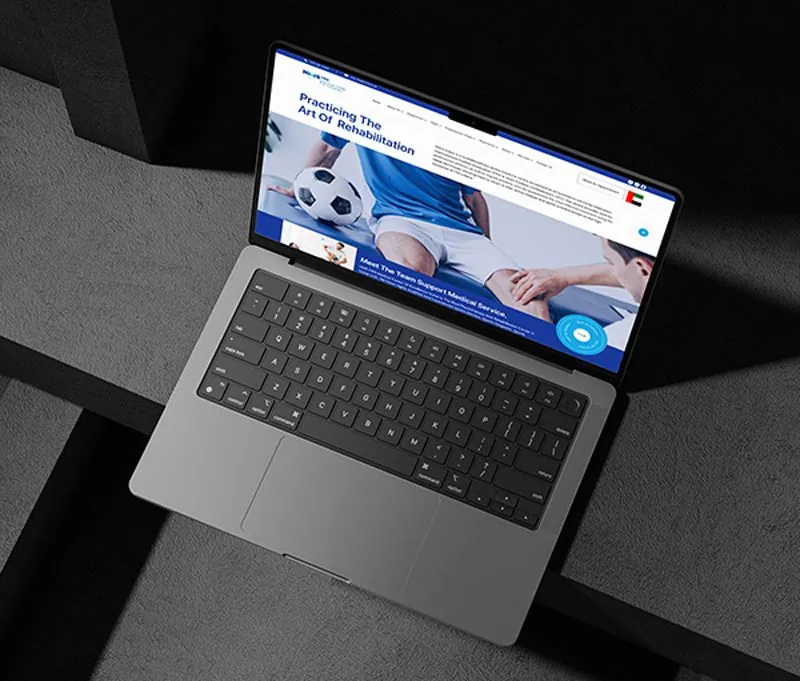
Website · Healthcare · Dubai
A Dubai rehabilitation and physiotherapy practice with one properly bilingual site in English and Arabic.
hmsfmce.com
Website · Education · Dubai
One of Dubai's most diverse schools, 2,400+ students and 40+ nationalities, connected across campuses.
aldiyafah.com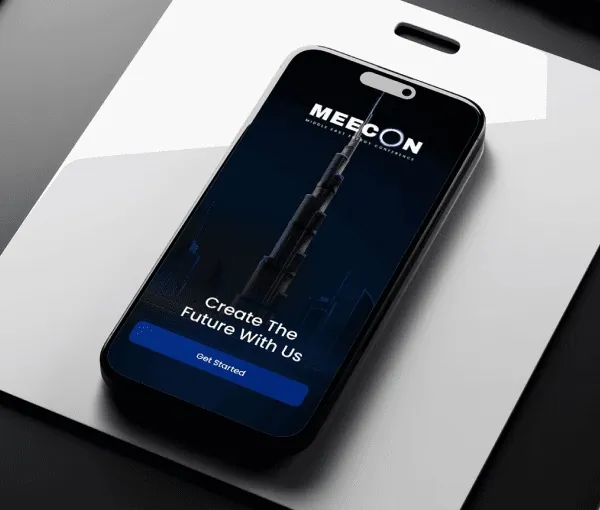
Mobile app · Events · UAE
A UAE conference platform replacing printed programmes and email chains for delegates and organisers.
meecon.aeStraight answers
Yes, either through a booking widget connected to your clinic system, or a request form that your reception team confirms by phone or message. Which one fits depends on the booking software you already use.
Healthcare advertising in Dubai sits with the Dubai Health Authority, and what a clinic can claim, particularly around outcomes, before and after images and pricing, is a live regulatory area. This is not legal advice, and content should be reviewed against the current DHA requirements before it is published, not just checked once at launch.
It is common practice for a clinic site to show each practitioner's specialty and qualifications clearly, since patients actively look for this before booking. Confirm exactly what must be displayed, and in what form, with the Dubai Health Authority.
Yes, an insurance panel list is one of the most searched pieces of information on a clinic website, and keeping it current is usually more valuable than adding new pages elsewhere on the site.
Every project gets a fixed written quote scoped to your brief, sent within 45 minutes during business hours with no obligation. Booking integration, the number of practitioners and languages needed are the main cost drivers.
Sources
Fixed price, in writing
Got it. Your quote is being written now.
In business hours you will have it within 45 minutes. Check your inbox for the confirmation.