
Package pages for travel website design in Dubai
What is included, what is not, pickup points, duration, group size and departure times, laid out so a visitor does not have to message you to find out.
Web Design by Industry
Travel website design in Dubai for tour operators, travel agents and desert safari brands: package pages that show what is actually included, availability that stays accurate, and a booking flow built for phones.
A tour operator, travel agency or desert safari brand in Dubai is usually selling on WhatsApp, Instagram and a booking platform long before the website catches up. Travel website design in Dubai has to bring those together: package pages that answer the questions a visitor actually has, pricing that is not a mystery, and an enquiry or booking step that works from a phone at the airport as well as a desktop at home.
This sits within our wider web design and website development work. What follows is specific to travel, tours and tourism brands rather than a general template with the word “travel” swapped in.
What the site has to do
A generic brochure site loses tourism enquiries at the first click. These pages carry the actual decision.
What is included, what is not, pickup points, duration, group size and departure times, laid out so a visitor does not have to message you to find out.
A calendar or date picker connected to real capacity, so a visitor is not left guessing whether tomorrow’s slot is actually free.
A short form or WhatsApp button that captures the tour, date and group size in one step, built for travel website design in Dubai where most enquiries start on a phone.
Package pages
Vague copy about “unforgettable experiences” answers nothing. A visitor comparing desert safari operators or Dubai tour packages wants specifics: what vehicle, how many stops, is the meal included, is the hotel pickup within the package or an add on, and what happens if the weather changes. Travel website design in Dubai works best when the itinerary is written like a schedule, not a mood board.
Photography matters, but so does the practical detail underneath it. We build package templates that hold both without either one crowding out the other.
Regulatory angle, not legal advice
Running tours, safaris or a travel agency in Dubai sits under tourism business licensing from the Department of Economy and Tourism’s own guidance on tourism licences and permits. It describes specific requirements for different tourism activities: safari operators need a registered fleet and trained drivers, desert camp operators need minimum vehicle and guide numbers plus Civil Defence and Dubai Municipality approval, and tour companies applying to run sales counters or kiosks go through a separate permit route. Individual tour guides are expected to hold status through Dubai’s tour guide programme.
None of this is legal advice. If your business sells tours, safaris or travel packages to visitors, confirm your licensing and permit position directly with DET before the site advertises anything it should not, and tell us what applies so travel website design in Dubai can reflect it accurately on the booking terms and package pages.
What stops a visitor
Two patterns show up repeatedly on travel and tour operator sites.
A visitor booking a same day or next day activity wants to know it is genuinely available now, not just that the tour exists somewhere in a catalogue. Pages that show live or near live availability convert better than a static list of packages, which is why travel website design in Dubai should treat the calendar as a selling tool, not decoration.
Making a visitor download a brochure to find out what is included pushes most people to a competitor’s site instead. We put the same information directly on the page in a format that is easy to compare, and we hear this complaint often enough from tourism clients that it shapes every travel website design brief in Dubai we start.
How we build it
The build order follows how a tourism business actually sells, not a fixed template.
We collect your full package list, inclusions, pricing structure, cancellation terms and any licence numbers that should appear on the site.
If you use a booking or reservation platform, we connect it to the package pages. If not, we build an enquiry flow that reaches your team by email and WhatsApp with the right detail attached.
Templates are approved before development, with Arabic and any other visitor languages you need built alongside English from the start.
Tested on real phones for the audience that actually books on the move, tracking connected, and domain, hosting and CMS logins handed to you at the end of travel website design in Dubai.
The person approving a tour operator or travel agency website is rarely a marketing generalist. It is usually the owner of a small operator, or an operations manager at a larger agency, and they are measured on a number a website can genuinely move: how many enquiries turn into confirmed, paid bookings, not how many people visited the homepage. Their first meeting questions are practical rather than visual. Can the site show which dates are actually free without a member of staff checking a spreadsheet first. Can a group leader booking for fifteen people get a different, faster path than a couple booking one activity. Will the site slow down their team by creating a second place package details have to be kept in step with WhatsApp and Instagram, or will it genuinely take some of that work off their hands.
A travel agency selling holiday packages to UAE residents asks a related but different question: whether the site can hold flight and hotel combinations, supplier terms and payment schedules without turning into a spreadsheet dressed up as a webpage. Travel website design in Dubai that gets this meeting right treats the enquiry and booking flow as the project’s central decision, the same way a tour operator treats a well briefed driver as more valuable than a nicely printed brochure.
Two audiences, one site
Dubai tourism businesses usually serve two different audiences from the same website, and travel website design in Dubai has to keep them from getting in each other’s way. An inbound visitor, already in Dubai or arriving soon, is booking a desert safari, a dhow cruise or a city tour, often within days of the activity itself, and wants to see today’s or tomorrow’s availability immediately. An outbound holidaymaker, a UAE resident planning a trip abroad, is browsing weeks or months ahead, comparing destinations, flight and hotel combinations and payment plans, and behaves far more like someone researching a purchase than someone confirming one.
Trying to serve both from a single generic package list tends to under serve whichever audience is smaller on a given site. A tour operator selling mostly inbound activities needs a homepage built around immediacy and today’s availability. A travel agency selling mostly outbound holidays needs a homepage built around destination browsing and a longer consideration path, with the booking step designed for a decision that takes days, not minutes.
The visitor
Travel website design in Dubai has to serve more than one kind of visit, and each has its own point where a bad site loses them.
They want to see the range of packages, roughly what is included and how operators differ, without registering or picking a date first. They leave if the site forces a booking step before showing anything useful.
They know roughly when they want to go and want a fast answer on availability, price range and how to confirm. They leave if the enquiry form is long, or if nothing on the page suggests today’s booking is even possible.
They want to confirm pickup time, change a headcount, or ask a question before the day itself. They leave frustrated if the only contact option is a generic form with no reference to their existing booking.
Demand through the year
Demand for tours and travel packages in Dubai moves with the calendar more than a typical business site, and travel website design in Dubai should be built with that movement in mind rather than treating every month the same.
| Period | What typically changes | What the site should do |
|---|---|---|
| Cooler months, October to April | Peak demand for outdoor activities and desert excursions | Show accurate, tight availability rather than an optimistic default |
| Summer months | Lower demand for daytime desert activities, indoor and evening options rise | Surface indoor, evening or water based packages more prominently |
| Ramadan | Adjusted operating hours and some activities pausing or changing timing | Update package timing clearly rather than leaving standard hours showing |
| School holidays and Eid | A sharp rise in family and group bookings | Group enquiry paths should be easy to find, not buried under individual booking |
No booking volumes or demand figures are invented here. These are patterns worth designing a travel website in Dubai around, confirmed against your own booking history rather than treated as a fixed rule for every operator.
Confirming and paying
How payment actually works varies more in this industry than in most, and travel website design in Dubai needs to reflect the real process rather than assume one path fits every operator. Some tour operators take full payment online at the point of booking through a payment gateway. Others prefer a confirmed enquiry followed by payment on the day, by card machine or bank transfer, particularly for higher value multi day itineraries where a deposit and balance structure is more common than a single payment. A travel agency selling a package holiday often needs to show a deposit amount at booking with the balance due by a set date before departure, which changes what the booking or enquiry page needs to capture and display.
Group bookings deserve their own path rather than being squeezed through the same form as an individual booking. A group leader organising fifteen colleagues for a corporate day out, or a family booking across several rooms and activities, wants a form that asks for headcount and any special requirements up front, and a faster response promise than a single enquiry might get.
Many travel agencies and tour operators in Dubai field visa questions from visitors alongside booking questions, and some agencies offer visa assistance as part of their service. Where a site publishes any visa information, whether that is a general note on entry requirements or a description of a visa assistance service the agency itself provides, it needs to be kept current and clearly separated from booking and package content, since a visitor reading outdated visa guidance on a travel website can make a costly mistake based on it.
This is not legal or immigration advice. Entry and visa requirements for the UAE change and vary by nationality, so any visa content on a travel website should point visitors to the relevant UAE federal authority for current rules rather than presenting a fixed list as permanent. If your agency provides visa assistance as a paid service, describe what the service actually does, such as document checking and application submission, rather than implying a visa outcome is assured, which no agency is in a position to promise.
Where visa assistance is a genuine part of the business, travel website design in Dubai should give it its own clearly labelled page or section, separate from tour packages, so a visitor is never uncertain whether they are looking at a travel product or an immigration service.
Behind the pages
Travel website design in Dubai depends on information that changes on a different rhythm for each part of the site.
| Data | How often it changes | Who usually keeps it current |
|---|---|---|
| Package availability and capacity | Daily, sometimes several times a day in peak season | Operations, synced from the booking system where one exists |
| Supplier rates and blackout dates | Seasonally, or whenever a supplier updates terms | Whoever manages supplier contracts, usually the owner or a senior booker |
| Licence and permit numbers | Only when a licence renews or a new activity is added | Management, confirmed with DET directly |
| Package content and photography | Rarely, but worth a scheduled annual review | Marketing, checked against what is actually delivered on the ground |
A travel website in Dubai that only updates availability once a day through a manual update will eventually show a slot as open after it has already sold through WhatsApp or a booking platform. Connecting the site to whatever system already holds real availability avoids that gap.
Named systems
Naming these specifically matters more than saying “integrations”, since each one solves a different problem for a tour operator or travel agency.
Where a tour operator already uses a booking or reservation system to manage capacity, travel website design in Dubai connects package pages to it so the site never shows a slot that has already sold elsewhere.
A gateway that supports deposits as well as full payment gives a travel website in Dubai the flexibility most tour operators and travel agencies actually need, rather than forcing every package into one payment model.
Many tourism enquiries in Dubai start and finish on WhatsApp. See our WhatsApp API integration page for how this connects to a shared team inbox rather than one person’s phone.
A travel agency selling flights and package holidays sometimes books through a global distribution system or a wholesaler’s own portal, which usually sits behind the booking flow rather than being exposed on the public site directly.
Google reviews shape a visitor’s decision before they reach a package page, so package content and photography need to stay consistent with what reviewers actually experienced.
Web analytics connected to the enquiry and booking flow shows where a visitor abandons a package page, not only how many people arrived on it.
Travel website design in Dubai moves fastest when package content is ready before development begins, and the most common delay is not design work, it is incomplete package detail. Inclusions and exclusions copied loosely from an old brochure, without the exact wording that applies to the current season, cause last minute rewrites once a client reads the finished page carefully. Licence and permit numbers are a smaller but real gap, since some operators want a permit reference shown on the site before confirming the exact current wording DET allows, which is why we ask for that confirmation directly rather than assuming it from an old flyer or a competitor’s site.
Cancellation and rescheduling terms need to be current and match what the team actually honours on the day, since a visitor who reads one policy on the package page and hears a different one over WhatsApp loses trust immediately, and that mismatch damages an operator’s reputation far more than a plainly stated, slightly stricter policy ever would.
Launch and phase two
A travel or tour operator website does not need every integration on day one.
Package pages with accurate inclusions and pricing structure, a working enquiry or booking flow, licence detail where it applies, and a fast path from homepage to enquiry on mobile.
Live availability connected to a booking platform if one is not yet in place, a dedicated corporate or group enquiry path, additional visitor languages once English and Arabic have proven themselves, and a loyalty or repeat customer offer.
Which languages actually earn their place on a travel website in Dubai depends heavily on where an operator’s visitors come from, more than for most industries this site covers, because Dubai’s inbound tourism draws heavily from a handful of specific source markets rather than being evenly spread. An operator selling mainly to Gulf and regional visitors benefits from a properly built Arabic version with right to left support, not a translated homepage sitting above an English only booking flow. An operator whose desert safaris and city tours are booked heavily by Russian or Chinese visitors gets real, measurable value from a genuinely translated version in that language, built by someone who understands tourism terminology rather than a literal, word for word translation that leaves inclusions unclear. A travel agency focused on outbound holidays for UAE residents may find English and Arabic cover the great majority of its own customer base, with no strong case for a third language at all.
What does not work in travel website design for Dubai is guessing at which languages matter without checking booking data first. Reviewing which languages current customers actually enquire in, whether that is through WhatsApp, email or a booking platform, is a better starting point than assuming every tourism site needs the same three or four languages by default.
What we see go wrong
Beyond the availability and pricing problems covered earlier on this page, a few other patterns repeat.
A seasonal package left live months after it ended, or a price that no longer matches what is actually charged, undermines trust the moment a visitor notices the mismatch.
Routing a same day safari enquiry and a two week package holiday enquiry to the same generic inbox slows down the faster moving one and confuses whoever answers it first.
Many tourism enquiries happen on a phone with patchy signal, and a form or flow that assumes a stable desktop connection loses exactly the visitor most ready to book.
Beyond the individual booking
A standard package page is built for one or two people on a chosen date, which leaves a gap travel website design in Dubai needs to plan for separately.
A company booking a team day out, or an event agency arranging transport and activities for delegates, rarely fits a standard enquiry form, so these need their own path with fields for headcount, date flexibility and any special requirements.
MICE style enquiries, where a company is arranging activities around a conference or an incentive trip, usually come with a shorter decision window and a named organiser who needs a fast, direct response rather than a general enquiry queue.
The metric that matters most for travel website design in Dubai is the enquiry to booking conversion rate, meaning how many of the people who ask about a package actually confirm and pay, and how that changes after a redesigned booking flow goes live. Alongside it, an operator’s team typically watches response time on WhatsApp and enquiry forms, since a slow reply to a same day activity enquiry often means the visitor has already booked somewhere else by the time an answer arrives. For agencies selling package holidays, average booking value and how many enquiries include a group or add on package matter more than raw visitor numbers. None of these are figures we invent or promise in advance. They are what travel website design in Dubai should be built to report clearly through web analytics connected to the enquiry flow, so an operator can see the effect of a change rather than guess at it.
Beyond the package page
Travel website design in Dubai increasingly involves more than the core package pages themselves.
Our SEO services work covers ranking for activity and destination searches beyond what booking platforms already capture on your behalf.
Where an operator wants full self service payment rather than a payment link sent by hand, our ecommerce solutions work covers a checkout built for that.
How many steps sit between choosing a package and confirming it is a decision our UI UX design work makes deliberately, not by default.
Search behaviour
Visitors searching for tours and travel packages in Dubai fall into two broad patterns, and travel website design in Dubai needs pages built for both.
Terms such as “desert safari Dubai” or “things to do in Dubai” come from a visitor weeks from a decision, comparing operators and activity types before narrowing down. Clear category pages and honest package comparisons answer this search.
A visitor searching a specific operator name or “book desert safari today” is close to booking, often already comparing two or three sites in open tabs. A fast enquiry flow and visible today availability answer this search.
No search volumes are invented here. These are patterns worth designing a Dubai travel website around, not numbers to promise a client.
Selling through partners
A meaningful share of bookings for many Dubai tour operators arrives not from a visitor directly but from a hotel concierge, another travel agency or an online reseller acting on a guest’s behalf, and travel website design in Dubai often has to accommodate this without confusing it with the retail booking flow a direct visitor uses. A trade partner usually wants a simple way to check availability and confirm a booking for a client quickly, sometimes at a different rate to the retail price shown publicly, and mixing that enquiry into the same form as an individual visitor’s booking request slows both down.
A separate, clearly labelled trade or partner enquiry page, even a simple one, saves an operator from fielding reseller requests through the same channel as retail visitors and helps the team recognise and prioritise them correctly.
A single day desert safari and a five day itinerary combining several emirates are not the same kind of page, and travel website design in Dubai works better when it treats them as genuinely different rather than forcing both into one package template. A single day excursion page succeeds by being scannable: inclusions, pickup time and what to bring, answered in a few lines a visitor can absorb in under a minute on a phone. A multi day itinerary is closer to reading a short schedule, and benefits from a day by day breakdown showing what happens each day, where the group stays each night, and which meals and transfers are included, since a visitor comparing multi day options is trying to picture the whole trip, not just the first day of it.
Where an operator sells both, giving each its own template rather than stretching one layout to cover both tends to convert better on each, because the shorter page stays fast to scan and the longer itinerary gets the structure it actually needs to be read properly rather than skimmed and abandoned halfway through.
Trust and proof
A visitor cannot try a desert safari before booking it, so reviews and honest photography do a disproportionate amount of the persuading.
A cluster of recent reviews next to the enquiry button reassures a visitor at the exact moment they are deciding, rather than reviews living only on a separate testimonials page nobody reaches.
Stock desert imagery that could belong to any operator does less for travel website design in Dubai than photography of your own vehicles, guides and typical group, even when it is less polished.
Naming what changes about an activity in summer, or what happens if a sandstorm affects a planned route, reads as more trustworthy than glossing over it, and reduces disputes after the fact.
A tour operator, travel agency or desert safari brand shares some ground with hospitality and events in how visitors search and what a booking step expects of them, so it is worth glancing at what we cover for hotel websites, event websites and yacht charter websites if any of those describe part of your own offering, and browsing the remaining sectors from the web design by industry hub. The general approach to development, hosting, testing and handover that applies whichever industry we are building for lives on our website development page.
What sets a tourism project apart is rarely the build itself. Operators that have their package content, current licence detail and honest photography ready before the first design meeting consistently reach a working enquiry flow faster than those who start design before that groundwork is settled, because so much of a package page’s structure follows directly from what the operator can actually confirm about inclusions, dates and pricing.
A visitor comparing desert safari operators is not choosing the prettiest homepage. They are choosing whichever page answers what is included, what today’s price is, and how soon they can confirm, fastest.
Weather can change a desert safari or a dhow cruise on short notice, and how an operator handles that is one of the first things a cautious first time visitor tries to find before booking. Burying the cancellation and weather policy inside a general terms page, written in dense legal style, means most visitors never read it until something goes wrong on the day, at which point a confusing policy causes far more frustration than a clear one would have. Travel website design in Dubai handles this better with a short, plainly written policy page linked directly from every package page, covering what happens if the operator cancels for safety reasons, what happens if the visitor wants to cancel, and how a rescheduled date is handled.
This is not legal advice on what your own cancellation terms should say. Whatever the policy is, stating it in plain language the same way across every package builds more trust than a stricter policy hidden in fine print, and it reduces the number of enquiries your team has to field explaining terms that could have been clear on the page itself.
Where a deposit or full payment has already been taken through an online payment gateway, the refund path for a weather cancellation needs to be genuinely quick, since a visitor whose activity was cancelled for safety reasons is already inconvenienced and a slow or unclear refund compounds it. Travel website design in Dubai should make that path visible on the same policy page rather than something a visitor has to ask about separately, and the underlying gateway needs to support the kind of same day or next day refund a weather cancellation usually calls for, not a lengthy manual process better suited to a disputed charge. For a rescheduled date rather than a full refund, the same page should say plainly whether the original price is held or a new rate applies, since silence on that point is exactly the kind of detail a visitor remembers if it goes against them later.
Travel and tourism sites share ground with other booking led sectors. See our approach to hotel websites, event websites and yacht charter websites, or start from the web design by industry hub. Where package or itinerary content needs translating for a specific visitor market rather than simply built in Arabic and English, see our translation services, and for a mobile app once the website’s own booking flow is proven, see mobile app development.
Selected work
Work across sectors, with the closest to this industry shown first. Every one is a live site, not a mockup.
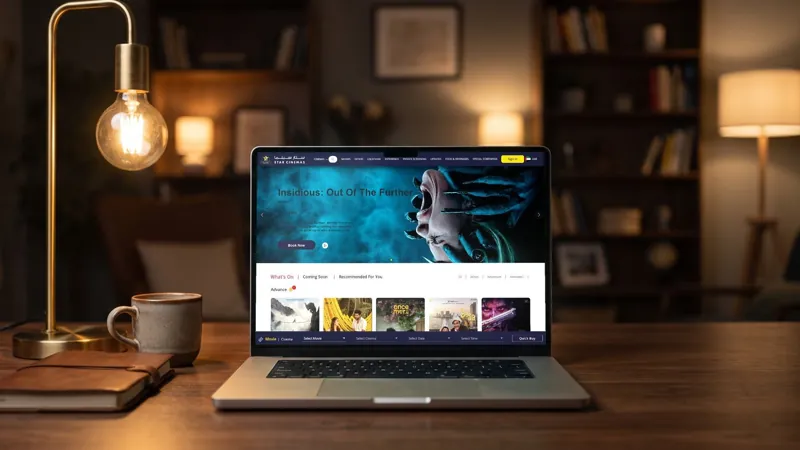
Web app · Ticketing · UAE
The UAE cinema chain operated by Phars Film. Every screening, offer and payment in one place customers can use on a phone.
starcinemas.ae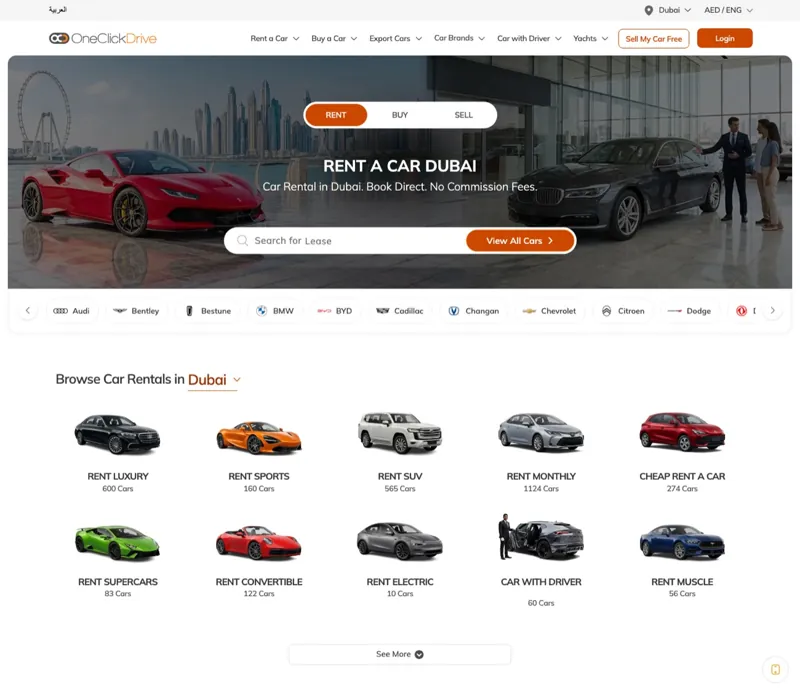
Platform · Car rental · UAE
A car rental marketplace where suppliers list fleets and renters compare and book, under real traffic.
oneclickdrive.com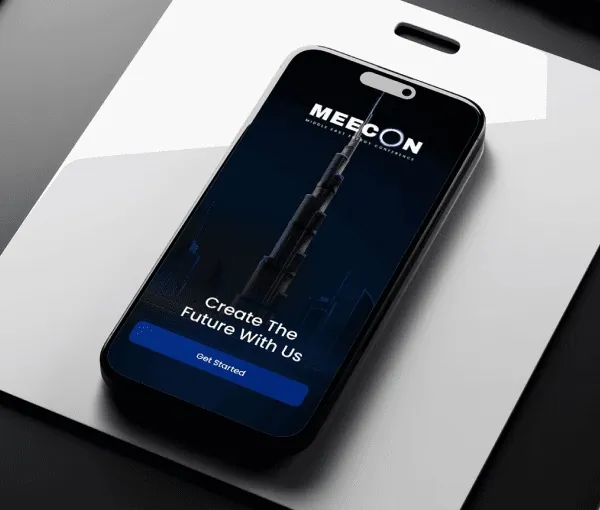
Mobile app · Events · UAE
A UAE conference platform replacing printed programmes and email chains for delegates and organisers.
meecon.aeStraight answers
Yes, if you already use a booking or reservation system, we connect the site to it so package pages reflect real availability. Without one, we build an enquiry flow that routes requests to your team with the dates and group size attached.
We can integrate a payment gateway for deposits or full payment where your booking system supports it. Many tour operators prefer a confirmed enquiry followed by payment over WhatsApp or phone, and we design the site to support either route.
Tourism activities such as running tours, safaris or a travel agency in Dubai need the relevant licence or permit from the Department of Economy and Tourism. This is not legal advice, so confirm your own permit position with DET before the site goes live, and tell us so we can reflect it correctly.
Yes. We build additional language versions with proper right to left support for Arabic and correct typography for other scripts, based on where your visitors actually come from.
Every project gets a fixed written quote, scoped to your brief, sent within 45 minutes during business hours with no obligation. The number of packages, languages and any booking integration are the main cost drivers.
Sources
Fixed price, in writing
Got it. Your quote is being written now.
In business hours you will have it within 45 minutes. Check your inbox for the confirmation.