
Branding collateral checklist: what a new UAE company actually needs, and in what order
The branding collateral a newly licensed UAE company needs in week one, what can wait, and the pieces that carry legal requirements.
Read the articleUI UX Design
User research, wireframes, clickable prototypes and a design system for software people log in to, designed in Arabic and English and checked against WCAG 2.2.
What it covers
UI UX design is for software with tasks in it: a booking app, a customer portal, a school parent app, a property management dashboard, a payments flow. In UI UX design, the question for a Dubai product is not “does this look good” but “can a busy person finish this task on a phone without calling support”. A marketing website is a different job, covered by web design.
Who uses the product, what they are trying to do, and where they get stuck today.
Flows and screen layouts in greyscale, so the structure is agreed before styling.
Clickable versions that behave like the real product, used for testing and sign off.
Reusable components, tokens and rules, so developers build consistently and new screens are quick.
Research
For UI UX design in Dubai, research does not need to be a three month study. It needs to answer the questions that would be expensive to get wrong. For a UAE product that usually means understanding a mixed audience: Arabic and English speakers, residents and visitors, people using the app daily and people who open it twice a year to renew something.
We choose methods by what is already known. An existing product has analytics and support tickets that show where people fail. A new product has competitors and a few real potential users who can be interviewed in a week. If your analytics are not set up to show this, web analytics can fix that first.
Wireframes and prototypes
Each stage produces something you can react to. Changing a flow in a wireframe takes minutes; changing it after development takes a sprint.
Every path through a task, including the unhappy ones: wrong password, expired Emirates ID, payment declined, no internet in a car park.
Low detail screen layouts that settle what information and actions each screen holds, at phone size first for mobile products.
Wireframes or styled screens linked together so people can tap through the task. We use it to test with users and to get sign off from stakeholders who do not read wireframes easily.
A handful of people from the target audience attempt real tasks while we watch. Problems that appear repeatedly are fixed before visual design is finalised.
Final screens in both languages, with loading, empty, error and success states for every component.
Design systems
In UI UX design for a Dubai product, once it has more than a few dozen screens, consistency breaks down without a system. Buttons drift in size, spacing becomes arbitrary, and each developer invents their own error message. A design system fixes this with named tokens for colour, type and spacing, a library of components with every state drawn, and short rules on when to use each one.
For an Arabic and English product, every component is designed in both directions. Icons that indicate direction are mirrored, input fields align to the reading side, and number fields stay left to right.
If you work with UAE federal government entities, note that the Telecommunication and Digital Government Regulatory Authority publishes the UAE Design System for federal government websites and applications. TDRA describes its components as tested for WCAG 2.2 guidelines. Where a project must follow it, we design within it rather than around it.
WCAG 2.2
The W3C first published WCAG 2.2 as a Recommendation in October 2023, and the current version is dated December 2024. It added success criteria that bear directly on app and portal design, and we design to Level AA unless your brief sets a different target.
| WCAG 2.2 criterion | Level | What it changes in product design |
|---|---|---|
| 2.4.11 Focus Not Obscured (Minimum) | AA | Sticky headers, cookie bars and chat buttons must not hide the element a keyboard user has moved to. |
| 2.5.7 Dragging Movements | AA | Anything done by dragging, such as reordering or a slider, also needs a single tap or click alternative. |
| 2.5.8 Target Size (Minimum) | AA | Pointer targets at least 24 by 24 CSS pixels, with listed exceptions such as enough spacing or inline text links. |
| 3.2.6 Consistent Help | A | Help options such as contact details or chat appear in the same place across screens. |
| 3.3.7 Redundant Entry | A | Information already entered in a process is filled in or selectable, not typed again. |
| 3.3.8 Accessible Authentication (Minimum) | AA | Logins do not rely on a memory or puzzle test without an alternative, so pasting passwords and password managers must work. |
For words inside the interface, see UX writing. For the build, see mobile app development or website development. All design services are listed on the design services hub.
Selected work
A cinema ticketing web app, a conference event app and a fintech app, each with a task that has to work first time.
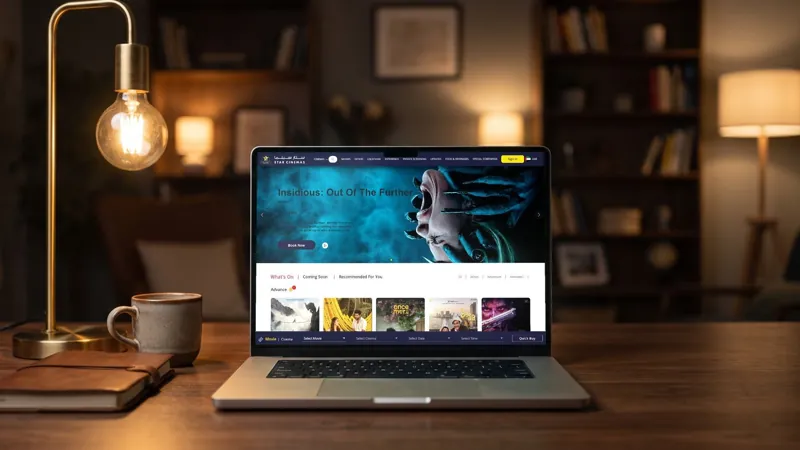
Web app · Ticketing · UAE
The UAE cinema chain operated by Phars Film. Every screening, offer and payment in one place customers can use on a phone.
starcinemas.ae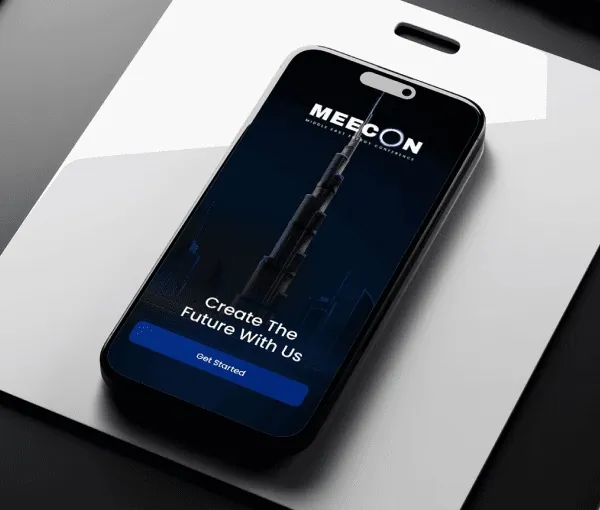
Mobile app · Events · UAE
A UAE conference platform replacing printed programmes and email chains for delegates and organisers.
meecon.ae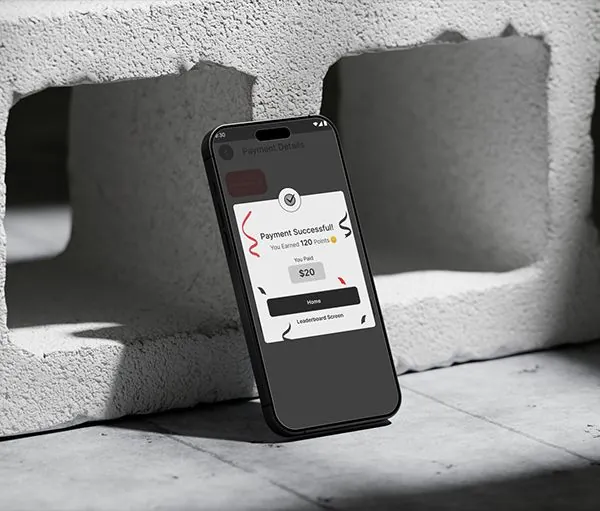
Mobile app · Fintech · United States
A fintech platform connecting merchants, customers and charities in a single payment flow.
purposepayment.comFrom the blog

The branding collateral a newly licensed UAE company needs in week one, what can wait, and the pieces that carry legal requirements.
Read the article
Branding, graphic design, UI and print are separate jobs. How to tell which you need, how to brief it, and what files you should receive.
Read the article
What an Arabic and English brand guide must settle in writing so printers, developers and writers in the UAE apply it the same way.
Read the articleStraight answers
UX is how the product works: the flows, the steps, what happens when something goes wrong. UI is how each screen looks and responds. They are designed together, but UX decisions come first.
Yes. A focused review of the flows with the most drop off, followed by redesigned screens for those flows only, is often the better first step. The findings tell you whether a larger redesign is justified.
By the number of user flows and screens, the platforms involved, the depth of research and whether a design system is part of the scope. You receive a fixed written quote, scoped to your brief, before work starts.
Yes. Our team develops web apps and mobile apps, and you approve the design before development begins. Designs can equally be handed to your in house developers.
Buttons, error messages and empty states are part of the experience, so they are drafted during design. For larger products, our UX writing service handles this in Arabic and English.
Sources
Fixed price, in writing
Got it. Your quote is being written now.
In business hours you will have it within 45 minutes. Check your inbox for the confirmation.