
Logistics website quote forms
Separate forms for freight, courier and warehousing enquiries, each asking only for the details that shipment type needs.
Web Design by Industry
Logistics website design in Dubai for freight forwarders, couriers and warehousing operators, built around quote forms, service area pages and shipment tracking.
Logistics website design in Dubai has a narrow window to convert a visitor, because most people land already knowing roughly what they need to move and are comparing two or three providers within minutes. A generic contact form that asks for a name and a message loses that visitor to the next site with a proper quote form. Logistics website design in Dubai works best when it is built around the shipment types your business actually handles, not a single enquiry box that treats a pallet of furniture the same as a same day courier run.
This page covers the pages a Dubai freight, courier or warehousing site needs, what Dubai Customs expects from a registered business, and what we ask for before a build starts.
Core pages
A logistics visitor is comparing providers on speed, coverage and price, and the site should answer all three quickly.
Separate forms for freight, courier and warehousing enquiries, each asking only for the details that shipment type needs.
Coverage by emirate or region, useful both for visitors checking reach and for search visibility on area specific terms.
A tracking lookup connected to your system where one exists, reducing the volume of status enquiries your team fields by phone.
Vehicle types, warehouse capacity and equipment, which reassures a customer moving higher value or unusual cargo.
Plain explanations of customs registration and documentation, aimed at a customer shipping through Dubai for the first time.
A separate path for regular business accounts, since a repeat shipper wants a rate agreement, not a one off quote form.
Customs and registration
Dubai Customs’ own guidance states that any business using its services needs to register with Dubai Customs, with the application filed through the Dubai Trade platform rather than in person. Licence holders then need a customs business code to submit declarations, whether for local sales or a free zone export moving to the mainland. The guidance also notes that clearing agents can act on behalf of a business if they hold their own licensing and the goods owner’s authorisation, and that certain goods need approval from a restricted authority before release.
None of this is legal advice, and it does not cover every registration a specific logistics business may need. If your website content states a registration or licence status, confirm the current requirement with Dubai Customs directly, since documentation and codes are tied to your specific trade licence and activity.
What stops an enquiry
Two patterns come up often on freight and courier sites we review.
| Problem | Effect on the visitor | What we build instead |
|---|---|---|
| One contact form for every shipment type | Sales chases weight, route and cargo details by phone | Separate quote forms matched to each service |
| No visible coverage area | Visitors assume the business does not serve their route | A clear service area page per emirate or region |
| No tracking, only a phone number | Support calls pile up asking for shipment status | A tracking lookup connected to the system you already run |
Build and content
A logistics build moves quickly once this information is ready.
Every shipment type you handle, and the areas or countries each one covers.
Whether a tracking system or carrier API already exists to connect to the site, or whether status updates will be manual at first.
Vehicle types, warehouse capacity and any equipment worth showing to reassure a customer.
Whether repeat business customers need a separate enquiry path or a login for rate agreements.
The questions your sales team answers most often about registration, customs codes or restricted goods are usually the strongest candidates for a plain language page, since they show up in search as well as in phone calls.
A logistics site benefits from treating its own sales team as the first source of content, since the questions they answer every week are usually the same questions a search engine sees typed into it.
Development, hosting and handover are covered on our website development page, form design sits under UI UX design, and SEO services covers ranking for route and service area searches once the site is live.
The person who approves a logistics website design in Dubai is rarely the founder alone. In a freight forwarder or 3PL business the operations manager or supply chain lead is usually in the room, because they are the one who will be told about every enquiry that arrives without a route, a weight or a ready date. They are measured on cost per shipment, on time delivery and how few enquiries need a phone call to clarify before a quote can be sent, so a site that turns a vague message into a usable enquiry is doing part of their job for them before the sales team even sees it.
In the first meeting this buyer asks practical questions rather than design questions: can the quote form split by shipment type, can a tracking lookup connect to the system already in use, who owns the data once the site is live, and what happens to enquiries outside office hours. A courier or last mile operator asks a narrower version of the same questions, usually about pickup and drop off scheduling rather than freight documentation. Answering these clearly during the brief, before design starts, is what keeps a logistics website design in Dubai from turning into a features list nobody asked for.
A general manager or business owner is sometimes the final sign off, particularly at a smaller operator, and their question is usually simpler: will this website actually bring in new account customers, not just one off shipments. That question is worth answering honestly during the brief rather than after launch, since a site built purely to look polished for one off enquiries needs a different structure from one built to win and retain regular business accounts.
Three different businesses
The word logistics covers businesses with genuinely different sites, and treating them as one template is where a lot of generic builds go wrong.
Built around route pages, incoterm explainers and a quote form that separates air, sea and road freight, because the information each one needs is different and a shared form loses detail.
Built around facility pages, pallet or square metre capacity, and an enquiry form that asks about storage duration and handling requirements rather than a single shipment.
Built around service area coverage, same day or next day options, and a lighter enquiry form since a courier decision usually needs pickup and drop off points rather than freight paperwork.
Enquiry quality
A freight enquiry that arrives without cargo type, weight, dimensions and a ready date cannot be quoted, so it sits in an inbox until someone calls the customer back, and by then a competitor may already have replied. Logistics website design in Dubai should treat the request for quote form as the single most important element on the page, built to capture what a rate desk actually needs rather than what looks simple to a designer.
The fields worth asking for change by shipment type. A full container load enquiry needs container size and Incoterm. A less than container load or air freight enquiry needs volume weight as well as actual weight. Anything involving temperature control, batteries or classified dangerous goods needs a flag early, since it changes who can even quote it. Asking these questions inside the form, rather than discovering them on a call, is what separates a logistics website design in Dubai that shortens the sales cycle from one that only adds another channel for vague messages.
Comparing enquiry types
A single generic enquiry form cannot serve freight, courier and warehousing customers equally well.
| Enquiry type | Minimum fields to quote | Where it usually goes wrong |
|---|---|---|
| Freight forwarding | Mode, cargo type, weight, dimensions or container size, origin, destination, ready date | A single message box, so a rate desk has to chase basic detail before quoting |
| Courier and last mile | Pickup point, drop off point, parcel size, urgency | A form built for freight, asking for container size a courier customer does not have |
| Warehousing and 3PL | Pallet or volume count, storage duration, handling needs, inbound frequency | No storage specific form at all, so warehousing enquiries land as generic contact messages |
A logistics website design in Dubai is unusual among service sites because parts of it are not static copy, they are live operational data that goes stale within hours if nobody owns it. Shipment tracking status is the obvious one, but coverage information, fleet availability and warehouse capacity all move as well, and a page that has not been touched since launch quietly starts telling customers things that are no longer true.
Coverage by emirate or country changes when a business adds a new route or drops one that stopped paying its way. Fleet and vehicle type pages date quickly if new vehicles are added and old ones removed from the copy but not the page. Warehouse capacity, if it is shown at all, needs someone checking it periodically rather than a number pulled from the day the site launched. None of this needs to be fully automated to be useful. What matters is naming, before launch, who inside the business is responsible for keeping each piece current, because a tracking page that never updates or a coverage map that still lists a route the business dropped last year damages trust faster than no page at all.
Integrations
Named by what they actually do, and what they do not solve on their own.
Where a business ships through named carriers, pulling status from the carrier’s own tracking API onto the site removes the need to send customers to a separate portal, though it only shows what that carrier’s system reports.
A WMS or TMS already in use can often feed stock counts or job status to the website, but the website consumes that data, it does not replace the system that manages it.
Useful for pushing a shipment update to a customer directly, and our WhatsApp API integration work covers connecting this properly rather than a manual forward.
A login area for repeat shippers to see rate agreements and past shipments, worth building once regular account volume justifies it rather than at launch.
For businesses running SAP, Oracle or a similar ERP, syncing order or shipment status to the website avoids double entry, but it needs an export or API on the ERP side to exist first.
Tracking which quote form fields cause drop off, covered under web analytics, tells a business which fields are worth trimming rather than guessing.
Free zone detail
Businesses operating from a Dubai free zone such as Jebel Ali often handle goods that are held in bond, meaning duty is suspended while the cargo stays inside the free zone and only becomes payable if and when it moves to the UAE mainland. Dubai Customs’ guidance confirms that any business using its services, mainland or free zone, needs to be registered with Dubai Customs and hold a client code before it can file declarations, and that this registration sits behind the scenes rather than on the site itself.
What the website can usefully do is explain, in plain language a first time customer will actually read, the practical difference between a shipment that stays in the free zone and one that clears into the mainland, since customers new to trading through Dubai often do not know the two are treated differently. This is not legal advice, and specific duty treatment depends on the goods and the licence involved, so any firm claim about duty status should be checked with Dubai Customs’ own registration service before it goes on a page.
A logistics customer’s search behaviour splits fairly cleanly into two stages, and a site that only answers one of them loses the other. Early research searches look like “freight forwarder Dubai to London” or “sea freight from Dubai to India”, where the person is comparing whether a route exists and roughly who serves it. A ready to book search looks different: “air freight quote Dubai same day” or “courier Dubai to Abu Dhabi today”, where the person already knows what they need and wants a form, not an explanation.
Logistics website design in Dubai answers the first stage with route and service area pages that state coverage honestly, and answers the second with a quote form reachable in one or two clicks from wherever the visitor lands, not buried three levels into a menu. Building both into the site structure from the start avoids the common mistake of a homepage that reads well for research but makes a visitor hunt for the form once they are ready to act.
A fleet page that quietly lists routes a business no longer runs is worse for trust than having no fleet page at all.
Delivery time promises on a logistics website are shaped by more than traffic. Dubai’s Roads and Transport Authority, working with Dubai Police, enforces timing restrictions on heavy vehicle movement across parts of the city, covering a full ban on certain tunnels and bridges, a partial restriction through the city centre and Sheikh Zayed Road during core daytime hours, and further intermittent restrictions at peak commuting times on other roads. Oversized cargo movements need a separate RTA permit and are generally confined to the early hours of the morning when traffic is lightest.
None of this needs to appear on the site as a compliance notice, but it does mean a delivery window promise such as same day or next day city delivery should be checked against what a truck can actually do on the roads a business serves before it goes on a page. This is not legal advice, and route restrictions can change, so current timing should be confirmed with the Roads and Transport Authority rather than assumed from a previous year’s schedule.
Content and sequencing
A logistics build moves fast once this is ready, and stalls when it is not.
A service list, general coverage areas and basic company details are almost always available on day one, along with a rough idea of the main shipment types handled.
Specific route coverage by country, current registration and licence detail, and clean fleet or facility photography are the three things that most often hold up a logistics build, because they sit with operations rather than marketing and take longer to collect than expected.
Once content is ready, a phased launch keeps the site useful without waiting for every integration to be finished. Quote forms, service pages and a static coverage map go live first. A tracking lookup connected to a live carrier or internal system, an account customer portal and deeper language coverage for specific trade lanes are a sensible second phase, added once the core site is proving the enquiry volume is worth building further.
Arabic content
Not every logistics site needs a full Arabic build, but some parts benefit from it more than others.
Company and registration pages, and any content aimed at government tender submissions or GCC trading partners, are where bilingual Arabic and English content carries real weight, since a Dubai or wider GCC buyer often expects both.
Driver facing content, such as delivery instructions, usually lives in an operations app rather than the public website, so it does not need to drive the site’s language plan.
The same handful of problems turn up repeatedly on freight, courier and warehousing sites we review. A single contact form asked to cover every shipment type is the most common, forcing a sales team to chase basic detail that a proper request for quote form would have captured on the first visit. Close behind is a coverage claim that reads as though the business serves everywhere, when a specific route or country is actually excluded, which erodes trust the moment a customer finds out during a call rather than on the page.
A third pattern is a tracking link that points to a system the business stopped using months ago, quietly training customers to distrust the site. And a fourth is a homepage built entirely around brand language, “reliable”, “trusted”, “efficient”, with nothing underneath it that a buyer comparing three providers in one afternoon can actually use to decide. None of these are expensive to fix, but they need someone treating the site as an operational tool rather than a one off design project.
Measuring it
The right measures come from the business’s own sales process, not from generic traffic numbers.
Tracking how many freight, courier and warehousing enquiries arrive separately shows which service pages are actually earning their place on the site.
The sales team already knows this number from their own process, and comparing it before and after a new site is a more honest measure than form submissions alone.
If a tracking lookup is live, a drop in status related phone calls is a practical sign it is doing its job, rather than an assumption that it must be helping.
We do not promise a fixed number of enquiries or a set cost per lead, since that depends on the market and the offer, not just the website. What we do measure from launch is what the site is actually producing, so a logistics business can see whether the investment is paying back in its own terms.
These measures work best when someone on the business side owns them, since a marketing report on form submissions means little without the rate desk confirming how many of those submissions became jobs. Sharing that loop back with whoever built the site is what lets a logistics website design in Dubai actually improve over time, rather than staying frozen at the version that launched.
Warehousing detail
A 3PL or warehousing operator’s website is often the weakest part of a logistics group’s site, because the business is confident about freight but treats storage as an afterthought. A warehousing enquiry needs different detail from a shipment quote: pallet positions or square metres available, whether racking is ambient, chilled or temperature controlled, inbound and outbound handling charges, and how often stock counts are reconciled with the customer.
A warehousing page that only says “storage solutions available” gives a prospective customer nothing to compare against another provider. Stating capacity type, handling capability and a realistic sense of lead time to onboard a new account is what turns a warehousing page from a filler section into a genuine source of enquiries.
Route pages and search
A route page earns its place when it answers a real research query, not when it exists purely to hold a keyword.
A route such as Dubai to Mumbai or Dubai to London deserves its own page only where the business actually moves regular volume there, stating typical transit options honestly rather than every country it could theoretically reach.
A visitor who found the page through a route search should not have to navigate away to ask for a price, so the same request for quote form belongs on every route and service page, not only the homepage.
A route page for a lane the business no longer serves is worse than no page, since it generates enquiries nobody can fulfil and damages trust when the sales team has to say no.
A large share of logistics enquiries in Dubai now start on a phone, often from someone standing in a warehouse or on site rather than at a desk, so a request for quote form that is awkward to complete on mobile loses enquiries that a desktop only test would never catch. Field spacing, a visible progress indicator on a multi step form, and a WhatsApp option alongside the form all matter more here than on a typical service site, since the visitor is frequently mid task rather than settled in for a browsing session.
Where a logistics business also runs a driver or field app, that sits outside the public website and is covered separately under mobile app development. The two should stay distinct in scope: the website converts a new enquiry, the app manages an existing job.
Free zone versus mainland
The practical difference worth explaining to a first time customer, in plain terms rather than customs language.
| Free zone shipment | Mainland shipment | |
|---|---|---|
| Duty timing | Suspended while goods remain inside the free zone | Applies once goods clear into the mainland |
| Registration | Still needs a Dubai Customs client code to declare | Needs a Dubai Customs client code to declare |
| What the site should say | Explain that free zone storage does not mean duty free forever | State standard clearance expectations plainly, without promising timing |
This is a general explanation, not legal advice, and specific duty and documentation requirements depend on the goods and licence involved. Confirm current rules with Dubai Customs before publishing a firm claim.
A repeat shipper moving regular volume through the same routes wants a different relationship with a logistics website than a one off customer. Where a business has enough account customers to justify it, a separate enquiry path, and eventually a login area showing agreed rates and shipment history, reduces the number of routine quote requests the sales team has to handle manually. This is rarely needed at launch, but naming it as a phase two goal during the initial brief means the site’s structure does not have to be rebuilt later to accommodate it.
Even without a full account portal, a simple distinction on the enquiry form, asking whether the customer already has an account, helps route the message to the right person immediately rather than into a general inbox that a rate desk has to triage by hand.
Customers new to shipping through Dubai ask the same handful of questions again and again: what a customs code actually is, whether a free zone shipment is automatically duty free, what documents a clearing agent needs, and how a restricted or controlled good gets approved for release. Turning these into short, plainly written pages does two jobs at once. It answers a genuine question a search engine sees typed in regularly, and it gives the sales team something to send instead of re-explaining the same thing on every call.
The discipline that matters here is restraint. A documentation page should explain the general shape of a process and link to the relevant government service for the current detail, rather than restating rules that change without the page being updated. Dubai Customs’ own guidance is the right place to send a reader for anything specific to their shipment, and the website’s job is to make that reader confident enough to ask a proper question rather than to replace the regulator’s own information.
Working with logistics operators
Our website development process follows six stages, and a logistics build follows the same shape with a few extra checkpoints along the way.
We map out shipment types, coverage, any tracking or account system already in use, and which questions your sales team answers most often on the phone.
A fixed written quote covering the request for quote forms, tracking integration if applicable, and the language plan, sent within 45 minutes during business hours.
Route, service and coverage pages are drafted around the shipment types and areas you actually serve, with the quote form built to match your rate desk’s real fields.
You approve every page before development begins, including any customs or free zone content, since accuracy there matters more than on a typical service page.
Handover includes training on updating coverage and fleet pages yourself, plus a recorded walkthrough and a support window, so routine content does not depend on us for every change.
Once live, form analytics and quote to job conversion, tracked with your sales team, show which pages and fields are actually working.
A freight or courier site does not need to look playful, but it should not read as cold either, since the buyer behind most enquiries is a person trying to solve a problem quickly, often under some pressure. Clear typography, a request for quote form that never feels like a wall of fields even when it is collecting detailed cargo information, and photography of real fleet and facilities rather than generic stock images of a container ship all do more for conversion than a heavily designed homepage.
Where a logistics business also sells through an online store or marketplace listing alongside its core freight or courier service, that side of the business is a genuinely different build, closer to retail than to logistics, and is worth scoping separately rather than folding into the same enquiry driven site.
Related industries
Relevant for logistics groups that also run storage or moving services for property clients.
Relevant if your logistics business also offers cargo insurance or trade finance introductions.
For the trading companies whose cargo a logistics business actually moves, a closely related but distinct brief.
A different customer and a different form, but a similar quote led enquiry pattern to logistics website design.
See the full range of industry pages we design and build for across Dubai and the UAE.
Freight, courier and warehousing businesses often assume a website mainly needs to look established, when the traffic that matters most is usually someone already comparing quotes with a shipment on the way. That changes what the homepage has to prioritise: a way into a quote form within one or two clicks, clear coverage information, and enough plain language about registration and documentation that a first time shipper trusts the business before they call.
Dubai sits at the centre of trade routes connecting Europe, Africa and Asia, and a logistics website design in Dubai is frequently the first proof point an overseas customer sees before agreeing to route cargo through the emirate at all. That makes the site’s accuracy, not just its appearance, part of the sales pitch. A route page that overstates coverage, a tracking link that no longer works or a fleet page that has not been touched since launch all quietly tell an overseas customer that the operational side of the business may be similarly out of date, even where that is not true.
The businesses that get the most from their site treat it the same way they treat their fleet or their warehouse: as something that needs a named owner internally, a routine for keeping coverage, fleet and tracking content current, and a periodic review rather than a one off project that is finished the day it goes live. A logistics website design in Dubai built this way keeps earning enquiries well after launch, instead of slowly drifting out of date while the business itself keeps moving.
Selected work
Work across sectors, with the closest to this industry shown first. Every one is a live site, not a mockup.
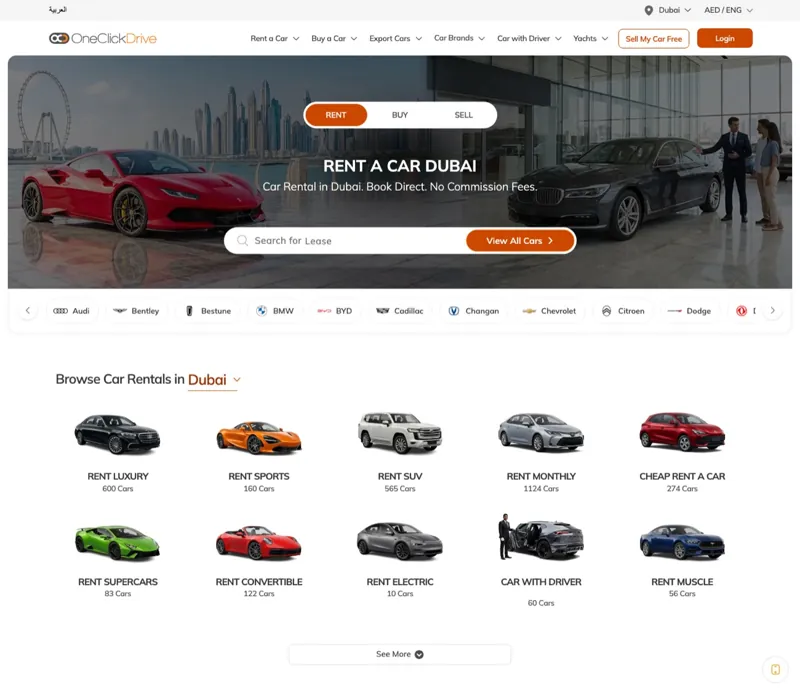
Platform · Car rental · UAE
A car rental marketplace where suppliers list fleets and renters compare and book, under real traffic.
oneclickdrive.com
Website · Property development · Abu Dhabi
An ADX listed holding company building master planned communities, with a site that holds investors and residents at once.
modon.com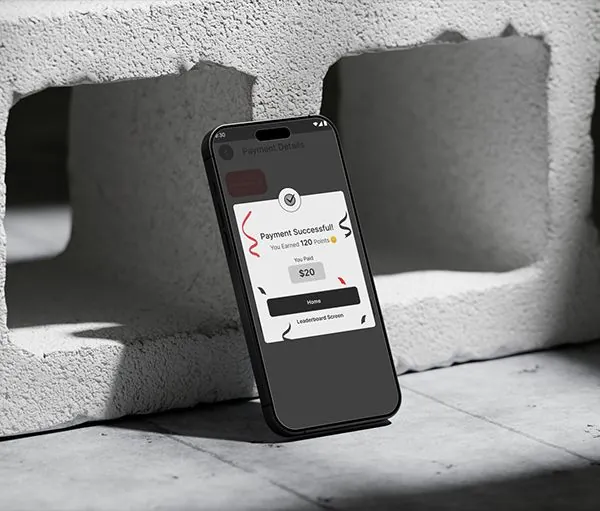
Mobile app · Fintech · United States
A fintech platform connecting merchants, customers and charities in a single payment flow.
purposepayment.comStraight answers
If you already use a tracking system or carrier API, we can usually surface a tracking lookup on the site itself rather than sending customers to a separate portal, which cuts down on support calls asking where a shipment is.
Separate is almost always better. A freight quote needs weight, dimensions and route; a courier quote needs pickup and drop off points; a warehousing enquiry needs pallet count and storage duration. One shared form forces a sales team to chase missing details afterwards.
Businesses moving goods through Dubai typically register with Dubai Customs before they can clear cargo, and the specific documentation depends on your activity and licence. Confirm the current requirement directly with Dubai Customs rather than relying on this page as legal advice.
Yes, and it is worth explaining the difference in plain language for customers who are new to shipping through Dubai, since free zone and mainland movements follow different customs treatment.
Every project gets a fixed written quote scoped to your brief, sent within 45 minutes during business hours with no obligation. Tracking integration, the number of service types and languages are the main cost drivers.
Sources
Fixed price, in writing
Got it. Your quote is being written now.
In business hours you will have it within 45 minutes. Check your inbox for the confirmation.