Ruby on Rails for a Dubai startup: where it still makes sense, and where it does not
Where Ruby on Rails still makes sense for a Dubai startup, UAE hiring realities, and when a founder should choose something else.
Read the articleWeb Services · WordPress
Custom WordPress themes, a plugin list you can actually maintain, Arabic and English content kept in step, and an editor handover, for Dubai and UAE businesses that want to publish without calling a developer for every change.
WordPress development in Dubai covers a wide range of actual projects: a five page brochure site for a new consultancy, a fifty page corporate site with a news section three people update weekly, a bilingual site for a school with forms and a parent portal, or a WooCommerce store selling homeware. The platform is the same, but what a good build looks like changes completely depending on which of those you are. This page sets out how we approach WordPress specifically: when it earns its place against the alternatives, how we structure themes and plugins so the site stays maintainable, and what a proper handover gives your team.
For a wider comparison across platforms, including headless setups and custom web applications, see our page on website development. If you are choosing between WordPress and another content system for a specific project, our content management system page covers that decision in more depth.
Fit
WordPress earns its place when the ongoing work is mostly publishing rather than software features.
A news page, an offers page, service pages added as the business grows, or a blog someone on the team is expected to keep active. WordPress’s editing screen is built for exactly this, without a developer in the loop for routine posts.
Roles and permissions are built into WordPress core, so a marketing assistant can be limited to drafting posts while a manager approves and publishes, without either of them touching settings that could break the site.
Booking forms, a job listings page, a simple product catalogue, a members area with the right plugin: WordPress covers a large amount of ground with tools that already exist, rather than custom software written from nothing.
WordPress.org describes the software as now running over 43% of all websites, which in practice means most hosting providers, security tools and developers already know how to support it, an advantage that matters once the site is live and something needs fixing quickly.
Fit
We would rather say this on the page than discover it three months into a project. WordPress is a publishing platform first. Stretched too far to cover software behaviour it was never designed for, it becomes slower to build, harder to secure and more expensive to maintain than the alternative would have been.
If most of what you are describing is workflow, permissions and data rather than pages, our web application development page covers the alternative directly, including where a custom build is genuinely the right call and where it is not.
Build approach
Every WordPress project sits somewhere between an off the shelf theme and a fully custom one, and the right point on that line depends on the brand and the budget, not on which sounds more impressive.
| Approach | What it means | Good fit when | Watch for |
|---|---|---|---|
| Off the shelf theme, lightly customised | A pre built theme with your logo, colours and content dropped in | Tight timeline, a brand that can flex to fit an existing layout, a first website for a new business | Bloated code the theme does not use, generic look, harder to make small layout changes later |
| Theme framework with a child theme | A solid, well maintained base theme, extended with your own templates and styling | A team that wants speed but still needs some layout control | Still tied to the parent theme’s update cycle and any of its unused features |
| Fully custom theme | Built from your approved design, page by page, with only the code the site actually needs | A specific brand, a content structure a generic theme cannot express, a site meant to last several years | Longer build time, and any change beyond content editing needs a developer |
| Custom theme with a block based editor | Custom design plus reusable content blocks editors assemble themselves | A team that wants brand consistency and the freedom to build new pages without a developer | Blocks have to be planned properly up front, or editors end up with either too little control or too much |
A fully custom theme built for WordPress development in Dubai is not automatically the right answer. If your content is mostly static and a good existing theme covers the layouts you need, spending on custom work elsewhere, such as SEO or advertising, is often the better use of the same budget.
Under the hood
A custom theme is not one large file of code. It is a set of templates, one per page type, built from your approved design and connected to fields an editor fills in rather than a designer laying out by hand. A service page template, for example, defines where the title, the intro, the feature list and the call to action sit, and an editor adds a new service by filling those fields, not by rebuilding the layout.
We also decide, before development starts, which parts of a page should be flexible blocks an editor can rearrange, and which should stay fixed so the brand does not drift page by page. Too much flexibility and every page ends up looking different, which is a common problem we see on sites handed over without this decision made deliberately.
Plugins
A plugin solves a problem in an afternoon. It also becomes a permanent line item: something that has to update, that can conflict with another plugin, and that someone has to notice if it stops being maintained by its author.
Forms, SEO fields, a caching layer, a multilingual system, security hardening, backups. A handful of well chosen plugins covering genuine gaps is normal and sensible, not a sign of a badly built site.
Page builder plugins bundled into a theme, or a slider plugin when the theme already has one, add weight and conflict risk without adding capability. Part of our job is spotting these before they are installed, not after.
Many WordPress sites accumulate plugins over the years that were installed for a campaign or a feature that no longer exists, and are never removed. Each one is still a piece of code with update notifications nobody reads and a potential security gap.
The practical cost of a plugin is not what it costs to install. It is the ongoing attention it needs: checking its update notes before applying a major version, testing it against the rest of the site on staging, and replacing it if the author stops maintaining it. A site with thirty plugins is not more capable than one with twelve well chosen ones; it is usually slower, harder to update safely, and more likely to break when WordPress itself releases a new version.
Plugins
Before adding a plugin to a Dubai client’s site, we ask whether the need is genuinely recurring, whether a smaller, single purpose plugin exists instead of a large all in one suite, and how actively the plugin is maintained. WordPress.org’s plugin directory shows the last update date and compatibility with the current WordPress version for every listed plugin, which is one of the first things worth checking before installing anything.
We also keep a written list, given to you at handover, of every plugin on the site, what it does, and what would break if it were removed. That list becomes useful the day a plugin stops being supported and someone has to decide whether to replace it or live without the feature.
Arabic and English
A bilingual WordPress site needs separate content fields for Arabic and English on every page, not a single field run through automatic translation on the fly. We build the theme with a right to left stylesheet from the start, so Arabic pages mirror correctly rather than looking like an English layout stretched to fit, with navigation, icons and forms flowing from right to left and numerals and embedded English brand names handled correctly.
Content is managed through a dedicated multilingual plugin that keeps the Arabic and English versions of a page linked as translations of each other, each with its own URL, title, meta description and slug. That structure matters for search as much as for readers: each language version needs to be genuinely crawlable and indexable on its own address, with the two versions linked to each other so neither is treated as a duplicate of the other.
Security
WordPress development in Dubai is not finished at launch. WordPress core, the theme and every plugin release updates, and the security of the site depends on those updates being applied.
WordPress’s own developer documentation is direct about this: older versions miss security fixes that are publicly documented once a newer version ships, which makes an outdated site an easier, known target rather than a harder one.
Strong, unique passwords for every admin account, two step authentication where the plugin stack supports it, and admin accounts limited to the people who genuinely need them, following WordPress’s own hardening guidance.
Core WordPress folders restricted to the accounts that need write access, and scheduled backups of both the database and the files, checked occasionally to confirm they actually restore rather than assumed to be working.
These are exactly the recommendations set out in WordPress’s own hardening documentation: keep everything updated, use strong passwords with two step authentication where possible, restrict file permissions correctly, and take regular backups of the database and files together. Longer term care after launch is covered on our website maintenance page.
Hosting
Where a WordPress site is hosted affects how quickly it loads for visitors in Dubai and the rest of the UAE, and it can also matter for compliance depending on the sector and the client.
| Hosting type | What it means | Good fit when | Watch for |
|---|---|---|---|
| Shared hosting | The site sits on a server with many other sites, sharing resources | A small brochure site with light traffic and a tight budget | Performance can drop when a neighbouring site spikes in traffic |
| Managed WordPress hosting | A host configured specifically for WordPress, often with built in caching and updates | A business that wants performance handled without managing server settings | Some plugins or custom code may be restricted by the host’s rules |
| Cloud hosting with a regional data centre | Resources sized to the site, with a data centre chosen to be close to your visitors | A site that needs steady performance and predictable scaling | Needs someone to configure and monitor it, in house or through us |
| UAE based data centre | The server itself is physically located inside the UAE | Sectors or contracts, particularly some government or regulated work, that specify local data residency | A genuine requirement rather than an assumption, so always confirmed against the actual contract or regulator, not chosen by default |
Certain government tenders and regulated sectors in the UAE do specify where data must be stored, and this is not something to guess at. If data residency is a requirement for your project, we recommend confirming the exact wording with your client, regulator or legal adviser before we choose a host, since this is not legal advice and the requirement varies by contract and sector.
Handover
A WordPress site is only as useful as the team’s confidence in editing it. Handover is not a single email with a login. We record a walkthrough specific to your site, showing exactly how to add a service, publish a post, swap an image and update a form, in the order your team is actually likely to need those tasks.
We also agree, before launch, which parts of the site are meant to be edited freely and which are structural, so nobody discovers by accident that changing one setting affects every page on the site. A short reference document sits alongside the video, listing the fields on each page type and what each one controls.
Migration
Moving a WordPress site to a new theme, a new host or a rebuilt structure carries a real risk: losing the search visibility the old site earned, or breaking content that customers already rely on.
We crawl the existing site to list every URL that gets visits, ranks for a keyword or is linked to from elsewhere, and export the current content, plugins and any custom code so nothing depends on memory.
Every URL that matters gets mapped to its equivalent on the new site, even where the site structure or the slugs are changing, so a permanent redirect can be set up rather than leaving a broken link or a generic redirect to the homepage.
The new theme or structure is built on a staging copy, checked in both languages where relevant, and compared against the audit list so nothing that mattered on the old site is missing from the new one.
Redirects go live alongside the new site, the sitemap is updated and resubmitted, and we watch Search Console for crawl errors on the old addresses in the weeks after launch, since search engines take time to fully process a site move.
If the migration is less about the platform and more about the design and content itself, our website redesign page covers the decisions around what to keep, what to change and how to stage the rollout, in more depth than a platform move alone.
Migration
WordPress development in Dubai sometimes starts with a site built on a different system altogether: a page builder tool the business has outgrown, a legacy content management system nobody wants to keep paying for, or a site built by a previous developer who is no longer reachable.
Text and images are exported from the old system, cleaned of formatting artefacts the old platform baked in, and mapped to the fields the new WordPress theme actually uses, rather than pasted in as one long block per page.
Every URL from the old platform that has search visibility is redirected to its new address on WordPress, and title tags and descriptions are recreated rather than left blank, so the move does not read to search engines as a new, unproven site.
Contact forms, newsletter signups and any CRM connection are rebuilt on the new stack and tested end to end before launch, since these are the parts most likely to silently stop working during a platform change.
This kind of move is also common in reverse: a business that started on WordPress outgrows it and moves to a headless setup or a custom application, a decision covered on our website development page. Either direction, the discipline is the same: know exactly what the old site had before deciding what the new one keeps.
Editing
The tool your editors actually use day to day matters as much as the theme underneath it, and WordPress offers several genuinely different approaches.
| Tool | How it works | Good fit when | Watch for |
|---|---|---|---|
| Third party page builder (for example Elementor) | A drag and drop visual editor that sits on top of WordPress | A small team building varied, one off pages without a developer | Can produce heavier page code and a learning curve for a consistent look |
| WordPress block editor with custom blocks | WordPress’s own editor, extended with blocks built for your brand | Editors who want structure and speed without full design freedom | Custom blocks need to be built properly, which is part of the theme project |
| Custom fields with fixed templates | Editors fill in defined fields; the layout itself does not change | A brand that needs to stay consistent across every page, run by non design staff | Least flexible option if a genuinely new page layout is needed later |
We choose this per project, and explain the trade-off in plain terms before development starts, because the choice affects how your team works with the site every week after launch, not just how it looks on day one.
Selling online
WooCommerce turns WordPress development in Dubai into a store as well as a content site: product pages, a cart, checkout and order management, built as a plugin on top of the same content system your team already edits. For a Dubai business already comfortable running WordPress, this is often simpler than learning a second platform for ecommerce, particularly when the store sits alongside a larger content site rather than being the whole business.
The trade-off is that a WooCommerce store carries the same plugin maintenance considerations as the rest of a WordPress site, with the added weight of payment gateway plugins, tax calculation and stock management on top. Our ecommerce solutions page covers the wider decision between WooCommerce, Shopify and other platforms, including payments and checkout, in more detail than fits here.
Performance
WordPress development in Dubai can produce a genuinely fast site or a genuinely slow one, and the difference usually comes down to the same handful of decisions.
Page caching avoids rebuilding the same page from the database on every visit. Set up badly, it can also serve stale content to editors who just published a change, so it needs to be configured with your workflow in mind.
Images uploaded at full camera resolution and displayed small are one of the most common causes of a slow WordPress page. Automatic resizing and modern formats, applied on upload, avoid relying on editors to resize every image by hand.
Every additional plugin can add its own scripts and stylesheets to every page, whether or not that page uses the feature. This is the performance cost of plugin sprawl described earlier, showing up directly in load time.
Content governance
Handover is the start of the site’s working life, not the end of the project. WordPress development in Dubai holds up best when a business decides, early, who owns which part of the site day to day.
A shared list of what gets published and when keeps the site active without relying on someone remembering. Sites that go quiet for months after launch usually had no one clearly responsible for adding to them.
WordPress prompts core, theme and plugin updates in the admin dashboard. Someone needs to actually see those prompts and act on them, whether that is your team, ours through a maintenance plan, or a clear split between the two.
Adding a new plugin, a new page type or a redesign of an existing template is worth a quick check against the original site structure, so growth does not quietly undo the consistency the theme was built to protect.
Analytics set up at launch shows which pages get read and which forms get submitted, which is useful evidence when deciding what to expand next rather than guessing. Our web analytics page covers this in full.
Mistakes
A recurring pattern on WordPress sites we are asked to take over is a theme customised so heavily, through the visual editor rather than proper code, that no developer can safely touch it without risking the whole layout. Another is a plugin installed to solve one problem years ago that is now the single point of failure for the entire checkout or booking flow, with nobody sure what would happen if it were removed.
A third, specific to bilingual sites, is an Arabic version added later as a plugin translation layer rather than built into the original structure, which tends to produce pages that read as translated rather than written, and URLs that confuse rather than help search engines tell the two languages apart.
Ownership
The build is one cost. Running the site for the next several years is a separate, ongoing one, and it is worth planning for both from the start.
A recurring cost regardless of platform, sized to the traffic and the hosting type chosen earlier on this page.
Some plugins are free, some charge an annual fee for updates and support. A site with several paid plugins should budget for renewals, not just the build.
Whether handled in house or through a plan such as our website maintenance service, someone has to apply updates, watch backups and respond when something breaks.
A lower upfront build cost with a heavier plugin stack often ends up costing more over three years than a slightly more considered custom theme with fewer dependencies. This is one of the clearer arguments for planning WordPress development in Dubai around the whole life of the site, not only the launch date.
Search behaviour
WordPress development in Dubai has a direct effect on how easily a site can be found, separate from the writing itself. Categories, tags and a clean permalink structure decided early give search engines and visitors a predictable way to move through the site, while a flat structure with every page bolted onto the main menu tends to bury older, still useful pages.
WordPress development in Dubai also means deciding, before content is written, whether a topic belongs on a static page, a blog post, or both, since search engines treat these differently and mixing them without a plan produces pages that compete with each other rather than each earning their own place. Ongoing search work, once the site is structured correctly, continues under our SEO services page.
Two questions come up on nearly every WordPress development in Dubai project once the platform decision is settled: who is going to keep publishing after launch, and what happens the day something on the site needs fixing quickly. Neither question has a single right answer, and both are worth agreeing before the project starts rather than after a problem appears. WordPress development in Dubai that skips this conversation tends to produce a site that looks finished but has no clear owner once the agency or the developer moves on.
We treat this as part of WordPress development in Dubai rather than a separate conversation, because the technical decisions in this page, the theme structure, the plugin list, the hosting choice, all feed directly into how easy that ownership actually is. A WordPress development in Dubai project that gets these choices right at the start costs far less time and worry to run for the next three years than one that gets them right eventually, after the first difficult update.
Working together
The projects that move fastest are the ones where a small set of decisions are made early, before any theme code is written.
WordPress development in Dubai begins once the design is signed off in full, so the theme is built once against a settled layout rather than repeatedly reworked mid build.
Copy, images you own the rights to, and a confirmed navigation structure, ideally ready before development starts rather than trickling in page by page.
A single person who can approve decisions on your side keeps WordPress development in Dubai moving, rather than waiting on a committee for every small question.
WordPress development in Dubai moves faster when the content is ready before the build starts rather than written page by page as the build progresses. That usually means final page copy, an approved logo and brand colours, any images the client already owns, and a clear answer on which pages exist and in what order they sit in the navigation. Arabic content, where it applies, is best written directly for Arabic readers rather than translated from a finished English draft, since a translated page often reads awkwardly and can miss search terms an Arabic speaker would actually type.
Where content is still being written as development happens, we agree a realistic order so the developer is never blocked waiting on copy for a page that was supposed to be ready. This is a common cause of delay on WordPress projects generally, not specific to any one client, and it is easier to plan around than to fix mid project.
A WordPress site is easy to hand over well and just as easy to hand over badly. The difference is whether the theme and the plugin list were built with your editors in mind from day one.
Selected work
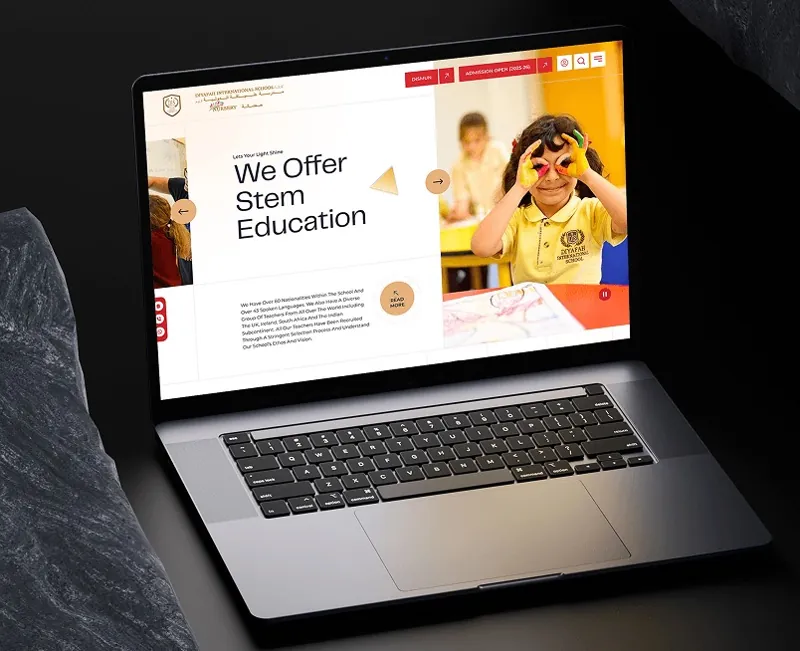
Website · Education · Dubai
One of Dubai's most diverse schools, 2,400+ students and 40+ nationalities, connected across campuses.
aldiyafah.com
E-commerce · Retail · Dubai
A Dubai floral boutique on WooCommerce, built around a fast checkout for a gift driven market.
thegorgeousflower.com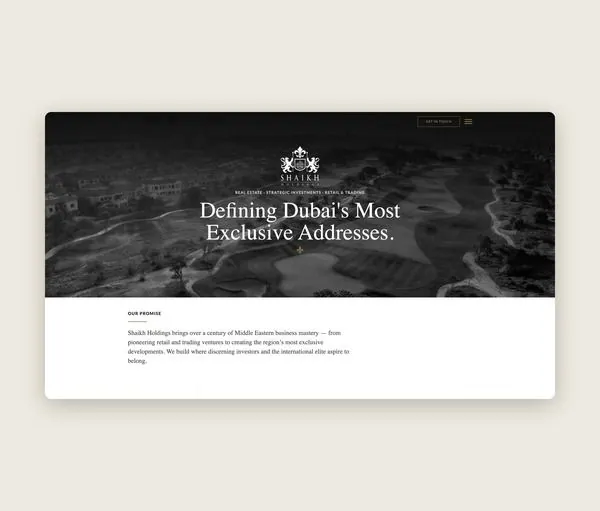
Website · Corporate · Dubai
A Dubai investment house with a century of business behind it. The site speaks to institutional investors, not shoppers.
shaikhholdings.comBusinesses ask us to compare WordPress development in Dubai against a headless build most often when traffic is high and speed at scale is the deciding factor. Businesses ask about WordPress development in Dubai against a page builder tool such as Wix or Squarespace most often when they have outgrown a drag and drop editor and need proper roles, a faster site or a design a template cannot express. And businesses ask about WordPress development in Dubai against a fully custom application most often when what they actually need is software, not a website, a distinction covered in detail on our web application development page.
In every case, WordPress development in Dubai is a means to an end rather than the goal itself. The platform should disappear into the background once the site is live, leaving your team with a fast, secure, bilingual site they can genuinely run, and leaving us with a short, honest answer if you ever ask whether WordPress was still the right call a year after launch.
From the blog

Where Ruby on Rails still makes sense for a Dubai startup, UAE hiring realities, and when a founder should choose something else.
Read the article
Choosing a CMS for a UAE business by who edits it, what it integrates with and who maintains it, not by which platform sounds most impressive.
Read the article
Laravel against WordPress for a Dubai business: where a content site ends, an application begins, and what happens when WordPress is pushed past that line.
Read the articleStraight answers
WordPress.org states it now runs over 43% of all websites, and the software is actively maintained with regular core releases. For a content heavy Dubai business site with a small in house editing team, it remains one of the most practical options because the publishing tools, the plugin ecosystem and the pool of people who can support it are all mature.
Yes, and we start with an audit before quoting: the theme, the installed plugins, the PHP and WordPress version, and how the database and files are structured. If the site is fragile or built with abandoned plugins, we tell you plainly before proposing a rebuild or a repair.
Both, depending on who will edit the site. A page builder suits a small team that wants to lay out new pages itself without touching code. A custom theme with defined content blocks suits a business that wants a consistent brand and faster pages, with editors filling in fields rather than designing from scratch.
Through a dedicated multilingual plugin with separate content fields per language, a right to left stylesheet built into the theme rather than patched on afterwards, and a URL structure with proper hreflang between the Arabic and English versions of each page.
You do. The domain, hosting account, WordPress admin and any custom code are registered to your company, and we hand over every credential at launch along with training for your editors.
Every project gets a fixed written quote, scoped to your brief, after we understand the number of templates, languages, integrations and any custom functionality. The main cost drivers are usually the number of unique page designs and the plugins the site depends on.
Sources
Fixed price, in writing
Got it. Your quote is being written now.
In business hours you will have it within 45 minutes. Check your inbox for the confirmation.