
Photographing People for Marketing in the UAE: Consent and the Law
How UAE cybercrime and data protection law apply when your marketing shows real people, and how to collect consent you can prove.
Read the articlePhotography
What a complete set of images contains, how to keep them consistent across hundreds of items, what the marketplaces require, and why most store photography fails on the second shot rather than the first.
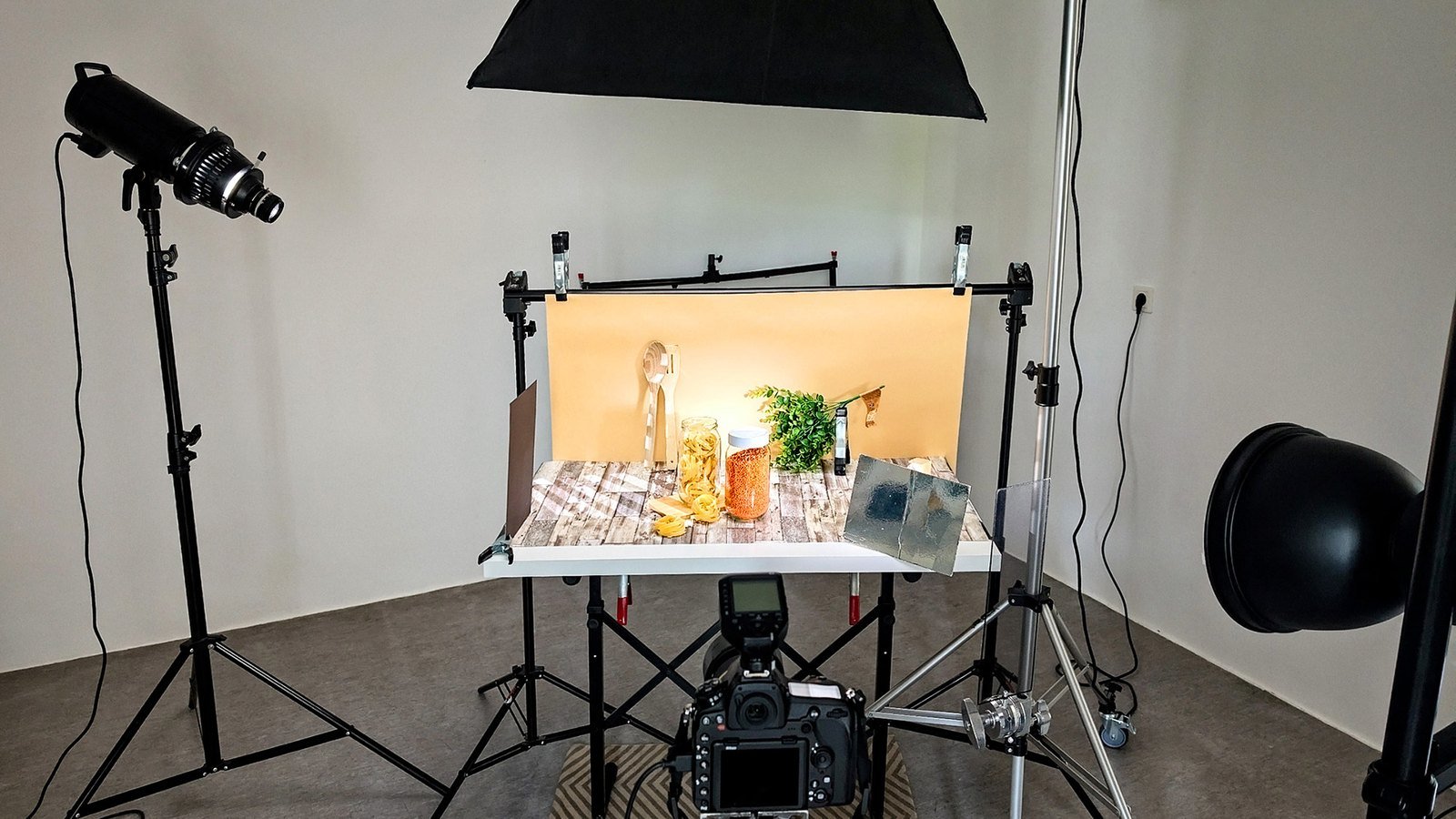
Product photos in Dubai are usually commissioned as a single task, shot in one day, and then quietly abandoned as the catalogue grows. Six months later half the items look like one business and half look like another, and nobody can say when it happened.
The photography itself is the easy part of product photos in Dubai. What decides whether a set of images still works in a year is the shot list, the specification and the rule for everything added afterwards.
Five product photos per item covers most categories, and each one answers a question a buyer would otherwise ask.
The main shot. Product centred, plain background, consistent crop. This is the one that appears in search results and in the basket, so it has to read at thumbnail size.
Two further angles. Whatever the first shot hides. Back, side, opening, underside.
A detail. Texture, stitching, finish, the part that justifies the price. This is the image that answers whether the item is what it claims to be.
Scale or use. Held, worn, or beside something familiar. Returns in this market are frequently caused by a buyer misjudging size, and one honest image prevents more of them than any amount of description.
Some categories need a sixth. Anything assembled, installed or worn in a particular way benefits from an image showing that state, because the question it answers is the one that otherwise arrives as a message before the order rather than after it.
For variants, photograph every colour you sell. Recolouring one image is visible, and the review saying the product arrived in a different shade is the predictable consequence.
The second shoot is where product photos in Dubai fall apart as a set, because it happens months later with different light, a different person and nobody holding the original settings.
Write a specification before the first shoot and keep it with the images. Background colour, camera height, distance, how much empty space around the product, lighting setup, and the file naming. One page is enough.
It matters more than it sounds. A listing page showing items photographed at four different distances looks like a reseller rather than a brand, regardless of how good each individual image is.
Agree the naming at the same time. A product code and a number is sufficient, and it is the difference between uploading a hundred images in an afternoon and matching them by hand.
If several people will add products over time, the specification is what keeps the set coherent, because none of them will have seen the first shoot. Store it next to the images rather than in somebody’s inbox, and review it once a year against what the catalogue actually looks like now.
Product photos are almost always the largest thing on a store page, which makes this a performance question as much as a visual one.
Shoot and archive large, publish small. Keep the original files somewhere you control, and serve resized versions appropriate to where they appear. A thumbnail should not be a full resolution photograph scaled down in the browser.
Oversized images are the most common reason a store page is slow, and the published measurements treat the largest visible element as the headline figure. Our note on what those numbers mean covers the order to work through.
Two things worth doing while the files are being prepared. Give each image a descriptive name rather than a camera reference, because image guidance treats the filename and surrounding text as signals. And write alternative text that describes the product, which serves both search and the readers covered by the accessibility guidelines.
If you sell on the regional marketplaces as well as your own site, their rules decide the main image, and product photos in Dubai should be shot to the strictest of them.
Expect requirements on background, on the proportion of the frame the product fills, on minimum dimensions, and a prohibition on text, logos, watermarks or promotional badges in the main image. A listing rejected for a watermark is a day lost for a reason nobody anticipated.
Shoot the clean version first and treat any styled or badged variant as an additional asset for your own channels. Going the other way, trying to clean up a styled image later, rarely produces something that passes.
Our note on preparing listings covers the fields around the images, and the comparison between the two marketplaces covers where the requirements differ.
On your own store, product structured data lets the images appear in richer results, and the supported properties are documented.
A few conditions apply to shooting product photos in Dubai rather than anywhere else.
Daylight is abundant and harsh. It is strong, directional and changes quickly, which is excellent for lifestyle images in the first and last hours of the day and unhelpful for consistency. A controlled setup indoors is what keeps a catalogue coherent.
Studio hire is widely available and priced by the hour. Plan the shot list before arriving. The expensive part is deciding what to photograph while the clock runs.
Outdoor shoots may need permission. Filming and photography in many public and private locations here require clearance, and our note on permits covers when.
People in frame need consent. A model, a passerby, a member of staff. The rules here are stricter than many expect and apply to commercial use of the resulting images.
Six mistakes recur in product photos in Dubai across stores of every size.
One image per product. The buyer fills the gap with suspicion rather than imagination.
Inconsistent scale. Items photographed at different distances make a category page look chaotic and make comparison difficult.
Colours that do not match reality. The main driver of returns in clothing and homeware, and a problem of lighting and white balance rather than of the camera.
Text burned into the image. It breaks marketplace rules, it cannot be translated, and it dates the moment the offer ends.
No sense of size. Especially for anything a buyer has not held before.
Images nobody optimised. A beautiful set that takes eight seconds to appear has been paid for twice and received once.
Both routes to product photos in Dubai are reasonable, and the decision usually comes down to volume and category.
In house works when products are simple, volume is continuous and somebody can be trained once on a fixed setup. The investment is a consistent lighting arrangement and a written specification, not an expensive camera.
Commissioning works when the category is difficult, jewellery, glass, anything reflective or anything where colour accuracy is commercial, and when a large batch is needed at once.
The hybrid most growing stores reach is a commissioned shoot that establishes the look and the specification, then in house photography for new items against that standard. It keeps the catalogue coherent without a studio booking every time something arrives.
Whichever route you take to product photos in Dubai, settle the usage rights in writing. Who owns the files, where they may appear, and for how long are three separate questions, and the answers matter the first time you want to run one as an advertisement.
Keep the raw files as well as the edited ones. A reshoot because the originals were deleted after a laptop was replaced is an entirely avoidable expense, and it happens often enough to be worth one line in whoever’s job description covers the catalogue.
For the work, product photography covers studio shoots and catalogue sets, and social photography covers the looser images a feed needs.
For the listing around the image, product descriptions and the listing checklist cover the fields that decide whether anyone finds the product at all.
If the store itself is the question rather than the photography, choosing a platform and the comparison of the three main options are the places to start.
Where the catalogue has to synchronise with stock, a supplier feed or a system of record, that is an integration rather than a store setting. Codeeo handles that work in Dubai.
If your catalogue has drifted and you are deciding whether to reshoot all of it, send us a link to a category page and we will tell you what we would redo and what we would leave.
Straight answers
For simple items on a plain background, a recent phone in good light produces perfectly usable results. Where it struggles is reflective surfaces, jewellery, glass and anything where colour has to be accurate. The limitation is usually lighting and consistency rather than the camera.
Five is a reasonable working minimum for most categories: the main shot, two angles, a detail, and something that shows scale or the product in use. Marketplaces have their own minimums, and listings with more images generally convert better because fewer questions are left unanswered.
Both, for different places. The main image on a marketplace is usually required to be on white. Styled or in context images belong further down the listing and on your own site, where they do the work of showing size, texture and use.
Agree it in writing before the shoot. Ownership of commissioned images and the right to use them on marketplaces, in advertising and in print are separate things, and assuming you have all of them is the most common dispute in this area.
When the product changes, when the packaging changes, or when the set is visibly inconsistent with newer items. Reshooting on a schedule wastes money. Reshooting because half your catalogue looks different from the other half is usually overdue.
Sources
Fixed price, in writing
Got it. Your quote is being written now.
In business hours you will have it within 45 minutes. Check your inbox for the confirmation.
Keep reading
How UAE cybercrime and data protection law apply when your marketing shows real people, and how to collect consent you can prove.
Read the article
Who applies for a Dubai filming permit, when a script needs clearance and what a brand should prepare before an ad or photo shoot.
Read the article
The five variables that drive the figure, and the running costs that appear after launch rather than on the proposal.
Read the article