Best website design examples, and what they get right for Dubai and UAE businesses
What well known sites such as GOV.UK, u.ae, RTA, Apple and Stripe get right, and how to turn those qualities into a brief.
Read the articleMobile Apps
A practical guide to salon booking app development in Dubai: how bookings by service, duration and stylist really work, what Dubai Municipality guidelines mean for home salon apps, and what to ask before you brief a developer.
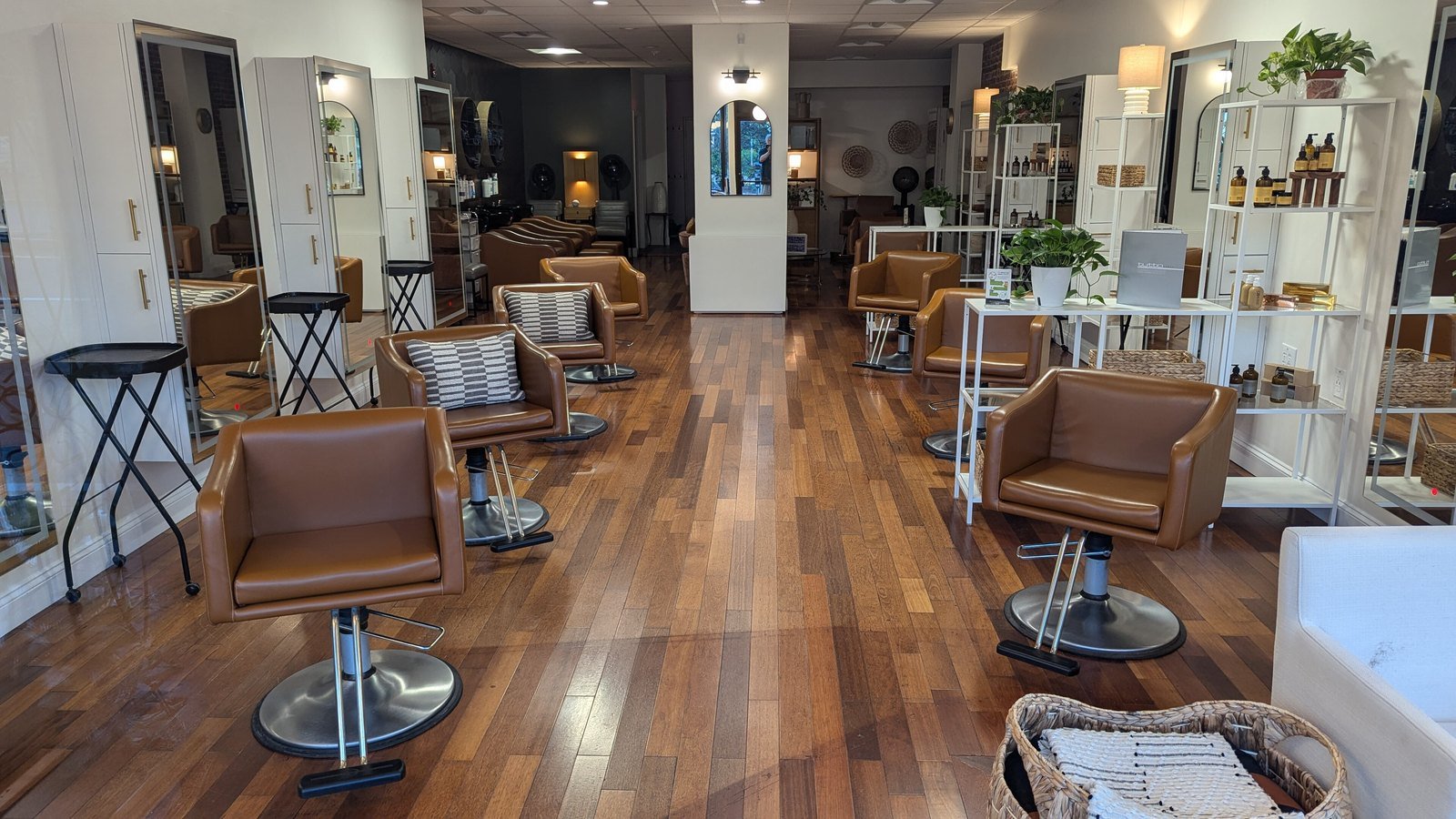
A salon booking app in Dubai earns its keep when it books the right service, for the right length of time, with the right stylist or therapist, in a chair or room that is actually free, and then keeps the client informed until they arrive. That sounds simple, but salon scheduling is closer to airline seating than to a restaurant table: every booking consumes a person, a station and sometimes a product step that cannot be rushed.
This guide covers what to build for a hair or beauty salon, a barber, a spa and a home salon service in Dubai, the Dubai Municipality guidelines that shape the feature list, how consultation records meet the UAE data protection law, and the questions to put to any developer, as of October 2026.
Key points
Most owners picture the client screen first. In practice a salon booking app for Dubai is three products sharing one database, and the one clients see is often the easiest of the three.
The client chooses a branch or home visit, a service or combination, a stylist or “any available”, a date and a time, then confirms and pays a deposit if your policy needs one. After that come reminders, directions or a live arrival window, a receipt, a review prompt and an easy way to rebook the same service with the same person. In a salon booking app for Dubai, “book again” belongs on the home screen, not three taps deep, because returning clients usually rebook rather than browse.
Stylists, nail technicians, barbers and therapists need their own day view: who is next, what they booked, notes from the last visit, any consultation answers that affect the service, and a way to mark arrival, start and finish. For home service teams it also carries the address, access notes, a check in at the door and a check out at the end.
Reception handles walk ins, phone bookings, changes and payments, while managers set services, durations, prices shown in the app, staff skills, shifts, breaks and leave. Owners want reporting across branches: utilisation per stylist, no shows, rebooking and package balances. If reception cannot override the salon booking app quickly when a client is standing at the desk of a busy Dubai branch, staff will drift back to a paper diary and your data will split in two.
The heart of any salon booking app development project in Dubai is the scheduling engine. Get its rules right and the screens almost design themselves; get them wrong and no interface will save it.
Each service needs at least these fields: a name in English and Arabic, a duration that can vary by stylist level or hair length, the skills required, the resource it occupies, any cleanup time, and whether it can be combined with other services in the same visit. A blow dry and a full colour do not just differ in length; colour may need a basin at the start and the end, and the stylist can take another short client while it processes.
Good salon software treats a colour or treatment as segments: application, processing, rinse, finish. During processing the stylist is free but the client still occupies a chair. If your engine cannot express that, your top colourists will show as fully booked when they are not, and the app will lose bookings your reception would have squeezed in.
Many Dubai salons run a ladies section and a gents section, sometimes on different floors or with separate entrances, and some branches serve only one. The app needs gender as a property of the branch area, of the staff member and of the service, so a client booking a ladies blow dry never sees a gents barber’s free slot. Treat this as data in the scheduling rules rather than as two separate apps; it keeps reporting in one place.
Barbershops behave differently from salons. Services are short, walk ins are a large share of the day and clients often care more about the wait than about a fixed slot. A barber booking app for Dubai usually works better with a live queue than with the slot grid of a salon: join remotely, see your position and an estimated wait, and receive a message when you are two clients away. Booked clients and walk ins then share the same queue under rules the shop sets, such as one booked slot per barber per hour.
A spa adds a second constraint that most salons only meet occasionally: the room. A massage needs a therapist and a treatment room at the same time, a couples treatment needs two therapists and one double room, and a hammam or wet area may need turnaround time before the next guest. A spa booking app for the UAE market should treat rooms as bookable resources with their own capacity, cleaning buffer and opening hours, and only offer times where every required resource is free.
Spas also sell more by time than by service. Guests choose a sixty or ninety minute massage, add an upgrade, then want the steam room before and tea after. Represent these as add ons attached to the main booking rather than as separate appointments, so one cancellation releases everything at once.
The marketing side of a spa, its treatment menu pages and therapist profiles, is covered on our spa website design page. The app should reuse that structure, not invent a second treatment menu that drifts out of step.
Packages are where a custom salon booking app most often beats generic tools in Dubai. A typical spa or salon sells bundles of sessions, monthly memberships with a set number of treatments, and family or shared packages. The app needs a ledger per package: sessions bought, used, remaining, expiry, which services qualify, and which branches honour it. Clients should see their balance before they book, and the booking flow should apply a package automatically rather than relying on reception to remember. Put your terms for expiry, transfer and freezing a membership in writing inside the app before you sell the first package.
Home salon services are one of the fastest ways for a Dubai beauty brand to grow without another lease, and they change the app more than any other choice. Dubai Municipality publishes technical guidelines for home salon service providers (version 2, issued 12 July 2024), covering men’s, women’s and children’s services across the emirate. Several of its points translate directly into features of a home salon booking app in Dubai.
| What the guideline says | What the app should do |
|---|---|
| Authorised mobile services are manicure and pedicure, hair care excluding chemical treatments such as keratin, waxing, facials and make up. | Keep a separate home service menu and block salon only services, such as keratin, from the home visit flow. |
| Every service provider needs an Occupational Health Certificate. | Hold the certificate and its expiry on each staff profile and stop a therapist being assigned once it lapses. |
| Consultation before the service, and a record of customer data, date and type of service. | Show a short consultation form in the staff app before the service starts and store it against the visit. |
| Providing services at the same time, such as henna after waxing, is listed as unauthorised. | Add combination rules so the booking flow will not sell those services together in one visit. |
The guideline also lists other unauthorised practices, including medical services such as Botox and filler injections, and services without consultation such as hair colouring. A salon or beauty services booking app in Dubai should never let those appear as bookable home services, even as a hidden option for favoured clients.
This is not legal advice. The guideline sets health and safety requirements; it does not replace the trade licence and any home service permission your activity needs. Confirm your licensed activities with Dubai Municipality and the Department of Economy and Tourism before the home service flow goes live.
For home visits the salon booking app has to add travel between appointments, which in Dubai depends heavily on the area and the time of day. Most teams start with fixed zones and a travel buffer per zone, then refine it with real arrival data from the staff app. Clients frequently ask for a female therapist or for the same person each time, so staff gender and preferred staff should be filters the engine respects, with a clear message if nobody matching is free rather than a silent substitution.
Safety works in both directions. Staff need the full address, building and access notes before they set off, a check in when they arrive and a check out when they leave, and a way to flag a problem to a supervisor from inside the app. Clients need to see who is coming, with a name and photo, before the doorbell rings. Keep staff phone numbers out of the client view and route calls or messages through the business.
Dubai Municipality’s guidelines for salons, barbershops and beauty centres describe consultation as asking questions about the client’s health status before specialised services and documenting the answers, in manual records or an electronic system. Its appendices include sample forms for hair care, skincare, eyelash extensions and Moroccan bath services, asking about allergies, skin diseases, current medication and previous treatments.
That makes a salon booking app in Dubai a natural home for consultation: the client fills the form when booking or at check in, the stylist reviews it in the staff app, and the answers sit on the client record for next time. It also means the app is now storing health information.
The UAE Personal Data Protection Law, Federal Decree by Law No. 45 of 2021, defines sensitive personal data to include any data relating to a person’s health and physical condition. Article 6 says consent must be clear, simple and easy to access, that the controller must be able to prove it, and that it must include the right to withdraw it easily. Article 20 requires appropriate security measures, naming encryption and pseudonymisation among them, and Article 22 sets conditions for transferring personal data outside the State. For a salon booking app this translates into a few concrete requirements:
How the PDPL applies to your business depends on where you are licensed and how you process data, so check it with your adviser. The point for the app brief is simple: consultation is a feature that carries legal weight, and it should be designed, not bolted on.
No shows hurt a salon twice: the stylist sits idle and the slot was refused to someone else. The app can reduce them in three ways, and none needs a figure in this guide because the right level depends on your services.
Reminders do most of the work, and in Dubai clients read WhatsApp far more reliably than email. Meta’s opt in rules say a business must clearly state that the person is opting in to receive messages and name the business they will come from, and must comply with applicable law. Collect that opt in inside the salon booking flow of your app, which in Dubai usually means next to the mobile number field, and store it with the client record.
Meta’s template guidelines also say that a utility message must have no promotional intent, and that mixed content, such as an order update that includes a promotion, is categorised as marketing. Keep the reminder for a salon booking app in Dubai purely about the appointment, and send offers separately to clients who agreed to marketing. Our post on WhatsApp marketing rules in the UAE covers the promotional side, and WhatsApp API integration explains the connection itself.
Reviews belong in the same sequence. A short message a few hours after checkout, asking for a rating of the stylist and linking happy clients to your public profile, works better than a generic request weeks later. See our guide to a Google reviews strategy for how to ask without breaking platform rules.
Apple’s App Review Guidelines, section 3.1.3(e), say that when an app lets people buy physical goods or services consumed outside the app, it must use purchase methods other than in app purchase, such as Apple Pay or card entry. A haircut or a massage is consumed in the salon or at home, so a Dubai salon booking app sends deposits, full payments and package purchases through your payment gateway.
Gift cards need more care. Section 3.1.1 says digital gift cards redeemable for digital goods or services must use in app purchase, while physical gift cards mailed to customers may use other methods. A salon gift card redeemed for treatments in a branch sits on the physical service side, but describe it clearly in the app review notes so the reviewer understands it. Each gift card needs a code, balance, expiry, purchaser, recipient and redemption history, and it should be usable at reception as well as in the app.
Apple’s section 5.1.1(v) also requires apps that support account creation to offer account deletion within the app, so build that into the first release, not after a rejection.
General questions about process and platform are covered in our MVP app guide, and budgeting in what drives mobile app cost. These are the questions specific to salons, spas and barbers:
Our team plans and builds booking apps and the websites around them, with bilingual Arabic and English screens and testing on real devices. We start with your service menu and front desk rules, then send a written fixed price proposal. Read more about our mobile app development in Dubai, or about beauty website design if the website comes first.
Straight answers
A single branch with a simple menu is usually well served by an established salon booking platform plus a good website. A custom app starts to make sense when you run several branches, a home service team, memberships or a loyalty scheme that an off the shelf tool handles badly. Map the rules your front desk follows today; if most of them fit a platform's settings, start there.
Technically yes, through a card payment gateway or Apple Pay rather than Apple in app purchase, because the service is used outside the app. Whether you should depends on your cancellation policy and how clearly it is shown before payment. Many salons take payment for packages and gift cards upfront and a deposit or nothing for single visits.
The app can let clients filter by therapist gender and only show matching staff, as long as the staff profile holds that field and the scheduling engine respects it. Decide in advance what happens if no matching therapist is free, and say so on screen rather than quietly assigning someone else.
For a clientele that includes Arabic speakers, yes, and it is far easier to build right to left layouts and bilingual service names from the start than to retrofit them. Service names, durations, prices shown in the app and policy text all need an Arabic version reviewed by a fluent speaker.
Ask for a full export of clients, bookings, consultation records, packages and gift card balances in a documented format before you sign. The PDPL gives individuals a right to request transfer of their personal data, so your system should be able to produce one client's data on request as well as the whole database.
Sources
Fixed price, in writing
Got it. Your quote is being written now.
In business hours you will have it within 45 minutes. Check your inbox for the confirmation.
Keep reading

What well known sites such as GOV.UK, u.ae, RTA, Apple and Stripe get right, and how to turn those qualities into a brief.
Read the article
Registrar, DNS and hosting are three separate things. Here is which ones a UAE business should hold, and what the .ae rules say.
Read the article
When a breadcrumb trail earns its place on a UAE website, and how to design, mark up and translate it properly.
Read the article