
WhatsApp marketing in the UAE: Meta's rules, message categories and local law
Opt in, templates, messaging limits and UAE law: what a Dubai business needs to know before sending promotions on WhatsApp.
Read the articleSales
Why most enquiries here arrive as a message, what breaks when one person owns the handset, and how to run it properly without losing the informality that makes it work.
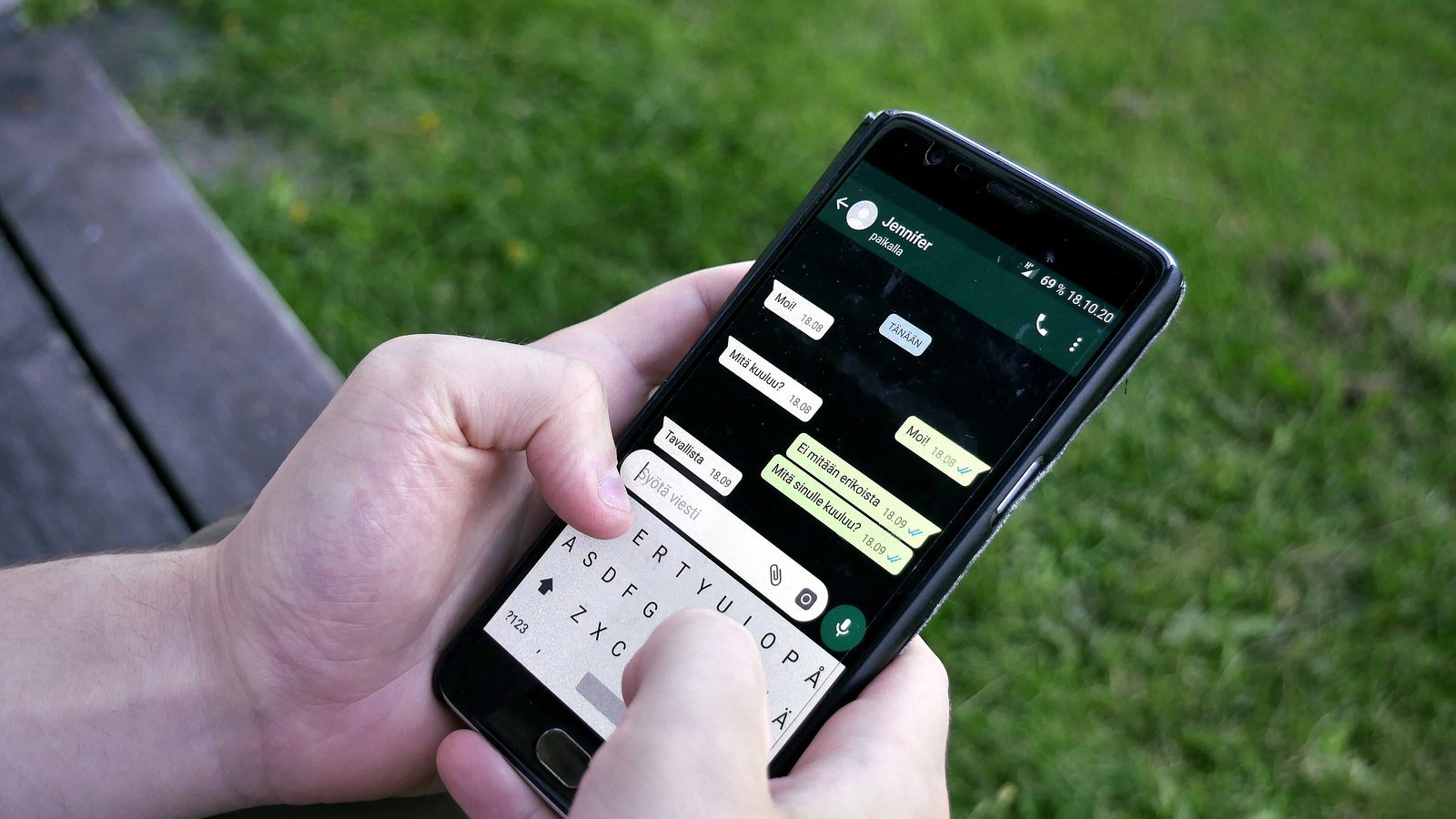
In most markets a website enquiry arrives as a form. Here it arrives as a message, and the business that treats that message as an interruption loses to the one that treats it as the channel. WhatsApp sales in Dubai is not a tactic bolted onto marketing. For a large share of businesses it is where the selling actually happens.
What follows is how to run it as a channel with owners, rules and a record, without destroying the informality that makes people use it in the first place.
Three reasons sit behind WhatsApp sales in Dubai, and understanding them changes how you set the channel up.
It is asynchronous but feels immediate. Somebody can ask a question at eleven at night without the commitment of a call, and still expect an answer rather than a ticket number.
It is the default for everything else. People here already arrange deliveries, schools and maintenance this way. Asking them to fill in a form instead is asking them to use a less convenient channel for your benefit.
It carries proof. A photograph of the broken thing, a screenshot of the error, the document in question. Most forms cannot take any of that, which is why the conversation often starts over in the first reply anyway.
The consequence is that your response time, not your website, becomes the main thing a prospective customer is evaluating in the first ten minutes. They are comparing you with whoever else they messaged, on that one measure, before they have read anything you wrote.
Nearly every business running WhatsApp sales in Dubai starts with one person and one phone, and it works until it does not.
The number leaves with them. If a salesperson used a personal number, the relationships are theirs. Customers will keep messaging that number after they join a competitor, and there is no technical remedy for this after the fact.
Nobody can cover. One illness or one holiday and the channel is unattended, with no visible sign to the person waiting.
There is no record. What was promised, what was quoted, what the customer actually asked for, all of it sits on one handset. Disputes become one person’s memory against another’s.
Nothing can be measured. You cannot say how many enquiries arrived, how fast they were answered or how many became work, so this channel stays invisible in every report while quietly carrying the business.
The fix is not more discipline from that person. It is shared ownership of the number and the history.
Moving an established number is easier than most people expect and harder the longer it is left. If the number already carries years of customer relationships, plan the move deliberately: tell regular customers it is unchanged, keep the same handset answering during the transition, and verify that the history has come across before anybody relies on it.
In WhatsApp sales in Dubai the distinction that matters is who started the conversation.
Replying to somebody who messaged you is ordinary customer service and is uncontroversial. Starting a conversation with somebody who did not is promotional messaging, which the telecommunications regulator governs here and which the platform’s own business policy also restricts, with its own requirements about consent and about what may be sent.
Three practical consequences for WhatsApp sales in Dubai. Scraping numbers and messaging them is both a regulatory problem and the fastest route to losing the number entirely. Numbers collected for one purpose, a delivery for example, are not automatically available for marketing. And every conversation contains personal data, which sits under the federal data protection law wherever it is stored.
None of this restricts the thing most businesses actually need, which is answering people who got in touch first and following up on a live conversation.
Five decisions set up WhatsApp sales in Dubai, in the order they matter.
The number belongs to the business. Registered to the company, with access granted to people rather than owned by them.
Somebody is responsible during defined hours. Named, with a substitute. An unattended channel is worse than no channel, because the expectation has already been set.
The history is retained. Searchable by customer, surviving staff changes. This is where the free app stops being adequate.
There is an honest automatic reply outside hours. Saying when somebody will respond. Not a cheerful message implying an answer that will not come until Sunday.
The outcome gets recorded somewhere. Even a shared sheet. Without it, this channel never appears in any assessment of where your work comes from.
The register of WhatsApp sales in Dubai is different from email and people notice immediately when it is wrong.
Short messages, several of them, rather than one long block. Plain sentences. No formal salutation, no signature, no reference number. A message that reads like a letter signals that somebody has pasted a template, and the informality was the point.
Prepared answers are fine and should be starting points rather than scripts. Keep a short set for the questions that recur, then change a line so the reply is clearly about this person.
Two habits that work here. Answer the question first and ask yours afterwards, because a reply that opens with three questions of its own reads as a screening process. And when a conversation reaches a price or a scope, send it as a written summary in the same thread, so both sides have the same record.
Language follows the customer. If somebody writes in Arabic, reply in Arabic, and make sure somebody on the rota can. Switching a customer into your preferred language is a small discourtesy that costs more here than it would elsewhere, because the alternative supplier almost certainly did not ask them to.
This channel is usually invisible in reporting, which is how businesses conclude that their advertising does not work while it quietly fills the message queue.
Start with the click. A message button on the website or in an advertisement can be recorded as an event, and the analytics side supports that, so you can at least see which pages and campaigns send people into the conversation.
Then count four things by hand if necessary. Conversations started, how many were answered within the hour, how many produced a quotation, how many became work. A month of that tells you more than any dashboard, and it usually reveals that the response time, not the volume, is the constraint.
One warning about attribution. People often see an advertisement, visit the site later, and message the number from a different page entirely. Treat the figures as directional rather than precise, and keep asking new customers where they first heard of you.
Most businesses do not need an integration on day one. The signals that WhatsApp sales in Dubai has outgrown a handset are specific.
Two or more people answering the same number. Conversations that need to continue in another system, an order, a ticket, a project. A volume where somebody is now spending most of a day in the application. Or a requirement to prove what was agreed, which a handset cannot satisfy.
At that point the business platform and a connection into whatever system holds your customers becomes worth the effort, and our note on putting the business interface in place covers what that involves.
Resist automating the conversation itself at the same time. Automate the routing, the acknowledgement and the record. Leave the selling to a person, because the reason this channel converts is that there appears to be one.
For the technical side, the business interface covers connecting the number to your systems. On the rules, what you may send and the position on promotional messaging are the two to read before any outbound campaign.
If the traffic is coming from advertising, why a page collects clicks and no enquiries is relevant, because a message button often outperforms a form here.
Where conversations need to land inside something you own, a portal, an order system, an application that keeps the history, Codeeo handles that work in Dubai.
If your number is currently one person’s phone and you know that is a problem, tell us how it works today and we will set out what moving it properly involves.
Straight answers
Not freely. Starting a conversation with somebody who never contacted you is promotional messaging, which is regulated here and also restricted by the platform's own business rules. Replying to somebody who messaged you first is an entirely different situation and is the basis of most legitimate use.
The app is adequate while one person handles a manageable volume. You outgrow it the moment two people need to answer the same number, you want the history to survive somebody leaving, or you need conversations to appear in a customer system. That is the point to move, not before.
The business, always. A salesperson using their personal number builds a relationship the company cannot inherit, and when they leave your customers keep messaging them. This is the single most common and most expensive mistake in this channel.
For routing and for out of hours acknowledgement, yes. For the actual conversation, usually not. People here use messaging because it feels like reaching a person, and a bot that pretends to be one removes the advantage you were buying.
Within the hour during working time, and an honest automatic acknowledgement outside it. The expectation set by every other business someone messages is minutes, so an answer the next morning reads as disinterest rather than as normal office hours.
Sources
Fixed price, in writing
Got it. Your quote is being written now.
In business hours you will have it within 45 minutes. Check your inbox for the confirmation.
Keep reading

Opt in, templates, messaging limits and UAE law: what a Dubai business needs to know before sending promotions on WhatsApp.
Read the article
How the UAE Personal Data Protection Law applies to email marketing: scope, consent, exceptions, subscriber rights and overseas email platforms.
Read the article
How to choose between Google Ads and Meta ads as a first paid channel in the UAE, and how to test the decision instead of guessing.
Read the article