
Best website design examples, and what they get right for Dubai and UAE businesses
What well known sites such as GOV.UK, u.ae, RTA, Apple and Stripe get right, and how to turn those qualities into a brief.
Read the articleMobile Apps
A practical guide for restaurants, groups and cloud kitchens planning their own food delivery app in Dubai: the customer, kitchen and rider journeys, menu data, POS links, delivery rules and the Ramadan rush.
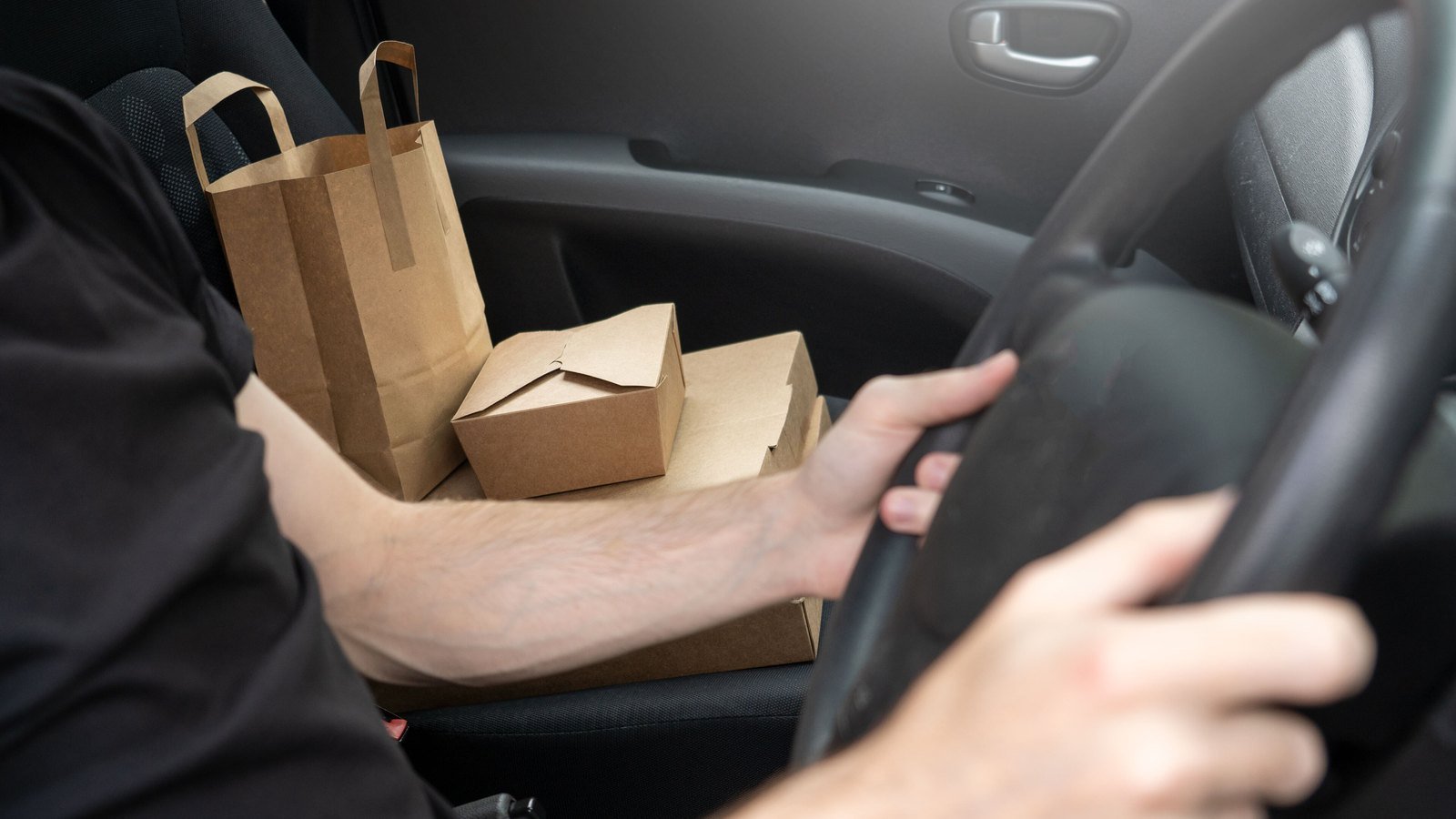
A food delivery app in Dubai is worth building when a restaurant, group or cloud kitchen has enough repeat customers to justify owning the relationship rather than renting it from aggregators. The app itself is the easy part. What decides success is the data behind it: a menu with proper modifiers and allergen flags, a direct link to the POS and kitchen screens, a clear plan for who carries the food, and enough capacity for the evenings when everyone orders at once.
This guide covers those pieces with the Dubai rules that apply as of October 2026. It is planning advice, not legal advice.
Key points
Most restaurants in the city already sell through aggregators, and for good reason: they bring new customers, run riders and handle payment disputes. The cost is that the customer belongs to the platform. You see an order, not a person, and pay commission on repeat visits from people who would have ordered from you anyway.
A restaurant’s own ordering app answers a narrower question: how do we serve the people who already know us, on our terms? It rarely replaces aggregators outright. The realistic goal is to move a share of loyal, repeat orders onto a channel where you own the customer record, set the offers and keep the margin, while aggregators keep doing discovery.
So your own channel has to sit alongside the aggregator tablets on the pass, not compete with them. If it arrives on a separate screen with a separate menu, staff will treat it as an afterthought.
If none of these apply yet, a strong ordering page on your website may be the better first step. Our restaurant website design service covers that route, and many restaurants add the food delivery app in Dubai later once regulars ask for it, and the MVP app guide explains how to test demand with a smaller first release.
A working food delivery app in Dubai is really four connected products. Planning each journey separately avoids a common gap we see: a polished customer app while the kitchen and riders work from printouts and phone calls.
The customer journey is short and unforgiving: confirm the address, build the order, pay and watch it arrive. Dubai addresses add friction. Many customers describe a building, a tower name or a villa number in a community rather than a street address, so the address step should combine a map pin with free text fields for building, floor, flat and landmark, and save several addresses per account for home, office and family.
Checkout needs to show delivery fee, service charge if any, and the final total before payment. Apple’s App Store Review Guidelines say that when an app sells physical goods or services consumed outside the app, it must use purchase methods other than in app purchase, such as Apple Pay or card entry. Google Play’s payments policy likewise lists food delivery among the physical services that fall outside its billing requirement. In practice a food delivery app in Dubai uses a card gateway, Apple Pay and Google Pay, plus cash on delivery if you choose to keep it.
Branch staff need to accept orders, mark items unavailable, pause the branch when the kitchen is overwhelmed and see when a rider is close, usually on a tablet. Pausing an item in one place should update every channel you control.
Your own riders need the queue of ready orders, the customer’s pin and notes, masked calling and a proof of delivery step. If a third party fleet carries your orders, the rider app is theirs and your system connects to it.
The admin panel holds menus and prices, branches and delivery zones, hours, offers, refunds and reports. Ask to see it early: a restaurant ordering app in Dubai that is painful for the operations team drifts out of date within weeks.
The menu is the hardest dataset in any food delivery app, and Dubai restaurants have rich menus: half and full portions, spice levels, extra toppings, bread choices, family meals, set menus that change by day, and items that exist only at some branches. Each choice drives the kitchen ticket, the price and the POS sale.
Build modifiers as groups with rules: required or optional, minimum and maximum choices, and a price for each option. “Choose your bread, one required” and “Add extras, up to three” are different rules, and the kitchen ticket should print them in the order the line cooks work. Keep free text notes, but make “no onions” a structured choice that can be counted and reported.
Dubai Municipality’s Food Code says food service establishments must declare the most common ingredients known to cause allergic reactions, and lists items such as crustaceans, peanuts, tree nuts, sesame, fish, egg, milk, soy and cereals containing gluten as ingredients to be declared on the label or the menu, however small the amount. The same code says restaurant menus should be printed in Arabic and English and that foods with allergens or non halal ingredients should be clearly identified in the menu.
For a food delivery app in Dubai, the sensible reading is to treat every dish’s allergen and non halal flags as structured fields, shown in both languages and filterable by the customer. Whether the code’s wording applies to your app in a particular way is a question for your compliance adviser or Dubai Municipality, but building the fields from day one costs far less than retrofitting them across hundreds of items.
Dubai Municipality’s calorie declaration guidance defines a menu to include online menus and menu applications. The same guidance says its requirements are not mandatory unless an establishment is certified under the calorie declaration scheme, while claims such as “healthy” bring mandatory requirements. If you are certified, or plan to make health claims, your app needs a calorie field per item and per portion, plus space for the statement of daily calorie allowance that the guidance sets out.
Article 38 of the UAE VAT Decree Law says the advertised price for taxable supplies shall include the tax. For an app, that means every menu price, modifier price and delivery fee the customer sees should already include VAT, with the VAT amount shown on the receipt. Our guide to VAT inclusive menu pricing explains the wording and the arithmetic, and the same price file should feed the app, the POS and the aggregator menus so that the three never disagree.
An order retyped into the till will eventually be wrong. The most valuable integration in a food delivery app for a Dubai restaurant is a direct link to the POS, so each order lands as a proper sale with the right modifiers, discounts and VAT, and to the kitchen display, so the line sees it without anyone touching a tablet.
Before design starts, ask your POS provider in writing what it supports. Some systems offer an open API, some accept orders only through approved partners, and some have no integration at all.
| Integration point | What it should do | What goes wrong without it |
|---|---|---|
| Menu sync | Items, modifiers, prices and availability come from one source | The app sells a dish the branch removed last week |
| Order injection | App orders arrive in the POS as sales with the correct tax lines | Staff retype orders and end of day totals do not match |
| Kitchen display or printer | Tickets route to the right station, grill, fryer or pass | Orders sit unseen on a tablet at the counter |
| Status updates | Accepted, preparing, ready and picked up flow back to the customer | Customers call the branch to ask where their food is |
| Stock and pause | An item marked out of stock disappears from every channel you control | Refunds and apologies at the busiest hour |
Prep time matters as much as the link. The branch should be able to set a preparation time per item or order size and lengthen it in a rush, so every food delivery app estimate a Dubai customer sees reflects what the kitchen can really do.
Cloud kitchens change the shape of the system. One physical kitchen might cook for four or five virtual brands, each with its own name, menu, photography and customer base, sharing the same staff, stock and riders. Cloud kitchen app development in the UAE therefore needs a data model where brand and kitchen are separate, and a cloud kitchen food delivery app in Dubai should never mix one brand’s menu into another.
One app with several brands inside works like a food hall; one app per brand on a shared backend keeps each brand clean. Either way, the admin panel should let the team launch a new brand without a developer.
Delivery is where a food delivery app in Dubai meets the road. You have three options: your own riders, a contracted delivery company, or a hybrid where your app takes the order and a fleet partner handles the drop.
The RTA’s technical manual on managing delivery services through electronic platforms and smart applications covers establishments that manage and provide delivery of items such as food through websites, apps and social media. As of October 2026 it sets out permit requirements, an obligation to provide systems that link with RTA systems including tracking devices, rider training at accredited centres, Dubai registration and UAE insurance for every vehicle, and limits on delivery box size of 50 cm in length, width and height. It also says that contracting transport from another party requires that party to be licensed for the same purpose in Dubai.
The same manual includes Dubai Municipality’s food safety requirements for deliveries: the motorbike box must meet Dubai Municipality food safety specifications, an annual permit for food delivery means is obtained through channels approved by its Food Safety Department, and requirements are registered on the Food Watch platform. If you plan your own fleet, check with RTA and Dubai Municipality how these apply to your business before the rider app is built, because they decide what data the app has to record. Packaging design for the box and bags is covered separately in our fast food box design service.
| Model | What your system must do |
|---|---|
| Own riders | Dispatch, rider app, live location, proof of delivery, shift and cash reconciliation, rider records for compliance |
| Third party fleet | Send ready orders to the fleet by integration, receive rider status and location back, handle failed delivery rules |
| Hybrid | Both of the above, plus rules for which orders go to which fleet by zone, time or order size |
The strongest case for a restaurant ordering app in Dubai is that the same guest books a table on Friday, orders delivery on Sunday and picks up coffee on Tuesday. One account across those visits makes loyalty worth running.
A table booking app in Dubai needs real availability per branch, party size and seating area, reminders by push or WhatsApp, optional deposits for busy nights, and easy cancellation. If you already use a reservation platform, integrate with it rather than running two diaries. Our post on WhatsApp Business API integration explains how confirmations through WhatsApp are set up.
Busy mall and beachfront branches often have queues rather than bookings. A digital waitlist lets a guest join from the door or from home and get a message when the table is nearly ready.
Points, stamps or member prices all work; pick the one your staff can explain in a sentence, and apply it across delivery, pickup and dine in. Keep loyalty offers inside your own food delivery app in Dubai rather than mirroring them on aggregators, because they are the reason customers download it. Promoting that offer belongs in your social plan, which our restaurant social media guide covers.
During Ramadan order volume behaves differently: iftar orders bunch into a narrow window before sunset, suhoor orders arrive late at night, and the menu itself often changes to iftar boxes, set menus and family platters. A food delivery app in Dubai has to plan for that pattern explicitly rather than hope the servers cope.
The work on a food delivery app in Dubai does not stop when it reaches the stores. Someone has to answer messages, process refunds, update the menu and watch failed payments. Plan that before launch, along with app store optimisation and promotion, which our mobile app marketing service handles. For budgeting, see our guide to mobile app cost in Dubai, which explains how scope drives the quote.
A restaurant app developer in Dubai should answer these plainly before quoting a food delivery app.
Our team plans and builds ordering apps for restaurants, groups and cloud kitchens as part of our mobile app development service in Dubai, starting with the menu data, POS link and delivery model before any screens are drawn. You approve the design before development begins, you own the code and the store accounts, and you receive training plus a recorded walkthrough at handover. Send us your menu, POS name and branch list and we will return a written fixed price proposal within 45 minutes during business hours, with no obligation.
Straight answers
Usually not. Aggregators keep bringing new customers who have never heard of you, while your own app serves the regulars who already have. The aim is to share one menu and one stock feed across both, so neither channel lets the other down.
Yes. You can show every brand inside one app, like a food hall, or give each brand its own app on a shared backend. In both cases orders from all brands should reach a single kitchen screen and a single stock list.
No. Many restaurants start with pickup plus a contracted delivery company, and add their own riders later. If you do run a fleet, check the RTA delivery manual and Dubai Municipality food delivery permit requirements first, because they affect what the rider app must record.
It can, and that is often the main reason to build one. Booking, waitlist, pickup and delivery under one account let loyalty apply to every visit. If you already use a reservation platform, connect to it so the branch keeps one diary.
Their published rules say no for physical goods. Apple's guidelines require apps selling goods consumed outside the app to use methods such as Apple Pay or card entry, and Google Play lists food delivery among services outside its billing requirement. Your payment gateway's own fees still apply.
Sources
Fixed price, in writing
Got it. Your quote is being written now.
In business hours you will have it within 45 minutes. Check your inbox for the confirmation.
Keep reading

What well known sites such as GOV.UK, u.ae, RTA, Apple and Stripe get right, and how to turn those qualities into a brief.
Read the article
Registrar, DNS and hosting are three separate things. Here is which ones a UAE business should hold, and what the .ae rules say.
Read the article
When a breadcrumb trail earns its place on a UAE website, and how to design, mark up and translate it properly.
Read the article