
Business stationery in Dubai: what the set actually needs to contain
Which stationery pieces a UAE company actually uses, what a tax invoice and a letterhead must carry, and what belongs on a company stamp.
Read the articlePrint and Stationery Design
What UAE VAT law says about menu prices, the narrow exceptions, and how to word and lay out prices so printed menus, QR menus and bills agree.
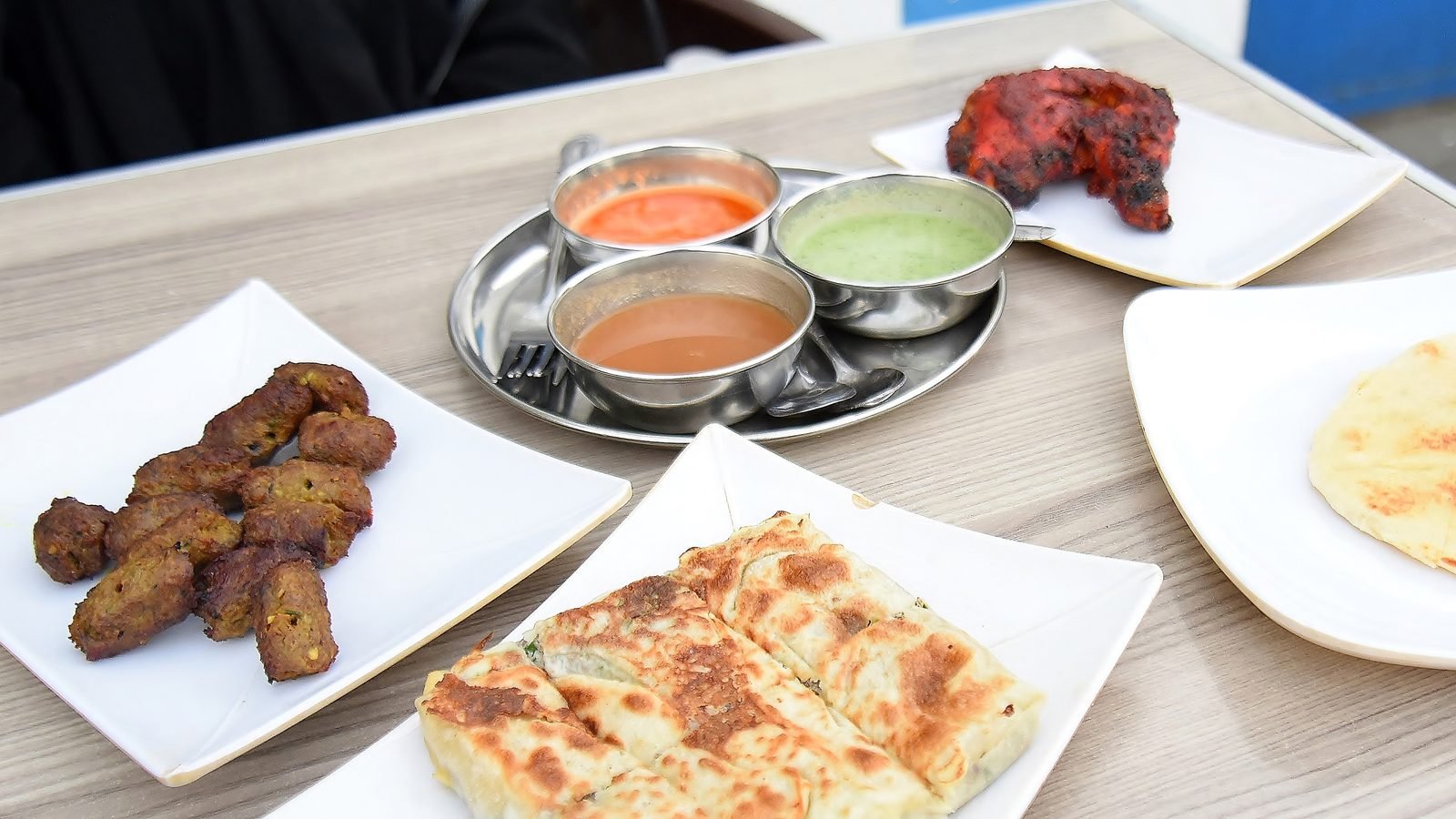
If your restaurant or café in the UAE is registered for VAT, the prices on your menu should already include VAT. Federal Decree-Law No. 8 of 2017 on Value Added Tax says the advertised price of a taxable supply shall include the tax, and the Federal Tax Authority’s own guide names food menus as one of the places this applies. The exceptions are narrow and rarely fit a diner ordering at a table.
This guide explains where that rule comes from, how it interacts with the Consumer Protection Law, and how to set out prices on printed and digital menus in Dubai so they stay consistent. It reflects the legislation as published as of September 2026 and is not tax or legal advice.
Key points
The rule sits in two places. Article 38 of Federal Decree-Law No. 8 of 2017, titled Tax Inclusive Prices, states that for taxable supplies the advertised price shall include the tax, and that the cases where prices do not include tax are set by the Executive Regulation. Article 27 of that Executive Regulation, Cabinet Decision No. 52 of 2017 as amended, repeats that published prices for a taxable supply shall be inclusive of tax.
The Federal Tax Authority’s awareness guide for new registrants turns this into a plain instruction: a registrant must make sure prices of goods and services advertised to consumers include VAT, and it gives food menus, catalogues and price tags as examples. For a restaurant, that covers the dine in menu, the table tent with today’s specials, the drinks list, the menu board over the counter and the PDF behind your QR code.
The standard rate itself is set in Article 3 of the Decree-Law at 5%. Menus should not need to mention the rate at all if prices are simply inclusive.
Article 27 of the Executive Regulation lists when a taxable person may, or must, declare prices exclusive of tax.
| Case in Article 27 | What it allows or requires | Relevance to food service |
|---|---|---|
| Supply of goods or services for export | Prices may be declared exclusive of tax | Almost never relevant to meals served in the UAE |
| Customer is a registrant | Prices may be declared exclusive of tax | Can apply to catering quotes or supply contracts with VAT registered businesses |
| Either optional case above | The price should be clearly identified as exclusive of tax | Any B2B quote shown exclusive must say so plainly |
| Concerned goods or services under the reverse charge provisions of Article 48 | Prices must be declared exclusive of tax | Not a normal restaurant scenario |
A public menu is offered to anyone who walks in, most of whom are not registrants buying for a business. That is why the inclusive rule is the working default for menus. If you run corporate catering alongside a restaurant, keep two clearly separate documents: an inclusive public menu, and business quotes labelled as exclusive of VAT where your adviser confirms the exception applies.
Menu prices and VAT in the UAE both need this next step. Once prices are inclusive, your finance team still needs the tax portion for returns. The FTA guide gives the method: the VAT included in a transaction is calculated by dividing the VAT inclusive price by 21. That works because 5% on top of a net price means the tax is one twenty first of the total.
This matters for menu design in one practical way. Many venues like tidy price endings. If you calculate net prices first and add VAT, you get awkward decimals on the menu. It is usually cleaner to decide the inclusive price guests will see, then let the system work backwards to the net figure and the tax. Agree which approach you use before the designer receives the price list, so the numbers on the menu are final and do not change after typesetting.
Menu prices and VAT in the UAE are only half the picture. Federal Law No. 15 of 2020 on Consumer Protection applies to all goods and services in the UAE, including free zones, under Article 3. Article 8 requires the supplier to place the price clearly when offering a good for sale, and says the declaration of prices shall not be misleading. Article 1 defines a misleading advertisement as one based on deceptive information or that omits essential information, and Article 17 prohibits describing a good or service with incorrect data.
For a menu, that points to a simple principle: the guest should be able to work out what the bill will be from what the menu says. If any charge is added on top of the printed dish price, whether a service charge, a cover charge, a minimum spend or a supplement for an outdoor table, state it clearly on the menu in both languages, near the prices rather than hidden in small type on the back. Whether a particular charge is permitted, and how it is taxed, is a question for your licensing authority and tax adviser; the design job is to make sure nothing on the bill surprises the guest.
If a guest cannot predict the bill from the menu, the menu is not doing its job, legally or commercially.
Article 26 of the Consumer Protection Law states that data and advertisements related to the consumer shall be in Arabic, with other languages allowed in addition, and Article 8 requires the consumer invoice to be in Arabic too. On a bilingual menu, the price statement needs the same care as dish names.
Check the Arabic wording with a native reader and your accountant together. A translated phrase that reads as “prices before tax” by mistake undoes the whole exercise.
Menu prices and VAT rules in the UAE apply everywhere a guest looks: on a printed card, a QR menu, a delivery platform and a receipt, sometimes within the same week. The VAT inclusive rule applies to advertised prices wherever they appear, and a mismatch between channels is exactly the kind of thing that turns a small complaint into a formal one.
| Channel | Common drift | Control |
|---|---|---|
| Printed dine in menu | Old stock left in use after a price change | Version code and date in small type; destroy old copies |
| QR menu PDF or web page | Updated on a different day from the print run | Publish digital and print changes together |
| Delivery platform listing | Different price level set for the app, without saying so on printed takeout material | State which channel each printed price covers |
| Point of sale and receipt | Net price entered where an inclusive price was intended | Test order for every changed item before launch |
Delivery leaflets have their own considerations, covered on our takeout menu design page, and if you sell online as well, our guide to UAE VAT tax invoice requirements for online stores covers the invoice side.
This article summarises UAE federal legislation as published by the Federal Tax Authority and the Ministry of Economy and Tourism, read on 14 September 2026. It is general design guidance, not tax or legal advice. Confirm your own position with a registered tax agent or the FTA before changing how prices are shown.
We keep menu prices and VAT rules in the UAE easy to follow: clear VAT statements in Arabic and English, space reserved for any charge notes, and a master file built so price updates do not mean a new design. See restaurant menu design for dine in menus, placemat design for paper table pieces, and the print design hub for everything else. Before your next reprint, our print ready file checklist helps the files reach the printer correctly. Send your current menu and price list and we will reply with a written fixed price proposal within 45 minutes during business hours.
Straight answers
The rule discussed here is about the advertised price including tax, not about showing a breakdown. Many venues simply state once that all prices include VAT. The tax amount itself belongs on the invoice or receipt, which follows separate invoicing rules.
Under Article 38 of the VAT Decree-Law and Article 27 of its Executive Regulation, the published price of a taxable supply should include tax, with only narrow exceptions. A price marked as excluding tax for ordinary diners does not fit those exceptions. Ask your tax adviser to review any legacy notation before reprinting.
The Decree-Law imposes VAT on supplies by a taxable person, defined as a person registered or obliged to register for tax. A business that is neither should not print wording suggesting prices include VAT. Whether you are obliged to register is a question to settle with the FTA or a registered tax agent before the menu goes to print.
The Executive Regulation lets a taxable person declare prices exclusive of tax where the customer is a registrant, provided the price is clearly identified as exclusive of tax. If you quote business clients that way, label it plainly on the quote and keep public menus inclusive.
Every time any price changes, and on a regular schedule even when nothing seems to have changed. Delivery apps, QR menus and printed copies drift apart easily. A dated version code on each menu makes the check quick.
Sources
Fixed price, in writing
Got it. Your quote is being written now.
In business hours you will have it within 45 minutes. Check your inbox for the confirmation.
Keep reading
Which stationery pieces a UAE company actually uses, what a tax invoice and a letterhead must carry, and what belongs on a company stamp.
Read the article
The questions, PDF/X settings and final checks that turn artwork into files a printer in Dubai can run without calling you back.
Read the article
Which single use items Dubai has banned, what is still exempt as of September 2026, and how new materials change your packaging artwork.
Read the article