
Best website design examples, and what they get right for Dubai and UAE businesses
What well known sites such as GOV.UK, u.ae, RTA, Apple and Stripe get right, and how to turn those qualities into a brief.
Read the articleMobile Apps
A practical guide to planning a building management app in Dubai: the resident journeys, the facility management side, community layers, BMS and Hassantuk realities, and the Dubai rules that shape the data you keep.
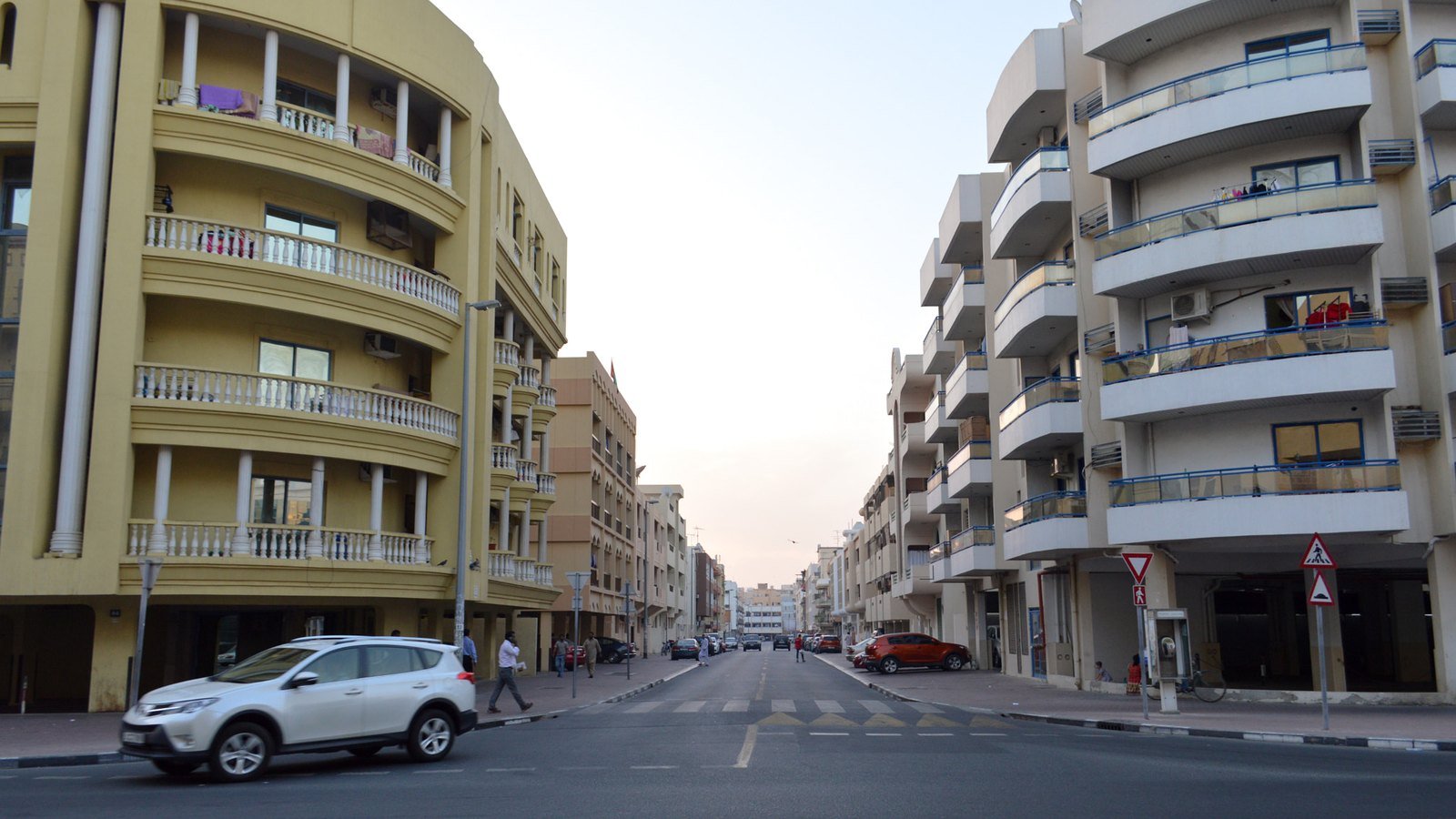
A building management app in Dubai is really three products sharing one database: a resident app for tenants and owners, a field app for technicians and supervisors, and an admin panel for the management office. Get the roles, the unit records and the work order flow right, and the screens follow. Get them wrong, and the prettiest app still ends in residents sending photos to a WhatsApp group.
This guide covers what each side needs, how community and building layers differ in Dubai, how an app should read from a building management system rather than pretend to be one, and which Dubai rules shape the records you keep, as of October 2026. It is a planning guide, not legal advice.
Key points
Before any screen is drawn, list who will open the app and what each person is allowed to see. In a typical Dubai residential tower that list is longer than people expect.
The single most important data decision is that access is tied to a unit, not to a phone number. A person may own one flat and rent another, and tenancies end. If a building management app in Dubai links rights to a tenancy record with start and end dates, access lapses on its own when the lease ends, which is safer than relying on the office to remember.
Tie every permission to a unit and a date range, never to a phone number alone.
Tenant app development in Dubai is judged by residents on a handful of journeys they repeat every month. Each one needs a clear status, a named owner on the building side and a record the management office can search later.
A good request form asks for the unit, a category, a short description and up to a few photos or a short video, then shows a reference number at once. Categories should match how your facility management contract divides work, such as air conditioning, plumbing, electrical and common areas, so the request routes straight to the right team. Add a field for access: can the technician use the master key, or must the resident be home? That one question prevents many wasted visits. Residents then see the request move from received to assigned to completed, with a short rating, and a clear note when a job waits for a part or a landlord’s approval.
Pools, gyms, barbecue areas, tennis courts and function rooms each have their own rules. The booking engine needs slot lengths, capacity, blackout periods for cleaning, limits per unit per week and, for some rooms, a deposit or a signed rules acknowledgement. Bookings should be tied to the unit so a tenant whose lease has ended cannot keep reserving the court.
A resident creates a pass with a name, date and time window, and the guest receives a QR code or a code to show at the gate. Security scans it on a tablet at the desk. Keep the data minimal: the guard needs to know a visit is expected, not the visitor’s full profile. Recurring passes for cleaners and drivers save many calls, but need an end date.
Water shutdowns, lift maintenance and fire drill dates belong in the app with push notifications, targeted to the tower, floor or unit affected. A notice sent to a whole community about one tower’s water tank soon trains people to ignore notifications. Keep an archive residents can search.
Most Dubai buildings control moves through the service lift and the loading bay. The app takes the request, collects the documents the building asks for, lets the office approve it and books a lift slot that security sees on the day. Documents differ by building and community, so make the checklist configurable rather than hard coding one building’s rules.
Facility management app development in Dubai is where most of the operational value sits, and where generic apps fall short. The resident sees one request. The building team sees a work order with a priority, a trade, an asset, a technician, parts and a clock.
Every resident request creates a work order, but supervisors and the preventive plan raise them too. Each work order needs a priority, a category, the location down to the unit or common area, the linked asset where there is one, and a full history of who changed what and when.
Chillers, pumps, lifts, generators, water tanks and fire systems all have service intervals. The app should hold the schedule per asset, generate work orders ahead of time, and show the supervisor what is overdue. Keep the intervals editable, because they come from manufacturers, contracts and the authorities, not from the developer.
Technicians in Dubai buildings work in plant rooms and basements where signal is poor, wear gloves and often prefer a language other than English. The field app needs large buttons, offline queueing that syncs once signal returns, before and after photos, a parts used field and a resident confirmation at the end. In a building management app in Dubai, Arabic and English screens for the technician side matter as much as for residents.
Facility management contracts usually set response and resolution times per priority. The app should start the clock when a request is logged, pause it only for clearly defined reasons such as waiting for resident access, and escalate to a supervisor before a breach rather than after it. Report on SLAs honestly, including jobs reopened by residents, because owners and boards will ask.
An asset register lists each piece of equipment with its location, make, model, serial number, installation date, warranty, service contractor and maintenance history. A QR label on each asset lets a technician scan it and open its history at once. A complete register is also what lets a building management app in Dubai survive a change of management company or contractor.
| Need | Resident app | Technician app | Admin panel |
|---|---|---|---|
| Requests and work orders | Raise, track, rate | Receive, update, close with photos | Assign, prioritise, report on SLAs |
| Bookings and permits | Book amenities, apply for moves | See booked slots that affect work | Set rules, approve, export |
| Visitors | Create passes | Not needed | Front desk scanning and logs |
| Assets | Not shown | Scan, view history, log readings | Register, schedule, contractor records |
| Notices and statements | Read, acknowledge | Shift and safety notices | Publish, target, archive |
Many Dubai addresses have two layers of management. A master community covers roads, landscaping, gates, community pools and shared rules, while each building inside it has its own management for the lobby, lifts, plant and units. A community management app in Dubai has to know which layer owns which request, otherwise a resident reporting a broken streetlight lands in the tower’s queue and waits.
In practice the data model holds communities, buildings and units as a tree, with every category, notice and amenity attached to the right level. Residents see one app, with the layer shown only where it matters, such as “Community request” against “Building request” on the form.
For jointly owned property, the Dubai Land Department describes Mollak as its system to regulate jointly owned properties and service charges and to monitor their payment, and it says owners receive quarterly service charge invoices through the system. The DLD’s own service for approving service charges asks management companies to submit an annual budget, at least three tenders for each service provider, copies of service and maintenance contracts and an external audit report through Mollak. A DLD article from 2020 adds that, unless the lease says otherwise, the owner is liable for service and usage charges and is not released from that liability if the tenant fails to pay.
The practical lesson for the app is that service charges are an official record, not a number the app should calculate. Show the owner the approved statement and its status as it stands in the official system, link to the official payment route, and never present tenants with an owner’s charges by default. Owners associations, their boards and their voting sit on top of this and are a subject of their own; this guide stays with the building operations side.
This is not legal advice. Rules for jointly owned property, service charges and management company registration in Dubai are set by the Dubai Land Department and RERA, and can change. Check the current position on the official sites or with your adviser before you design payment or statement features.
The DLD also states that a company supervising jointly owned property must register through Mollak, with named managers for owners affairs, finance and facilities management. Roles in your building management app in Dubai should mirror those responsibilities, so finance staff see statements and facilities staff see work orders.
A building management system, or BMS, is the control layer for plant: chillers, air handling units, pumps, lighting, lifts and their alarms, usually from a specialist vendor and run by engineers. A building management system app in the UAE should be framed as a window into that data, not as a new control system. Changing set points or starting pumps from a phone is a decision for the BMS vendor, the facility management engineer and the building’s safety case, not for an app sprint.
What an app can usefully do is read. Common patterns include:
Dubai Civil Defence’s own Category 5 specification shows why a careful read only approach matters. The specification for life safety alarm monitoring says the BMS shall integrate into the Dubai Civil Defence alarm panel using open protocols, listing BACnet IP, BACnet MSTP, Modbus TCP, Modbus RTU and LonWorks, and that the BMS shall expose the monitored points as digital values. It defines Category 5 to include buildings above 200,000 square feet of gross area or with twenty one floors and more. Your developer should treat that link as part of the life safety system, connect only through an interface or gateway the BMS vendor approves, and never route Civil Defence signals through the app.
Dubai Civil Defence describes Hassantuk for private and public buildings as a system that lets it monitor buildings in real time for life and safety alarms, including fire, lift and emergency alarms, safety equipment faults, power interruption, low reservoir water, pump faults and gas leaks. It states that installation is mandatory for all public and private buildings and establishments across Dubai, in accordance with Law No. 24 of 2012. The UAE Government portal describes Hassantuk as an intelligent command and control solution launched in 2018 that monitors fire and smoke alarms in commercial buildings and residential apartments.
A building management app in Dubai does not replace any of that. Where it helps is the paperwork around it, as of October 2026:
Leave the legal duties themselves to your fire safety consultant and the Civil Defence requirements; the building management app in Dubai simply makes the records complete and easy to find.
A building management app in Dubai holds a surprising amount of personal data: names, phone numbers, unit numbers, tenancy dates, visitor names, photos taken inside homes and sometimes copies of Emirates IDs or passports for move permits. The UAE Government portal says the federal Personal Data Protection Law prohibits processing personal data without the owner’s consent, except in cases such as protecting a public interest or carrying out legal procedures, and gives people the right to correct inaccurate data and to restrict or stop its processing. Note that free zones such as DIFC have their own data protection law, which the portal lists separately.
Design choices that follow from this:
The app stores add their own rules. Apple’s App Review Guidelines say apps that collect user or usage data must secure user consent for the collection, and that an app which supports account creation must also offer account deletion within the app. Apple also says that where an app lets people buy physical goods or services consumed outside the app, payment must use methods other than in app purchase, such as Apple Pay or card entry. For buildings, that covers things like extra cleaning or a function room deposit. Our mobile app development page covers store submission in more depth.
Generic questions about process and price are covered in our guides to what a mobile app costs and building an MVP first. For this vertical, the questions that separate a workable plan from a demo are these:
If your work is closer to leases, renewals and owner statements across many buildings, our page on property management software is the better starting point. If you are a facility management company that needs a public site that wins contracts as well as an app, see facility management website design and development.
Our team plans and builds building management apps in Dubai through the same six stages we use for every project: Brief, Proposal, Create, Review, Deliver and Improve. For a building, the brief starts with a walk through your units, roles and existing systems rather than with screens. You receive a written fixed price proposal within 45 minutes during business hours, approve the full design before development begins, and own the code, store accounts and cloud accounts at handover, with training, a recorded walkthrough and a support window.
If you are weighing a resident app, a technician app or both, start with our mobile app development team and tell us how many buildings, units and systems are involved.
Straight answers
Yes, provided roles are set per unit rather than per person. An owner who leases out a flat needs statements and notices, while the tenant living there needs requests, bookings and visitor passes. Some people hold both roles in different units, so the account model has to allow it.
Usually not. The BMS keeps controlling plant and the CAFM or work order system can stay as the record, with the app acting as the front end for residents and technicians. Replacing a working back office system is a separate decision with its own risk.
For jointly owned property in Dubai, service charges run through the Dubai Land Department's Mollak system and its approved invoices, so most apps show the statement and link to the official payment route. Paying for things like amenity deposits or extra cleaning is a different question, and Apple's rules say services consumed outside the app must be paid by methods other than in app purchase.
For most Dubai residential buildings the honest answer is that you need both, because residents, owners and frontline staff differ in their first language. Plan Arabic with proper right to left layout from the first design round, including notices written by the management office, rather than translating screens at the end.
That should be settled in the contract before work starts. When we build an app, the client owns the code, the store accounts and the cloud accounts, which matters a great deal in buildings where the management company may change at the end of a contract.
Sources
Fixed price, in writing
Got it. Your quote is being written now.
In business hours you will have it within 45 minutes. Check your inbox for the confirmation.
Keep reading

What well known sites such as GOV.UK, u.ae, RTA, Apple and Stripe get right, and how to turn those qualities into a brief.
Read the article
Registrar, DNS and hosting are three separate things. Here is which ones a UAE business should hold, and what the .ae rules say.
Read the article
When a breadcrumb trail earns its place on a UAE website, and how to design, mark up and translate it properly.
Read the article