
Best website design examples, and what they get right for Dubai and UAE businesses
What well known sites such as GOV.UK, u.ae, RTA, Apple and Stripe get right, and how to turn those qualities into a brief.
Read the articleMobile Apps
A practical guide to laundry app development in Dubai: pickup slots by area, garment tagging, driver routes, the plant floor, WhatsApp updates and the UAE rules on claims, refunds and customer addresses.
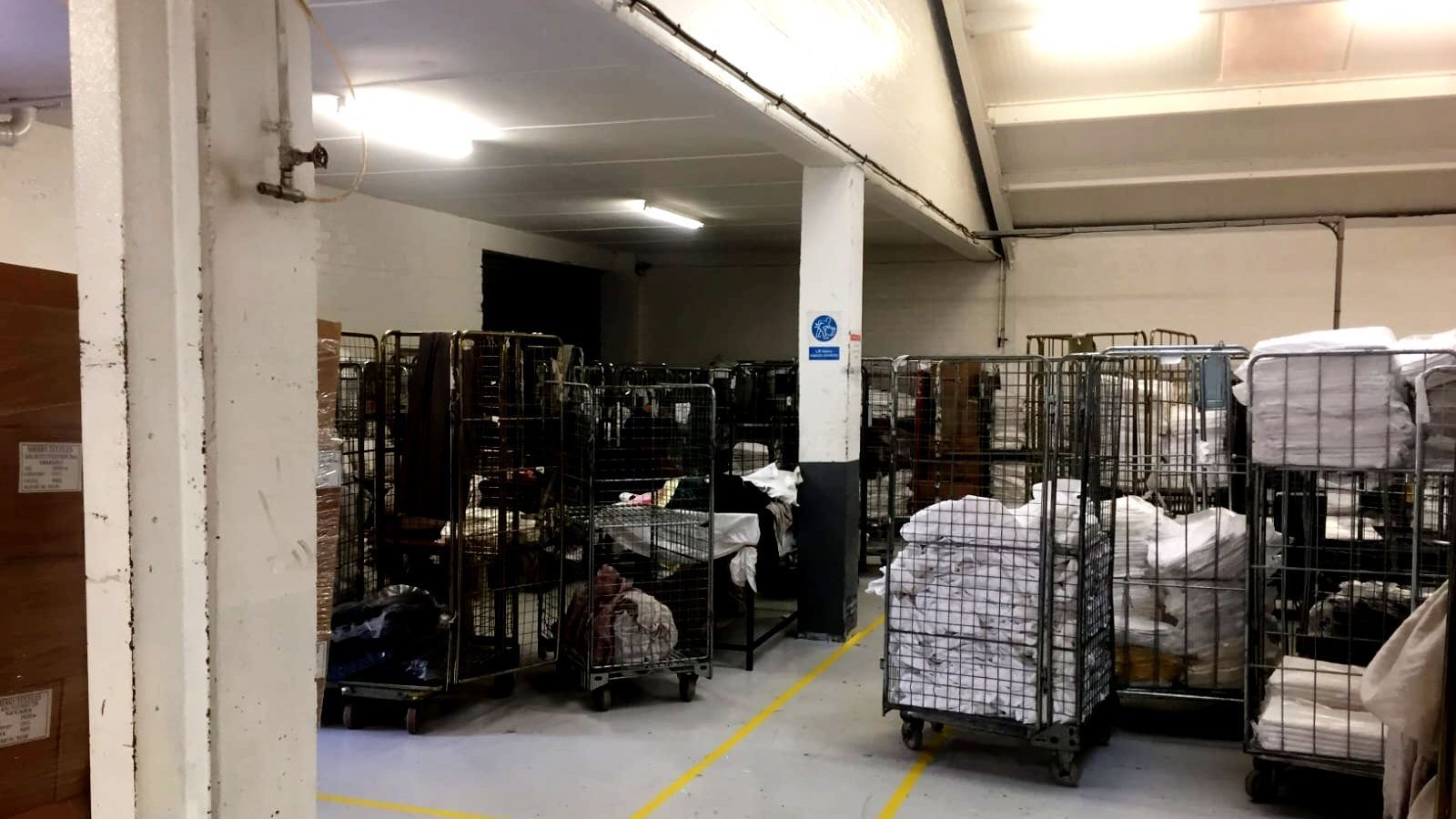
Laundry app development in Dubai is really three builds that share one database: a customer app for booking pickups, a driver app for collecting and returning bags, and an operations panel for the plant where garments are counted, tagged, cleaned and packed. The customer app gets the attention, but most of the money is lost or saved in the other two.
A laundry business in the UAE also sits under specific rules. Dubai Municipality publishes a compliance guideline for laundry facilities, the federal Consumer Protection Law sets out what happens when a service is faulty, and the personal data law covers the addresses and access codes your drivers rely on. This guide follows an order through each part of the build, as of October 2026.
Key points
The customer books and pays, a driver collects, the plant counts and processes, a supervisor checks quality, and a driver, often a different one, returns the order. Each handover is a moment where an item can go missing, so each needs its own screen and its own record. Good laundry app development in Dubai starts from that map, not from a list of features copied from a delivery app.
The customer side covers sign up, saved addresses, service type, a collection slot and a return slot, notes, payment, tracking and a way to raise a problem. The Consumer Protection Law says data, advertising and contracts related to the consumer must be in Arabic, with other languages allowed alongside, so Arabic belongs in your terms, price list and receipts from launch.
Drivers need a day list in route order, building and access notes for each stop, bag tag scanning at the door, proof of collection and delivery, and a cash ledger. It must work one handed, in bright sun and with weak basement signal.
The plant panel handles intake counts, tagging, routing to wash, dry clean, press or specialist care, quality checks, packing and dispatch. Above it sits the admin layer: zones, slots, prices, staff, refunds, subscriptions and reports. This is the part of laundry app development that Dubai operators most often leave out of the brief. Our mobile app development page covers the general build.
An on demand laundry app in the UAE lives or dies on its slot engine. If customers can pick any time in any area, drivers spend the day crossing Sheikh Zayed Road for single bags. The fix is to sell capacity, not hours.
Draw delivery zones as map polygons rather than a dropdown of community names, because a customer in a tower on the edge of two communities will pick the wrong one. Each zone gets its own windows, perhaps a morning and an evening band, and each window takes a set number of stops. When a window fills, the app offers the next one in that zone rather than an open slot across town. In laundry app development for Dubai, this single rule usually does more for driver costs than any routing software.
The return slot depends on the service mix. Wash and fold can come back sooner than dry cleaning, and stained or delicate items take longer again. Let the app calculate the earliest return from the basket, and let the plant extend it when an item needs extra work, with a message explaining why.
Much of Dubai lives in towers and gated communities, so a laundry app in Dubai needs more than a pin. Useful address fields include tower, floor, unit, loading bay instructions, whether security registers visitors, and whether the customer allows a concierge or reception drop. Add a concierge option per address with a photo at handover, so a missing bag can be traced to a time and a person. Show gate codes only to the assigned driver during the job, never in the general order history.
Dry cleaning app development in Dubai is where a booking app turns into an inventory system. A bag of shirts can be charged by the bag, but a suit, an embellished abaya or a silk dress has to be tracked as an individual item from the door to the hanger.
At intake, the plant panel records each item with type, colour, brand where visible, existing damage, missing buttons and stains, and attaches a durable tag with a barcode or QR code. A photo of each item costs seconds and settles most later arguments. The tag follows the garment through every station, and the customer sees the itemised list and can confirm the count before cleaning starts. For dry cleaners, this tagging layer is the core of laundry app development in Dubai, and it is the part generic booking templates lack.
The Consumer Protection Law requires the provider to give the consumer a detailed invoice with the service type, price and details, in Arabic, with other languages optional. The same article says advertised prices must not be misleading. In the app, that means a line per item or per bag, the service applied, extras such as stain treatment or express handling, and the total, shown before the customer confirms. Keep the price list in the admin panel so staff can change it without a new app release.
Give customers a care notes field per item, and let the plant add notes after inspection, such as “label says do not dry clean” or “beading loose before cleaning”. Where the plant judges an item too risky, the app pauses that item and asks the customer to approve, decline or have it returned unprocessed.
Customers rarely open a laundry app between booking and delivery unless something worries them. In laundry app development for Dubai operators, a clear status trail cuts calls to the branch and gives staff one shared view of every order.
| Status | Set by | What the customer sees |
|---|---|---|
| Booked | Customer | Collection window, address, service type |
| Collected | Driver app | Bag count and a photo at the door or concierge desk |
| Counted at plant | Plant panel | Itemised list with tags and any damage noted at intake |
| Needs your decision | Plant panel | The item, the concern, approve or decline |
| Ready | Quality check | Final invoice and return window |
| Delivered | Driver app | Photo, time, who received it, a link to report a problem |
Most of these updates work better on WhatsApp than as push notifications, because many customers turn push off. Meta’s WhatsApp Business Platform documentation describes utility templates for transactional or informational messages, and explains that when a customer messages the business a 24 hour customer service window opens for free form replies; outside it, only templates can be sent. So the status updates become a small set of utility templates, and the decision step invites a reply that reopens the window. Our WhatsApp API integration page covers templates, opt in and handover to staff.
A common problem we see is an app that sends every status change as its own message. Customers mute the thread and then miss the one message that matters, the request to approve a risky item. When we scope laundry app development for Dubai clients, we keep routine updates few and make decision messages stand out.
Drivers are the most expensive part of an on demand service and the hardest to measure. The driver app should show the day as batches of stops per zone and window, already grouped, with a suggested order and the option to reorder when a loading bay is closed. Batching rules belong in the brief for laundry app development in Dubai from day one:
Every handover should record the bag count, tag scans, a photo and who received it, so a missing bag is traced on one screen. Where so many deliveries go to lobbies, this proof step is worth more than live map tracking.
Dubai Municipality’s Health and Safety Department publishes Technical Guidelines on the Compliance of Laundry Facilities, version 5 dated March 2026, which applies to laundry shops and related activities in the Emirate of Dubai. Most of it concerns premises, machines and chemicals, but some points shape the software. The guideline says a laundry needs a commercial licence and a permit from the competent department, and that its services must match the activities on its licence, so the service catalogue in the admin panel should mirror the trade licence.
The guideline asks for suitable containers to store clothes until they are washed and recommends packaging to protect clothes from dust and dirt. For textiles contaminated with germs it asks for a suitable and separate transport vehicle, dedicated colour coded and labelled bags, and complete separation from other clothing at all stages, from collection to delivery. If you serve clinics, salons, gyms or hotels, the app needs a contaminated textiles flag on the account or order that routes the job to a separate vehicle and bag type and blocks batching with household orders. Few briefs for laundry app development in Dubai mention this, yet it decides whether business contracts can run through the app at all.
Inside the plant, give each station a queue: sorting, washing, dry cleaning, stain treatment, pressing, quality check and packing. Supervisors need to see items stuck at a station or waiting on a customer, and orders at risk of missing their return window. Use tablets with large buttons and scanners, because staff work with wet hands.
This summarises a public Dubai Municipality guideline as it stood in October 2026. It is not legal or licensing advice; check the current version and your licence conditions before launch.
Apple’s App Review Guidelines state that if an app lets people buy physical goods or services consumed outside the app, it must use purchase methods other than in app purchase, such as Apple Pay or card entry. A laundry order is exactly that, so laundry app development in Dubai includes a card payment gateway. The same guidelines require apps that support account creation to offer account deletion inside the app.
Laundry has an awkward payment shape: the customer books before anyone has counted the items. A workable pattern is to save a card at booking, show an estimate, and charge the final itemised amount after the plant count. Cash and card on delivery remain common, so the driver app needs a payment step at the door and the admin panel a daily reconciliation per driver. In laundry app development for Dubai, this reconciliation screen is what the owner opens every evening.
Subscriptions deserve early attention in laundry app development in Dubai, because households and offices sending laundry weekly are the customers worth keeping and become fixed slots you can plan around. Define a recurring day and window per address, an allowance per cycle, how extra items are charged, and how to pause for travel, which matters in a city where many residents leave for the summer. Let customers skip one collection without cancelling. Our post on what shapes mobile app cost in Dubai explains why payment and subscription logic adds scope.
Every laundry eventually shrinks a jumper or loses a sock. How the app handles it decides whether that customer stays.
Federal Law No. (15) of 2020 says a provider must stand behind its service so it is free from defects for a period suited to the service; otherwise it returns the amount paid, or part of it, or performs the service again correctly. Where a flaw in a service is found, the provider must perform it again without charge, as the Executive Regulation sets out. The consumer may claim compensation for material damage caused by a service, excluding damage from misuse. Electronic commerce providers registered in the UAE must give consumers their name, legal status, address, licensing authority and sufficient information in Arabic on the service, terms, payment and warranty. For laundry app development in Dubai, that means a claims module rather than an email address:
This is a summary of public law text, not legal advice. Have your claims policy and terms reviewed by a UAE lawyer, particularly any limit on compensation for high value garments.
A laundry app holds addresses, phone numbers, access notes and, through photos, glimpses of people’s homes. Federal Decree by Law No. (45) of 2021 allows processing without consent where it is necessary to perform a contract the customer is party to, which covers using an address to collect and return an order; marketing is a separate purpose. Article 20 asks for appropriate security including encryption and pseudonymisation, Article 9 requires breaches to be reported to the data office, Article 15 gives rights to correction and, in listed cases, erasure, and Article 22 sets conditions for transfers outside the UAE, relevant when hosting sits abroad. The law excludes free zone companies that have their own data protection legislation, so check which regime covers your licence. For laundry app development in Dubai, that means access codes visible only during the job, driver access that expires after delivery, and a way for customers to delete addresses and their account.
A laundry booking app developer in Dubai should answer these before quoting, not after:
With one branch, it can be sensible to launch the customer and driver apps with a simple plant panel; our guide to building a mobile app MVP in Dubai covers how to cut a first release, and careful UI and UX design matters because a slot picker and an itemised basket are easy to get wrong on a small screen.
Our team builds customer apps, driver apps and admin panels for businesses in Dubai, plus the website in front of them. If you are planning laundry app development in Dubai, send us your service list, zones and how orders move through your plant today, and we will reply with a written fixed price proposal within 45 minutes during business hours, with no obligation. You approve the full design before development begins and you own the code, store accounts and logins. Many laundries also need a booking website, which our cleaning and laundry website design page covers.
Straight answers
No. Apple's App Review Guidelines say that when an app sells physical goods or services consumed outside the app, it must use payment methods other than in app purchase, such as Apple Pay or card entry. A laundry order is a physical service, so the app connects to a card payment gateway and can also record cash on delivery.
The UAE personal data law lets a business process data without consent when it is necessary to perform a contract the customer is party to, which covers using an address to collect and return an order. Marketing messages are a different purpose and need their own basis. Either way, the address book must be secured and limited to the staff who need it.
Usually yes, with separate service types inside it. Dry cleaning needs garment level tags, stain and care notes and longer processing, while wash and fold is often charged by the bag. One customer account with two clearly different order flows is easier to run than two apps.
For a single branch with a small route it can be a sensible start. Once you have several drivers, subscriptions and garment tracking, a chat thread cannot hold slot capacity, tags and claim records, so the app and admin panel take over and WhatsApp becomes the notification channel.
It can, but business accounts need their own rules: invoicing on account, agreed collection days and, for textiles that may carry germs, a separate handling flow. Dubai Municipality's laundry guideline asks for complete separation of contaminated items from collection to delivery, so those orders should never be batched with household bags.
Sources
Fixed price, in writing
Got it. Your quote is being written now.
In business hours you will have it within 45 minutes. Check your inbox for the confirmation.
Keep reading

What well known sites such as GOV.UK, u.ae, RTA, Apple and Stripe get right, and how to turn those qualities into a brief.
Read the article
Registrar, DNS and hosting are three separate things. Here is which ones a UAE business should hold, and what the .ae rules say.
Read the article
When a breadcrumb trail earns its place on a UAE website, and how to design, mark up and translate it properly.
Read the article