
Best website design examples, and what they get right for Dubai and UAE businesses
What well known sites such as GOV.UK, u.ae, RTA, Apple and Stripe get right, and how to turn those qualities into a brief.
Read the articleMobile Apps
What a visitor management app in Dubai has to do for offices, sites and security operators: pre registration, Emirates ID capture, guard patrols, access control integration, smart home control and employee tracking within UAE privacy rules.
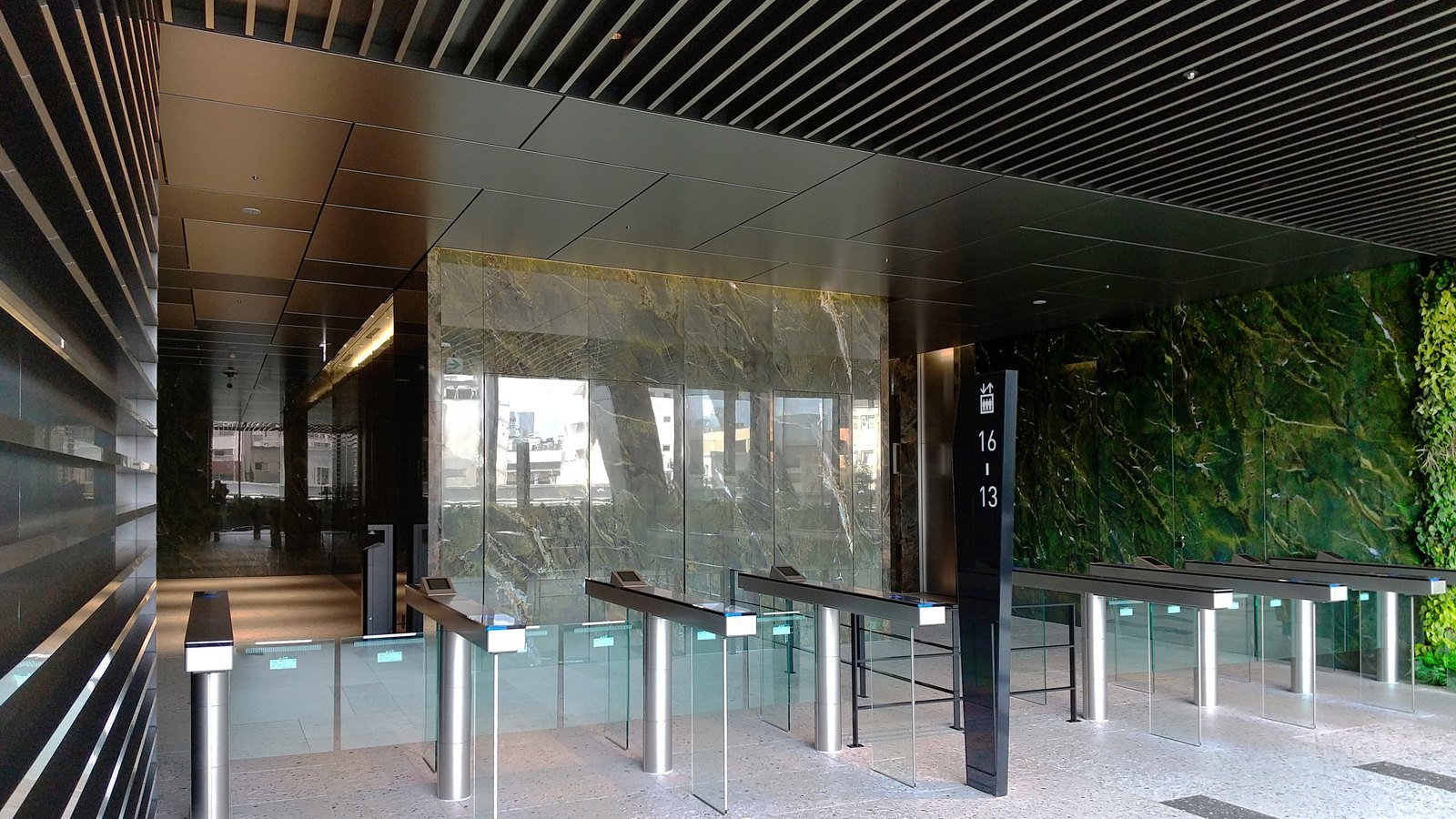
A visitor management app in Dubai has one job at the front desk: know who is coming, confirm who arrived, and keep a record that stands up later, without slowing the queue. For an office tower, a construction site or a security operator, that usually means a host app for invitations, a guard or reception app for check in, and an admin console that holds the log and talks to the access control system.
The rules shape the build more than most owners expect. Emirates ID data is personal data under the UAE data protection law, cameras and door systems in Dubai sit under the Security Industry Regulatory Agency (SIRA), and app stores police location tracking closely. This guide walks through the journeys, the integrations and the regulatory points, as of October 2026.
Key points
Owners often picture a tablet on the reception counter. In practice the reception screen is the smallest part. A visitor management app for a Dubai office or site splits into three products that share one database, and each has a different user who will judge it on different things.
Employees invite guests, approve walk ins and get a message when their visitor arrives. Visitors receive an invitation with a QR pass, directions to the right gate or tower entrance, parking notes and any site rules. For most offices this part can be a web link, because a visitor coming once will not download anything.
This is the working tool: scan the QR pass, capture ID, take a photo if the policy needs one, print or issue a badge, and flag anyone on a watch list. It runs on a tablet or a rugged phone, it must work with gloves and glare at a site gate, and it needs to queue data when the network drops.
In the console, security managers and facility teams set rules per building, per tenant and per visitor type, run reports, export logs on request and manage retention. Because it holds identity data on everyone who has entered, its access controls, audit trail and hosting matter more than its looks. Our cyber security services page covers testing that kind of system before launch.
Pre registration is where a visitor management app in Dubai saves the most time. When a host has already entered the visitor’s name, company, purpose and time slot, the guard confirms rather than types, and the lobby queue at nine in the morning shrinks to a scan.
Each invitation should create a pass that only works for a set date and time window and for the entrances the visit needs. A delivery driver’s pass might open the loading bay only. A contractor’s pass might cover five working days but only the plant room floors. Recurring visitors such as cleaners or couriers need a different rule set from one off guests, so plan visitor types early.
Residents of the UAE carry the Emirates ID, which the UAE government portal describes as the government issued identity card for citizens and residents, with an electronic chip holding the holder’s personal data. The same page states that companies are not allowed to withhold the Emirates ID cards of employees, customers and visitors, and that they are allowed to take the personal data on the cards. That single line settles a common reception habit: the app should read or photograph the card and hand it back, not hold it until the visitor leaves.
Tourists and business visitors from abroad carry passports instead, so the capture flow needs both paths. Decide which fields you actually need. A visitor management app for a Dubai office rarely needs a passport photo page stored for years; a name, document type, the last few digits and a timestamp may be enough for your policy. Capturing less makes the PDPL questions below far easier.
On construction and industrial sites the visitor is often a subcontractor’s worker. The app can hold induction videos or a safety checklist that must be completed before the pass activates, record the sponsoring company, and attach permits to work. This is where a visitor management app for a Dubai site differs most from an office one: the gate decision depends on documents and training, not only on an invitation.
Two sets of rules meet at the entrance. The UAE Personal Data Protection Law governs what you collect about visitors. SIRA, Dubai’s security industry regulator, governs the cameras, access control and guarding around them. This is general information, not legal advice.
Federal Decree by Law No. 45 of 2021 came into force on 2 January 2022, according to the UAE government portal, and it prohibits processing personal data without the owner’s consent, with listed exceptions. The law’s definition of personal data names identifiers such as name, voice, image, ID number, electronic identifier and geographic location, so a visitor log is personal data from the first entry. Biometric data, described in the law as data such as facial images or fingerprints that can confirm a person’s unique identity, sits inside the sensitive personal data category.
The practical design consequences for a visitor management app in Dubai are clear enough. Show a short notice at check in explaining what is captured and why. Collect only the fields your policy needs. Article 5 of the law says personal data should not be kept once the purpose of processing has ended, so set a retention period per visitor type and let the console delete or anonymise records automatically. If you plan face matching for returning visitors, treat it as biometric processing and get advice first. Note that the law’s scope carves out some categories, including government entities and certain free zone entities with their own data protection legislation; a business in DIFC, for example, should check the DIFC Data Protection Law instead.
SIRA issued Administrative Resolution No. 13 of 2025 approving the Preventive Systems Manual under Law No. 12 of 2016 regulating the security industry in Dubai. The manual sets minimums that affect any app touching the camera system:
Two of those points belong directly in the app. If guards can pull a clip to attach to an incident, the app should write the copy record automatically. And every timestamp in the visitor management app should come from a synchronised server clock in Dubai, so a visitor’s check in time lines up with the camera footage when someone needs to compare them. For business centres, the manual also lists recognition view cameras at reception desks and identification view cameras at entrances, which tells you where a check in photo adds little because the camera already covers it.
For a Dubai security operator the guard app is the product, and visitor management is one module inside the app. A security guard app in the UAE has to prove to the client that patrols happened, capture incidents properly and pass the shift cleanly to the next team.
Guard tours work by placing tags at checkpoints: plant rooms, fire exits, roof doors, car park levels. The guard scans each tag on the route, and the app records the time, the guard and the device. NFC tags are harder to copy than a printed QR code, which a guard could photograph once and scan from the guard room; QR costs less and works on any phone. Many operators use NFC for critical points and QR elsewhere. The console should show missed and late checkpoints per route and per shift, because that is what a facilities manager asks for when renewing a contract.
An incident form should be quick on a phone: category, location picked from the site map, free text, photos and an optional voice note, all stamped with server time. Reports take added notes but are never overwritten, so the original account survives. Escalation rules decide who is alerted for a water leak versus a trespasser.
Handover is where information gets lost. A handover screen that lists open incidents, keys issued, visitors still on site and equipment checked turns a verbal briefing into a record. The roster side matters too: SIRA’s Security Cadre Card service lets licensed security providers obtain the licence that allows a person to practise private security professions in Dubai, and SIRA states the licence is valid for two years. A guard app can hold each guard’s licence expiry and block rostering when it lapses.
One rule changes the scope for operators. The 2025 manual requires security guard service providers to use communication and security devices, and security apps for smart devices, approved by SIRA, for communication between management and personnel, between personnel, and with security and safety authorities in Dubai. If your security guard app UAE project includes messaging or alerting between guards, confirm with SIRA how approval applies before you build that module, or integrate with an approved tool rather than replacing it.
Access control app development in Dubai almost never means building the door system. The controllers, readers and turnstiles already exist, supplied and maintained by a licensed contractor. The app’s role is to issue credentials and read events through the access control vendor’s API or SDK. SIRA’s manual helps here: it requires that complete software development kits be provided for all components of access control systems so they can integrate with other systems, and that the management software keep login and logout records for linked devices for at least one year.
The simplest link is a visitor QR pass that the turnstile reader accepts. The visitor management app then registers the visitor in the access system of the Dubai building with a validity window, receives a credential, and revokes it when the visit ends. Ask the vendor whether their readers accept dynamic QR codes and how quickly a revoked pass stops working.
Staff increasingly open doors with phones. Apple’s support pages describe employee badges in Apple Wallet that require a participating employer and an app provided by the employer, with Express Mode on by default so the phone can be held to the reader. That is only possible when your access control vendor supports it, so the question goes to the vendor first, then to the app developer.
The manual also states that integrating different systems with security systems, such as video surveillance with access control, alarms and building management systems, must use PSIM platforms after prior written approval from SIRA. A visitor management app in Dubai that only creates passes through the vendor’s API is a smaller step than one that merges camera, alarm and door events, and your contractor should confirm with SIRA which side of that line your design sits.
Developers and villa communities ask for a smart home app in Dubai that controls lights, air conditioning, curtains, locks and intercoms. The trap is writing a separate integration for every device brand. A better route is to sit on a platform.
The Connectivity Standards Alliance describes Matter as an IP based connectivity protocol designed so devices from multiple brands work natively together, running on WiFi and Thread with Bluetooth Low Energy used for commissioning. Home Assistant, a widely used open source hub, exposes a REST API where every request needs an access token, actions are called through a services endpoint, and a WebSocket API is recommended for connections that track changes. Building your app on a hub like this keeps local control working when the internet does, and lets the property team swap device brands later.
For the security side of a smart home, keep the door lock and intercom flows strict: confirm before opening, log every remote door release, and let a resident see who opened the door. Guest codes follow the same rules as passes in a visitor management app for a Dubai office: a time window, an expiry and a record.
Security operators, cleaning firms and field service companies often want an employee tracking app in the UAE to confirm guards are on post or technicians reached the site. In a visitor management app for Dubai operators, this is the most sensitive module and the easiest to get wrong.
Geographic location is personal data under the PDPL definition, so tracking needs a lawful basis and a clear purpose. Track during shifts, not evenings and weekends. Prefer event based location, such as a checkpoint scan or a geofence check in at the start of a shift, over continuous tracking. Show the employee what is being recorded, and give supervisors summaries rather than raw trails where a summary does the job.
Google Play’s background location policy says apps should access location in the foreground wherever possible, must show a prominent in app disclosure before the permission request, and must declare the background feature in Play Console. Its Stalkerware rules allow apps that monitor individual employees only if they do not present themselves as surveillance, show a persistent notification and a unique icon while running, disclose the tracking in the store listing, and use the isMonitoringTool flag with the enterprise management value. Google also says such apps cannot be used to track other adults. An employee tracking app UAE companies install on personal phones has to meet all of these, which is one reason many operators issue company devices instead.
Track the shift, not the person. Location data collected outside working hours is a liability, not evidence.
A short list of questions catches most of the problems we see in briefs for this kind of system. If you want the wider picture of how we plan and scope apps, see our mobile app development page, and for a first version with only the core flows, the guide to building an MVP.
Cost depends heavily on how many integrations the brief includes; our guide to mobile app cost in Dubai explains what moves the number, and every project gets a fixed written quote, scoped to your brief.
Our team designs and builds visitor, guard and access apps for Dubai offices, sites and security operators, starting from a written brief and a fixed price proposal sent within 45 minutes during business hours, with no obligation. You approve the full design before development begins, and you own the code, hosting and logins at handover. If you run a security company and also need the public website that wins contracts, see our security company website design page. To discuss a visitor management app for your Dubai building or operation, send us the systems you already run and the journeys you want to fix.
Straight answers
No. The UAE government portal states that companies are not allowed to withhold the Emirates ID cards of employees, customers and visitors, although they may take the personal data on the card. Design the check in so the card is read or photographed and handed straight back.
SIRA's Preventive Systems Manual says integrating video surveillance with access control, alarms or building management systems must use a PSIM platform after prior written approval from SIRA. Your licensed security systems contractor is the right party to raise that with SIRA before the integration is built.
It should. Guards scan checkpoints in plant rooms and lower levels where signal drops, so the app needs to store scans, photos and reports on the phone and sync them with their original timestamps once the connection returns. Ask the developer to demonstrate this in a basement, not on office wifi.
The UAE data protection law treats geographic location as personal data and generally requires a lawful basis such as consent. Keep tracking to working hours and work purposes, tell staff exactly what is collected, and take legal advice for your situation, since this guide is not legal advice.
Usually not. Going through a platform such as Matter or a hub like Home Assistant means the app controls many brands through one interface, and the hub keeps working locally if your cloud service is down. Device by device integrations multiply the maintenance work every time a manufacturer changes its API.
Sources
Fixed price, in writing
Got it. Your quote is being written now.
In business hours you will have it within 45 minutes. Check your inbox for the confirmation.
Keep reading

What well known sites such as GOV.UK, u.ae, RTA, Apple and Stripe get right, and how to turn those qualities into a brief.
Read the article
Registrar, DNS and hosting are three separate things. Here is which ones a UAE business should hold, and what the .ae rules say.
Read the article
When a breadcrumb trail earns its place on a UAE website, and how to design, mark up and translate it properly.
Read the article