Best website design examples, and what they get right for Dubai and UAE businesses
What well known sites such as GOV.UK, u.ae, RTA, Apple and Stripe get right, and how to turn those qualities into a brief.
Read the articleWeb Services
Why translated keyword lists miss real Arabic searches, how to research them with Google's own tools, and how to map them to Arabic pages Google can serve correctly.
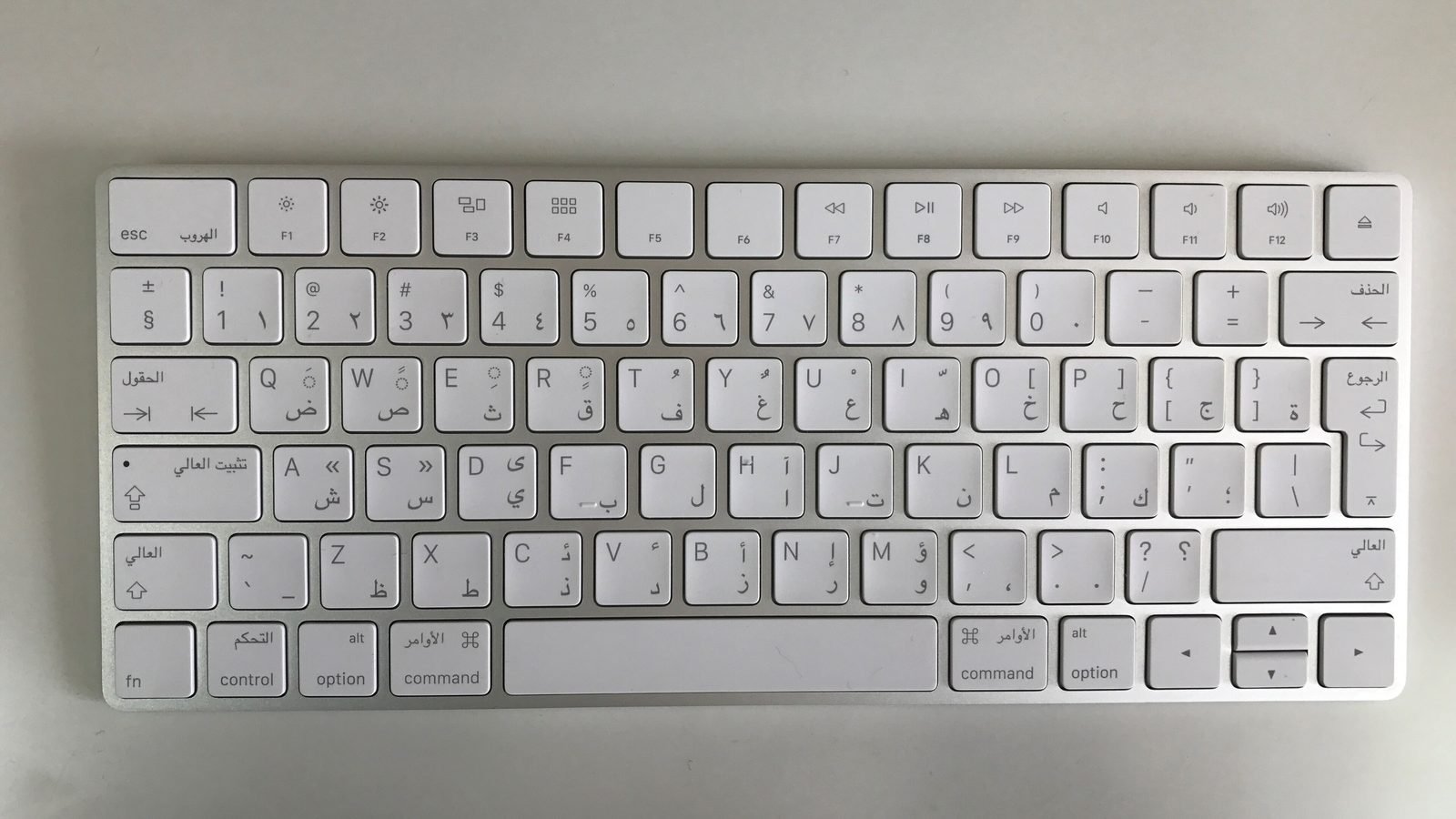
Arabic SEO in the UAE starts with keyword research done in Arabic, not with translating an English keyword list. Customers in Dubai and across the Emirates search with spelling variants, dialect words, English brand names written in Arabic script and sometimes Arabic typed in Latin letters. Find those terms with Keyword Planner set to Arabic and the UAE, with your own Search Console data and with the words customers use in calls and chats, then give each group of terms a genuine Arabic page linked to its English equivalent.
Google’s documentation is clear that it works out a page’s language from the visible content, not from code. So the Arabic has to be real, the page has to answer the Arabic searcher’s question, and the technical signals only help Google show the right version to the right person. This guide walks through the research and the page decisions that follow, based on Google’s own guidance as of September 2026.
Key points
Google’s SEO Starter Guide makes a point that applies twice over in a bilingual market: people who know a subject search with different words from people who are new to it. In Arabic, that difference is multiplied by register, dialect and script. A literal translation of “car rental Dubai” gives you one grammatically correct phrase. Real searchers may type several others, and some of them may be far more common than the textbook version.
The same guide also notes that Google’s language matching systems can connect a page to queries that do not repeat its exact wording. That is reassuring, but it does not remove the need for research. It means your job is to understand the vocabulary and intent well enough to write a page that covers the subject naturally, not to repeat every variant, which is the practical heart of Arabic SEO.
A translated keyword list tells you what your English speakers search for, in Arabic. It does not tell you what Arabic speakers search for.
Before opening any tool, list the kinds of variation you need to test. Each of these can split what looks like one keyword into several distinct searches.
| Type of variation | Example | What to check |
|---|---|---|
| Hamza on alif | أسعار or اسعار | Many people type the letter without the hamza. Check both forms. |
| Taa marbuta and haa | شركة or شركه | Informal typing often swaps the final letter. |
| Alif maqsura and yaa | مستشفى or مستشفي | The dotted and undotted endings are used interchangeably by many writers. |
| Loanwords in Arabic script | لابتوب alongside حاسوب محمول | Everyday speech often borrows the English word; formal writing uses the Arabic term. |
| Brand and place names | دبي مول or مول دبي | Word order and spelling of names in Arabic script vary between searchers. |
| Arabic typed in Latin letters | Words using numbers such as 3 or 7 for Arabic letters | Common in chat. Look for it in Search Console before investing in it. |
| Standard and colloquial words | A formal term versus the word used in conversation | Ask Arabic speaking staff what customers actually say on the phone. |
None of these means a page should list every form. They tell you which variant to lead with in titles and headings, and which others to use where they read naturally in the text, and that discipline is what separates careful Arabic SEO from keyword stuffing.
Keyword Planner is built for advertisers, so its numbers need careful reading when you use them for organic search, the foundation of reliable Arabic SEO data.
| Setting or metric | What Google’s help centre says | What it means for Arabic research |
|---|---|---|
| Average monthly searches | Average searches for a keyword and its close variants, for the months, locations and network you select | Spelling variants may be combined, so two rows can reflect overlapping demand. |
| Rounding | Volumes are rounded, and totals across several locations may not add up as expected | Treat numbers as relative size, not exact counts. |
| Date range | Historical data is averaged over 12 months by default | Shorten the range to see seasonal demand around Ramadan, Eid or school terms. |
| Historical metrics and forecasts | Forecasts reflect bid, budget and seasonality; historical metrics do not | Use historical search volume for organic planning, not ad forecasts. |
| Language setting | Ads language targeting considers users’ language settings and whether Google is confident a user understands the ad’s language | Arabic speakers with English device settings still exist in the data you are not seeing. Search Console fills that gap. |
If you also run paid search, the Arabic terms that convert in your Google Ads campaigns are some of the most reliable evidence you can bring into organic planning.
Research only pays off if each Arabic term leads to a page Google can identify and show to Arabic searchers, which is the technical half of Arabic SEO.
Google’s guidance on multilingual sites compares country domains, subdomains, subdirectories and URL parameters. It describes subdirectories such as example.com/ar/ as easy to set up and low maintenance, and it does not recommend parameters such as ?lang=ar. For the page path itself, Google’s URL guidance encourages words in the audience’s language, or transliterated words, and shows Arabic words being percent encoded in the address. Pick one convention for Arabic paths and apply it across the site.
Hreflang tells Google which pages are language versions of each other. According to Google’s documentation, codes use an ISO 639-1 language such as ar or en, optionally followed by an ISO 3166-1 region such as AE, so ar-AE is valid but AE alone is not. Annotations can live in the page head, in HTTP headers or in the XML sitemap. If two pages do not point at each other, Google ignores the pair. Google also confirms it does not use hreflang to decide a page’s language; it relies on its own analysis of the text.
Google advises against automatically redirecting people to another language version and against adapting content based on IP location, which it calls difficult and generally not reliable. In the UAE, where an Arabic speaker and an English speaker may share the same office network, a visible language switcher is the safer choice.
Two of Google’s spam policies are directly relevant to Arabic SEO projects.
Practical rules for the page itself: write the title and main heading around the primary term in natural Arabic, answer the searcher’s question in the opening lines, use supporting variants only where a fluent reader would not notice them, and make sure prices, contact details and calls to action match what the English page offers. Google’s Starter Guide also confirms that the meta keywords tag is not used, so time spent filling it is wasted on any page, Arabic SEO included. If your team needs help producing that Arabic copy, our Arabic and English translation service and website content writers work from the keyword map rather than from a word count. For the difference between translating copy and adapting it, see our guide to translation and transcreation for Arabic marketing.
Search Console’s Performance report can be grouped by queries, pages, countries, devices, search appearance and dates, and it is the main tool for measuring Arabic SEO progress over time. Build a simple monthly view with these filters: country set to the UAE, pages containing your Arabic path, and a list of your mapped primary terms. Watch impressions first, because they show whether Google is testing the page for Arabic queries before clicks follow.
Google’s help centre notes that results depend on the time, place, device and history of the person searching, so a query appearing in the report does not mean you will see your page when you search it yourself. Judge progress from the report, not from spot checks on your own phone. Businesses with a physical location should also make sure their Google Business Profile is complete, because Arabic map searches rely on it as much as on the website.
We research Arabic and English keywords as separate lists, map them to pages, and brief bilingual writers and developers from the same sheet. That work sits within our SEO services, and for businesses serving nearby customers it links closely with local SEO. We report what can be measured, such as impressions, clicks and enquiries from Arabic pages, and we do not promise rankings for any term. Tell us which services matter most and you will receive a written fixed price proposal within 45 minutes during business hours.
Straight answers
Research both and let the data and your customers decide. Formal Arabic often suits service descriptions and legal or medical topics, while everyday product and service searches may use colloquial words. Many pages end up written in clear standard Arabic with the common everyday terms included naturally.
Google's spam policies list automated translation used to produce many pages with little value among the forms of scaled content abuse. A draft from a tool can help a writer, but the page that goes live should be reviewed and adapted by a fluent Arabic writer.
No. Google's documentation treats a subdirectory such as /ar/ on your existing domain as a valid structure that is simple to set up and maintain. A country domain is a signal for a country, not for a language.
Google's SEO Starter Guide says some changes take effect in hours and others take several months, and suggests waiting a few weeks before judging whether work has helped. We do not promise positions or timelines for any keyword.
It depends on who buys from you. Check Search Console for Arabic queries you already receive and ask your sales team how often customers switch to Arabic. If both are low, English pages may be the better use of the budget for now.
Sources
Fixed price, in writing
Got it. Your quote is being written now.
In business hours you will have it within 45 minutes. Check your inbox for the confirmation.
Keep reading

What well known sites such as GOV.UK, u.ae, RTA, Apple and Stripe get right, and how to turn those qualities into a brief.
Read the article
Registrar, DNS and hosting are three separate things. Here is which ones a UAE business should hold, and what the .ae rules say.
Read the article
When a breadcrumb trail earns its place on a UAE website, and how to design, mark up and translate it properly.
Read the article