Treatment tagged per pair on an aesthetics clinic website
Every before and after set names the specific treatment shown, rather than a vague “results” label that could apply to several procedures.
Web Design by Industry
An aesthetic clinic website in Dubai lives or dies on how before and after images and treatment claims are handled. We build these sites around a controlled gallery, a consultation booking flow, and wording that a compliance reviewer can sign off with confidence.
An aesthetic clinic website in Dubai has a different problem to most clinic sites. The booking flow matters, but what gets people through the door is the gallery, the treatment descriptions and the tone of the wording around them, and that is exactly the part most likely to cause trouble if it overstates what a treatment can do. Aesthetic clinic website design in Dubai has to hold two things in balance: a brand that looks confident enough to compete for a crowded search term, and content a compliance reviewer would actually approve.
This page covers how we handle the before and after gallery, treatment wording, and where health advertising rules touch an aesthetics site, separately from our wider healthcare website design page and our clinics website design page, both of which focus on booking and the patient journey rather than imagery and claims.
It also covers a distinction that matters more here than almost anywhere else in healthcare: the difference between a surgical procedure and a non surgical one. Injectables, laser and light based devices, skin treatments and body contouring machines are regulated differently from surgery, carried out by a wider range of practitioner types, and searched for differently too. An aesthetic clinic website design in Dubai that treats every treatment on the menu the same way, whether it is a dermal filler appointment or a surgical referral, usually gets both wrong. For a practice offering surgical procedures alongside its non surgical menu, our plastic surgery website design and cosmetic surgery website design pages cover that side separately.
The gallery
An aesthetic clinic website in Dubai loses trust fast when the gallery mixes unrelated photos with no structure. We treat each pair as a small record, not just an image.
Every before and after set names the specific treatment shown, rather than a vague “results” label that could apply to several procedures.
A field against each image pair for whether written consent to publish was given, so nothing goes live that a patient did not agree to show.
Matching angle, lighting and distance between the two photos in a pair, since inconsistent conditions are one of the easiest ways a gallery looks misleading even by accident.
Any pair can be taken down quickly if a patient withdraws consent or a compliance reviewer asks for it, without a developer needing to touch the code.
The practitioner who performed the treatment is credited against the result, which also supports the trust building the rest of the site is doing.
We do not use generic or licensed stock images to stand in for real results. If you have no approved gallery yet, the page launches without one rather than with something misleading.
Advertising rules
Health related advertising in the UAE, which covers many aesthetic and non medical treatments alongside clinical ones, runs through a licensing system operated by the Ministry of Health and Prevention. According to MOHAP’s own service description, a facility needs a valid medical and trade licence to register in the system, and every product or claim featured in an advertisement needs supporting documentation before it goes live, with a specified contact person responsible for the advertising content. Applications in that system take around three working days to process.
What counts as a health advertisement is broad, and MOHAP’s description covers clinics, specialty and diagnostic centres and healthcare related commercial organisations, not only prescription treatments. This is a starting point, not legal advice, and it changes. We ask every aesthetics client to confirm with a compliance adviser exactly which pages and claims need registration before launch, rather than assuming a marketing website sits outside the system.
One detail worth planning around: MOHAP’s own service description notes that a healthcare institution can hold only one account in the advertising system, and that registering more than one freezes all of them. For an aesthetics brand with more than one branch or a related retail entity, deciding early which licensed entity the aesthetic clinic website design in Dubai will advertise under avoids a mix up that is awkward to unwind once content is already published.
Consultation first
Most aesthetic clinic visits in Dubai start with a conversation about suitability, not a fixed appointment on the website, and the booking flow should reflect that.
| Step | What we build |
|---|---|
| Treatment interest | A short menu of treatment categories written descriptively, without outcome promises |
| Consultation request | A form or widget asking what the patient wants to discuss, not which result they want to buy |
| Practitioner match | Where relevant, showing which practitioner handles that treatment area |
| Confirmation | A clear message on what happens next, since a consultation booking usually needs a human reply |
This sequence keeps the site honest about what it can promise on a screen versus what only a practitioner can assess in person, which also keeps the wording easier to defend if it is ever reviewed.
Build and content
An aesthetic clinic website in Dubai needs more sign off steps than a typical service site, so we plan for that from the first brief.
What each treatment involves, written by you or approved by your compliance reviewer, since we do not invent clinical descriptions.
Before and after images with confirmed patient consent to publish, and the treatment matched to each pair.
Names, specialties and qualifications for each practitioner who should appear against a treatment.
Who signs off wording and claims before publishing, so a launch is not delayed by finding this out afterwards.
Whether consultation requests should connect to existing software or route to your front desk directly.
Development, hosting and handover sit under our website development page, and the gallery and booking screens are designed under UI UX design before any build work starts. Once the site is live, ranking for treatment and specialty searches is covered under SEO services.
The buyer
At a single aesthetics brand, sign off usually sits with the clinic owner or medical director, often together with a marketing lead who runs the social accounts that already bring most of the enquiries. Where the brand has grown into more than one branch, a general manager or group marketing director is added to that list, and a compliance reviewer becomes a fixed part of every sign off rather than an occasional check. Whoever approves the site is rarely thinking about the homepage first. They are thinking about whether the gallery and treatment wording will survive scrutiny, and whether the booking flow actually reduces the number of DM enquiries the front desk has to answer by hand.
What this buyer is measured on tends to be consultation bookings converted from the treatment pages, not raw traffic, since an aesthetics site can rank well and still fail to fill the consultation room if the wording is too cautious to be convincing or too promotional to be approved. The questions we hear first from this buyer are practical: can the gallery be updated by the clinic’s own team without a developer, can a new injector be added to a treatment page the week they start, and does the booking form actually distinguish a first time consultation from a repeat client rebooking a maintenance session.
The treatment menu
A single flat list of treatment names is the most common structural mistake we see on an aesthetic clinic website in Dubai, since injectables, devices, skin treatments and body treatments are different decisions for a patient, not one long menu.
Dermal filler, anti wrinkle injections and similar treatments, each with its own page explaining what it involves, typical downtime described in general terms, and who performs it.
Laser, IPL, radiofrequency and similar machine led treatments, grouped separately since the qualifications required to operate them differ from injectables.
Facials, peels and skin health programmes, usually the entry point for a new client who has not yet decided on anything more involved.
Non surgical body contouring and skin tightening, kept distinct from the surgical body procedures covered on our plastic surgery website design page.
Where a clinic bundles a course of sessions, the page describes what is included and how many sessions, not a discounted headline figure, since pricing stays behind an enquiry throughout the site.
A clearly labelled section for anything recently added to the menu, so the newest offering does not get lost inside an already long list.
Practitioner qualifications
Non surgical cosmetic procedures carried out in a Dubai facility fall under the Dubai Health Authority’s Standards for Non-Surgical Cosmetic Procedures, a Health Regulation Sector document (reference DHA/HRS/HPSD/ST-05) that became effective in February 2025. It sets requirements that touch a practitioner page directly, not only the treatment room. Every healthcare professional practising in a non surgical cosmetic facility is required to hold an active DHA licence and work within the scope and privileges that licence actually grants, hold a valid Basic Life Support certificate, and carry up to date medical malpractice insurance.
One requirement is easy to miss and directly shapes how a practitioner page should read. The standard states that healthcare professionals must not use titles that differ from their actual DHA licence, and it names examples specifically: Cosmetic Specialist or Consultant, Aesthetic Specialist or Consultant, Aesthetician, Cosmetologist, Beauty Specialist or Consultant and Anti Aging Specialist or Consultant. An aesthetic clinic website design in Dubai that invents a flattering job title for a practitioner page, rather than showing the licensed title exactly as issued, is building on the wrong foundation from day one. This is not legal advice, and current requirements should be confirmed directly with the Dubai Health Authority before a practitioner page goes live.
The standard also sets a specific experience threshold for practitioners arriving from abroad: a minimum of two years’ experience performing non surgical cosmetic procedures before working in the field in Dubai, or one year for a beauty therapist. Laser and IPL treatment carries its own separate licence and training certificate requirement on top of a general DHA licence, held only by specific professional categories named in the standard. None of this needs to appear word for word on a public page, but it shapes what we ask a client to confirm before publishing a practitioner’s credentials, since a page overstating a practitioner’s scope is a compliance risk the clinic carries, not just a content error.
A practitioner page that invents a flattering job title is building an aesthetic clinic website design in Dubai on the wrong foundation.
Devices and equipment
Device led treatments bring a piece of the physical clinic onto the website in a way an injectable does not, since the equipment itself is part of what a researching patient wants reassurance about.
Laser hair removal, skin tightening and similar device based treatments read better as their own page than folded into a general “laser” category, since patients search for the specific treatment name.
Describing what a device category does in general terms holds up better than naming a specific manufacturer’s equipment as though owning it were itself the qualification.
DHA facility standards for non surgical cosmetic procedures set physical requirements for a laser environment, including a minimum room size, so a page describing “state of the art” facilities should reflect what the room genuinely is, not a stock phrase.
A treatment page for a device the clinic no longer runs is one of the most common stale content problems on an aesthetics site, and it directly misleads a patient who books expecting it.
Where a treatment requires supervision by a specific specialist, such as certain laser work supervised by a dermatologist or plastic surgeon, the page should not imply a technician is working unsupervised if that is not the case.
Where a treatment normally requires a patch test or an assessment before the first session, saying so on the page sets an accurate expectation rather than one the front desk has to correct by phone.
Search behaviour on an aesthetic clinic website design in Dubai splits clearly into two stages, and building one page to answer both usually serves neither well. A research stage search looks like a treatment name paired with “how does it work” or “what is it”, and is best answered by a treatment page written to explain the process, who it suits in general terms, and what a consultation covers. A ready to book search looks like a treatment name paired with “Dubai”, “near me” or a specific area, and that visitor wants a fast route to the consultation form, not another explanation of the treatment they have already decided to look into.
No search volumes are claimed here, since none have been measured for any specific aesthetics practice. The practical point is structural: an aesthetic clinic website design in Dubai that only builds the explanatory kind of page, because it feels more thorough, tends to lose the second, more valuable search entirely. A visitor who has already decided which treatment they want does not want to read an explainer again before they can find the booking button.
Social led demand
Most new enquiries to an aesthetics brand in Dubai start on social media, not a search engine, and that changes what the website’s own job actually is.
A practice’s Instagram or TikTok account is usually where a prospective patient first sees a treatment, a result, or a practitioner’s personality, and the content that performs well there is often more informal and more visual than anything an aesthetic clinic website design in Dubai can safely mirror, since the advertising rules that apply to a website apply just as much to a post. The website’s job in that journey is not to compete with social content for attention. It is to be the place that confirms what social media only suggested: real qualifications, an actual consultation process, and a gallery that has been through consent and compliance checks rather than posted straight from a phone.
This matters most at the exact point a social visitor lands on the site, usually a specific treatment page reached from a bio link or a story swipe up. If that page cannot answer the same question the social post raised (what does this actually involve, who does it, how do I book) within a couple of screens, the visitor bounces back to scrolling rather than converting. An aesthetics clinic website design in Dubai built around this handoff, rather than assuming visitors arrive cold from a search engine, tends to convert social traffic considerably better.
Data that changes
An aesthetics site ages faster than most service sites, because the menu, the team and the gallery are all genuinely live things, not a one time content project.
| Data | How often it changes | Who usually owns it |
|---|---|---|
| Treatment menu and descriptions | Whenever a treatment is added, paused or discontinued | Clinic owner or medical director, confirmed with compliance |
| Practitioner roster and credentials | As staff join, leave or gain a new certification | Practice manager, verified against each licence |
| Gallery and consent records | Continuous, as new consented photography becomes available | Front desk or marketing, tracked against signed consent |
| Device and equipment list | Occasionally, as equipment is added or retired | Clinic management, reflected in the affected treatment pages |
An aesthetic clinic website design in Dubai therefore needs an editing structure the clinic’s own team can use for the fast moving parts, the menu and the gallery, with compliance sign off built into that workflow rather than treated as a separate step someone has to remember.
Integrations
An aesthetics practice usually already runs booking and point of sale software before the website exists, and an aesthetic clinic website design in Dubai should connect to what is already in use rather than replace it. The most common integration is a consultation or appointment booking system that shows real availability, followed by a package or membership management tool for clients on a course of sessions, and a payment gateway for consultation deposits, since many practices ask for a deposit to reduce no shows on a booked slot.
A consent management layer, even a simple structured form rather than a full system, is the integration most aesthetics practices are missing when they first come to us, and it is the one that matters most given how central consent is to the gallery and to before and after imagery specifically. None of these are assumed. We confirm what software a practice already runs before proposing any connection, rather than replacing a system the front desk already relies on.
Content that goes missing
A clinic often has years of before and after photography on a phone or a social account with no record of which patients agreed to publication, and sorting that out is usually the single biggest delay on an aesthetics build.
Without one person confirmed to sign off wording, review requests stall between the clinic owner and whoever wrote the copy, and nobody wants to be the one who approves a risky claim.
Copy borrowed from a device manufacturer’s marketing material or a competitor’s site is one of the most common things we have to rewrite from scratch, since it usually carries exactly the promotional language an aesthetic clinic website design in Dubai has to avoid.
Phasing
| Stage | What launches | What waits |
|---|---|---|
| Phase one | Treatment menu by category, practitioner pages, a consultation request form, an approved starter gallery | Live booking calendar synced to the clinic system |
| Phase two | Synced real time booking, package and membership management shown online, an expanded gallery as more consent is gathered | Newer treatments still awaiting compliance review or a completed consent process |
| Ongoing | New treatment pages as the menu changes, gallery additions as consent is signed | A full rebrand, done in one batch rather than piecemeal |
An aesthetics practice rarely benefits from waiting for every treatment and every consented photo to be ready before launching. A smaller, accurate site that only shows what is genuinely approved outperforms a delayed one that tries to launch complete.
Arabic content
Dubai’s aesthetics client base is genuinely international, and a bilingual aesthetic clinic website design in Dubai usually pays off fastest on the pages closest to a decision: the treatment pages themselves, the consultation request form, and the gallery captions and disclaimers, rather than only the homepage. A patient researching a specific injectable or device treatment in Arabic and finding only an English page, with no way to book a consultation in their own language, is a common gap on existing aesthetics sites in Dubai, and it is usually the exact pages closest to a booking that get missed while the homepage carries a polished bilingual welcome.
Consent wording deserves particular care in translation, since it needs to carry the same meaning and the same legal weight in both languages, not a loose paraphrase. We treat consent and disclaimer text as content that gets translated properly and checked, not machine translated as an afterthought.
The mistakes we see most often on existing aesthetics sites in Dubai tend to repeat. A gallery still carrying a client’s photos months after they asked for them to be removed, because nobody had a simple way to take a single image down without a developer. A treatment page copied almost word for word from a device manufacturer’s own marketing page, carrying exactly the kind of promotional language a compliance reviewer would reject if they read it closely. A practitioner listed under a flattering invented title rather than the one on their actual DHA licence. None of these require a full rebuild to fix, but each one is a genuine compliance risk sitting quietly on a live page, and an aesthetic clinic website design in Dubai that gets a proper content audit before launch usually catches all three before they become a problem rather than after.
Measuring it
Overall traffic tells an aesthetics owner very little on its own, since a page can rank well for a treatment and still fail to convert if the consultation step feels uncertain.
What matters more is consultation requests by treatment category, since a site performing well overall but poorly for one category, injectables against devices for example, usually means that category’s pages need attention rather than the site as a whole. The share of consultation requests that convert into a booked, attended appointment is a second useful signal, since a form that generates enquiries which never show up is not actually doing its job. None of this is a promised outcome, and no specific result is promised by any aesthetic clinic website design in Dubai on its own. It is what we recommend a practice track using its own booking data, not a figure we would publish here.
Membership and repeat visits
An aesthetics practice depends on repeat visits far more than a general clinic does, since most non surgical treatments need maintenance sessions to keep a result, and a patient who books a first treatment through the website is often the start of a much longer relationship than a single appointment. An aesthetic clinic website design in Dubai that only builds for a first time consultation misses this second, quieter kind of visitor: someone who already knows the clinic, already knows the treatment, and just wants to rebook without repeating the whole research journey.
For a returning client, a simple login or a direct rebooking link sent after their last visit does more for retention than any amount of homepage polish. Where a practice runs a course of sessions or a membership style package, showing a client how many sessions remain, without requiring a phone call to check, removes one of the more common reasons a front desk gets tied up on calls that add nothing to the day.
It is worth being plain about what an aesthetics website does not need to solve at launch. A practice with a handful of treatments and one or two practitioners does not need a membership system, a synced booking calendar, or a fully built out gallery before it can go live usefully. A first version with an accurate treatment menu, consented photography where it exists, and a working consultation request form already answers the questions that matter most to a new visitor deciding whether to enquire. An aesthetic clinic website design in Dubai that tries to launch every feature at once, rather than the version that is genuinely ready, is usually the one that slips past its planned date by months.
The practices we see grow fastest online are rarely the ones with the largest gallery or the longest treatment list. They are the ones where the site stays accurate, where a discontinued treatment disappears from the menu the same week it stops, and where a new practitioner’s page goes live with correct, verified credentials rather than a placeholder bio written in a hurry before launch. That discipline, kept up after the site goes live rather than only during the build, is most of what separates an aesthetic clinic website design in Dubai that keeps converting from one that quietly goes stale.
Referrals and reviews
Word of mouth and reviews carry real weight in the aesthetics industry, since a result a friend or colleague can see in person is often more persuasive than anything a clinic can publish itself. That does not mean reviews belong on the site in the same form they arrive in. A written testimonial describing a specific outcome sits in the same cautious territory as a before and after photo: it needs the same documented, written consent before it can be used, and general star ratings displayed through a reviews widget are a steadier option than quoting individual patient stories on a treatment page.
Where a practice genuinely runs a referral scheme for existing clients, a short page describing how it works belongs under its own heading rather than folded into a treatment page, since it is a different kind of content entirely and reads oddly if it interrupts a clinical description partway through.
Multi branch aesthetics
A single branch aesthetics site can carry one menu, one team and one gallery. A second branch introduces a decision a single site never has to make: which branch a specific treatment, practitioner or piece of equipment actually belongs to.
| Single branch | What changes with a second branch |
|---|---|
| One treatment menu for the whole site | A treatment may be offered at one branch and not the other, so the menu needs a branch filter |
| One practitioner list | Practitioners often split their week across branches, and a page needs to say where, not just who |
| One gallery | Results are still tagged by treatment and practitioner, with branch added as a third, optional filter |
| One compliance reviewer | Usually still one reviewer, but now checking content submitted by two teams instead of one |
An aesthetic clinic website design in Dubai built for a single branch from the outset, without at least planning for this filter, is one of the more disruptive rebuilds we see, since retrofitting branch logic into a menu and booking flow built to assume only one location touches nearly every page on the site. Where a second branch is a realistic near term plan rather than a distant ambition, we would rather build the filter in from the start, even if only one branch is populated at launch, than revisit the whole treatment menu structure a year later.
Related industries
For a clinic where booking flow and the patient journey are the main problem, not gallery and claims.
For surgical procedures rather than non surgical treatments, with its own consultation and gallery rules.
Covers surgical procedure pages, surgeon credentials and hospital privileges separately from this page’s non surgical focus.
Shares some of the same licensing questions around treatments and therapist qualifications.
Relevant where an aesthetics brand also sells skincare products online alongside its treatment menu.
See the full range of industry pages we design and build for.
Selected work
Work across sectors, with the closest to this industry shown first. Every one is a live site, not a mockup.
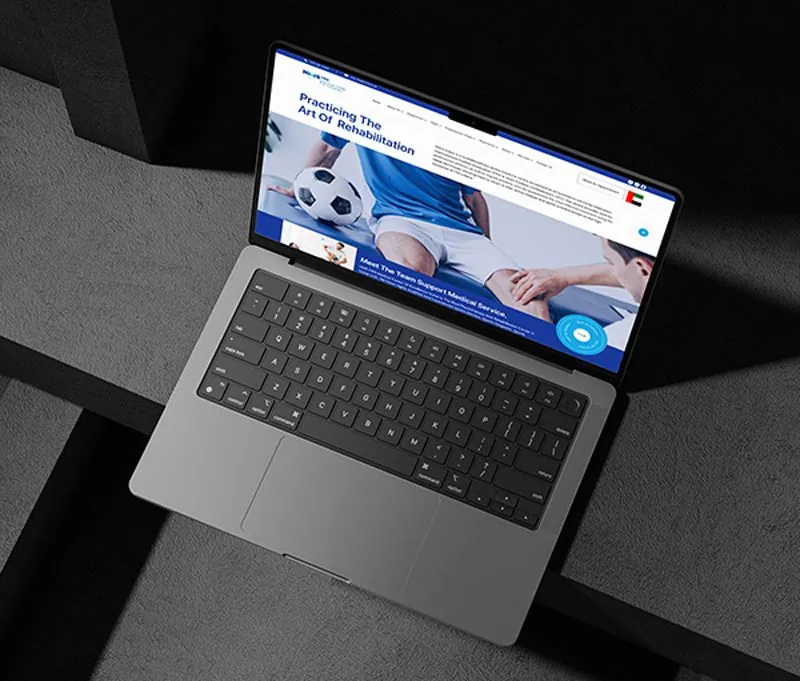
Website · Healthcare · Dubai
A Dubai rehabilitation and physiotherapy practice with one properly bilingual site in English and Arabic.
hmsfmce.com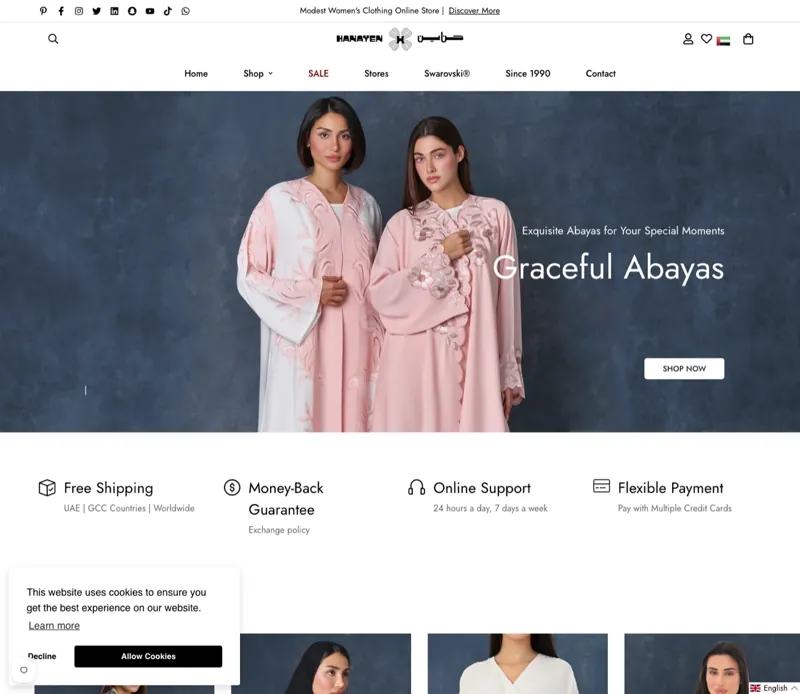
E-commerce · Fashion · Dubai
A Dubai luxury abaya house trading since 1990, carrying its craftsmanship into a quick mobile checkout.
hanayen.com
Website · Furniture · Middle East
A design led furniture brand that launched with no digital home, now shown as carefully as its pieces.
stulo.comStraight answers
Many aesthetics brands do, but how those photos are captioned and consented to is the part that needs care, not the gallery layout itself. We build the gallery to hold consent status and treatment name against each pair, and content wording is your compliance reviewer's decision, not ours.
No. We do not write copy that promises a specific outcome, a percentage improvement, or an assured look, because that is exactly the kind of claim that draws regulatory attention. We write about what a treatment involves and how to book a consultation instead.
Health related advertising in the UAE, including many aesthetic and non medical treatments, runs through a licensing system operated by the Ministry of Health and Prevention. This is not legal advice, and you should confirm what applies to your specific treatments and facility before publishing.
Yes, through a booking widget connected to your system where available, or a consultation request form. We treat this as a distinct step from a full appointment booking, since most aesthetic visits start with a consultation rather than a fixed treatment slot.
Every project gets a fixed written quote scoped to your brief, sent within 45 minutes during business hours with no obligation. Gallery volume, the number of treatments and practitioners, and any booking integration are the main cost drivers.
Sources
Fixed price, in writing
Got it. Your quote is being written now.
In business hours you will have it within 45 minutes. Check your inbox for the confirmation.