
Age group pages for the nursery website
Nursery, toddler, pre kindergarten and kindergarten rooms each described separately, with a sample daily schedule and lead teacher, rather than one page covering every age at once.
Web Design by Industry
A nursery website in Dubai is read by a parent deciding who looks after their child every day. We build these sites around curriculum, safety, staff ratios and a straightforward way to book a tour, rather than a stock photo gallery.
A parent reading a nursery website in Dubai is not comparing designs, they are trying to work out whether they can trust a stranger with their child for most of the working day. Nursery website design in Dubai has to answer that question directly: who runs the rooms, what the day actually looks like, how safety is handled, and what a real inspection or registration status says, rather than leaning on warm photography alone.
This page sits under our web design by industry work, built through the same website development process as every project, adapted to what a nursery or early childhood centre in Dubai needs a parent to find quickly.
What the site must do
Enrolment decisions take weeks, so the site has to support several visits and a genuine comparison against other nurseries.
Nursery, toddler, pre kindergarten and kindergarten rooms each described separately, with a sample daily schedule and lead teacher, rather than one page covering every age at once.
A simple form collecting the child’s age, preferred visit time and any questions, so staff can prepare before a family arrives rather than improvising a walkthrough.
Drop off and pick up procedure, staff to child ratios, and how the nursery handles allergies or medical needs, written in plain language a parent can act on.
Where daily updates, photos or billing already run through an app, the nursery website should link to it clearly rather than duplicate the same information in two places.
KHDA registration and any published inspection outcome, stated accurately and kept up to date as your status changes.
If popular age groups fill up, saying so on the enrolment page is more useful to a parent than silence followed by a rejection, and it saves your admissions team from answering the same question by phone throughout the week.
Who commissions the site
On a single site nursery, the owner or the nursery manager usually briefs nursery website design in Dubai directly, and they tend to know every room, every teacher and every family personally, which makes the brief detailed but also means the project competes with the daily running of the nursery for their time. On a nursery that is part of a wider early years group with several branches, the brief is more often owned by a marketing or admissions lead who has to represent branches they do not run day to day themselves, and who needs curriculum and safeguarding detail supplied accurately by each branch rather than assumed to be the same everywhere.
Either way, the first meeting for nursery website design in Dubai in almost every case comes back to the same three questions: what a parent needs to see to trust the nursery with their child, how a family actually books and attends a tour, and what KHDA registration detail can be stated accurately and kept current once the site is live.
What a parent came to do
A parent choosing a nursery is making one of the more anxious decisions a website will ever be asked to support, and the site has to move them through it without adding friction.
This happens in the first minute, usually on a phone, often comparing three or four nurseries in the same browsing session. A homepage with no clear age groups, no safety information and no visible registration status gets closed in favour of one that has all three.
A parent who cannot tell whether their child’s age group is open, limited or full will either call to ask, adding load to admissions, or assume the worst and move on to another nursery entirely.
Curriculum names and accreditation logos mean little to most parents compared with a plain description of a day: meals, naps, outdoor time and how a child settles in during the first weeks.
A tour booking form that asks for more than a name, phone number, child’s age and preferred time is asking for detail most parents will not complete on a first visit to the site, and a long form here is a common exit point.
If the tour booking form gives no confirmation, no address detail and no sense of what to expect, some parents simply do not show up, which wastes a staff member’s prepared time as much as it wastes the parent’s own.
A regulator’s own quality standard
KHDA does not only license early childhood centres, it publishes what it expects a quality setting to actually look like, and the website should reflect the same priorities.
The Quality Framework for Early Childhood Care and Education in Dubai, published by KHDA, sets out five domains that describe what quality looks like in an early childhood setting: learning and curriculum, partnership with families, the learning environment, health and safeguarding and wellbeing, and system leadership. It is a quality and improvement document rather than a licensing checklist, but it is a genuinely useful guide to what a nursery website should be able to speak to, since it describes, in the regulator’s own words, what families and inspectors are actually looking for in a setting.
A nursery website that only shows photographs of a bright classroom is addressing a fraction of what the framework covers. Curriculum pages speak to learning and curriculum, a described daily routine and parent app speak to partnership, a described safeguarding policy and nutrition approach speak to health and safeguarding, and a clearly stated KHDA registration status speaks to system leadership. This is a general summary of a published quality framework, not legal advice, and how it applies to a specific setting’s marketing should be checked with KHDA directly.
| KHDA quality domain | What it suggests for the website |
|---|---|
| Learning and curriculum | Age group and curriculum pages that describe what children actually do, not just a framework name |
| Partnership | A described way parents stay informed, whether through a parent app, updates or regular communication |
| Learning environment | Honest description of spaces and resources, without overstating what a photograph alone can claim |
| Health, safeguarding and wellbeing | A plainly stated safeguarding, nutrition and safety approach, covered in more detail below |
| System leadership | Accurate, current KHDA registration and inspection information, kept up to date as it changes |
Content to gather
Nursery website design in Dubai moves fastest when curriculum detail and daily routines are written down by the education team, not summarised secondhand by whoever manages marketing.
Safeguarding and photo consent
Safeguarding on a nursery website is not a single page, it runs through decisions made across the whole site. KHDA’s own Quality Framework for Early Childhood Care and Education in Dubai names safeguarding policies, procedures and practices, including cyber security, as a distinct expected standard, and states plainly that settings must ensure all policies and practices relating to the safe and ethical production and use of digital information about children and their families are strictly adhered to. That single line covers exactly the kind of decision a nursery website design project in Dubai has to get right: what photos go on a public page, what captions accompany them, and where a child’s full name never appears next to their image.
Separately, Federal Law No. 3 of 2016 on Child Rights, known as Wadeema’s Law, states that it is prohibited to expose a child to arbitrary interference in their life, home or correspondence, or to harm their honour or reputation, and that the state protects children from child pornography in all its forms. A nursery is not producing anything close to that, but the law’s underlying principle, that a child’s image and privacy deserve active protection rather than passive assumption, is exactly why photo consent on a nursery website needs a written process rather than an informal one. Neither of these points is legal advice, and a nursery’s own safeguarding and consent policy should be reviewed by KHDA guidance and, where needed, legal counsel.
What we do not state
Ratios are one of the first things a parent asks about, and one of the easiest things for a website to get wrong.
Staff to child ratios in Dubai’s early years settings are set by KHDA and vary by age group, and this page deliberately does not publish specific ratio numbers, because doing so without opening the current, binding regulatory document risks stating a figure that is out of date or simply wrong. A nursery website design project in Dubai should state the nursery’s actual current ratio for each room, sourced directly from the nursery’s own KHDA approved operating documents, rather than a number copied from a competitor’s website or an old marketing brochure.
What a nursery website can safely do is describe how the ratio is maintained in practice, staff scheduling, cover for breaks and sick leave, and how that translates to what a parent actually sees at drop off. That is often more reassuring to a parent than a bare number on its own, and it is content the nursery’s own operations team can supply and stand behind.
A day in each room
Nursery, toddler and preschool rooms run on genuinely different schedules, and one generic “our day” page undersells all three.
Feeding, sleep and nappy change routines that follow each baby’s own schedule rather than a fixed timetable, described in a way that reassures a parent their child is not simply following a group clock.
A structured but flexible day of guided play, an early curriculum introduction, a nap window and increasing independence around meals and toileting.
A more structured schedule closer to a school day in shape, with dedicated learning blocks, outdoor time, and preparation for the transition into kindergarten.
When meals happen, whether food is provided or sent from home, and how that differs by room, stated plainly enough that a parent can plan a child’s morning around it.
How a new child is eased into the routine in the first days and weeks, which is often the single biggest source of parent anxiety at enrolment.
How and when a child moves from one age group to the next, and what changes for a parent when that happens.
Nutrition and allergies
KHDA’s Quality Framework treats nutrition and food hygiene as a distinct expected standard, including policies and practices pertaining to allergies and emergency allergen reaction procedures, alongside guidance for parents on providing nutritious lunch and snack items. For a nursery website, that translates into content most sites currently skip: whether meals are provided or sent from home, how allergies are recorded and communicated to kitchen and room staff, and what a parent should expect if their child has a specific dietary need.
This is a genuine trust signal, not decorative content. A parent managing a child’s allergy reads a nursery’s food and allergy page closely before ever booking a tour, and a page that only says “we cater to all dietary needs” with no detail reads as unverified rather than reassuring.
Regulation and the website
This is a general summary of the public legislation, not legal advice, and current requirements should be confirmed directly with KHDA.
Early childhood centres in Dubai, including nurseries, are regulated under Executive Council Resolution No. 35 of 2020, published on the Dubai Legislation portal. The resolution states plainly that no person may run this kind of centre in Dubai without a trade licence and authorisation from KHDA, which issues initial approvals, reviews curriculum, staffing and fees, and carries out annual assessments. A nursery website should reflect that status accurately, since overstating or misdating a registration is easy for a parent or KHDA itself to check.
Because the resolution ties licensing to ongoing KHDA oversight rather than a one time approval, a nursery website design project in Dubai should include a simple way for your admissions team to update registration or inspection information as it changes, rather than leaving a static claim on the page to go stale. The same resolution sets out a penalty schedule for centres operating outside their approval, which is a further reason a nursery website in Dubai should only ever describe the rooms, age groups and capacity you are actually licensed to run.
Enrolment moves year round
A nursery’s enrolment calendar does not look like a school’s. Families move to Dubai, change jobs and have children throughout the year, so nursery admissions run as a rolling process rather than a single September intake, and nursery website design in Dubai has to reflect that. A page that only mentions one intake date a year, copied from a school’s admissions pattern, misrepresents how most nurseries actually take new children.
What matters more for a nursery is space by room, since a popular age group can fill mid year with no warning tied to an academic calendar. Stating plainly which rooms currently have space, which are at capacity, and whether a waitlist exists for a full room saves admissions staff from fielding the same phone call repeatedly, and it is more useful to a parent than a generic “contact us to enquire” line.
Drop off and pickup
This is one of the more sensitive operational details a nursery handles daily, and the website should describe it accurately rather than skip it entirely.
Stated timing, and how late pickup or early drop off is handled, since this affects working parents planning around a nursery day directly.
How a nursery confirms that only a parent or an approved person collects a child, described in general terms on the public site without exposing the actual security process in detail.
How a parent notifies the nursery if someone new is collecting their child that day, since this is a common real world scenario the website should not leave unanswered.
A nursery website should describe these procedures in enough detail to reassure a parent without publishing anything a bad actor could use against the safeguarding process itself. Where the line sits between reassurance and oversharing is a judgement call for the nursery’s own management, not a rule this page can set.
Integrations that come up often
Beyond the parent communication app already covered, several other systems tend to come up once the brief goes deeper.
Tracking a family from first enquiry through tour, application and enrolment, so admissions staff are not relying on memory or a shared spreadsheet.
A payment or billing system connected to enrolled families, kept separate from the public website, which never publishes fee amounts directly.
A common first contact point for parents in Dubai, worth linking clearly rather than only offering a contact form, and set up properly through WhatsApp API integration where admissions volume justifies it.
Frequently the first result a parent sees when searching a nursery by name, and worth keeping accurate on opening hours and address.
Tracking how many site visitors reach the tour booking form and how many actually complete it, which is usually more useful early on than overall traffic numbers.
An automatic confirmation with address, parking and what to expect, which reduces no shows more than a form alone ever does.
Arabic and a multinational parent body
Dubai nurseries serve families from dozens of nationalities, and language on the website has to account for that reality.
KHDA’s Quality Framework explicitly names the importance of the Arabic language, Emirati and Islamic values and heritage as part of what a quality early years setting reflects, alongside children’s individual identities and cultures more broadly. For nursery website design in Dubai, that supports a genuine Arabic presence on the site, not a token translated page, particularly for Emirati and Arabic speaking families choosing a setting where their child’s home language is respected from the start.
At the same time, many Dubai nurseries serve a parent body where English is the shared working language even though few families are native English speakers, which is different from a UK or Gulf market school audience. Photographs, plain language and a clear visual structure often carry more of the message than dense English text for this audience, and safeguarding and safety information in particular should never depend on a parent’s confidence reading English well.
Multi branch nurseries
A nursery group with several Dubai branches needs the website to tell them apart clearly, not blend them into one description.
Each branch of a nursery group can have a different KHDA registration status, different room capacity, a different age range offered, and sometimes a different curriculum emphasis, even under one shared brand. A parent researching a specific branch, usually the one nearest home or work, needs a page dedicated to that branch with its own address, room availability and registration detail, rather than a single generic page describing the group as a whole with a location dropdown bolted on.
Practically, this means nursery website design in Dubai for a multi branch group needs a structure that lets each branch’s admissions team update their own room availability and tour booking details without needing to touch shared brand content, and a way for the marketing team to keep group wide pages, values, curriculum philosophy, careers, consistent across all of them.
What goes wrong
Most of these are specific to how nurseries operate day to day, not general website problems.
| What we see | Why it matters |
|---|---|
| A child’s full name published next to their photo | Exactly the kind of detail a written photo consent process is meant to prevent |
| A stated ratio that does not match the nursery’s current KHDA approved documents | An easy fact for a parent or KHDA to check, and damaging to trust if wrong |
| One intake date shown, copied from a school template | Misrepresents how nursery enrolment actually runs throughout the year |
| A tour booking form with no confirmation or address detail | A common cause of no shows, wasting a prepared staff member’s time |
| An allergy or nutrition page that says nothing specific | Reads as unverified to a parent managing a real dietary need |
| Multiple branches described on a single blended page | Leaves a parent unsure which details actually apply to the branch near them |
Measuring success
The numbers that matter most sit closer to the admissions funnel than to overall traffic.
Traffic to a nursery website is a weak signal on its own. More useful is how many visitors reach the tour booking form, how many complete it, how many booked tours are actually attended, and how many attended tours convert into an enrolled child. A nursery that tracks this funnel can usually tell within a few weeks whether a website change, a clearer age group page, a faster tour form, a better allergy page, actually moved the numbers that matter, rather than guessing from traffic alone.
Search visibility for a nursery’s own area and nearby communities is worth watching over a longer period, since most families search for a nursery near a specific home or workplace rather than searching for nurseries in Dubai broadly. This is available through an optional SEO retainer once the site itself is live and the admissions funnel is set up to actually measure it.
Build order
Every project runs through the six stages under web services.
Age groups, curriculum detail and admissions process shape a fixed written quote for your Dubai nursery site, sent within 45 minutes during business hours.
Homepage and one age group page are designed first, in a tone that reads as genuinely warm rather than generic, before the rest is approved and built.
Remaining age group pages, the tour booking form and safeguarding content are built and connected, in English and Arabic where your families need both.
Admissions staff test the tour booking form and every claim on the page against current practice before launch.
Domain, hosting and CMS logins sit under your organisation’s name, with training for whoever updates age group pages and registration details.
Search visibility for local area and age group terms is the first thing worth tracking closely, available through an optional SEO retainer.
Content that usually goes missing
The content that most often holds up nursery website design in Dubai is not photography or brand colours, it is the operational detail that only the nursery’s own team can supply accurately. Curriculum and age group copy is usually stronger when written with input from website content writing support rather than left entirely to whoever has time, since a curriculum overview borrowed from a franchise pack rarely matches what a specific Dubai branch actually delivers, and a safeguarding summary written quickly for a website launch often turns out to be incomplete once compared against the nursery’s real internal policy.
The single most common delay is registration and inspection detail: confirming exactly what can be stated publicly about KHDA status, and who inside the nursery is responsible for updating it the moment anything changes. Settling that early, before design work starts on the registration page, avoids a late stage rewrite once legal or operations review the draft copy.
After launch
A nursery website is not finished the day it launches, and treating nursery website design in Dubai as a one time project tends to show within a term or two.
Room availability changes, staff change, KHDA inspection outcomes are published, and a nursery’s own curriculum evolves, so nursery website design in Dubai works best when someone inside the nursery is trained and responsible for keeping this content current, not left to age quietly until a parent notices something is wrong. This is exactly why handover for nursery website design in Dubai always includes training for whoever will make these updates, alongside the domain, hosting and CMS logins themselves.
Search visibility, admissions form performance and tour booking completion are worth reviewing every few months rather than left unchecked, since a small change, a clearer age group description, a faster loading tour form, a more current allergy page, tends to move enrolment enquiries more reliably for a nursery website than it does for many other kinds of business site, simply because the decision a parent is making is unusually high stakes and they read carefully before acting. Reviewing this on a fixed schedule, rather than only when someone happens to notice a problem, is one of the more practical habits behind nursery website design in Dubai that continues to perform well a year or two after launch. A short quarterly check against this page’s own list of common mistakes is often enough to catch most of what tends to go stale on a nursery website design project in Dubai before a parent ever notices.
Where a nursery group is planning nursery website design in Dubai for a new branch, much of the groundwork from an existing branch, safeguarding wording, the KHDA registration explanation, the tour booking flow, can be reused directly, which usually makes each additional branch faster to bring online than the first one was. That reuse is one of the clearer practical benefits of treating nursery website design in Dubai as a repeatable process rather than a one off project for each branch, and it is worth planning for from the very first branch rather than only recognised once a second one is already underway.
Live camera access
Several Dubai nurseries offer parents live camera access to their child’s room through a dedicated app or portal, and where that feature exists, the nursery website has a specific job to do: explain what it is, how a parent gets access once their child is enrolled, and what it is not. A live camera is not a substitute for the safeguarding, staffing and ratio decisions covered elsewhere on this page, and a website that oversells a camera feature as proof of safety, rather than one part of a wider approach, sets an expectation the nursery cannot really meet.
Where a nursery offers this feature, it is usually delivered through a specialist third party camera system built for childcare settings, connected to the parent communication app rather than built from scratch as part of the website. The website’s role is to describe access clearly, who can view it, whether grandparents or other relatives can be added, and to link to the actual login rather than attempt to embed a live video feed on a public page.
A parent choosing a nursery is not comparing designs, they are deciding who looks after their child every day, and the site has to earn that trust with substance, not photography alone.
Tour booking, in detail
A short form gets more completions, but a form that is too short leaves staff unprepared for the visit itself, and getting that balance right is UI UX design work as much as it is copywriting.
Lets staff match the family with the right member of the team before the visit starts, rather than working it out on the spot.
Showing actual available slots, rather than a generic “we will call you”, sets a realistic expectation and reduces back and forth by phone.
For a specific question, an allergy to flag in advance, or a preferred language for the tour, without making the field compulsory.
Address, parking guidance and what to bring, sent the moment the form is submitted, not hours later once someone gets to their inbox.
A short reminder message closer to the tour date measurably reduces no shows for any appointment based business, and a nursery tour is no exception.
What happens next, an application form, a place offer, or a waitlist position, stated on the confirmation itself so a family is not left wondering.
Related industries
Schools and training providers with similar curriculum and admissions pages.
Shares the same emphasis on trust, credentials and safety information.
Another education focused build with course and enrolment pages.
Selected work
Work across sectors, with the closest to this industry shown first. Every one is a live site, not a mockup.
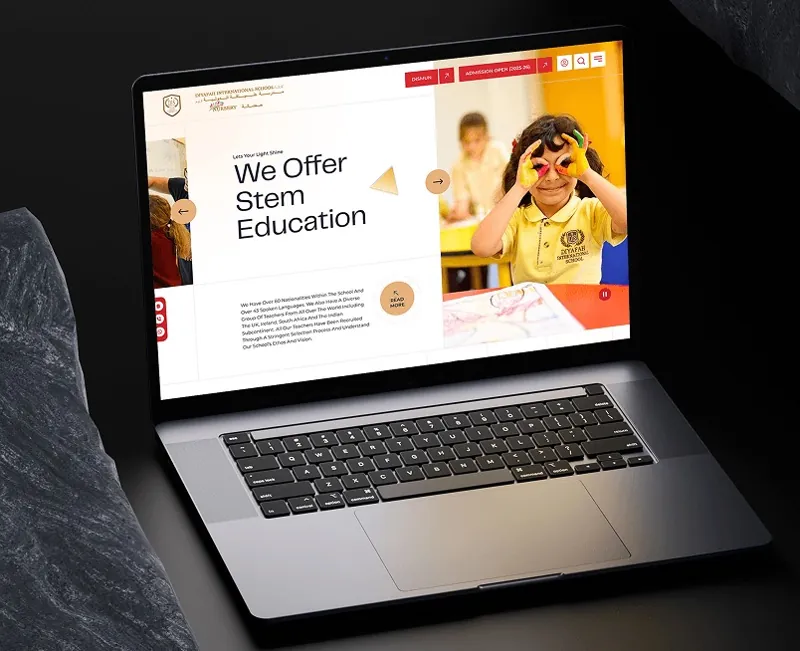
Website · Education · Dubai
One of Dubai's most diverse schools, 2,400+ students and 40+ nationalities, connected across campuses.
aldiyafah.com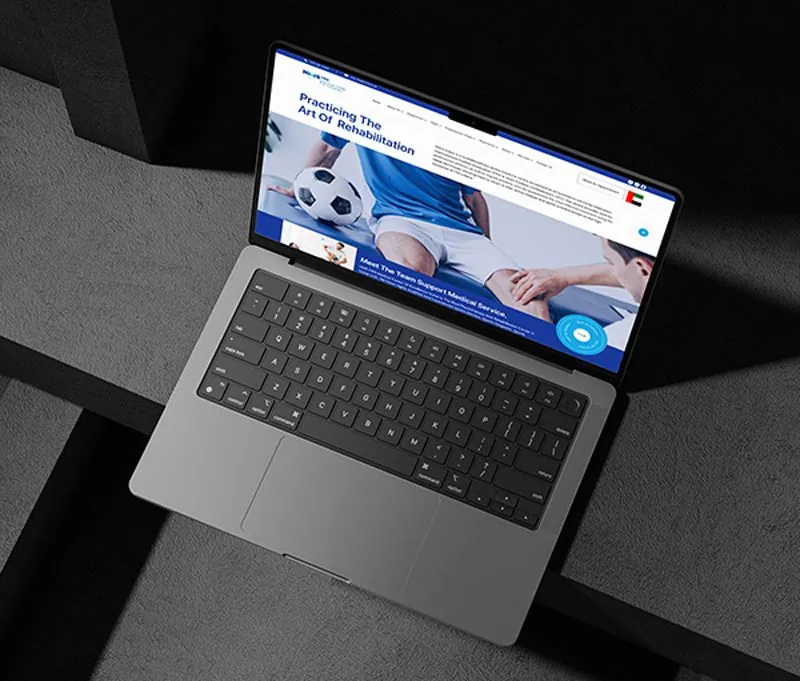
Website · Healthcare · Dubai
A Dubai rehabilitation and physiotherapy practice with one properly bilingual site in English and Arabic.
hmsfmce.com
E-commerce · Retail · Dubai
A Dubai floral boutique on WooCommerce, built around a fast checkout for a gift driven market.
thegorgeousflower.comStraight answers
Yes, showing that the nursery is registered and inspected by KHDA, along with your latest inspection rating if you are comfortable publishing it, is one of the strongest trust signals a Dubai nursery site can carry.
A tour booking form is straightforward to build. Full waitlist or enrolment management usually needs its own system, which the website can connect to rather than replace, so families are not asked to fill in the same details twice.
Only use photos of enrolled children with a parent's written consent on file, and avoid publishing anything that identifies a child by full name alongside their photo. This is one of the more sensitive parts of nursery website design in Dubai, and it is worth a written policy your admissions team can point to.
Yes, a page per age group or curriculum stream lets a parent read exactly what a day looks like for their child's age, rather than one general description covering every room.
Every project gets a fixed written quote scoped to your brief, sent within 45 minutes during business hours with no obligation. Age groups, languages and any parent portal are the main cost drivers.
Sources
Fixed price, in writing
Got it. Your quote is being written now.
In business hours you will have it within 45 minutes. Check your inbox for the confirmation.