
One page per procedure
Rhinoplasty, liposuction, facelift and every other procedure needs its own page describing what it involves and who a consultation is for, not a single combined services list.
Web Design by Industry
Plastic surgery website design in Dubai built around procedure pages, surgeon credentials and a consultation booking flow that keeps photography and outcome wording inside Dubai Health Authority rules.
Someone researching a cosmetic procedure in Dubai is usually further along in their decision than a general medical patient. They have often already narrowed the choice to a specific procedure and are now comparing surgeons on qualifications, approach and, carefully, results. Plastic surgery website design in Dubai has to support that research stage without slipping into promises the practice cannot make, since results and outcome wording are among the most closely watched parts of medical advertising here.
The job of the site is to move a visitor from research to a booked consultation, not to a booked procedure. That distinction shapes almost every page a plastic surgery website design in Dubai carries, from how a procedure is described to how a photo gallery is built. This sits alongside our wider healthcare website design work, built on the same website development foundation as every other build.
A plastic surgery practice in Dubai also sits at the surgical end of the aesthetics spectrum, distinct from the non surgical treatments covered on our aesthetics website design page and from the elective surgery advertising language covered in more depth on our cosmetic surgery website design page. This page focuses on what is specific to a surgical practice itself: how a surgeon’s credentials and hospital privileges are shown, how the site should treat international patients researching from outside the UAE, and how recovery is written about responsibly.
What the site has to do
These are the pages that matter most for a Dubai cosmetic surgery practice.
Rhinoplasty, liposuction, facelift and every other procedure needs its own page describing what it involves and who a consultation is for, not a single combined services list.
Qualifications, training and area of practice, presented plainly, are what a patient checks before trusting a surgeon with an elective procedure.
The site’s job is to get a suitability assessment booked, since a procedure date is set afterwards, not on the website itself.
Where a gallery exists, its structure needs to support consent records and the required disclaimer from the start, not have them added later.
Cost questions are common and legitimate; the answer is a written quote after consultation, not a published price list, which our pages never carry.
General, non promissory information on recovery time and aftercare answers a real question without describing an individual expected outcome.
Photography rules
Cosmetic procedures are where the DHA Guidelines for Medical Advertisement Content on Social Media are most specific about imagery. Before and after pictures must show the same individual, taken with the same lens and from the same angle, with no photo editing or equivalent software applied, and the guidance requires them to carry a statement that results may vary from one patient to another.
The same guidance separately prohibits filming a patient during surgery under general anaesthesia for promotional purposes, and prohibits presenting a procedure as certain to produce a specific outcome. This is not legal advice. Every photo, caption and headline on a procedure page should be checked against current DHA guidance before publishing, and reviewed again if the page is ever updated.
Consultation funnel
A common problem we see on cosmetic surgery sites is a procedure page that jumps straight from a description of the surgery to a contact form, skipping the part a nervous first time visitor actually needs: what a consultation involves, how long it takes, and what questions they should come prepared with. Answering that turns a browsing visitor into a booked one more reliably than adding more procedure detail.
A plastic surgery website design in Dubai also has to plan for language. The second common gap is language. A practice serving Dubai’s international population benefits from at minimum a clear English and Arabic version of every procedure page, since a patient often researches in one language and prefers to discuss in the other.
Page by page
A plastic surgery website design in Dubai lives or dies on structure, not on the volume of content a page carries.
| Section | Purpose | What to avoid |
|---|---|---|
| What the procedure involves | General, factual description | Language that promises a specific result |
| Who a consultation is for | Helps the visitor self qualify | Implying suitability without an assessment |
| Recovery information | General timeframes and aftercare | Individual outcome or timeline promises |
| Photo gallery, where included | Consented, unedited before and after images | Any image without documented consent on file |
| Consultation booking | Moves the visitor to the next real step | A form that promises a procedure date directly |
The buyer
At most Dubai plastic surgery practices, sign off sits with the surgeon themselves, often the founder of the practice, sometimes together with a practice manager who runs the day to day marketing and front desk. Unlike a larger hospital department, there is rarely a separate marketing team standing between the person approving the site and the person whose reputation the site represents, which means the surgeon reads every procedure page and every piece of gallery wording personally before it goes live, not just the headline copy.
What this buyer is measured on is close to what happens in the consultation room: how many enquiries turn into a booked, attended consultation, how many of those convert into a scheduled procedure, and increasingly, how many enquiries arrive from outside the UAE. A plastic surgery website design in Dubai succeeds for this buyer when the consultation booking flow works cleanly and the site’s tone matches how the surgeon actually talks to a patient in person, not a generic clinical voice borrowed from a template.
A plastic surgery website design in Dubai works when the site’s tone matches how the surgeon actually talks to a patient, not a generic clinical voice.
Surgical procedure pages
Surgical procedures fall into natural groups, and a plastic surgery website design in Dubai that organises pages around them helps a visitor find the right page faster than an alphabetical list ever could.
Rhinoplasty, facelift, eyelid surgery and similar procedures, each written around what the surgery involves and what a consultation assesses, not an assumed result.
Liposuction, tummy tuck and body contouring surgery, kept clearly separate from the non surgical body treatments covered on our aesthetics website design page, since patients researching each are asking different questions.
Augmentation, reduction and reconstruction adjacent procedures, written with particular care around outcome language given how closely this category is watched.
A page for patients seeking correction of a previous procedure performed elsewhere, since this is a distinct, sensitive enquiry that should never read as a criticism of another surgeon.
Where a practice commonly performs more than one procedure in a single session, a page explaining how that decision is made in consultation, not assumed in advance.
One page linking every procedure by group, since a visitor who has not yet settled on a specific procedure needs a way to browse rather than search by name alone.
Surgeon credentials
A surgeon profile carries more weight on a plastic surgery website design in Dubai than almost any other page, since an elective surgical decision is, at its core, a decision to trust one specific person. Beyond qualifications and training history, the Dubai Health Authority operates a formal framework behind that trust that a website does not usually explain directly but that shapes what a profile can honestly claim. Under the DHA’s Clinical Privileging Policy, a Health Regulation Sector policy in effect since September 2025, a health facility must run a standardised, evidence based system that grants a physician specific clinical privileges, permission to perform defined procedures, based on verified qualifications, training and demonstrated competence, reviewed by a clinical privileging committee within a two year cycle.
What this means in practice for a website is straightforward: a surgeon’s scope of practice, the procedures they are actually privileged to perform at a given facility, is a real, reviewed and time bound status, not simply a claim made once and left on a page indefinitely. A plastic surgery website design in Dubai should show a surgeon’s qualifications and area of practice plainly, and should be updated if a surgeon’s privileges change, rather than treating a profile page as a one time piece of content finished at launch. This is not legal advice, and the exact privileges held by a specific surgeon at a specific facility should be confirmed directly rather than assumed from a qualification alone.
International patients
Dubai draws a genuinely international patient base for elective surgery, and a plastic surgery website design in Dubai built only for a local audience misses a meaningful share of its actual visitors.
Where a practice offers an initial video consultation before travel, saying so plainly on the site removes the biggest uncertainty an international visitor has: whether it is even possible to speak to the surgeon before booking flights.
A visible note on typical response times and the best way to reach the practice from abroad, since an international enquiry often lands outside normal Dubai business hours.
General guidance on medical history, prior imaging or records a patient should have ready for a consultation, written for someone unfamiliar with how the practice normally works.
General, non specific information on how a consultation, procedure and recovery period typically sequence, so an international patient can plan a visit without the site guessing at their exact schedule.
Where a practice regularly treats patients from a specific region, a third language version of key pages can be worth the investment, confirmed against actual enquiry patterns rather than assumed.
A page addressing how follow up works once an international patient has returned home, since this is one of the most common questions a hesitant international enquiry raises before booking.
International enquiries on a plastic surgery website design in Dubai are also worth routing and tagging separately from local ones in whatever enquiry system the practice uses, since they typically arrive with different questions, need a slower, more considered follow up sequence, and often convert over weeks rather than days.
Recovery information
Recovery is one of the most searched topics on any plastic surgery website design in Dubai, and it is also one of the easiest sections to accidentally overstate. DHA guidance on medical advertisement content is direct on this point: any claim about a treatment outcome, whether stated explicitly or implied, must be substantiated and must include the associated risks, not just the reassuring part. The same guidance lists a long set of absolute and exaggerated terms it treats as unacceptable, including words such as unique, the best, assured success, has no side effects and immediate results, all of which are the kind of language a recovery section can drift toward if it is written to sound encouraging rather than accurate.
The safer approach, and the one we build toward, describes recovery as a general range rather than a fixed promise: typical time off work, typical time before swelling settles, typical follow up schedule, each qualified as varying between patients rather than stated as fact. Risks belong on the same page as the reassurance, not hidden on a separate consent form the patient only sees after they have already decided based on the website alone. This is not legal advice, and every recovery section should be checked against current DHA guidance before publishing.
Build process
A plastic surgery website design in Dubai follows the same process behind every build, with a compliance review step added for this industry.
Data that changes
A surgeon’s own profile is the single most sensitive piece of content on the site, and it is also the piece most likely to fall out of date if nobody owns updating it.
| Data | How often it changes | Who usually owns it |
|---|---|---|
| Surgeon credentials and privileges | Reviewed on a set cycle, updated when privileges change | Practice manager, verified against the surgeon’s own record |
| Procedure list and descriptions | Occasionally, as a practice adds or retires a procedure | The surgeon, reviewed by a compliance contact |
| Gallery and consent records | As new consented photography becomes available | Practice manager, tracked against signed consent |
| International enquiry routing | Rarely, but must stay accurate at all times | Front desk or a dedicated international coordinator |
Search behaviour on a plastic surgery website design in Dubai splits between a research stage and a ready to book stage, much like the wider aesthetics category, but the research stage here tends to run longer, since an elective surgical decision is rarely made quickly. A research search looks like a procedure name paired with “recovery” or “what to expect”, and is best answered by the procedure page itself, written to explain rather than sell. A ready to book search looks like a procedure name paired with a surgeon’s name, “Dubai”, or “consultation”, and that visitor wants a fast route to booking, not another explanation of a procedure they have already decided to pursue.
No search volumes are claimed here, since none have been measured for any specific practice. The practical point is structural: a plastic surgery website design in Dubai that only builds explanatory content, without a clear, fast consultation booking route from every procedure page, tends to lose the visitor who has already decided and just wants to act.
Content that goes missing
A surgeon often has years of case photography with no clear record of which patients agreed to publication, and resolving that is usually the largest single delay on a build.
Qualifications and privileges written from memory rather than checked against the actual record are a common source of last minute edits once a page is already drafted.
Whether the practice genuinely offers video consultations, and how an international enquiry is actually handled, is often assumed rather than confirmed before the international patient section is written.
Phasing
| Stage | What launches | What waits |
|---|---|---|
| Phase one | Procedure pages by group, surgeon profile, a consultation request form, an approved starter gallery | A dedicated international patient portal or video booking system |
| Phase two | A structured international enquiry route, a wider gallery as more consent is gathered, additional language versions | Procedures still awaiting a completed consent process for existing photography |
| Ongoing | New procedure pages as the practice adds services, gallery additions as consent is signed | A full rebrand, done in one batch rather than piecemeal |
A practice launching its first proper site rarely needs every language, every procedure and a fully built international journey finished on day one. The procedures currently drawing the most enquiries going live first, with the structure to add the rest later, is usually the faster and less risky order. A phased approach also gives a compliance reviewer a smaller set of pages to check thoroughly before launch, rather than the whole site at once under deadline pressure.
The mistakes we see most often on existing plastic surgery sites in Dubai tend to repeat across otherwise very different practices. A surgeon’s biography written once at launch and never revisited, so a qualification or affiliation that has since changed sits quietly wrong on a live page. A gallery still carrying a case months after a patient asked for it to be removed, because taking a single image down required a developer rather than a simple content update. Recovery information written to sound reassuring rather than accurate, using exactly the kind of absolute language DHA guidance names directly. None of these require a rebuild to fix, but each one is a genuine risk sitting on a page a prospective patient, or a compliance reviewer, could read at any time.
Measuring it
Overall site traffic tells a surgeon very little on its own, since a busy site that fails to convert a consultation is not doing its job.
What matters more is the share of consultation requests that turn into a booked, attended appointment, since a form generating enquiries that never show up is a symptom of a mismatch somewhere earlier in the page, either the procedure description setting the wrong expectation or the booking step itself being unclear. Tracking international enquiries separately from local ones is a second useful signal for a practice serving both, since the two often need different routing and different follow up, and often a different, slower measure of success given how much longer an international decision usually takes. None of this is a promised outcome. It is what we recommend a practice track using its own booking and enquiry data, not a figure we would publish here.
Multi surgeon practices
A solo practice can build a site around one voice, one set of credentials and one consultation calendar. A group practice with several surgeons changes that, since a plastic surgery website design in Dubai now has to help a visitor choose between surgeons, not just choose to enquire. Each surgeon needs their own profile with their own area of practice stated clearly, since two surgeons at the same practice rarely perform an identical range of procedures, and a shared, generic bio undersells the actual specialism each one has built a reputation on.
The booking flow changes too. Rather than a single consultation request routing to whichever surgeon is free, a group practice benefits from letting the visitor choose a surgeon directly from the procedure page they are already reading, since a patient who has researched a specific surgeon’s work rarely wants to be assigned to someone else without being asked first.
Before and after there was a site
Many plastic surgery practices in Dubai built their reputation on social media first, sharing case results and answering questions through direct message long before a proper website existed.
A direct message thread is not a booking system, and a plastic surgery website design in Dubai gives the practice a consultation flow it controls, rather than one dependent on a platform’s own messaging tools.
Case photography shared casually on social media rarely carries the same consent and disclaimer discipline a website gallery needs, and moving to a proper site is the point where that gets fixed.
A social account only reaches people who already follow it or who see a boosted post, while a plastic surgery website design in Dubai can be found by someone actively searching for a specific procedure with no prior connection to the practice.
Booking data, enquiry history and gallery consent records sit on infrastructure the practice owns outright, not inside a platform account that could change its rules or access at any time.
A qualification mentioned once in a caption gets lost in a feed. A dedicated surgeon profile page keeps that same information visible to every visitor, not just the ones who scrolled far enough back.
A direct message from an international visitor is easy to lose among local enquiries, while a structured international enquiry route on the website keeps that visitor from falling through the gap.
It is worth being honest about what a plastic surgery website design in Dubai does not need to solve at launch. A practice does not need every procedure, every language and a fully built international patient journey finished before the site can go live usefully. A first version built around the procedures currently drawing the most enquiries, a clear surgeon profile, and a working consultation request form already answers what matters most to a new visitor. Building everything at once, rather than the version that is genuinely ready to publish, is usually why a launch slips by months rather than weeks.
What tends to separate a plastic surgery website design in Dubai that keeps converting from one that quietly stops working is not the initial build at all. It is whether the practice keeps the surgeon’s credentials current, keeps the gallery limited to properly consented material, and keeps recovery information worded the same careful way a year after launch as it was on the day the compliance reviewer first signed it off.
Second opinions
A meaningful share of enquiries a Dubai plastic surgery practice receives are not a first time researcher, but a patient who has already consulted elsewhere, sometimes in another country, and wants a second view before committing to a procedure or, in some cases, wants a revision of a result they are unhappy with. This visitor searches and reads differently from a first time patient. They are less interested in a general explanation of what a procedure involves, since they have already had that conversation once, and more interested in whether this particular surgeon has specific experience with cases like theirs.
A short, clearly labelled second opinion or revision consultation page, separate from the standard procedure pages, gives this visitor a route that does not force them to repeat a first time enquiry form designed for someone earlier in the decision. It should never read as a criticism of another surgeon’s work, and should ask plainly for what a second opinion consultation needs: prior operative details where available, and what specifically the patient wants addressed. This is a genuinely different enquiry from a first time consultation request, and treating the two as identical on the website usually means the second opinion visitor gets a response written for entirely the wrong audience and the wrong stage of their decision.
Content review
A single surgeon practice can review content informally. As soon as a practice manager, a marketing contractor or more than one surgeon is involved in drafting content, an informal check is how an unreviewed claim slips onto a live page.
Procedure and outcome content on a plastic surgery website design in Dubai starts from what the surgeon actually knows to be true and can substantiate, not marketing copy adapted from elsewhere.
Specifically checking language against current DHA guidance, not just reading the page for tone or grammar, before anything publishes.
A page written correctly at launch can read differently against guidance that has since been updated, so a plastic surgery website design in Dubai should schedule a periodic review rather than assume a page approved once stays approved forever.
Accessible booking
A consultation request form is the single most important interaction on the whole site, and it has to work for every visitor who reaches it, not just the majority on a fast connection and a large screen.
Most research for an elective procedure happens on a phone, often in a quiet moment away from other people, so the consultation form has to work cleanly there before anywhere else.
Losing a half completed enquiry once is often enough to send a hesitant visitor back to browsing rather than trying again, so we test the form against exactly this failure.
A consultation form for a plastic surgery website design in Dubai should ask only for what is needed to book a first conversation, not a full medical history that belongs in the consultation room, not the browser.
One more area worth planning for early is what happens to enquiry data once a practice’s booking volume grows past what a founder can review personally. A single surgeon handling every consultation request by hand copes well at a small scale, but a plastic surgery website design in Dubai that succeeds tends to outgrow that pattern, and a practice manager or coordinator usually takes over first contact with new enquiries within the first year or two of steady growth. Building the site with that handover in mind from the start, a proper enquiry record rather than messages scattered across email and WhatsApp, saves a disruptive change later once the volume actually arrives.
The same applies to gallery consent records. A handful of consented cases can be tracked informally by a founder who remembers each one personally. A growing gallery cannot, and a plastic surgery website design in Dubai built to hold consent status as structured data against every image, rather than relying on someone’s memory of which patient agreed to what, is the difference between a gallery that stays defensible and one that quietly becomes a liability as it grows.
None of the substance on this page replaces confirming current DHA requirements directly with the regulator for a specific procedure, a specific surgeon’s privileges, or a specific piece of gallery content. It is written as a starting position for that conversation, based on guidance we opened and read ourselves, not a final answer, and every practice’s compliance reviewer should have the last word before anything about outcomes, imagery or credentials goes live on a plastic surgery website design in Dubai. Where a practice is not yet sure who that reviewer should be, naming one before the first page is drafted is worth doing before any content work starts, not after a page is already sitting in a review queue.
Related industries
Goes deeper on the exact advertising language DHA guidance restricts for elective procedures.
A different set of considerations for medically necessary weight loss surgery.
Non surgical treatments, injectables and devices, for a practice covering both sides of the industry.
Shares the same appointment and credential based trust pattern, with its own treatment specific content.
Relevant where a plastic surgeon operates within a larger hospital department rather than an independent practice.
See the full range of industry pages we design and build for.
Selected work
Work across sectors, with the closest to this industry shown first. Every one is a live site, not a mockup.
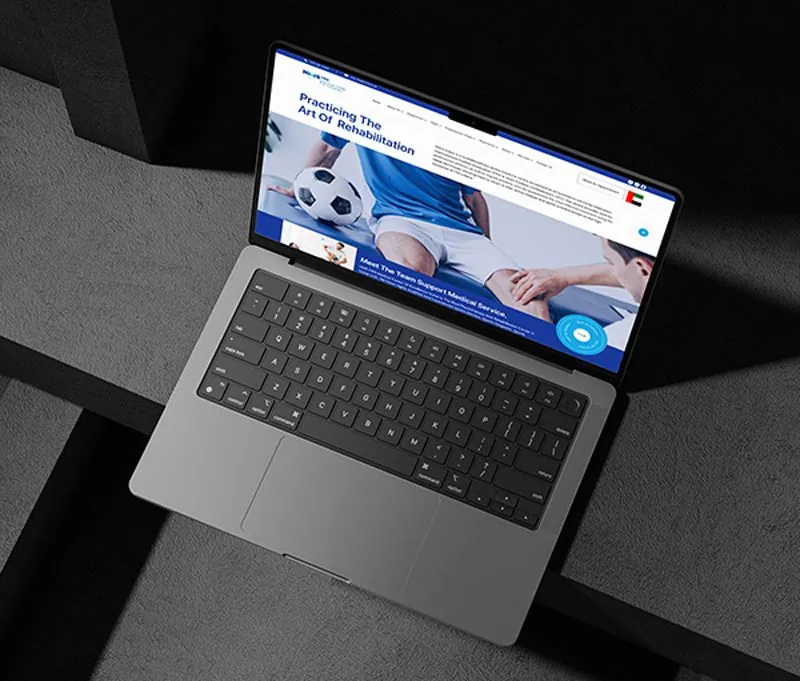
Website · Healthcare · Dubai
A Dubai rehabilitation and physiotherapy practice with one properly bilingual site in English and Arabic.
hmsfmce.com
Website · Furniture · Middle East
A design led furniture brand that launched with no digital home, now shown as carefully as its pieces.
stulo.com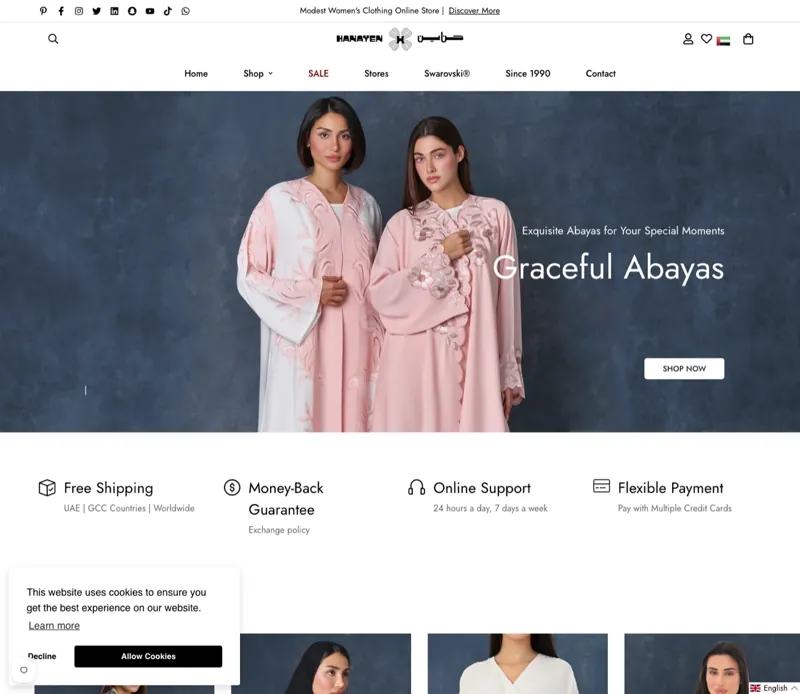
E-commerce · Fashion · Dubai
A Dubai luxury abaya house trading since 1990, carrying its craftsmanship into a quick mobile checkout.
hanayen.comStraight answers
Dubai Health Authority guidance permits this under specific conditions: written patient consent, the same camera and angle for both images, no editing, and a visible statement that results vary between patients. This is not legal advice, and every gallery should be checked against current DHA guidance before it goes live.
No, the site should route visitors to a consultation, not a procedure booking. Surgery scheduling normally happens after an in person or video consultation, once suitability has been assessed.
Wording has to stay general and avoid promising a specific or fixed outcome for an individual. Describing the process, recovery and what a consultation covers is safer ground than describing expected results.
Only with written consent from the patient, and DHA guidance requires that consent to be documented and kept on file, not simply assumed because the patient posted publicly elsewhere.
Showing each surgeon's qualifications and area of practice clearly is common practice, since patients actively check this before booking a consultation. Confirm exactly what must be displayed with the Dubai Health Authority.
Every project gets a fixed written quote scoped to your brief, sent within 45 minutes during business hours with no obligation. The number of procedures covered and any photo gallery work are the main cost drivers.
Sources
Fixed price, in writing
Got it. Your quote is being written now.
In business hours you will have it within 45 minutes. Check your inbox for the confirmation.