
A filterable timetable, the heart of a music school website
Day, time, age group and instrument or dance style, filterable rather than one long image a parent has to zoom into on a phone.
Web Design by Industry
A music or dance school in Dubai lives or dies on term enrolments, not one off visitors. The website needs a class timetable a parent can actually read, instructor pages, and a trial booking flow that turns a browse into a first lesson.
A music school website in Dubai has one real job: turn a parent researching classes at ten in the evening into a trial booking the next morning. Most school sites in the UAE show a list of instruments and a phone number, and leave the parent to work out the rest by calling during office hours. We build music and dance school sites in Dubai around the timetable, the instructor and the trial booking, because that is what a parent is actually trying to find.
This sits inside our wider web design by industry work. For the underlying build, see website development.
What the site has to do
Whether you teach piano to five year olds or run an adult dance studio, these pages carry the weight of the site.
Day, time, age group and instrument or dance style, filterable rather than one long image a parent has to zoom into on a phone.
Real photographs, instruments or styles taught, and a short background, since parents choose a school partly on who their child will actually see each week.
A short form that captures age, instrument or style and preferred time, routed to the right instructor rather than a shared inbox.
Photos and video from real student recitals, which do more to reassure a parent than any description of teaching method.
For schools with more than one location, a page per branch with its own address, parking notes and timetable, not one page trying to cover all branches at once.
A clear, current term calendar on the music school website in Dubai, since nothing frustrates a parent more than a term date page left unupdated since last year.
Public performances
Weekly classes taught on your own licensed premises raise no separate permit question for the website. A year end recital in a mall atrium or an outdoor showcase is a different case. Dubai’s Department of Economy and Tourism (DET) lists an e Permit service for organising entertainment events, and notes that the trade licence used to apply must carry compatible activities.
We are not a licensing advisor. Whether a given recital needs its own e Permit turns on the venue and how the event is run, so before we publish a page promoting ticket sales for a public showcase, we ask the school to confirm that question directly with DET.
Term fees
Schools commonly ask for a term deposit or the first month’s fee to hold a place, then face the question of what happens when a family withdraws partway through a term. The UAE’s consumer protection framework voids any contract clause that lets a supplier avoid its obligations to a customer, which bears directly on a policy that simply keeps a full term’s fee no matter when or why a family leaves.
We do not draft your enrolment contract, but on every music and dance school website in Dubai we place the refund and withdrawal terms next to the enrolment form itself, in plain sentences, rather than a linked terms page most parents never open before paying.
What stops a booking
Two problems account for most drop off on music and dance school websites in Dubai.
A timetable that does not show which classes still have space forces a parent to call and wait, and many simply move to the next school on their list instead.
A scanned or photographed timetable saved as one large image is common and nearly unreadable on a phone, which is where most parents are looking.
How we build it
A music school website in Dubai does not need every feature at launch, but the sequence matters for a term based business.
Every class, its age group, day and time, and which instructor teaches it, structured as content rather than a static image.
Matched to your existing booking or student management system, or a simple form if you do not yet use one.
Every page approved by you before development starts, including recital photography and instructor profiles.
Trial bookings and enquiry calls measured from day one, so you can see which classes and pages actually convert.
A dedicated page for a new term intake or holiday camp is covered under landing page design. Ongoing visibility for class searches sits under SEO services.
The buyer
In a single studio, the person approving the site is usually the owner or principal teacher, and they are judging it against one question: will this fill next term’s classes. In a larger academy with several branches, a studio manager or marketing coordinator usually runs the project, and they are measured on occupancy per class slot and on how many families re enrol from one term to the next, not on how the homepage looks in isolation.
Either way, the first meeting with a Dubai school rarely opens with colours or fonts. It opens with the timetable: can it show which slots are full without a phone call, can a parent filter by instrument or dance style and age band, and can the person running the front desk update it themselves between terms without waiting on a developer. A music school website design brief that starts anywhere else is usually solving the wrong problem first. Every other decision on a music school website in Dubai follows from getting that starting point right.
A parent does not read a music school website. They scan a timetable, check one instructor’s photo, and decide in under a minute whether to book a trial.
Timetables by instrument and style
A piano class and a hip hop crew rehearsal are not the same product, and a music school website design in Dubai that treats every offering as one generic “class” loses the detail a parent is actually comparing.
| Instrument or style | What the timetable page needs to show |
|---|---|
| Piano, guitar, violin and other one to one instruments | Individual lesson slots per teacher, so a parent can see a specific teacher’s open times rather than a single class block |
| Group singing or choir | A fixed weekly slot with an age or voice range, and whether the group is currently accepting new members or has a waiting list |
| Ballet and classical dance | Levels or grades rather than ages alone, since a ten year old beginner and a ten year old in their fourth year are different classes |
| Hip hop, contemporary and street styles | Named crews or cohorts with a rehearsal schedule building toward a specific showcase date |
| Early years music and movement | Short sessions with a parent or carer attending alongside the child, which changes the venue and timing information the page needs |
The same underlying timetable data can drive both this comparison and the day by day grid on the schedule page, so a change made once by the front desk updates everywhere.
Age bands
The question a parent has in mind shifts with the child’s age, and a music school website design in Dubai that answers the same three points for every age band misses what each group actually needs to know.
Parents want to know whether they stay in the room, how long the session runs, and what a first session actually involves before committing to a term.
Parents want the weekly slot to fit school pickup and other activities, so the day and exact time matter more than almost anything else on the page.
The student themselves is often the one browsing, and they respond to what a class or crew looks like in practice, which is where recital and rehearsal footage does real work.
Teacher profiles
Parents choosing between two similar sounding schools frequently decide on the instructor their child will actually see each week, not on the school’s branding. A short, honest profile with a real photograph, the instruments or styles taught, and a plain description of teaching background does more to move a browsing parent to a trial booking than another paragraph about the school’s philosophy.
It also solves a real operational problem. Teachers move between schools reasonably often in Dubai’s music and dance sector, and a site where profiles are built as structured content rather than hand coded pages lets the front desk update a departure or a new hire without touching the rest of the site.
Recitals and showcases
Separate from whether a showcase needs its own event permit, the recital page itself has its own set of practical requirements that a generic events page does not.
Because most students are minors, a recital page that features student footage needs a documented parental consent step captured at enrolment, not assumed from a general terms link nobody reads.
Parents want to see which class or cohort performs when, so a running order or programme page matters as much as the photos from last term’s show.
Where a venue caps attendance, a simple way to record how many tickets each family has claimed avoids the front desk fielding the same question by phone all week.
Parent decision making
Most parents researching a music or dance school in Dubai are comparing two or three options rather than one, usually found through a school WhatsApp group, a recommendation, or a search that started broad and narrowed once they had a shortlist. By the time they reach the website, the decision usually comes down to three things: does a class exist at a time that actually works for their week, does the teacher or studio look like somewhere their child will want to keep going, and how much friction there is between deciding to try it and actually having a booked slot.
A music school website design that makes any one of those three things hard to find, even briefly, pushes a Dubai parent back to comparing the next school on their shortlist instead. This is why the timetable, the teacher, and the trial form sit at the centre of every page we build for this industry, rather than being one section among many.
Data the site has to handle
Underneath the pages a parent sees, a music school website design in Dubai has to manage several kinds of data that change constantly and need a clear owner.
Which classes are full, which have a waiting list, and which are actively recruiting, ideally updated by the front desk in one place rather than across a spreadsheet and a website separately.
Who teaches which slot this term, and what happens on the page when a substitute teacher covers a class, since an outdated instructor listing is a common source of parent complaints.
Public holidays, school holiday overlaps and any studio closures, kept current on a single calendar rather than repeated and inevitably contradicted across several pages.
Integrations
A music school in Dubai rarely needs custom software built from nothing. It needs the website connected properly to tools that already exist for this job.
| Tool category | What it solves, and what it does not |
|---|---|
| Class and studio management software | Handles enrolment, attendance and recurring billing well, but still needs the website’s timetable and trial form to actually feed it clean data |
| Payment gateway | Takes a term deposit or fee online safely, but a gateway alone does not decide your refund or withdrawal policy, which still has to be written and shown clearly |
| Calendar sync | Keeps a teacher’s individual lesson slots consistent between their own calendar and what a parent sees as available, but only if someone maintains it as the source of truth |
| WhatsApp or SMS reminders | Cuts down missed trial lessons and term renewal no shows, but works only once a parent’s contact details are captured correctly at enrolment |
Search behaviour
Someone typing a broad phrase like classes for their child’s instrument or dance style in a particular area of Dubai is usually still comparing schools, and lands better on a page that explains the programme, shows the teacher and sets expectations for a first term. Someone searching a specific class name plus trial or book is usually ready to act that day, and a site that sends both searches to the same generic homepage loses the second group to whichever competitor’s trial form loads faster.
In practice this means the timetable and trial booking pages need to stand on their own, reachable directly rather than buried three clicks into a general “programmes” page, since that is exactly where the ready to book search lands.
What we need from you
The build itself rarely stalls on design. It stalls on content that only the school holds: an accurate, current class list with real capacity numbers, teacher photographs and bios, and recital footage or images the school has the rights to publish. Teacher photographs are the most common gap, often because a school has never collected them in one place, and enrolment terms are the second, because they exist as a verbal understanding rather than a written policy.
None of this needs to be perfect before we start. It needs to be identified early, because chasing it midway through a build is what actually delays a launch, far more often than the design or the development work itself.
Phasing the build
A music school website design in Dubai does not need everything at launch. It needs the parts that get a trial booked, with the rest following once the first term is under way.
The filterable timetable, teacher profiles, a working trial booking form, and clear term dates. This is what a parent needs to decide and act, and nothing here should wait.
A parent login area for existing families, online term renewal, a richer recital gallery by year, and deeper integration with a student management platform once you know how families actually use the site.
Arabic and English
Not every music or dance school website in Dubai needs a fully bilingual site, but for schools drawing Arabic speaking families, specific pages carry more weight than a blanket translation of the whole site.
The enrolment and trial booking form, and the term fee and withdrawal terms, since these are the pages a parent reads most carefully before committing, in whichever language they are most confident in.
Recital galleries and teacher bios travel reasonably well without full translation, since photos and video do much of the communicating regardless of language.
Common mistakes
Beyond the timetable image problem covered earlier, a handful of other issues turn up repeatedly on school sites in this industry.
A class named only by instrument or style, with no age or level shown, forces a parent to call before they can tell if it even applies to their child.
Listing a private one to one lesson alongside a group class with no distinction confuses parents comparing cost and format, and often the site itself.
Video linked out to a personal social media account rather than embedded on the site looks unofficial and tends to disappear when an account changes.
Measuring success
The number that matters most for a music school website design in Dubai is trial bookings started against trial bookings completed, since a form abandoned partway through usually points to a specific, fixable problem rather than a general lack of interest. Beyond that, which classes and instructors generate the most enquiries tells you where to put attention on the homepage next term, and re enrolment from one term to the next, tracked through your student management system rather than the website itself, is the real test of whether the school behind the site is delivering on what the site promised.
None of this needs invented targets or industry benchmarks to be useful. It needs the school’s own numbers, tracked consistently term after term. That is the real measure of whether a music school website in Dubai is doing its job.
Multi branch academies
Once a music or dance school opens a second location in Dubai, the temptation is to add a branch address to the footer and leave the rest of the website as it was. That approach breaks the timetable almost immediately, because two branches rarely run identical schedules, and a parent near one branch has no reason to see classes running twenty minutes away at the other.
Each branch needs its own timetable view, its own set of instructors even where some teach at both locations, and its own trial booking form that routes to the right front desk. A single combined timetable filterable by branch works for a school comparing options across the city, but the branch specific view has to be the default for anyone who has already chosen a location.
Group and private lesson structure
We do not publish fixed prices on the pages we build, since group and private lesson costs vary by instrument, class size and term length. What the page can and should do is remove every other unknown, so the only remaining question when a parent requests a quote is the number itself.
Number of sessions per term, session length, and whether an instrument or costume is provided or the family’s own responsibility.
The maximum number of students in a group class, since this affects both the experience and, honestly, what a family expects to pay for it.
Whether private lessons can be rescheduled, whether a group class has a fixed enrolment for the term or rolling admission, and how a mid term start is handled.
Waitlists
Certain instruments, styles and time slots fill faster than others, particularly after school hours, and a music school website design in Dubai has to handle a full class gracefully rather than simply hiding it.
A class marked “waitlist” with a short form still captures a genuinely interested parent, where a class that disappears from the timetable altogether loses that enquiry completely.
When a spot opens, the front desk needs an easy way to see who is next on the waitlist for that specific class, not a shared spreadsheet nobody remembers to check.
The Dubai school year
Enquiry volume for music and dance classes in Dubai tends to move with the school calendar rather than the regular calendar, with the strongest push around the start of the school year in late August and September, when families are setting a term’s activities alongside a new school year. A second, smaller push often follows the winter break as families reassess January commitments. A music school website design should be ready for that first push well in advance, since a timetable that is still showing last term’s schedule in the last week of August costs real enrolments.
Ramadan is a second, distinctly local consideration. Evening class times often shift earlier, some families reduce the number of activities during the month, and a school running its normal schedule unchanged risks empty slots it could have adjusted for. Where a school does run an adjusted Ramadan timetable, the site needs a clear, dated notice rather than a quiet change nobody outside the front desk knows about.
Summer brings a different pattern again, with short, intensive holiday camps and workshops replacing the term structure entirely for many schools. A holiday camp page is different content from the term timetable, and treating it as one more row on the regular schedule usually confuses more than it clarifies.
Children’s information
Because most students are minors, a music school website design in Dubai collects and displays more information about children than a typical business site, from enrolment forms with a child’s name and age to recital photography and video. This is a practical build consideration as much as anything else: consent for photography should be captured once, at enrolment, and recorded against that specific child, rather than assumed from a general site terms page.
We are not a data protection advisor, and specific obligations depend on how a school collects, stores and shares this information. What we build in as standard is a clear, separate consent step for photography and video at enrolment, and a way for a family to withdraw that consent later without needing to contact a developer to do it.
The trial lesson page
Booking a trial is only half the job. What a family receives after booking decides whether they actually turn up.
A branch address alone is not enough. Parking or drop off notes save a first time visitor from arriving late and frustrated before the lesson even starts.
Whether an instrument is provided, what to wear for a dance trial, and roughly how long the session runs, set expectations that a generic confirmation email skips.
A direct link or number to change the trial time, rather than forcing a family to start the booking process over from the homepage.
Tickets and merchandise
Some schools sell recital tickets to extended family, or sell uniforms, costumes and instrument accessories on the side. This rarely justifies a full online store, but it does need a proper, secure checkout rather than a form that emails an order to the front desk to process manually. Where the volume genuinely supports it, connecting a small ecommerce checkout for these specific items is more reliable than expanding a general enquiry form to try to take payment.
For most schools, ticket allocation by family, as covered earlier, solves the recital side without needing payment built in at all. Merchandise is more often worth a proper checkout, particularly for costume orders with sizes and colours that need to be tracked accurately.
Search terms
Two different searches lead to two different pages, and a music school website design in Dubai should send each one to the right place rather than funnelling both through the homepage.
| Search type | What it usually means | Best landing page |
|---|---|---|
| Broad instrument or style plus area, for example a general search for classes near a Dubai neighbourhood | Early research, comparing several schools | A programme page explaining the instrument or style, with a link into the timetable |
| School name plus timetable or schedule | Already considering this specific school | The timetable page itself, not the homepage |
| Trial, taster or first lesson plus instrument | Ready to act, comparing how easy each school makes it to start | The trial booking form, reachable in one click |
| School name plus recital or showcase | An existing parent or family member looking for dates or footage | The current recital or showcase page, kept up to date each term |
No search volumes are quoted here since they change constantly and vary sharply by instrument, style and neighbourhood. The pattern of research search against ready to act search is what shapes the site, not a specific number.
Families with several children
A common pattern at a Dubai music or dance school website is one family with two or three children, each in a different class, sometimes at different branches or on different days. A site built around a single account per child forces a parent to log out and back in repeatedly just to check next week’s schedule, which is a small but real source of frustration for exactly the families who bring the most enrolments to a school.
A family account that lists each child, their current classes, and their individual trial or term history in one place removes that friction, and is a detail most music school website design work in Dubai still gets wrong. It also gives the front desk a single, accurate view of a family’s full relationship with the school, useful when a sibling discount or a shared pickup arrangement needs to be handled consistently rather than remembered by whoever answers the phone.
Renewal, not just enrolment
A music school website design in Dubai that focuses entirely on the first trial and treats renewal as an afterthought is missing where a school’s revenue actually comes from term after term. Most of a school’s income in any given term comes from families renewing rather than new trials converting, yet many sites offer no way to renew online at all, leaving it to a paper form, a phone call, or a reminder that never quite gets sent.
A renewal reminder timed to the end of the current term, sent automatically rather than manually by the front desk, and a renewal flow that pre fills a returning family’s details rather than asking them to start from scratch, both reduce the number of families who simply drift away between terms without ever deciding to leave. Building this properly is as much a part of music school website design in Dubai as the trial booking form itself. This matters more for a music school website design than for most other local business sites, because the business itself is structured entirely around repeat, term by term commitment rather than one off purchases.
Where a school runs continuous rather than fixed terms, the equivalent moment is a monthly or block renewal, and the same principle applies: make the decision to continue the easy, default path, and make cancelling or pausing a clear, respectful option rather than something a family has to chase down.
Nearby industries
For nurseries and schools with a broader curriculum beyond music and dance.
For organisers running the wider calendar of shows and public performances.
For adult courses and professional training programmes with similar term structures.
For nurseries handling younger age groups and different licensing questions.
A parent portal or teacher app for a larger academy is covered under mobile app development, and the booking flow itself is a UI UX design question as much as a development one.
Selected work
Work across sectors, with the closest to this industry shown first. Every one is a live site, not a mockup.

Mobile app · Events · UAE
A UAE conference platform replacing printed programmes and email chains for delegates and organisers.
meecon.ae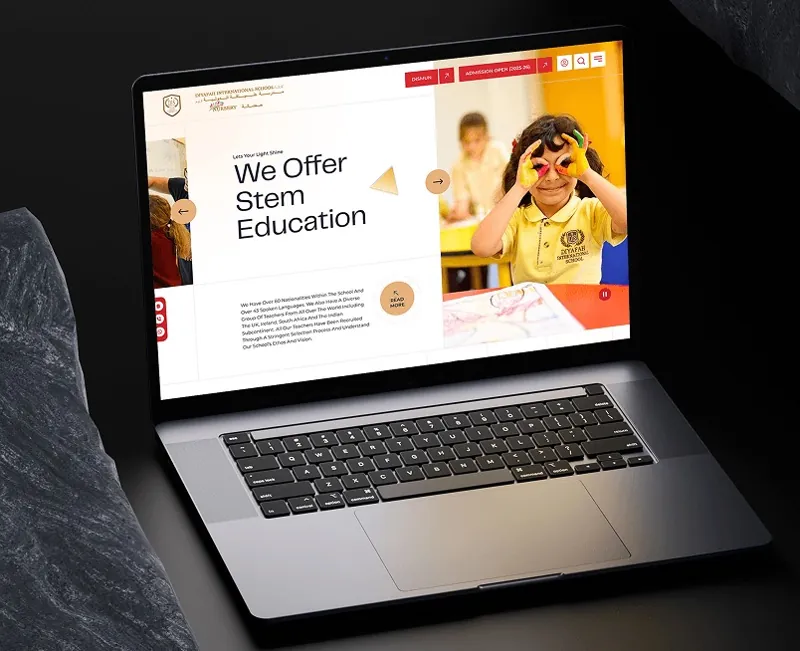
Website · Education · Dubai
One of Dubai's most diverse schools, 2,400+ students and 40+ nationalities, connected across campuses.
aldiyafah.com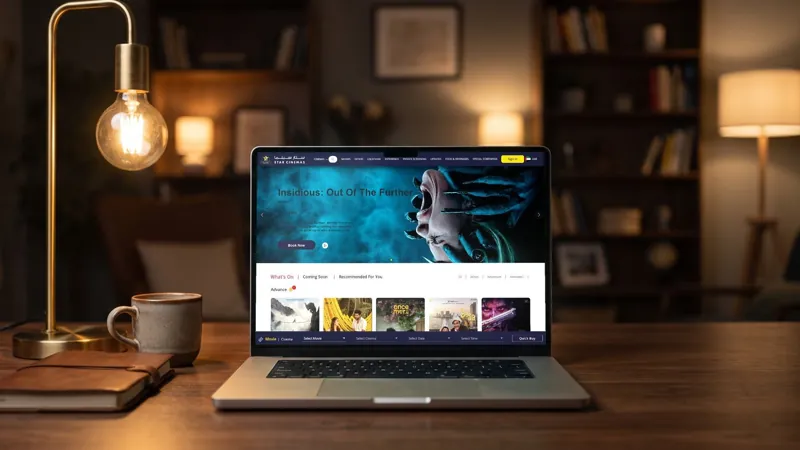
Web app · Ticketing · UAE
The UAE cinema chain operated by Phars Film. Every screening, offer and payment in one place customers can use on a phone.
starcinemas.aeStraight answers
Yes. We build the timetable as filterable content rather than a single static image, so a parent can filter by instrument, age group or day and see which classes still have space.
If a recital, showcase or performance is held in a public venue rather than inside your own licensed premises, the Department of Economy and Tourism's e Permit process for entertainment events may apply. We are not a licensing advisor, so confirm the specific case with DET before promoting a public event on the site.
Yes, a trial booking form can check age group and instrument against class capacity, and route the enquiry to the right instructor rather than a general inbox.
We do not publish fixed prices on the pages we build, since term fees vary by instrument, group size and package. What we do publish is exactly what each package includes, term length and included hours, so a parent can request an accurate quote already informed.
It can link to a booking or student management system that handles recurring enrolment and renewal reminders, though which system fits depends on how you currently manage registrations and payments.
Sources
Fixed price, in writing
Got it. Your quote is being written now.
In business hours you will have it within 45 minutes. Check your inbox for the confirmation.