
Product pages for the jewellery website
Metal, carat, stone type, weight and any certificate reference, laid out the same way on every item so a buyer can compare pieces without emailing to ask.
Web Design by Industry
A jewellery website in Dubai has to show craftsmanship and material at a level of detail a phone photo never manages, then make booking a private viewing or a video consultation as easy as adding an item to a basket.
Jewellery is one of the few categories where the product photography carries almost the entire weight of the sale, because a customer cannot hold the piece before deciding whether to travel to a showroom. Jewellery website design in Dubai has to treat imagery, material detail and a trustworthy path to a human conversation as the core of the page, not decoration around a shopping cart.
Jewellery website design in Dubai sits within our web design by industry section. Where a full online store is the right approach, the build follows our ecommerce solutions process; where the site exists mainly to bring people into a showroom, it follows standard website development.
What the site must do
A jewellery buyer researches carefully before committing, so the site has to carry weight a quick catalogue page cannot.
Metal, carat, stone type, weight and any certificate reference, laid out the same way on every item so a buyer can compare pieces without emailing to ask.
A form for an in store viewing or a video consultation, with the item of interest attached, so your team walks in prepared rather than guessing what the visitor wants to see.
A separate route for custom design or repair work, since these buyers are asking a different question to someone browsing a finished collection.
Some Dubai jewellers accept old gold or an existing piece against a new purchase, and a dedicated enquiry route for this, separate from a standard sale, sets the right expectations before the buyer arrives.
No published stock counts or addresses beyond a showroom location, and enquiry forms rather than public listings for the highest value pieces.
Many Dubai jewellery buyers read product detail in Arabic, so properly bilingual jewellery website design in Dubai, not a translated afterthought, matters here.
Google reviews through From the initial consultation to the final delivery, the team was professional, responsive, and easy to work with. They understood our requirements, provided valuable suggestions, and delivered a website that reflects our brand perfectly.
i own a rent a car agency n needed leads coming through my website, wasn't really happening before. gave [them] a try n honestly within a month i started getting good calls, actual genuine inquiries not random ones.
The team is highly professional, responsive, and delivers quality software solutions on time. Communication was smooth throughout the project, and they paid attention to every detail.
Got SEO done for our dentist website through [the team], and it actually worked. Within a few weeks we started getting real leads coming in through the website, which is exactly what we needed.
Got both a mobile app and marketing/SEO done through [the team], and honestly the experience was really good. What stood out most was the quality of the work and the app came out solid, no major issues.
[The team] built our app exactly the way we envisioned it. Clean design, smooth performance, and the team was professional throughout the process. Great communication and delivered on time.
Content to gather
The slowest part of jewellery website design in Dubai is usually photography, since every piece needs consistent, well lit images before a product page means anything. Settling this early keeps the rest of jewellery website design in Dubai on schedule.
What usually goes missing
A handful of specific items hold up jewellery builds more often than anything else, and naming them upfront saves time later.
Certificate references for graded stones are the most common gap, since these often sit in paper form with individual pieces rather than in any central record a website can be built against quickly. Gathering these into a simple spreadsheet, piece by piece, before design begins is worth doing even where it feels tedious, because retrofitting certification data onto live product pages after launch is slower than doing it once upfront. Consistent photography is the second most common delay, for the reasons already covered, and a showroom without an existing photography workflow should expect this stage to take longer than the website build itself.
A less obvious gap is appointment logic: many showrooms run bookings informally, by phone or WhatsApp, without a clear sense of how many slots a day genuinely allow for a private viewing. Working this out before the booking form is built avoids a system that looks polished but does not reflect how the showroom actually operates day to day.
Everyday gifting
Not every purchase handled by jewellery website design in Dubai is a considered, appointment led decision. Everyday pieces and gifting, a birthday, an anniversary, a smaller gold piece, deserve a simpler path than bridal buying does.
Where a jeweller is comfortable listing a defined, lower risk range at a stable or gold rate linked price, a lighter enquiry or even a direct online purchase path suits this category better than routing every visitor through a full appointment.
A gifting page that shows realistic delivery or collection timing against a specific occasion, rather than a generic dispatch estimate, helps a buyer shopping against a date they cannot move.
Separating everyday and gifting pieces from bridal and bespoke work in the site’s structure, rather than presenting the whole catalogue through one appointment led path, keeps both buyer types moving at the pace that actually suits them.
Vintage and pre owned pieces
Some Dubai jewellers also buy, sell or take in pre owned and vintage pieces, and jewellery website design in Dubai needs its own content structure for this, distinct from a standard new collection.
A pre owned piece needs its condition described honestly, including any wear, resizing or repair history known to the showroom, since the trust expectation for a used item is even higher than for a new one. Where the site accepts sell in or trade in enquiries, a clear, separate form asking for photographs, any existing certificate and a general description sets the right first step, rather than routing this request through the same form used for a new purchase enquiry. Provenance, where genuinely known and verifiable, is worth stating plainly, and left out entirely where it is not, rather than implied vaguely in a way that could mislead a buyer. Certification detail matters just as much here as with new stock, and the same hallmarking rule covered earlier still applies to a wrought precious metal article regardless of whether it is being sold new or pre owned.
Selling model
This is usually the single biggest decision in jewellery website design in Dubai, and it shapes almost everything else about the build.
| Showcase site with appointment booking | Full online store | |
|---|---|---|
| Best suited to | Bridal, bespoke and higher value pieces | A defined, lower risk range such as chains, studs or gifting pieces |
| Price shown | Not published, enquiry or appointment led | Can be shown, updated against the current gold rate where relevant |
| Payment and delivery | Handled in store or by invoice after an appointment | Needs a payment gateway and insured delivery built in |
| Build follows | Standard website development | Our ecommerce solutions process |
Many Dubai jewellers land somewhere between the two: a showcase for bridal and one off pieces, sitting alongside a smaller online store for a defined, repeatable range. We scope which pieces of the catalogue suit each model during the brief rather than forcing the whole business down one path.
Bespoke design
Custom design is a different product to a finished piece, and a jewellery website in Dubai that treats it as an afterthought loses a genuinely high value part of the business.
A short form or upload option lets a buyer share reference images, a sketch, or a piece they want reworked, so the first conversation starts from something concrete rather than a blank enquiry.
Bespoke work almost always needs an in person or video consultation, so the same appointment system used for bridal enquiries can usually be reused here rather than building a separate flow.
Once a design direction is agreed, the showroom provides a written quote, which the website supports by making clear upfront that bespoke pricing is quoted individually rather than listed.
A realistic timeline, communicated on the site rather than left to a phone call, sets expectations correctly from the start, particularly where a bespoke piece is timed against an event such as a proposal or a wedding.
Photography
Jewellery photography is slower and more specialised than most product categories, and it is usually the true pace setter for how quickly jewellery website design in Dubai can launch.
A ring or a pendant needs close, well lit macro photography that shows facets, texture and setting detail a standard product shot never captures, often requiring specialist lighting and a macro lens rather than a general product photography setup. Colour accuracy matters more here than almost any other retail category, since a stone or a metal tone that photographs even slightly differently from reality is precisely the kind of gap that damages trust once a buyer sees the real piece. Reworking or reshooting jewellery photography after launch, once a mismatch has already caused a complaint, costs more in trust than getting the brief right before the first shoot.
Where a showroom’s catalogue is large, photographing every piece to the same standard on day one is rarely realistic. Prioritising the current collection, bridal and higher value pieces first, with the rest following in a planned second pass, is usually a more sensible approach than delaying launch until every single item is shot.
Multi branch showrooms
A jeweller with branches across Dubai, or further across the UAE, needs the site to help a buyer choose the right one, not just list addresses.
Each showroom’s hours, specialisms and appointment availability are worth showing separately, since a branch known for bridal work and one known for everyday gold pieces are not interchangeable to a buyer who already knows what they want. Where appointment booking differs by branch, whether by staff, private viewing rooms, or simply available time slots, the booking form needs to reflect that branch’s actual availability rather than a single shared calendar that does not match reality on the day.
Stock, particularly for one off or bespoke pieces, is often physically held at one branch, so a product page should say where a specific piece can currently be viewed, rather than implying it is available everywhere. This detail matters more in jewellery than most retail categories, since a buyer travelling to see a specific piece in person needs to know it is genuinely worth the trip.
The buyer
A jewellery buyer at boardroom level asks different questions to a showroom manager, even inside the same business.
For an independent jeweller, the owner is measured on total showroom revenue and reputation, and their first meeting question is usually how the website protects the brand’s image, since jewellery is sold as much on trust as on the piece itself.
A sales manager is measured on appointments booked and converted, and their first question is almost always how enquiries from the website actually reach the sales floor, since a lead that sits unread in an inbox is a lost sale in this category more than most.
Both roles are ultimately protecting the same thing: a buyer’s confidence that what the website shows is exactly what they will be shown in person, at a price that reflects the material honestly. A proposal for jewellery website design in Dubai that does not address that confidence directly, in the first meeting rather than as an afterthought, is usually the wrong proposal for either role to accept.
The visitor’s journey
A jewellery purchase is rarely impulsive, so jewellery website design in Dubai has to move a visitor through research toward a human conversation, not force an instant transaction.
A visitor starts by comparing metal, carat and stone options, often across several jewellers’ sites at once, so a specification block that is easy to compare matters more here than striking photography alone.
Since jewellery value moves with the daily gold rate, a visitor who cannot get any sense of price range without emailing or calling often simply moves to a jeweller who makes that easier, even without publishing exact figures.
The decision point is usually whether to commit to an appointment, in store or by video call, and a booking form that asks too much too soon puts this step off rather than encouraging it.
By the time a buyer reaches a showroom appointment, they expect the piece and its detail to match what the website showed, and any gap between the two is where a jewellery sale is most often lost at the final stage.
Gold and diamond retail
Gold jewellery and diamond jewellery are sold differently even within the same showroom, and a jewellery website in Dubai needs to reflect that rather than treating every piece the same way.
Gold pieces are largely valued on weight and karat against the daily gold rate, so product pages benefit from showing weight and karat prominently, even where an exact price is not published.
Cut, colour, clarity and carat drive diamond value far more than weight alone, so a diamond product page needs its own specification format rather than reusing the gold jewellery layout.
A gold ring set with diamonds needs both specification formats on one page, metal weight and karat, plus stone grading detail, laid out so neither buries the other.
Price volatility
Gold jewellery value moves with the daily gold rate, published and updated by jewellers and exchanges across Dubai, so a fixed price shown on a website can be wrong within hours. This is the practical reason, separate from any general policy on pricing, that gold jewellery is more often quoted at the point of sale than listed at a static price online.
What a jewellery website can do instead is show the making charge, stone value and any fixed component separately from the metal value, so a buyer understands what moves with the gold rate and what does not. Diamond and other gemstone jewellery, where the value sits mainly in the stone rather than the metal, is more often shown at a stable listed price, since it is not tied to a daily commodity rate in the same way.
Certification, not legal advice
Certification is one of the few areas where a genuine UAE regulator touches jewellery retail directly, and getting the website’s claims right against it matters more here than almost any other industry we build for.
Federal Law No. (11) of 2015 concerning monitoring trade in precious stones, precious metals and its stamping sets legal standards of fineness for gold, silver and platinum jewellery, and prohibits selling, offering for sale, or holding for sale any wrought precious metal article unless it carries an official or a recognised foreign hallmark, or is accompanied by an identification card where hallmarking is not physically possible. The law also sets out what an official hallmark must contain: a mark for the metal type, its standard of fineness, and a distinctive shape identifying the hallmarking body. This is general information about a published federal law, not legal advice, and a jeweller should confirm current requirements and any executive regulation detail directly with the relevant authority before relying on it.
For the website, the practical implication is straightforward: where a product page states a karat or purity figure, that figure should match what the hallmark on the physical piece actually shows, and where a certificate number is referenced for a diamond or gemstone, for example from an internationally recognised grading laboratory, a buyer should be able to verify it, either through the number itself or by asking your team directly. Overstating purity or grading on the website, even inadvertently through a copy error, sits at odds with a law that treats hallmarking as a matter for criminal penalty in serious cases, not just a trading standards issue.
Practical risks
Beyond the hallmarking law itself, the following are practical risks rather than points of law, and any specific licensing or advertising question should still be checked with the Dubai Department of Economy and Tourism or Dubai Municipality directly.
If a product page references a grading certificate, a buyer should be able to verify it, either through a certificate number or by asking your team directly.
Heavily edited images create returns and disputes when the piece arrives looking different in person, which matters more for jewellery than almost any other product category. Google’s own guidelines for representing a business online expect what a listing shows to match reality, and the same standard is worth holding a jewellery website to.
Where the site does take online payment, the gateway and checkout flow need to meet standard card security practice, since a jewellery order is a high value target.
A buyer weighing a significant purchase who does not hear back quickly will often simply book an appointment with a competitor instead.
A jewellery website is judged on the same standard as the showroom itself: does what is shown match what a buyer is handed when they walk in.
Trust signals
A jewellery purchase asks a buyer to hand over a significant amount of money based largely on what a screen shows them, so the site needs to work harder on trust than a typical retail catalogue.
Metal, karat or purity, stone type, weight and certificate reference, shown in the same order on every product, lets a buyer compare pieces confidently rather than hunting for detail that is sometimes present and sometimes missing.
Google reviews carry more weight for a considered purchase like jewellery than copy written for the site, which is why From the initial consultation to the final delivery, the team was professional, responsive, and easy to work with. They understood our requirements, provided valuable suggestions, and delivered a website that reflects our brand perfectly.
i own a rent a car agency n needed leads coming through my website, wasn't really happening before. gave [them] a try n honestly within a month i started getting good calls, actual genuine inquiries not random ones.
The team is highly professional, responsive, and delivers quality software solutions on time. Communication was smooth throughout the project, and they paid attention to every detail.
Got SEO done for our dentist website through [the team], and it actually worked. Within a few weeks we started getting real leads coming in through the website, which is exactly what we needed.
Got both a mobile app and marketing/SEO done through [the team], and honestly the experience was really good. What stood out most was the quality of the work and the app came out solid, no major issues.
[The team] built our app exactly the way we envisioned it. Clean design, smooth performance, and the team was professional throughout the process. Great communication and delivered on time.
A verifiable address, phone number and years the business has traded in the location it shows, without overstating anything beyond what is genuinely true, reassures a buyer that there is a physical business behind the site.
No published stock counts, no address beyond the showroom location itself, and enquiry forms rather than public listings for the highest value pieces, all reduce a real security risk rather than only a perceived one.
A buyer close to a significant decision responds better to a named person they can ask for by name than a general enquiry form that gives no sense of who will reply.
A piece described one way online and shown differently in person is the fastest way to lose a buyer who was already close to deciding, and it is entirely avoidable with accurate product data.
Bridal and appointments
Bridal jewellery, engagement rings especially, is one of the most appointment driven categories jewellery website design in Dubai handles. Very few buyers complete a bridal purchase without an in person or video conversation first, so the website’s job is to make booking that conversation as easy as possible, not to replace it.
A bridal enquiry form works best when it asks for the essentials, budget range in broad terms, preferred stone or style, and timeline, without demanding so much detail upfront that a nervous first time buyer abandons the form. Where a couple is choosing together, a shareable wishlist or a saved selection they can send each other before the appointment reduces the pressure of deciding everything in the showroom on the day.
Insurance and delivery
Where a jewellery website does take online payment and ships a piece, the delivery side needs treating with the same seriousness as the sale itself.
| What to show on the site | Why it matters for a high value item |
|---|---|
| Whether delivery is insured, and up to what value | A buyer sending a significant amount of money wants to know the parcel itself is covered in transit |
| Signature or ID required on delivery | Reduces the chance of a high value parcel being left unattended or accepted by the wrong person |
| Discreet, unbranded packaging as standard | A parcel that visibly announces its contents is a security risk the website can quietly design around |
| A clear route for in store collection instead | Many buyers of higher value pieces prefer collecting in person over any courier option, and the site should make that easy to choose |
Where insurance or courier terms are provided by a third party, such as the courier or an insurer, the specific terms should come from that provider rather than being restated inaccurately on the jewellery website. We have not independently verified any single courier or insurance provider’s terms, so treat this as a checklist of what to confirm rather than a promise of coverage.
Data the site handles
A jewellery catalogue behind jewellery website design in Dubai moves less often than a fashion catalogue, but what changes tends to matter more when it does.
| Data | How often it changes | Who usually keeps it current |
|---|---|---|
| Piece availability, especially one off pieces | As soon as a unique piece sells | Showroom or inventory staff |
| Gold rate reference and making charges | Daily to weekly | Sales management, following the day’s rate |
| Certificate references for graded stones | Per new piece added | Whoever holds the grading paperwork |
| Appointment slots and showroom hours | Weekly, plus holiday exceptions | Showroom reception |
| Bespoke and repair enquiry status | Ongoing, per enquiry | Whoever manages custom orders |
Search behaviour
Jewellery search in Dubai splits clearly into a research mood and a ready to buy mood, and the site needs to answer both.
A research search looks broad: a style, a stone type, or a general category like engagement rings, often browsed weeks or months before a decision is made. A ready to buy search is specific: a collection name, a particular design, or a search that already includes a showroom or brand name. The first group needs category pages with enough real content, material explanations, style guidance, to be genuinely useful browsing. The second group needs the exact product or collection page to be findable directly, with clear, specific naming rather than only an internal reference code.
We do not publish invented search volumes for jewellery terms, since real demand varies enormously by category, from everyday gold pieces to bridal diamonds, and no single figure represents the whole market honestly. Structuring the site to answer both moods, rather than chasing a specific keyword count, is the more reliable approach for jewellery website design in Dubai.
Phasing
Launching the full catalogue, every integration and every planned feature at once usually delays launch without adding proportionate value on day one.
| Phase one, at launch | Phase two, once the core is proven |
|---|---|
| Core catalogue with full specification per piece | Online payment for a defined, lower risk range |
| Appointment booking for in store and video | Wishlist accounts shared between a couple |
| Bespoke and repair enquiry route | A loyalty or repeat client programme |
| Google reviews and a verifiable showroom address | Marketplace or Meta shopping catalogue listings |
Arabic content
Jewellery buying in the UAE crosses language lines constantly, and a few specific areas matter more than a general translation pass.
Material and certification terminology needs to be precise in Arabic, not approximate, since a buyer comparing karat, purity or stone grading between two showrooms is reading for exact meaning rather than general impression. Bridal and gifting pages benefit from Arabic copy written for the occasion, an engagement or a wedding, rather than adapted from a general product description, since these are highly considered, emotionally significant purchases in both languages. Appointment booking forms need to work as naturally in Arabic as in English, since the booking step is where a browsing visitor becomes a real lead.
Layout matters as much as the words. Specification tables, filters and the booking form need to mirror correctly right to left, not simply carry translated labels inside an English layout, which is a detail that shows how seriously jewellery website design in Dubai is built for a bilingual audience rather than translated as an afterthought.
Mistakes we see
These come up repeatedly enough across jewellery website design in Dubai reviews to be worth naming directly.
Even an unintentional copy error here creates a mismatch a buyer can catch immediately once they see the piece in person.
A considered buyer close to a decision moves on quickly when a specific question goes quiet, and jewellery is a category where competitors are easy to switch between.
Colour and clarity that look better on screen than in person cause disputes on arrival or at collection, which matters more for jewellery than most categories.
A generic contact form gives no sense of availability, which discourages a buyer who wants to plan a visit around their own schedule.
Showing exactly how many of a rare, high value piece are held, or precisely where, is an avoidable security detail some jewellery sites still publish.
Certification and specification detail left in English only, on a site otherwise presented as bilingual, undermines the buyer’s confidence in the detail that matters most.
Measuring success
The right numbers depend on whether the business sells mainly through appointments, online, or both, but a few apply broadly.
Tracking both the booking and the actual attendance rate shows whether the website is generating genuine interest or just form submissions that never convert.
Since slow replies lose considered buyers, tracking how quickly enquiries are actually answered is a more useful internal measure than traffic alone.
For a trust led purchase like jewellery, a steady flow of genuine reviews matters more than a single high score achieved once and left unmaintained.
Tracking is connected as part of every build so these numbers are available from launch, rather than relying on an invented benchmark. What counts as good differs sharply between an everyday gold retailer and a bridal specialist, so a jewellery website in Dubai is judged against its own trend over time.
Build order
Every project runs through the six stages under web services, weighted differently here because photography and product data take longer than the build itself.
Catalogue size, appointment model and whether online payment is needed shape the quote for jewellery website design, sent within 45 minutes during business hours in Dubai.
Product page and category layouts are designed around whatever photography style you already use or plan to commission, then approved before build begins.
Product data, appointment booking and, where relevant, a payment gateway are built and connected, with Arabic content built in rather than added later.
Every product page, filter and form is checked against the real catalogue before launch, on desktop and on a phone.
Domain, hosting, CMS and any store platform accounts pass to your company, with training on adding new pieces and updating stock.
Once the catalogue is live, an optional SEO retainer helps specific pieces and categories surface for the right searches.
Related industries
Shares the same emphasis on product pages and clear specification.
A neighbouring category with similar photography and sizing needs.
Another appointment led retail business built around bookings and product pages.
Shares the bridal, appointment led buying journey with jewellery.
For the wider industry list, start from the web design by industry hub. Product pages and appointment booking sit within our website development and UI and UX design work, ongoing visibility for collections and categories sits with SEO services, and where online payment is genuinely the right model, catalogue and checkout follow our ecommerce solutions process.
Selected work
Work across sectors, with the closest to this industry shown first. Every one is a live site, not a mockup.
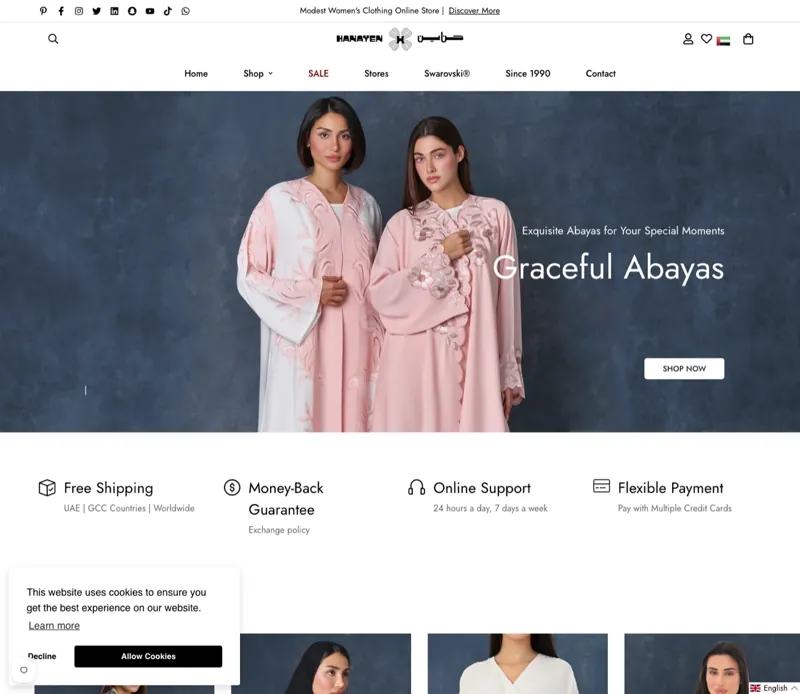
E-commerce · Fashion · Dubai
A Dubai luxury abaya house trading since 1990, carrying its craftsmanship into a quick mobile checkout.
hanayen.com
Website · Furniture · Middle East
A design led furniture brand that launched with no digital home, now shown as carefully as its pieces.
stulo.com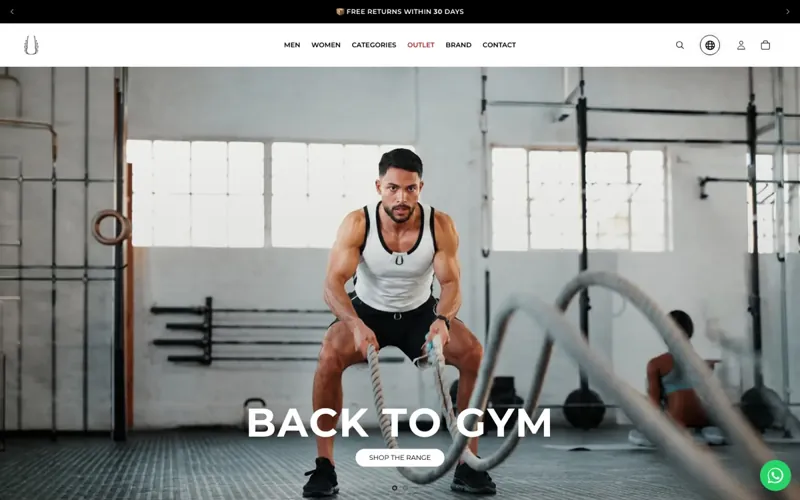
E-commerce · Fashion · UAE
A sustainable clothing label whose customers shop on a phone and expect the store to feel considered.
egosustainable.comStraight answers
Both models exist in Dubai. Some jewellers sell directly with online payment for a defined catalogue, others use the site to show the collection and route serious enquiries into an appointment or a video call. We plan which fits your business before design starts.
A clear specification block on each product page, listing metal, carat, stone type and any grading certificate reference, answers the questions a buyer would otherwise call to ask.
Yes, a booking form or scheduling tool can collect the piece of interest, preferred time and whether the visitor wants an in store or video appointment.
We do not publish prices as a rule across the site, since jewellery value depends on live metal and stone pricing. A written quote or an in store consultation is the standard route instead.
Every project gets a fixed written quote scoped to your brief and catalogue size, sent within 45 minutes during business hours with no obligation.
Sources
Fixed price, in writing
Got it. Your quote is being written now.
In business hours you will have it within 45 minutes. Check your inbox for the confirmation.