
Immigration website visa category pages
Separate pages for employment, family, investor, freelance and golden visa work, each describing the service you provide rather than restating rules that belong to the government.
Web Design by Industry
Immigration website design in Dubai for visa and golden visa consultancies, built around a document checklist, a secure case tracker and clear routing to the correct government authority.
A visa applicant rarely reads an immigration website for pleasure. They arrive with a specific question, usually about a document they are missing or a stage their case seems stuck on, and they want an answer without calling. Immigration website design in Dubai has to carry that weight: a clear breakdown of visa categories, a document checklist that matches what the authority actually asks for, and a way for an existing client to check progress without tying up your phone lines. Getting all three right, in one coherent site, is the real test of immigration website design in Dubai, more than any single page on its own. Whether the site belongs to a visa consultancy, a corporate relocation firm or a PRO services company, the job of the site is the same, turn a worried visitor into someone who knows exactly what to send you next. That worried visitor is also, more often than not, comparing three or four consultancy websites side by side in separate browser tabs, so the one that answers plainly, without vague reassurance or an implied outcome it cannot deliver, is usually the one that gets the call.
This page covers the pages and features immigration website design in Dubai needs, where GDRFA Dubai and the federal authority ICP sit in relation to the site, the routes, nationalities and languages the build has to account for, and what we ask a consultancy for before a build starts. None of this is legal advice, and current visa rules should always be checked directly with ICP or GDRFA Dubai.
Core pages
A generic list of visa types tells a visitor little. Immigration website design in Dubai works better as a set of narrow, specific pages that match how people actually search.
Separate pages for employment, family, investor, freelance and golden visa work, each describing the service you provide rather than restating rules that belong to the government.
A plain list of the documents a case usually needs, written as a starting point for a conversation with your team, not a promise that nothing else will be requested, and a core part of any serious immigration website design in Dubai.
A login area where an existing client sees named stages such as documents received, submitted and approved, without exposing any file to search engines, one of the features clients ask about most in immigration website design in Dubai.
An encrypted form for passport copies, photographs and supporting letters, replacing email attachments that are easy to lose in a busy inbox.
A separate path for HR teams sponsoring several employees at once, since a bulk enquiry on an immigration website in Dubai is handled differently from a single family visa case.
Full bilingual pages, since a meaningful share of visa enquiries on an immigration website in the UAE come from Arabic speaking applicants and their families.
Which authority to point to
Visa work in Dubai touches two separate authorities, and immigration website design in Dubai reads better once the site is clear about which one it is talking about on any given page. GDRFA Dubai, the General Directorate of Residency and Foreigners Affairs, issues residence permits for the private sector in Dubai, handles cancellations of residence permits, and runs a booking system for applicants following up on a golden visa application in person. ICP, the Federal Authority for Identity, Citizenship, Customs and Port Security, sits at federal level and covers entry permits for tourism, visit and treatment purposes, golden residency for investors, entrepreneurs and specialised talents, and the issuing, renewal and cancellation of residence permits linked to an Emirates ID.
The official government portal lists five broad golden visa categories, investors, entrepreneurs, talented individuals such as doctors, scientists and executives, outstanding students, and humanitarian pioneers, with validity running from five to ten years depending on the category. Good immigration website design in Dubai describes a consultancy’s own service around each category without restating the eligibility thresholds themselves, since those are set by the authorities and do change.
What the visitor came to do
Most visitors follow a similar path through an immigration website, and each step has a specific point where a weak site loses them.
They land on a route page, or search directly for their nationality and route together, wanting to know quickly whether their situation is even the right fit for the consultancy.
This is the point a badly written immigration website loses people fastest: a checklist that is vague, outdated, or missing the one document that actually applies to their nationality sends them straight to a competitor’s site instead.
Named team members, a real office address and honest, non promotional language about outcomes are what get weighed here, more than design polish.
A short form matched to their specific route, not a generic contact box, is what turns a visitor who has decided to trust the firm into an actual case.
Once a case is live, the same visitor comes back through a login rather than a search, which is exactly why immigration website design in Dubai treats the case tracker as part of the same journey, not a separate feature.
Practical risk
Most problems on immigration sites are not legal disputes, they are visitors who feel misled by something the site implied.
| Common problem | What we build to reduce it |
|---|---|
| A rule changes after the page is written | A visible last reviewed date on regulatory content, and a habit of checking pages against the current ICP or GDRFA Dubai guidance rather than assuming a page written last year still holds |
| A visitor assumes a positive result is certain | Copy that describes the service and process, never the outcome, since a decision always belongs to the authority |
| Documents sent by email go missing | An upload portal with a confirmation receipt, so nothing depends on an inbox |
| Fraudulent lookalike agents online | Clear, consistent branding and contact details on every page, since ICP itself warns applicants to use official and authorised channels |
Build and content
An immigration build moves quickly once this information is ready.
The exact categories you handle, so the site does not promise work outside what your team actually does.
Your own current checklist, reviewed against ICP or GDRFA Dubai guidance before it goes on the page.
The named stages your team already uses internally, so the client portal matches how a case actually moves rather than inventing new labels.
Who reviews wording about eligibility and outcomes before it is published, so nothing on the site overstates what a case can achieve.
Development, hosting and handover are covered on our website development page, and the secure client login sits under UI UX design. Once the site is live, SEO services covers ranking for the visa category searches that bring in enquiries.
Who commissions the site
The person briefing an immigration website is rarely the applicant. It is usually the owner of a visa consultancy, a PRO services manager, or an HR lead at a firm handling relocation for staff, and each of them is measured on something different. A consultancy owner is measured on qualified enquiries turning into paying cases, and wants a site that filters out casual browsers before they reach the phone. A PRO services manager inside a larger firm is measured on how few status calls the office fields in a week, and wants a self service tracker that actually reduces that volume rather than adding a login nobody uses. A corporate relocation lead is measured on getting a group of new hires through their paperwork on schedule, and wants a bulk enquiry route built for ten cases at once, not ten separate individual forms.
In the first meeting, all three tend to ask a version of the same question: can the site say what we do without sounding like it is promising a result we do not control. That question sits behind almost every decision in immigration website design in Dubai, from the wording on a single button to the structure of the FAQ.
Pages per route and per nationality
Two cases in the same visa category can need completely different documents once nationality enters the picture, and a well structured site reflects that rather than hiding it behind one generic checklist.
Employment, family, golden visa, freelance and investor routes each get their own page describing the consultancy’s service for that route, rather than one long page trying to cover all of them at once.
Document attestation chains, embassy requirements and translation needs genuinely differ by the applicant’s nationality, so a short nationality specific guidance note under the relevant route page is more useful than a single checklist that quietly does not apply to everyone reading it.
Someone researching their own case searches for the visa route and their own nationality together far more often than for the route alone, which is the practical reason this structure exists rather than a stylistic preference.
A separate page for employer sponsored group cases, describing how a bulk enquiry is handled differently from a single family visa case, matters once a consultancy works with corporate clients regularly.
Each route page ends in a short form asking only for what that route actually needs to start a conversation, rather than one long generic form that asks family visa questions of an investor applicant.
With five or more routes and several nationality notes under each, a clear index page matters more here than on a typical service site, since a confused visitor on an immigration website usually leaves rather than keeps searching.
Eligibility, answered honestly
Eligibility is the question every visitor actually came to ask, and it is also the question an immigration website is least equipped to answer with certainty. Categories, thresholds and documentation requirements are set by ICP and GDRFA Dubai, not by a consultancy, and both bodies update them without much public notice. Stating a rule as fact on a page written months earlier risks telling a visitor something that is no longer true, which does more damage to trust than simply saying the rule needs to be checked.
The honest structure that works well in immigration website design in Dubai is a short, clearly worded eligibility overview describing broad categories, immediately followed by a direct route to the official service or to a case review with the consultancy’s own team, rather than a page that reads as a definitive yes or no. Where a genuinely common question has a stable answer, such as which authority handles which type of case, that can be stated plainly. Where the answer depends on a threshold that changes, the honest version points the reader to where to check rather than guessing on their behalf.
Document checklists
A checklist that only lists document names leaves out the detail that actually causes delays.
| Checklist element | Why it matters on the page |
|---|---|
| Document name and format | Original, certified copy or scanned upload, stated per document rather than assumed |
| Attestation status, where relevant | Some documents need attestation before submission, and this is exactly the kind of detail that differs by nationality |
| Translation requirement | Some documents need translation into Arabic; we say plainly that sworn legal translation in the UAE must be carried out by a translator licensed by the Ministry of Justice, and that our own work is marketing and website translation, not certified legal translation |
| Validity window | A passport or certificate close to expiry is a common cause of a rejected submission, worth flagging on the page itself |
A document checklist on an immigration website should always read as a starting point for a conversation with the consultancy’s own team, not a promise that nothing further will be requested once a case is actually reviewed. This single habit, treating the checklist as a conversation starter rather than a finished answer, is one of the clearest signs of careful immigration website design in Dubai versus a page copied once and never revisited.
Outcome and approval claims
Nothing on an immigration website should imply that a consultancy approves a visa, because no consultancy does. GDRFA Dubai and ICP make that decision, and a website that blurs this line, even through careless wording like “we get your visa approved fast”, sets an expectation the consultancy cannot control and risks looking misleading the moment a case does not go the applicant’s way. The distinction the site has to hold onto consistently is between what the consultancy does, prepare, check and submit a case, and what the authority does, decide it.
In practice this means writing about the service in terms of process rather than result: “we prepare and submit your application” rather than “we secure your approval”, and “we help you meet the documentation requirements” rather than “we can confirm you will be found eligible”. We apply this rule to every route page, every FAQ answer and every testimonial we would ever consider publishing, and it is one of the few places on a client site where we will push back hard on wording the client would prefer, because the risk of overstating an outcome sits with the client, not with us.
Consultancy or government service
A private consultancy and an official government service exist for different reasons, and the website has to make the difference obvious at a glance.
Consistent naming, a normal commercial domain and a plainly stated status as a private consultancy, on every page, so a visitor is never confused about who they are dealing with.
Avoiding UAE government emblems, colour schemes or page layouts that could be mistaken for an official portal, since ICP itself has warned applicants that fraudulent websites misuse its name and logo.
Any figure quoted on the site is described plainly as a fee for the consultancy’s service, never as, or alongside, a government fee, which the site should not state at all since GDRFA Dubai and ICP set and change those independently.
Linking out to the actual ICP or GDRFA Dubai service page for anything the applicant can or must do directly, rather than trying to recreate a government process inside the consultancy’s own site.
A named team, a real office address and a phone number that is answered, all of which are exactly the signals ICP points to when it tells the public to use official and authorised channels.
A site that could be mistaken for a government portal invites the wrong kind of attention, and a consultancy that is clearly and honestly private sector has less to answer for if a fraudulent lookalike ever appears.
Data the site has to handle
An immigration website in Dubai is not a static set of pages once a client base builds up behind it. Case stages move daily as documents are received, submitted and progressed, and the client portal needs to reflect that without becoming a second system the team has to maintain by hand. Document expiry is its own ongoing task: passports, Emirates IDs and supporting certificates all carry dates, and a consultancy handling many live cases benefits from a simple internal way to flag an expiry approaching before it becomes a submission problem, even if that tool never faces the public site directly.
Government processing times and fee amounts are the two things we deliberately do not try to track or display, since both are set by ICP and GDRFA Dubai and change independently of the consultancy’s own systems. Anything the site states about timing is described as the consultancy’s own service commitment, never as a government processing estimate.
Integrations
A handful of tools come up repeatedly, and naming them helps a consultancy brief the project properly.
Passport, photograph and supporting document uploads need encryption in transit and storage that only the case team can reach, replacing email attachments that are easy to lose in a busy inbox.
Most consultancies already run a case management tool internally, and the website’s tracker and upload form should feed into it rather than creating a second, disconnected record of the same case.
A short automatic message when a case moves stage cuts down on status calls more effectively than a portal alone, since many applicants check a text message before they log into anything.
Where the consultancy charges its own service fee, a payment step handles that specifically, kept entirely separate from any suggestion that a government fee is being paid through the site.
Marketing and website translation into Arabic is one thing; where a client needs sworn legal translation of a document, the site should point them to a translator licensed by the UAE Ministry of Justice rather than implying the consultancy provides that service itself.
A simple spreadsheet upload or multi row form for an employer sponsoring several staff at once saves a corporate relocation lead from submitting the same form ten separate times.
Search behaviour
Immigration website design in Dubai has to answer a research search and a ready to buy search with two different kinds of page. A research search looks like a question, golden visa eligibility UAE, documents needed for a family visa, how long does a residence visa renewal take, and the person asking it is usually not ready to hand over documents yet. The honest answer to a research search is an informational page that explains the route and nationality specific detail plainly, links to the relevant ICP or GDRFA Dubai service, and offers a case review rather than a hard sell.
A ready to buy search looks different: visa consultant Dubai, golden visa consultancy Dubai, PRO services company Dubai, often typed by someone who already has a rough answer to their research question and now wants a firm to handle it. This visitor wants a route page, a short enquiry form and, ideally, a document checklist they can start working through immediately. Immigration website design in Dubai works best when the site structure keeps these two visitors on separate paths that eventually meet at the same enquiry form, rather than forcing every visitor through a single generic homepage.
Content the client supplies
The build itself moves quickly once this content is ready, and most delays come from content that needs internal review rather than the build schedule.
Which visa categories the consultancy genuinely works on, so the site does not describe a route the team does not actually handle day to day.
The consultancy’s own working checklist, reviewed against current ICP or GDRFA Dubai guidance before it appears on the page, since an outdated internal list is one of the most common gaps we find.
The named stages the team already tracks internally, so the client portal matches how a case actually moves rather than inventing new labels nobody inside the business recognises.
A named person who checks every page mentioning eligibility or outcome before it publishes, which is frequently missing at the start of a project and always worth assigning before launch.
Legal and immigration terminology needs precise Arabic equivalents, not a general translation, so route pages in Arabic often need a second review pass by someone who works with these terms regularly.
Where the consultancy handles employer sponsored cases, a description of how that process differs from an individual case, so the corporate page does not simply repeat the individual route page with a different heading.
Mistakes we see
A recurring problem on immigration websites is a document checklist copied from a general source years ago and never checked against current ICP or GDRFA Dubai guidance, which quietly sends applicants in with the wrong paperwork. Another is language that reads as a promised result, “your golden visa, approved,” printed as a headline without anyone considering how it reads to an applicant whose case is later declined by the authority, through no fault of the consultancy’s work.
A third pattern is a site that visually borrows from official government styling, intending to look credible, that instead risks being mistaken for an unauthorised channel, exactly the confusion ICP warns the public about. A fourth is a single upload field buried at the bottom of a contact page instead of a proper secure portal, which pushes anxious applicants back toward email attachments the consultancy specifically wanted to avoid. None of these are legal problems in themselves, but each one is a visitor who leaves feeling misled by something the site implied rather than stated.
Measuring success
Success on an immigration website in Dubai looks different from a typical lead generation site, and it is worth agreeing what to track before launch.
Tracking which route page an enquiry came from tells a consultancy whether employment, family or golden visa work is driving interest, which shapes staffing and marketing effort, and it is the single most useful number to review after any immigration website design in Dubai project goes live.
Once a case tracker and automatic status updates are live, a genuine drop in incoming status calls to the office is the clearest sign the portal is actually being used rather than ignored.
How many applicants complete an upload through the portal instead of falling back to email shows whether the upload flow is actually easier than the alternative it was built to replace.
We do not invent benchmark numbers for any of these, since they depend on the routes handled and how established the consultancy already is. Ongoing search visibility for route and nationality specific terms is covered under SEO services, the secure tracker and upload portal sit under UI UX design, and where a mobile app is preferred over a browser based tracker, that is covered separately under mobile app development. Custom integration work, such as connecting the portal to an existing case management system, is scoped by hiring a developer directly for that piece of work.
Arabic and the second language
Arabic carries more legal and practical weight on an immigration website than on most other industry sites we build, because the underlying case documents, the authority’s own correspondence and, for many applicants, their own first language all sit in Arabic already. A route page translated loosely, using a general word for “visa” where the authority’s own terminology is more specific, or describing a “residence permit” and a “visa” as interchangeable when GDRFA Dubai and ICP treat them as distinct products, creates confusion at exactly the point a nervous applicant most needs clarity. This is a case where a fast, general translation pass genuinely is not good enough, and immigration website design in Dubai benefits from a second review of the Arabic pages by someone who works with this terminology regularly, not only a fluent Arabic speaker.
Beyond legal terminology, a large share of visa applicants and their sponsoring family members in Dubai correspond and search in Arabic day to day, so an Arabic route page is not a courtesy addition, it is often how a genuine share of enquiries arrive in the first place. We build these as full right to left pages rather than a machine translated layer over the English site, since a document checklist or an eligibility overview that reads awkwardly in Arabic undermines the same trust the English page worked to build.
An immigration website should describe what the consultancy does, prepare, check and submit, and leave the decision, and the word “approved”, to the authority that actually makes it.
Where we draw the line
A few rules stay fixed across every immigration website design in Dubai project, regardless of what the client would prefer written.
We link to the official ICP or GDRFA Dubai service for anything that depends on a threshold the authority sets, rather than printing a figure that might already be out of date.
Government visa fees belong to ICP and GDRFA Dubai and change without much notice, so an immigration website never states one, even as an estimate.
Every route page and FAQ answer on an immigration website design in Dubai project describes the consultancy’s process, never a promised approval, since the decision always belongs to the government authority handling the case.
Local search
An immigration website in Dubai gains most of its search visibility through the combination of a visa route and a nationality or a district, rather than through the word immigration on its own, which is far too broad a term to compete for directly. A route page written for, say, family visa sponsorship combined with a specific nationality’s document requirements, or a golden visa page aimed at a specific investor category, answers a narrower and more findable search than a single broad immigration website could ever manage with one page. This is the same logic behind local SEO applied to a document heavy, route specific site rather than a single physical location.
Related industries
Relevant for firms that combine immigration case work with wider legal services.
Shares the same need for document intake and case style tracking through hiring and sponsorship.
Relevant for firms offering immigration advice alongside wider business consulting.
See the full range of industry pages we design and build for.
Selected work
Work across sectors, with the closest to this industry shown first. Every one is a live site, not a mockup.
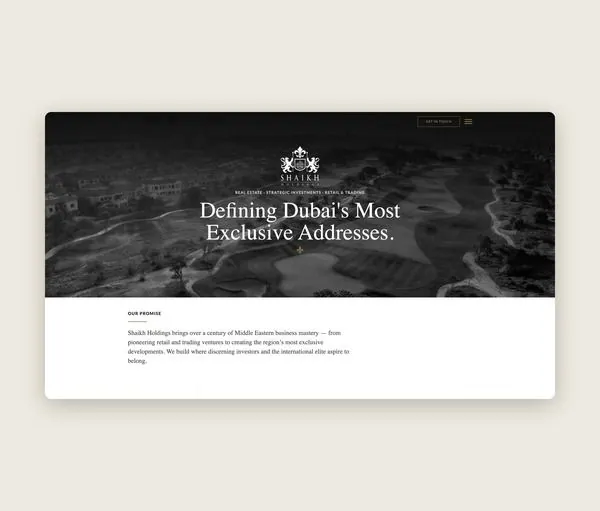
Website · Corporate · Dubai
A Dubai investment house with a century of business behind it. The site speaks to institutional investors, not shoppers.
shaikhholdings.com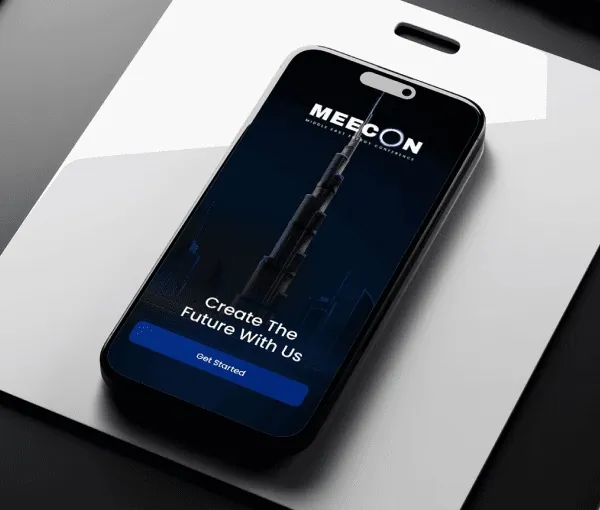
Mobile app · Events · UAE
A UAE conference platform replacing printed programmes and email chains for delegates and organisers.
meecon.ae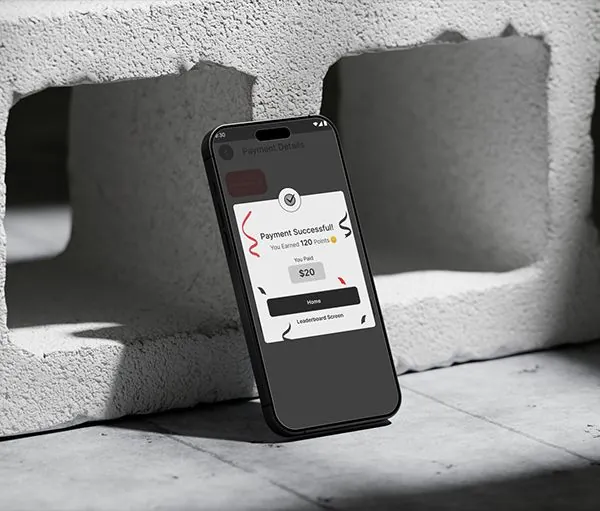
Mobile app · Fintech · United States
A fintech platform connecting merchants, customers and charities in a single payment flow.
purposepayment.comStraight answers
We avoid writing eligibility rules as fact, because visa categories and thresholds are set and changed by the Federal Authority for Identity, Citizenship, Customs and Port Security and by GDRFA Dubai, not by a consultancy. Pages point a visitor to the relevant official service instead of stating a rule that might be out of date by the time someone reads it.
Government visa fees are set by ICP and GDRFA and change without much notice, so we do not put figures on the page. A fee estimate for your own service is handled as a written quote once a case is understood, kept separate from what the government charges.
Yes, a document upload form is one of the most useful features on an immigration website, provided it sits behind encryption in transit and the files are only accessible to your case team, not indexed or left in a public folder.
A simple status page behind a login, showing stage names such as documents received, submitted and approved, reduces the volume of status calls to your office. It should never promise a decision date, since that sits with the government authority handling the file.
Every project gets a fixed written quote scoped to your brief, sent within 45 minutes during business hours with no obligation. The number of visa categories covered, the upload and tracking functionality and languages needed are the main cost drivers.
Sources
Fixed price, in writing
Got it. Your quote is being written now.
In business hours you will have it within 45 minutes. Check your inbox for the confirmation.