
Facial procedures
Rhinoplasty, eyelid surgery, facelift and chin or jaw contouring, each written around what the surgery involves and what a consultation will assess, without predicting how an individual face will look afterwards.
Web Design by Industry
Cosmetic surgery website design in Dubai for aesthetic surgery practices, built around a consultation led procedure menu and a gallery managed under DHA rules on imagery and language.
Cosmetic surgery is the area of medical marketing regulators watch most closely, because the decision is elective, the visitor is often emotionally invested in how they look, and the language used to sell a result can shade quickly into a promise nobody can keep. Cosmetic surgery website design in Dubai has to sell the practice’s skill and safety record without selling a specific outcome, since DHA guidance is unusually specific about the exact phrases and imagery that cross that line.
This page covers the procedure pages a cosmetic surgery practice in Dubai needs, exactly where DHA guidance restricts gallery images and outcome language, and what we ask for before a build starts. None of this is legal advice, and current advertising rules should always be checked directly with the Dubai Health Authority.
Most of the visitors landing on a cosmetic surgery site have already looked at several competitors, often in the same browsing session, and have seen the gap between an inflated marketing claim and a plain, credible explanation of a procedure. A site that reads as measured and specific tends to earn more trust in that comparison than one leaning on confident promises, which is a useful thing to remember when the temptation is to write copy that sells harder. Restrained, careful cosmetic surgery website design in Dubai is not a weaker sales pitch, it is usually the more convincing one.
Many cosmetic surgery brands in Dubai are not a single surgeon working alone. They are a clinic carrying several surgeons under one name, sometimes across more than one branch, with a marketing lead and a patient coordination team standing between the enquiry and the surgeon’s own diary. That changes what the website has to do. Rather than one voice describing one surgeon’s approach, the site has to help a visitor choose between procedures and, where the clinic offers it, between surgeons, while a coordinator manages the enquiry itself. Our wider healthcare website design work covers this multi practitioner pattern in general; this page sets out what is specific to elective cosmetic surgery within it.
The buyer
Where a plastic surgeon’s solo practice is usually signed off by the surgeon personally, a cosmetic surgery clinic more often has a marketing lead or clinic director approving the site, working alongside the medical director who owns compliance for every surgeon under the clinic’s licence. That splits responsibility in a way a single practitioner site never has to manage: the marketing lead cares about enquiry volume and how quickly a coordinator can respond, while the medical director cares about whether a procedure page, a gallery caption or a surgeon bio could put the clinic’s advertising permit at risk.
What this buyer asks for in the first meeting is rarely about design. It is about process: who checks a page before it publishes, how quickly a new procedure or surgeon can be added without a developer, and whether the enquiry form actually reaches a coordinator fast enough to matter, since a cosmetic surgery enquiry that sits unanswered for a day is an enquiry that has usually gone to a competitor by the time someone replies. A cosmetic surgery website design in Dubai brief that starts with these process questions, rather than visuals alone, is usually the one that ships closest to schedule.
The enquiry, not the booking
A cosmetic surgery website should never behave like an online shop where choosing a procedure leads straight to a confirmed appointment. Part of the reason is clinical: suitability for any procedure is decided in consultation, not by a form. Part of it is regulatory: the same DHA guidance that sets out what a health advertisement may say also treats providing a patient with an appointment time they never actually requested as unacceptable content, which rules out any flow that auto books a slot the moment a form is submitted.
What we build instead is a triage step. A visitor picks the procedure they are interested in, answers a short set of questions, and in some cases uploads a photo for the coordinator to review before the call, and a named coordinator then follows up to arrange the consultation itself. That extra step feels slower on paper, but it is the point where a nervous first time enquiry becomes a person who has actually spoken to someone, and it gives the clinic a chance to route an unsuitable enquiry to a more appropriate procedure or specialist before a surgeon’s time is booked on it.
Facial and body procedures
A cosmetic surgery website design in Dubai covering both facial and body work reads better organised by the kind of decision a visitor is making, not as one long alphabetical list.
Rhinoplasty, eyelid surgery, facelift and chin or jaw contouring, each written around what the surgery involves and what a consultation will assess, without predicting how an individual face will look afterwards.
Liposuction, tummy tuck and body contouring, kept distinct from the surgery a patient considers after major weight loss, which our bariatric surgery website design page covers as its own journey.
Where a clinic commonly performs more than one procedure in a single visit, a page explaining how that combination is decided in consultation, not assumed from a package name.
Where a cosmetic surgery clinic also offers non surgical treatments alongside surgery, those sit on their own pages, cross linked rather than blended into a surgical procedure description.
A short set of questions that points a visitor unsure which procedure applies to them toward the right page, rather than leaving them to guess from a menu of surgical terms.
Where more than one surgeon performs a given procedure, one page listing who does, so a visitor can compare rather than being assigned to whoever is free.
A cosmetic surgery website earns trust by being specific about the process and quiet about the promise, not the other way round.
Imagery beyond consent
Every industry page in this cluster covers the headline photography rule: the same individual, the same lens, no editing, a visible statement that a result may vary. Two further points in the DHA guidance matter specifically for a cosmetic surgery gallery covering facial and body work. First, the appendix on prohibited content states that a before and after image must only represent a patient who actually received that treatment, which rules out generic or illustrative photography standing in for a real result. Second, the guidance’s rules on pictures, images and videos used in advertising require that content abide by UAE culture and Islamic teachings and not display intimacy or sex appeal, a standard that applies directly to body procedure photography and needs deliberate thought in how images are framed and cropped, not treated as an afterthought once a gallery is already built.
This is not legal advice, and every image, caption and headline on a cosmetic surgery website design in Dubai should be checked against current DHA guidance before publishing. The safer approach we build toward for a cosmetic surgery website design in Dubai is a gallery workflow that checks consent, framing and cultural fit together, at the point an image is uploaded, rather than as a separate review nobody owns.
Recovery and risk together
DHA guidance treats recovery claims as a specific risk area, not a generic one.
The guidance lists referring to the recovery time following a procedure in a way that may lead to unrealistic expectations as unacceptable content in its own right, separate from the broader rule on outcome claims, and its list of prohibited advertisement content rules out any suggestion that a treatment is certain to produce a full recovery. For a cosmetic surgery website in Dubai, that means a recovery section cannot simply promise a quick return to normal life to make the procedure feel more appealing, even where that is written with good intentions rather than a deliberate sales angle.
What we build instead pairs any statement about recovery with the associated risks in the same paragraph and the same visual weight, since the guidance is explicit that a surgical or invasive procedure advertisement must carry a clear statement of risk, not a risk note buried in small print underneath a more prominent recovery timeline. A patient reading a facelift or liposuction page on a cosmetic surgery website design in Dubai should see what a typical recovery involves and what can go wrong, presented together, not the reassuring half first and the caution somewhere further down the page.
International patients
Dubai’s cosmetic surgery clinics see a genuinely international enquiry base, and the site has to serve a different set of questions than a local patient asks. Rather than the video consultation and time zone questions a solo surgical practice handles directly, a multi surgeon clinic usually needs a single coordinator to own the entire international journey: confirming which language the patient prefers, explaining what a first visit typically involves before travel is booked, and giving a clear, currency neutral answer on how quotes work rather than publishing a price a currency conversion or a changing procedure scope would make inaccurate within weeks.
A cosmetic surgery clinic drawing enquiries from across the Gulf and from further afield also needs its intake process to work in more than English and Arabic where the numbers genuinely justify it, confirmed against real enquiry patterns rather than assumed. The coordinator role matters more here than almost anywhere else on a cosmetic surgery website design in Dubai, since an international patient is trusting one person, not a page, to guide them through a process that involves travel, cost and a procedure they cannot fully evaluate from a browser.
Data that changes
A single surgeon site can rely on one person noticing when something is out of date. A clinic with several surgeons cannot.
| Data | How often it changes | Who usually owns it |
|---|---|---|
| Procedure list per surgeon | Occasionally, as a surgeon’s own scope changes | Medical director, checked against each surgeon’s own record |
| Gallery and consent records | As new consented photography becomes available | Coordinator team, tracked against a signed consent log |
| Coordinator routing and roster | As staff join or leave the clinic | Clinic manager, since a wrong routing loses a live enquiry |
| International intake language coverage | Rarely, but reviewed against actual enquiry origin | Marketing lead, working from real enquiry data, not assumption |
Integrations
A cosmetic surgery website design in Dubai rarely stands alone once the enquiry step is built properly.
Many patients expect a reply on WhatsApp rather than email, and our WhatsApp API integration work connects an enquiry form directly to the number a coordinator actually monitors.
Tracking which coordinator owns which enquiry, and at what stage it sits, needs a proper system once enquiry volume passes what one inbox can manage cleanly.
A calendar system that reflects real surgeon and coordinator availability, so a confirmed consultation time is never offered before it has actually been agreed.
Where a triage step asks for a photo, it needs to be handled through a channel the clinic controls, not an open email attachment sitting in an inbox indefinitely.
Distinguishing a local enquiry from an international one, and one procedure page from another, is what lets a clinic see which pages are actually converting.
Where a cosmetic surgery brand runs several branches, our mobile app development work can extend booking and aftercare beyond the website itself.
Search behaviour for a cosmetic surgery website in Dubai splits, much like the wider surgical category, into a research stage and a ready to enquire stage, though the exact terms differ from a solo plastic surgery practice. A research search pairs a procedure name with “before and after”, “recovery” or “cost”, and is best answered by the procedure page itself rather than a page trying to sell against the question. A ready to enquire search pairs a procedure name with “clinic”, “Dubai” or “consultation”, and that visitor wants the coordinator step in front of them quickly, not another paragraph explaining what the surgery involves.
No search volumes are claimed here, since none have been measured for any specific clinic. The structural point holds regardless: a cosmetic surgery website that only answers the research question, without a fast, working route into the coordinator triage step, loses the visitor who has already decided and is ready to act.
Where a bad site loses the visitor
A visitor lands on a cosmetic surgery website already holding a rough idea of the procedure they are interested in, usually from a search, a referral or something seen on social media, and their first task is confirming whether this clinic actually does that procedure and does it well. The page loses them here if the procedure is buried inside a generic services list rather than given its own clear page, since a visitor who cannot quickly confirm the clinic covers exactly what they are researching moves on to a rival cosmetic surgery website design in Dubai that makes it obvious in a glance.
Their second task, once the procedure is confirmed, is deciding whether to trust this specific clinic over the several others open in other browser tabs, which is where surgeon credentials, gallery honesty and a measured tone do the real work. The final task is acting, and this is the point most sites quietly lose a visitor who has already decided: an enquiry form that asks too much too soon, or that gives no sense of what happens after it is submitted, reads as friction rather than a next step, and a visitor who is ready to enquire will not wait long for a form that feels like more research homework, which is why a cosmetic surgery website design in Dubai should treat the enquiry form itself as carefully as the procedure copy above it.
Content that goes missing
Case photography gathered over years with no clear record of which patient agreed to which use is usually the largest single delay on a cosmetic surgery build.
A clinic that has added or lost a surgeon since the last update often has a roster that no longer matches who is actually seeing patients.
Whether every enquiry genuinely reaches a named person quickly, or whether that only happens when someone remembers to check the inbox, is often assumed rather than confirmed before launch.
Reviews, kept separate from a gallery
A star rating and a written Google review are a different thing from a gallery image or a quoted patient story, and a cosmetic surgery website should treat them differently. Our own pages never write testimonials on a client’s behalf, and the same discipline applies here: reviews displayed through our standard review block reflect what a patient actually wrote on a public platform, rather than a quote selected and rewritten to sound more persuasive. A quoted patient story used anywhere else on the site, describing a specific procedure or result, still needs the same written consent DHA guidance requires for any patient testimonial, and should never be assumed simply because the patient left a public review elsewhere.
Kept this way on a cosmetic surgery website design in Dubai, reviews answer a genuine question, whether other patients found the clinic easy to deal with, without drifting into the outcome specific language a gallery caption or a procedure page has to avoid. This is not legal advice, and any use of a named patient’s words should be checked for documented consent before it goes anywhere near the site.
Phasing
| Stage | What launches | What waits |
|---|---|---|
| Phase one | Procedure pages for the highest demand facial and body work, surgeon profiles, a working coordinator enquiry step, an approved starter gallery | A full procedure finder quiz or a dedicated international patient portal |
| Phase two | A wider gallery as more consent is gathered, additional language versions, a procedure finder tool | Procedures still waiting on a completed consent process for existing photography |
| Ongoing | New surgeon and procedure pages as the clinic grows, gallery additions as consent is signed | A full site rebrand, done in one batch rather than piecemeal |
A clinic launching its first cosmetic surgery website design in Dubai rarely needs every procedure, every surgeon comparison feature and a fully built international journey finished on day one. Launching with the procedures currently drawing the most enquiries, and a coordinator step that genuinely works, is usually the faster and less risky order.
A handful of patterns keep turning up when we look at an established cosmetic clinic’s existing website ahead of a rebuild. A procedure list still naming a surgeon who left the clinic months earlier, simply because updating the roster fell nobody’s job description. A gallery that outgrew its own consent records, so a coordinator cannot say with confidence which image still has a signed agreement filed anywhere. Copy that reads as a generic clinic brochure, interchangeable with any other cosmetic surgery site, rather than something written around how this particular clinic’s coordinators and surgeons actually talk a patient through a decision. Fixing any of this rarely means starting over. It usually means someone finally being given the job of keeping the site as current as the clinic itself.
Measuring it
Enquiry volume on its own tells a clinic very little, since a busy enquiry form that a coordinator cannot keep up with is not doing its job.
What matters more is how many enquiries a coordinator actually reaches, and how many of those turn into a booked, attended consultation, since a fast, working triage step is usually what separates a converting cosmetic surgery site from one that only generates traffic. Tracking international enquiries separately from local ones is worth doing for any clinic serving both, since the two often need a different coordinator process and a different follow up rhythm. Which procedure pages actually lead to a booked consultation, rather than simply a page view, is a third useful signal, since it tells a marketing lead where to invest further content and where a page may need rewriting rather than promoting. None of this is a promised outcome. It is what we recommend a clinic track using its own enquiry and booking data, not a figure we would publish here.
Core pages
A visitor researching cosmetic surgery is often comparing several practices, and reads gallery and procedure pages more critically than most.
A page per procedure describing what it involves, who typically has it and how recovery is generally described, without predicting a specific personal result.
A consent tracked gallery structure so every image is tied to a signed form, with disclaimer text built into the template rather than added by hand each time.
Qualifications, training and affiliations stated plainly, since credentials carry more weight with a cautious reader than promotional language ever will.
A request form that routes every enquiry to a consultation first, since suitability for a procedure is a clinical decision, not something a website form can confirm.
General information on recovery timelines and follow up, positioned as education rather than a promise of how quickly a patient will heal.
Full bilingual pages, since cosmetic surgery enquiries in Dubai come from a wide regional patient base researching in Arabic and English alike.
Language that is not allowed
Most healthcare advertising guidance speaks in general terms about misleading content, but the DHA guidance on cosmetic and appearance related advertising is unusually specific. It names phrases such as “don’t delay”, “achieve the look you want” and “looking better and feeling more confident” as examples of language likely to create unwarranted expectations about a procedure’s effectiveness, alongside a wider rule against encouraging unnecessary or excessive use of a health service.
The same guidance separately prohibits claims that a treatment is infallible, unfailing or a certain cure, and rules out language implying a surgeon has an exclusive or unique skill. For a cosmetic surgery website in Dubai, the safest copy describes technique, experience and the consultation process, and leaves the patient’s own decision about how they will look to the conversation with the surgeon, not the homepage.
Gallery consent
A gallery is one of the most requested features on a cosmetic surgery website design in Dubai, and one of the easiest to build incorrectly.
| Requirement | What we build into the gallery |
|---|---|
| Same patient, same lens, no editing | An upload workflow that captures both images together, tagged to one consent record |
| Visible disclaimer on results varying | Disclaimer text rendered in the same size as the surrounding copy, not hidden in small print |
| Documented written consent | A consent status field on each entry, so nothing publishes without a recorded yes |
Build and content
A cosmetic surgery website design in Dubai build moves quickly once this is ready.
Which procedures are offered, described in plain terms rather than marketing copy borrowed from elsewhere.
Signed consent for every existing image intended for the site, matched to the correct patient pair.
Qualifications, registration and training history, verified before publishing.
Who reviews procedure and gallery wording before it goes live, so DHA related edits do not stall a launch. On a clinic with several surgeons, this is usually the medical director rather than any one surgeon, and naming that person early avoids a bottleneck once several procedure pages are ready for review at once.
Any current before and after photography, so we can check each pair against consent records before it moves onto the new site.
We plan the gallery layout and the step from a procedure page into a consultation request as UI UX design work first, then move into the actual website development, hosting and handover. After launch, keeping procedure pages ranking for specialty searches falls under SEO services, since this is a competitive area of search in Dubai.
Package pricing, avoided on purpose
Some cosmetic surgery marketing leans on the language of a package, a fixed figure covering a procedure, a stay and sometimes travel, presented as a single headline number. DHA guidance on acceptable and unacceptable advertisement content is direct about the risk in that approach: price information that is inaccurate, or that fails to specify the conditions or variables attached to an advertised figure, sits on the unacceptable side of the same appendix that governs outcome and imagery claims. A cosmetic procedure’s actual cost depends on the individual patient, the exact scope agreed with the surgeon and, for an international patient, on logistics that vary case by case, which makes a single advertised package figure difficult to defend as accurate for every enquiry it reaches.
None of our own pages publish a price for this reason, cosmetic surgery website design in Dubai included, and every cost question is answered the same way: a written, fixed quote scoped to the patient’s own consultation. This is not legal advice, and any pricing approach a clinic is considering should be checked against current DHA guidance before it goes anywhere near the website. A coordinator explaining, in plain terms, what shapes the eventual figure, the procedure itself, the surgeon’s time and any facility fees, does more for a hesitant enquirer than a headline number that cannot actually hold for every case it reaches.
Arabic and the wider region
Every industry page in this cluster notes that bilingual work is available, but for a cosmetic surgery clinic in Dubai, Arabic is not a general nicety, it is where a meaningful share of enquiries genuinely start. A patient researching a facial or body procedure often reads competing clinics in Arabic first, particularly where the enquiry is coming from elsewhere in the Gulf rather than Dubai itself, and a procedure page that only exists in English quietly loses that comparison before the coordinator ever gets a chance to speak to the patient.
Full procedure pages in both languages, not a translated summary, is the standard worth building to, since a shortened Arabic version reads as an afterthought to a careful reader who has already noticed the English page is longer and more detailed. Where a clinic’s enquiries genuinely justify it, a third regional language is worth adding once real enquiry data supports the investment, rather than being guessed at from launch.
Beyond the procedure page
Many cosmetic surgery clinics in Dubai sell aftercare and skincare products alongside procedures, which changes what the website needs technically, not just editorially.
Where a clinic sells recommended aftercare or skincare products, our ecommerce solutions work covers the store itself, kept clearly separate from the procedure pages it supports.
A patient looking for aftercare instructions after a real procedure needs a clear, practical page, not one written primarily to sell the next product.
Where a clinic wants to prompt a follow up appointment, a straightforward reminder tied to the coordinator’s own calendar works better than a generic marketing automation sequence.
An aftercare or product page should always offer a fast way back to the same coordinator who handled the original enquiry, not a separate general contact form.
Aftercare and product pages still fall under the same DHA advertising guidance as a procedure page, so they belong in the same review process, not treated as ordinary retail copy.
Built properly from the start, an aftercare section can grow alongside the clinic without becoming a second website bolted awkwardly onto the first.
Related industries
The solo practice pattern, surgeon credentials and hospital privileging in more depth.
A different set of considerations for medically necessary weight loss surgery.
Non surgical aesthetic treatments, sharing much of the same advertising caution.
Shares the elective and cosmetic enquiry pattern, with its own treatment specific content.
Relevant where a clinic sells skincare or aftercare products alongside its procedures.
See the full range of industry pages we design and build for.
Selected work
Work across sectors, with the closest to this industry shown first. Every one is a live site, not a mockup.
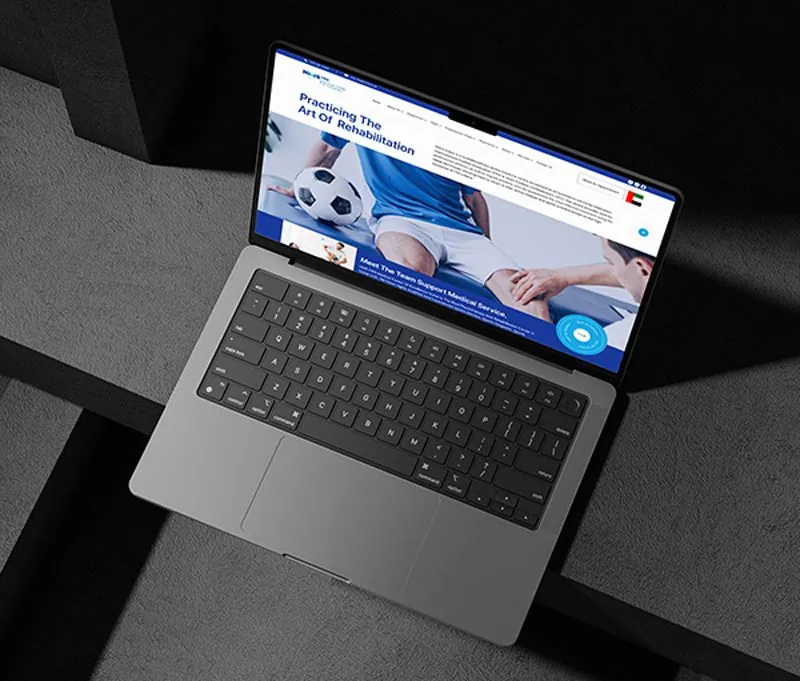
Website · Healthcare · Dubai
A Dubai rehabilitation and physiotherapy practice with one properly bilingual site in English and Arabic.
hmsfmce.com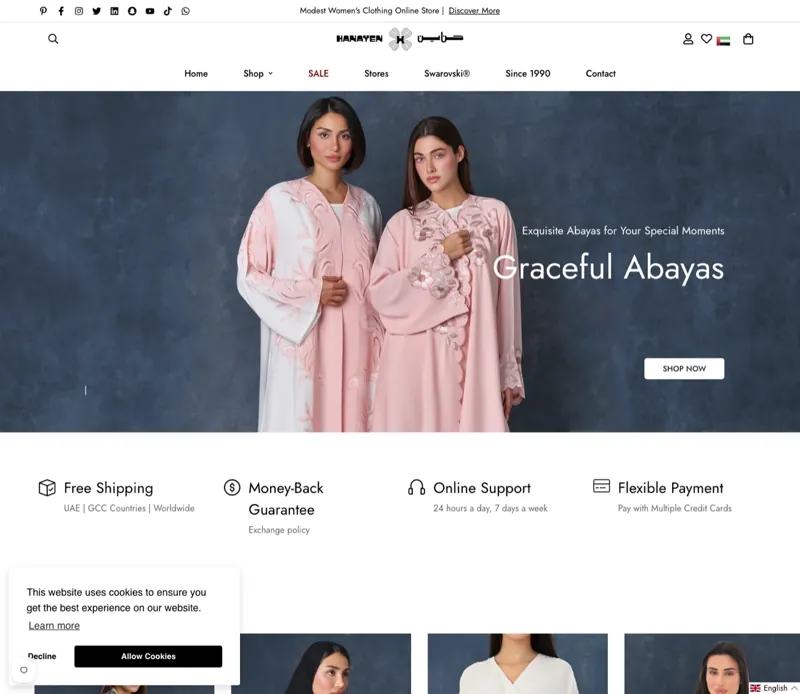
E-commerce · Fashion · Dubai
A Dubai luxury abaya house trading since 1990, carrying its craftsmanship into a quick mobile checkout.
hanayen.com
Website · Furniture · Middle East
A design led furniture brand that launched with no digital home, now shown as carefully as its pieces.
stulo.comStraight answers
Dubai Health Authority guidance allows before and after images under specific conditions: the same patient, the same lens, no editing, and a visible statement that results vary between individuals, alongside written patient consent. Current requirements should be checked directly with the DHA before any gallery is built, and this is not legal advice.
No. DHA guidance names this exact type of phrasing as an example of content that creates unrealistic expectations about the effectiveness of a service, alongside references to improving physical appearance used to encourage indiscriminate demand. Procedure pages are safer describing what a procedure involves and who to speak to for a consultation.
No fixed prices are published for cosmetic work, since a genuine quote depends on the consultation, the patient's anatomy and the exact procedure agreed with the surgeon. DHA guidance also treats inaccurate or unconditioned price information as unacceptable content.
Testimonials require documented written consent under DHA guidance, and comparisons between different regulated health professions are not acceptable. A general statement about consultation numbers or years in practice is a steadier alternative to individual patient quotes.
Every project gets a fixed written quote scoped to your brief, sent within 45 minutes during business hours with no obligation. The number of procedures listed, gallery functionality and languages needed are the main cost drivers.
Sources
Fixed price, in writing
Got it. Your quote is being written now.
In business hours you will have it within 45 minutes. Check your inbox for the confirmation.