
Finding the right doctor at a Dubai clinic
A short list of doctors by specialty, with languages spoken and next available slot, so a patient does not have to call and ask who is free.
Web Design by Industry
A clinic website design in Dubai has to carry a patient through several separate steps: finding the right doctor, booking a slot, completing intake paperwork, and coming back for a follow up. We build clinic sites around that whole journey, not a single contact page.
Clinic website design in Dubai is judged on one thing above the rest: whether a patient can get from a search result to a confirmed appointment without giving up halfway. That sounds simple, but a clinic visit is rarely a single step. A patient chooses a doctor, checks a time that fits their day, fills in medical history before or after booking, and often comes back weeks later for a follow up. A clinic website design in Dubai that only shows opening hours and a phone number is leaving most of that journey to a receptionist on the phone.
This page covers what a private clinic site in Dubai has to manage across that journey, where the facility licence held by the Dubai Health Authority affects what the site can say and when it can go live, and what we ask for before building one.
Everything here is written from the perspective of one premises with a handful of practitioners, not a chain of facilities under one brand. A clinic that grows into several addresses moves into a different set of problems, insurance networks that vary by location, doctor rosters spread across teams, a shared advertising review process, which is a different job we cover on our wider healthcare website design page. Staying focused on the single address a practice actually runs from, rather than borrowing structure meant for a larger group, is usually what keeps a clinic build both faster and easier to maintain once it is live. That focus is the thread running through the rest of this page, and it is what separates clinic website design in Dubai for one premises from the wider, group scale healthcare pattern.
The patient journey
Each stage below is a separate job on the site, and treating them as one page usually means the site does none of them well.
A short list of doctors by specialty, with languages spoken and next available slot, so a patient does not have to call and ask who is free.
A booking widget connected to real availability where your clinic system allows it, or a fast request form with a clear promise of when someone confirms.
Medical history and consent forms a patient completes before arriving, reducing time in the waiting room and giving reception accurate information in advance.
For a clinic group, the branch has to be chosen before a doctor or slot is shown, so a patient in one part of Dubai is never offered a time at a location across the city.
A returning patient should be able to rebook with the same doctor in a couple of taps, rather than repeating the full search every visit.
A call and WhatsApp option stays visible throughout, for the patient who would rather speak to someone than complete a form online.
Facility licence
A private clinic in Dubai operates under a facility licence issued by the Dubai Health Authority, and that licence status affects what a website is allowed to promote and when. According to the Dubai Health Authority’s own service description for a new facility licence, an approved application is first issued as an inactive licence, and the facility must complete a separate activation step before it can begin operating. A clinic on an inactive licence should not be treating patients or advertising treatments, which means the go live date for a clinic website design in Dubai is usually tied to that activation, not to when the design work finishes.
This is a starting point, not legal advice, and licence conditions change. We ask every clinic client to confirm their current facility licence status with the Dubai Health Authority before we schedule a launch date, so the site never goes live promoting services the facility is not yet permitted to provide.
Multi doctor, multi branch
The booking flow is the part of a clinic site most likely to break under real use, usually because the logic was built for one doctor at one address.
| Clinic shape | What the booking flow needs | Common mistake |
|---|---|---|
| Single doctor, single branch | A simple calendar tied to that doctor’s real hours | A form that does not say when someone will confirm |
| Several doctors, one branch | Doctor first selection, then their own slots | Showing every doctor’s slots merged together |
| One brand, several branches | Branch selected before doctor or time | A single shared calendar across all locations |
| Walk in and appointment mixed | Clear wording on which slots are confirmed in advance | A calendar that implies every visit needs a booking |
We build the booking screen to match how your clinic actually schedules patients, which we confirm with reception before any layout work starts, rather than fitting your clinic into a generic booking template.
Build and content
A clinic build moves quickly once this information is confirmed.
Names, specialties, qualifications, languages and which branch each doctor sees patients at.
Whether you use booking or patient management software we can connect to, or whether requests should route to reception by phone.
The medical history and consent questions your clinic already asks, so we can turn them into an online form rather than inventing new ones.
Current licence number and status for each branch, and who at the clinic confirms this before launch.
Who reviews doctor claims and treatment wording before it goes live, so licence related edits do not stall a launch.
Development, hosting and handover are covered on our website development page, and the booking screens themselves are a UI UX design job before any code is written. Once the site is live, SEO services covers ranking for doctor and specialty searches.
The buyer
At this size, the person approving the site is usually the owner practitioner or a general manager running one premises, not a marketing department. What they are measured on is close to what happens in the building itself: how full the consultation rooms are through the day, how many walk ins the reception desk can absorb without a queue forming, and whether the phone stops ringing once online booking actually works. A single clinic website design in Dubai succeeds or fails on those numbers, not on how the homepage photographs.
The questions we hear first from this buyer are practical rather than strategic: can the site show today’s real availability, can a patient who just walked past the door check if a doctor is free right now, and will the booking form actually reduce calls to reception rather than adding a second channel reception also has to check.
The single site journey is shorter than a group’s, and that is exactly why a clinic website design in Dubai has less room for error. A patient searching for a nearby clinic usually wants an answer within a couple of screens: is this the right kind of clinic, is someone free today, and what does it cost to find out. Where the journey breaks down most often is the gap between “we are open” and “someone can see you now”. A clinic that shows generic opening hours but no sense of whether today is busy sends a patient who wants care quickly straight to a competitor showing a same day slot, even if that patient would have been seen just as fast by calling.
The second common drop off is a patient who wants to walk in rather than book, and finds no way to tell whether that is even allowed. A single clinic website design in Dubai has to answer that question on the page itself, since a phone call just to ask “can I just come in” is a call that a clear line of text could have avoided.
Single site pages
A handful of practitioners at one address need less structure than a group, but what they do need has to work precisely, since there is no second location to fall back on.
A simple, honest signal, slots today, slots tomorrow, or fully booked, answers the question a patient in discomfort actually has before they read anything else.
Rather than a long static list, a short lookup letting a patient enter their insurer and see whether this specific address accepts it removes the single most common phone call reception gets.
Parking, the nearest metro or landmark, and which entrance to use matter more for a single address than a generic map embed, since there is nowhere else to redirect a lost patient to.
A single number that reception actually watches, rather than a general enquiry form that sits unread, suits the scale of a one location clinic better than a ticketing system built for a larger team.
With only a handful of doctors, each profile can carry real depth, training, approach, languages spoken, rather than the shorter entries a large roster forces.
Whether walk ins are accepted, and at what times, stops being a phone question once the site says so directly, in the patient’s own words rather than clinic jargon.
What actually changes daily
A one location clinic has less data to manage than a group, but it changes just as fast, and there is no second facility to absorb the mistake if it slips. A handful of practitioners means the weekly shift rota can change with a single sick day or a late flight home, and a site still showing yesterday’s schedule sends a patient to book a slot that no longer exists. The insurance panel at a single address is shorter than a group’s network, but a patient checking it expects it to be right for this exact premises, not a general statement copied from a template.
The walk in queue itself is the most perishable piece of information on the whole site. A queue status that was accurate an hour ago can be wrong within minutes once a few patients arrive at once, so we design this as an honest range, quiet, moderate, busy, rather than a promise of an exact wait time we cannot actually keep current.
Integrations at this scale
A one location clinic rarely needs the layered systems a group requires, and building for that scale unnecessarily just adds cost and things that can break.
| What a group typically needs | What a single clinic usually needs instead |
|---|---|
| A hospital information system integration | A booking widget tied to one practice management tool, or a request form |
| A group wide insurance directory | A single insurance eligibility check for this address only |
| Several staff roles publishing across facilities | One or two people editing the site directly |
| A patient portal syncing across locations | A simple login for repeat patients, if needed at all |
Clinic website design in Dubai for a single premises is usually a faster, simpler build for exactly this reason, and we scope it to what the practice actually runs rather than a larger system it will never need.
One licence, one roster
A private clinic facility licence in Dubai is issued to one address, and the practitioners named on it are the ones permitted to see patients at that specific location, a point our wider look at the Dubai Health Authority’s facility licence process covers in more detail. For a single site clinic website design in Dubai this is straightforward compared with a group: there is one licence and one roster to keep aligned, but that also means there is no second facility to quietly absorb the gap if a doctor listed on the website has actually moved on and is no longer part of that licensed team.
This is a practical risk to manage rather than a settled legal position we can state for you, and it is not legal advice. The safer habit is a short check before any doctor page changes: is this practitioner still part of the licence held for this address, confirmed with whoever at the clinic manages that relationship with the Dubai Health Authority.
A single clinic has one licence and one roster to keep aligned, which is simpler than a group, but there is no second facility to absorb a mistake.
Search behaviour at a single clinic splits the same way it does everywhere in healthcare, into a research search and a ready to act search, but the ready to act version reads differently here. A patient researching still types a condition or a treatment name. A patient ready to act at a single clinic often adds “now”, “today” or “near me” rather than the clinic’s own name, because they have not chosen a specific practice yet, only a need. A single clinic website design in Dubai that only answers the research question, with long treatment explanations and no visible same day slot, misses this second, more urgent visitor entirely, even though that visitor is often the easiest one to convert.
No search volumes are claimed here. The practical point is structural: a same day availability signal and a walk in policy stated plainly do more for this kind of visitor than another paragraph explaining a treatment they have already decided they need.
Content that goes missing
A rota is often kept on a printed sheet at reception rather than anywhere digital, and turning it into something the site can display is usually the first real delay.
A general statement copied from a group template is not the same as confirming which insurers this specific premises currently accepts, and the two are easy to mix up.
Stock photography of a generic waiting room does less for trust than a real photo of the entrance and reception a patient will actually recognise on arrival.
Phasing
| Stage | What launches | What waits |
|---|---|---|
| Phase one | Doctor list, treatment pages, booking or request form, insurance eligibility check | Automated reminders, a returning patient login |
| Phase two | SMS or WhatsApp appointment reminders, a simple repeat patient login | Anything that assumes a second location down the line |
A single clinic rarely needs a long phased rollout. Most of the value sits in getting the first phase right, since there are no other facilities competing for attention once it is live.
Arabic locally
A single clinic’s Arabic content is less about covering every page uniformly and more about matching the neighbourhood it sits in and the languages its own reception team can actually handle. A bilingual site is only as useful as the reception desk behind it, so before building full Arabic content across every page, we confirm whether reception can take a call in Arabic, since a site promising a service the desk cannot deliver creates a worse impression than a shorter, honest English only page.
The mistakes we see most often on existing single clinic sites are small, and that is exactly the problem. An insurance list that was accurate at launch and never updated after the panel changed. A doctor bio still online months after that doctor left the practice, because nobody was given the login to remove it. No mention anywhere of whether walk ins are accepted, so every one of those patients still calls to ask, defeating half the point of having a website at all. None of these need a rebuild to fix. They need one person at the clinic with regular access to the site, and a habit of updating it the same week something actually changes, which is most of what disciplined clinic website design in Dubai comes down to after launch.
Measuring it
Site wide traffic tells a clinic owner very little on its own, at this scale even more so than at a group’s.
What matters more, for clinic website design in Dubai measured properly, is whether booking requests are actually converting into filled slots, and whether the same day availability indicator is reducing the number of walk in patients who arrive without checking first. A drop in calls asking “are you open” or “do you take my insurance” is a real, if informal, sign the site is doing its job, since those are exactly the questions the site should now be answering on its own. None of this is a promised outcome. It is what we recommend a single clinic track using its own booking numbers and reception log, not a figure we would publish here.
The eligibility check
A static list of insurer logos tells a patient almost nothing useful, since most insurers offer several policy types, and a clinic often accepts some and not others. A working eligibility check for a single premises asks two short questions, the insurer name and the general policy category, and gives a plain yes, no, or a short note to call and confirm for anything genuinely uncertain, such as a newly added scheme or a policy the reception team has not seen before. Overstating acceptance to look more inclusive than the clinic actually is causes far more frustration at the reception desk than a shorter, more honest list ever would.
Because a single clinic’s panel is short enough to manage by hand, this does not need to be a live system connected to an insurer’s own database. A simple, clearly labelled table that whoever manages billing can update themselves, without needing a developer, is usually the right level of complexity for one address.
When a slot falls through
A missed appointment costs a single clinic more, proportionally, than it costs a large hospital with dozens of practitioners to absorb the gap, so clinic website design in Dubai treats cancellations as a real feature, not an afterthought.
A patient who can cancel in two taps is more likely to actually do it, freeing the slot for someone else, than one who has to call and explain, which is exactly the kind of detail clinic website design in Dubai has to get right.
Where a slot is full, letting a patient ask to be told if it opens up turns a lost booking into a filled one without extra reception effort.
A short reminder the day before does more to prevent a no show at a small practice than any amount of booking page design, and is usually the first improvement worth adding after launch.
Behind the indicator
The visible signal on the page, quiet, moderate, or fully booked, has to come from somewhere real, and clinic website design in Dubai usually settles on one of two common approaches that suit different sized practices.
| Approach | How it works | Best suited to |
|---|---|---|
| Manual toggle | Reception updates a simple status a few times a day | A very small practice with one or two treatment rooms |
| Calendar synced | The indicator reads directly from the booking calendar in use | A practice already running booking software with real slots |
Starting with a manual toggle and moving to a synced version once booking volume justifies it is usually the more sensible order for clinic website design in Dubai at a single premises, rather than building the more complex version first.
Local visibility
A healthcare group can afford a weaker showing at one facility because the others carry the brand. A single clinic has exactly one shot at appearing when someone nearby searches for the kind of care it offers, so the address, opening hours and phone number on the website need to match exactly what appears on the clinic’s Google Business Profile, since a mismatch between the two is a common reason a clinic underperforms in local search results despite having a perfectly good site. This work sits alongside our SEO services, and for a single premises it starts with getting these basic details consistent before anything more advanced.
Booking forms that work
A single clinic often has an older or less mobile patient base than the wider market, which makes accessible clinic website design in Dubai, particularly a working booking form, more important here, not less.
| What we check | Why it matters at a single clinic |
|---|---|
| Large, clearly labelled buttons for choosing a time | Many patients book on a phone, sometimes for an elderly relative |
| A form a screen reader can read correctly | A small practice cannot assume every visitor uses a mouse and a large screen |
| A booking step that survives a dropped connection | Losing a half filled form once is often enough to send a patient back to the phone permanently |
The W3C’s Web Content Accessibility Guidelines set the reference we test single clinic booking forms against, the same standard used across every healthcare related build we do, applied here to a much smaller form with fewer steps but no less need to work correctly the first time.
Building for one address is genuinely simpler and usually faster than building for a group, and it is worth saying plainly rather than dressing a small build up as bigger than it is. A single clinic does not need a content management structure built for several publishing teams, does not need a group wide insurance directory, and does not need a patient portal syncing records across locations that do not exist. Where we see single clinic sites go wrong is the opposite mistake: choosing a platform or a booking system built for a much larger practice, paying for complexity the clinic will never use, when a simpler, well built site with a working booking form and an honest same day indicator does the job better and costs less to maintain.
Before there was a site
Many single clinics we meet in Dubai started with a social media page rather than a website, posting updates and taking bookings through direct message because that was fast to set up and free to run. It works while the practice is small, and it stops working the moment good clinic website design in Dubai becomes the deciding factor: a patient wanting to check insurance before messaging, or a search result bringing a new patient in rather than a follower already familiar with the practice. A social profile also gives a single clinic no control over its own booking data, its own domain, or how it appears once someone searches its name directly.
Moving to a proper site does not mean abandoning that social presence, which still works well for day to day updates and photos. It means giving the practice a home that it owns outright, with the booking form, insurance information and treatment pages a social profile was never built to hold well, and linking the two together rather than treating the website as a replacement for a channel that still has its own use.
It is worth being honest about where a single clinic build stops. If the practice is genuinely planning to open a second premises within the near future, building the site as if a second location already existed, with branch selection logic and a structure ready for more than one address, saves a rebuild later. If that expansion is not a real, funded plan, building for it anyway usually just adds complexity the practice pays for and never uses. A clinic that does grow into more than one address moves into a different pattern of site altogether, closer to what we cover on our wider healthcare website design page, where facility selection, a shared insurance network and a content review workflow across more than one team become worth the extra structure. Until that point, a single clinic website design in Dubai is better served staying focused on the one premises it actually serves.
Room time, not just doctor time
A single clinic with only two or three treatment rooms sometimes runs into a limit the booking flow itself has to respect: a doctor being free does not always mean a room is free, particularly where two practitioners share the same space on alternating shifts. A booking system built only around doctor availability can happily offer a slot that the premises cannot actually deliver, and the patient finds out only at reception. For a small practice, checking room availability alongside doctor availability during booking, even as a simple manual rule reception maintains, avoids the kind of double booking that is far more visible and damaging at this size than it would be inside a larger facility with more rooms to absorb the clash.
This rarely needs a sophisticated resource management system. For most single clinics, a short list of which doctor uses which room on which day, kept current by reception and reflected honestly in the booking calendar, is enough to prevent the problem without adding real complexity to the site.
It is worth restating what a single site build does not need to solve on day one. Good clinic website design in Dubai for one premises rarely needs every integration, every language and a fully synced calendar finished before it can go live usefully. A first version with an honest same day indicator, a working request form and an accurate insurance eligibility check for this address already answers the questions that matter most to a patient deciding whether to call. Refinements such as a synced calendar, automated reminders or a returning patient login are genuine improvements, but they are improvements on top of a working foundation, not requirements for launch.
Clinic website design in Dubai done this way tends to age well too. A site scoped honestly to one address, one small team and one licence is easier to keep accurate over time than a larger structure borrowed from a group site the practice does not actually run, and an accurate, current small site consistently outperforms a more elaborate one that nobody has updated since launch.
Related industries
Our wider page on hospital and healthcare group websites, doctor pages and insurance panels.
For a cosmetic or aesthetics brand, where before and after imagery and advertising claims are the main concern rather than booking logic.
Shares the same appointment and intake pattern, with its own treatment specific content.
A step down in size again, for one independent practitioner rather than a small team.
Selected work
Work across sectors, with the closest to this industry shown first. Every one is a live site, not a mockup.
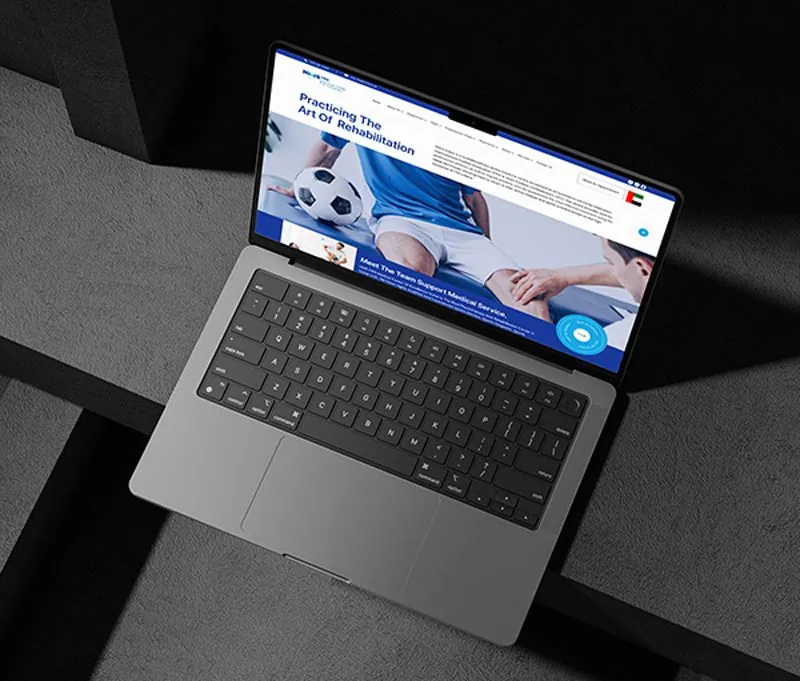
Website · Healthcare · Dubai
A Dubai rehabilitation and physiotherapy practice with one properly bilingual site in English and Arabic.
hmsfmce.com
Web app · Ticketing · UAE
The UAE cinema chain operated by Phars Film. Every screening, offer and payment in one place customers can use on a phone.
starcinemas.ae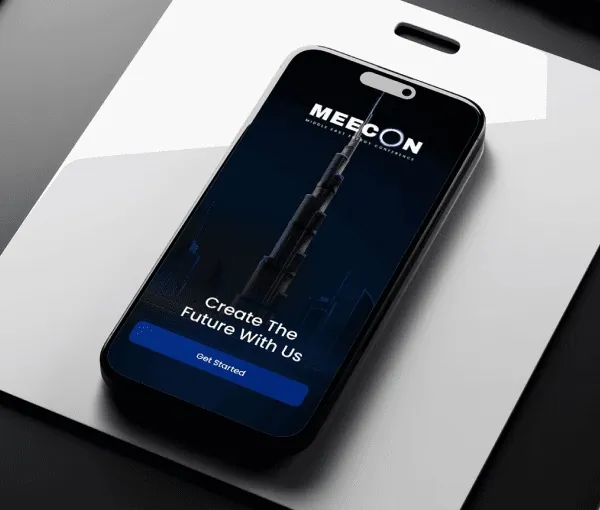
Mobile app · Events · UAE
A UAE conference platform replacing printed programmes and email chains for delegates and organisers.
meecon.aeStraight answers
Yes. A branch selector at the start of the booking flow, before a doctor or time slot is offered, keeps a multi branch clinic from showing availability that belongs to the wrong location. We set this up whenever a clinic group has more than one address.
Where your booking or patient system supports it, yes. A pre visit form for medical history and consent saves reception time and gets the patient seen faster. Where it does not, we build a simple downloadable or emailed version instead.
The site itself can be built and staged, but content that advertises treatments or invites bookings should wait until the facility licence is active, since a clinic cannot treat patients or advertise on an inactive licence. We plan the launch date around that status with you.
That depends on your booking or clinic management system, since reminders are usually sent from there rather than from the website itself. We make sure the booking flow captures a working phone number and email so reminders reach the right patient.
Every project gets a fixed written quote scoped to your brief, sent within 45 minutes during business hours with no obligation. The number of doctors, branches and the booking system you already use are the main cost drivers.
Sources
Fixed price, in writing
Got it. Your quote is being written now.
In business hours you will have it within 45 minutes. Check your inbox for the confirmation.