Web Design by Industry

Cybersecurity website design in Dubai built to earn a security buyer's trust

A cybersecurity website in Dubai is read by someone who audits vendors for a living. We build these sites around services, methodology and evidence of capability, without ever inventing certifications or claims the business cannot back up.

  • 4.7 Google rating
  • 200+ clients
  • In Dubai since 2018
45 minutesto a fixed written quote

Whoever reads cybersecurity website design in Dubai closely enough to hire the business is usually a technical buyer, and often the person best equipped in the room to spot a vague claim or a borrowed logo. Cybersecurity website design in Dubai has to survive that level of scrutiny, which means specific service pages, real methodology, and a policy of never claiming a certification, partnership or accreditation the business does not actually hold.

This page sits under our web design by industry work, built on the same website development process as every project. Cybersecurity website design in Dubai gets applied to a sector where trust signals carry more weight than visual polish. It covers the marketing site a security vendor or consultancy needs to win enterprise work; our own cyber security and penetration testing pages describe the practical security services we deliver, which is a separate subject from the website work covered here.

What the site must do

Pages a cybersecurity website design project in Dubai needs to be taken seriously

A security buyer reads for substance. The site earns credibility by being specific rather than by sounding impressive.

Service pages for the cybersecurity website

Penetration testing, managed detection and response, compliance consulting, incident response and staff awareness training each described in enough detail to show real methodology, not marketing language a security buyer will simply skim past.

Honest credentials on the website

Only genuinely held certifications, accreditations or vendor partnerships, each naming the issuing body, listed where a buyer can find and verify them.

Case studies on the cybersecurity website

A described problem, approach and outcome, without naming a client unless they have explicitly agreed, still demonstrates capability without breaching the confidentiality most security engagements require.

Team and expertise pages

Named consultants with genuine background and specialism reassure a security buyer far more than an anonymous “our team” paragraph on a generic website.

A secure cybersecurity website design in Dubai

Valid TLS certificate, sensible security headers and a clear privacy policy, since a cybersecurity firm’s own website is an obvious place for a Dubai prospect to check before they ever pick up the phone.

A direct route to a conversation

Security procurement rarely happens through a public contact form alone, so a clear path to a scoping call with a named contact matters more than a generic enquiry box buried in a footer.

Credibility, carefully

Building credibility on a cybersecurity website without naming clients

Most security engagements are confidential by nature, which means the usual proof points a website leans on, named client logos, quoted testimonials, tagged case studies, are often simply unavailable, and pretending otherwise undermines the exact trust the site is trying to build.

Proof approachWhen it worksWhat to avoid
Named case studyOnly with the client’s explicit, recorded written permissionA logo shown without a current, signed agreement to use it
Anonymised case studyDescribing sector, problem, approach and outcome without identifying detailDetail specific enough that the client is still identifiable to anyone who knows them
Methodology as proofExplaining exactly how an assessment or engagement runs, step by stepVague process language that could describe any vendor’s approach
Team credentials as proofNamed consultants with genuine, verifiable backgroundAn anonymous “our experts” paragraph with no names behind it

A useful discipline for anonymised material is agreeing internally, before publishing, exactly what level of detail the client would be comfortable seeing described even if they recognised the engagement. Where that line is unclear, the safer edit is always to generalise further, not to add colour that makes the case study more compelling. Sector and rough business size, described in general terms, usually gives a reader enough to judge relevance without identifying anyone, and it is a habit worth writing into a standing brief note so future case studies follow the same discipline rather than each one being judged fresh.

Assessment and monitoring

Cybersecurity website service pages for assessment and monitoring

“Cybersecurity services” as one page tells a buyer nothing about what they would actually receive. A buyer searching for a specific service wants that service’s page, not a paragraph inside a longer list.

Vulnerability assessment pages

What is scanned, how often, what a finding report looks like and how findings are prioritised, described concretely enough that a buyer can compare it against another vendor’s offer.

Managed detection and monitoring pages

What is actually watched, during what hours, by whom, and what happens when something is flagged. Vague language such as “continuous monitoring” means little without stating the coverage window and the escalation path honestly.

Compliance and audit readiness pages

Which frameworks or standards the engagement helps a client prepare for, and what is delivered, a gap assessment, a remediation plan, evidence collection support, described as a defined output rather than a vague promise of “compliance”.

Each service page benefits from stating what happens after a visitor enquires: a scoping call, a short questionnaire, or a proposal within a stated number of business days, so a cautious buyer knows what they are starting before they start it.

Incident response

Incident response contact routes on a cybersecurity website

Good cybersecurity website design in Dubai carries a genuine responsibility most other industry sites do not: someone mid incident might land on it looking for help right now, not a sales conversation next week. Where incident response is a service the business actually offers, that contact route needs to be separate from the general sales enquiry form, clearly labelled, and honest about response times, since a panicked visitor filling in a generic “get in touch” form and waiting two days for a reply is the worst possible outcome for everyone involved.

Where a business does not offer incident response as a formal, staffed service, cybersecurity website design in Dubai should not imply one exists. The UAE Cyber Security Council operates its own national reporting routes: its own page on reporting a cybersecurity incident states that “individuals and organizations” across the UAE can report incidents through channels including Dubai Police’s eCrime service, Abu Dhabi Police’s Aman service, and the federal eCrimes platform, and that in an emergency the guidance is simply to “call 999 for help”. A cybersecurity website can responsibly point a visitor toward these official channels for a genuine emergency, alongside its own commercial contact route for a scoped engagement, rather than blurring the two together.

What an incident response contact route needs

  • Separated clearly from the general sales enquiry form
  • An honest statement of response time, not an implied around the clock promise that is not staffed
  • A named escalation contact, not just a shared inbox
  • A link to official UAE reporting channels for a genuine emergency

Content to gather

Preparing a cybersecurity website brief for a Dubai firm

Cybersecurity website design in Dubai depends on precise service descriptions, since vague language reads as inexperience to the audience these sites are written for. Cybersecurity website design in Dubai that names its methodology plainly tends to convert better than one that relies on broad claims.

  • A clear description of each service and the methodology behind it
  • Certifications, accreditations and vendor partnerships genuinely held, with issuing bodies
  • Anonymised case study material, with client permission recorded where names are used
  • Consultant biographies and specialisms
  • How enquiries should be routed, and by whom

For cybersecurity website design in Dubai, a brief that arrives with these five items already settled moves considerably faster than one where certifications are still being confirmed with the issuing body, or where nobody has yet decided which case studies can be described and in how much detail. Because a cybersecurity business often has several people who could plausibly sign off service wording, agreeing a single named reviewer for the brief avoids the common problem of design being approved, then a technical reviewer objecting to a detail late in the project.

What usually goes missing

  • A single current list of certifications rather than several conflicting versions
  • Sign off from whoever holds the accreditation before it is published
  • A decision on which case studies can be named versus must stay anonymous
  • A named owner for the incident response contact route

Systems behind the site

Integrations that come up in cybersecurity website projects

A cybersecurity site tends to need fewer public facing integrations than a typical business site, and more careful ones.

A scoping call booking tool

A direct way to book a call with a named consultant, since security procurement rarely converts from a contact form alone.

Client portal link for existing engagements

Where one exists, a clearly separated login route for report delivery or ongoing monitoring status, kept away from public marketing pages that search engines index.

Newsletter or advisory sign up

Threat advisories and update notices, with a genuine opt in rather than a pre ticked box, since these visitors are often the same people who later commission an engagement.

CRM handoff with source tracking

An enquiry landing with the right consultant and the originating service page attached, useful given how long a security sales cycle typically runs.

A secure document upload route

Where a scoping conversation needs a client to share network diagrams or sensitive detail, a proper secure upload matters more here than a generic email attachment ever would.

Careers page for hiring where roles are open

Security hiring is candidate led as much as employer led, so a careers page that states genuine openings and required clearance or experience saves time on both sides.

Standards and the website

UAE cyber security standards and what they mean for a cybersecurity website

This is a general summary, not legal advice, and current accreditation requirements should be confirmed directly with the UAE Cyber Security Council.

The UAE Cyber Security Council runs a National Cyber Security Accreditation Program, described on the official UAE government portal as a framework for evaluating and accrediting entities against baseline cyber security requirements, intended to help government bodies and other organisations choose providers who meet a consistent standard. This matters directly for cybersecurity website design in Dubai, since the programme is aimed at three categories of organisation: government entities, cybersecurity providers, and training organisations, which means a consultancy or vendor selling into the UAE public sector or into enterprises that require verified suppliers is exactly the kind of business this accreditation is built to cover. If a cybersecurity business holds accreditation through a programme like this, or any other named body, the website should state exactly what was accredited and by whom, since these are the claims a careful buyer checks first.

Where a business has not yet gone through a formal accreditation process, the honest option is to describe experience, methodology and team background instead on the cybersecurity website, rather than implying a Dubai accreditation status the company does not hold. Cybersecurity website design in Dubai should treat this as a standing rule for every page, not a one time review before launch.

Careful claims

Careful handling of certification and accreditation claims

A certification badge on a homepage footer is one of the first things a technical buyer checks, and one of the fastest ways to lose their trust if it turns out to be lapsed, borrowed or aspirational. The safer pattern is treating each credential as its own small piece of content: the exact name of the certification or accreditation, the body that issued it, and, where the certification applies to a named individual rather than the company as a whole, whose it is. A blanket “ISO certified” line with no standard number, no certifying body and no scope is exactly the kind of unverifiable claim SPEC rules and a careful buyer both reject.

Careful cybersecurity website design in Dubai treats this as ongoing work: certifications also expire, get renewed under a different scheme name, or apply to one office rather than the whole company, and a website that has not been reviewed since the certificate was first issued quietly drifts out of date. Building a simple annual review into the website’s maintenance plan, alongside whoever internally owns the certification renewal, keeps this content accurate rather than aspirational.

Before a credential goes on the site

  • Exact certification or accreditation name, not a shortened version
  • The issuing or certifying body, named
  • Whether it covers the company, an office, or a named individual
  • A renewal date to check against before the annual review
  • No implied government endorsement where accreditation is commercial

Data protection

Data protection law and a security vendor’s own website

A cybersecurity business is judged on how it treats data more closely than almost any other industry, starting with its own site, which is exactly why cybersecurity website design in Dubai treats data handling as a design decision, not an afterthought.

The UAE government states that its Federal Decree Law No. 45 of 2021 on the Protection of Personal Data covers the processing of personal data, whether in full or in part through electronic systems, inside or outside the country, and requires an organisation holding personal data to secure it and maintain its confidentiality, generally prohibiting processing without consent outside specific exceptions. Every enquiry form, scoping questionnaire and newsletter sign up on a cybersecurity website collects personal data under this law, and a security business is one of the least forgivable places to get that handling wrong, since a prospect evaluating whether to trust the company with their network is simultaneously watching how the company treats data on its own site.

This is not legal advice, and how the law applies to a specific engagement or cross border data transfer should be checked with your own advisor. As a practical matter, every form on a cybersecurity website should state plainly what the data is used for, collect only what a specific enquiry needs, and avoid silently pre populating a marketing list from a security scoping form, since a prospect who notices that happening draws exactly the wrong conclusion about the business handling their infrastructure next.

Who signs off

Procurement and compliance driven buyers of cybersecurity website design in Dubai

Cybersecurity website design in Dubai has to work for a purchase that is rarely decided by one person reading a homepage. Cybersecurity website design in Dubai has to satisfy several readers at once: a chief information security officer or IT director usually identifies the need and shortlists vendors on technical substance, but procurement then runs the vendor through a formal process, and a compliance or risk officer frequently has a veto over anything touching regulated data. Each of these three reads the site differently: the technical buyer skims service pages for methodology, procurement wants a document trail and a fixed proposal, and compliance wants evidence, certifications, data handling practices and sometimes a signed vendor questionnaire before anything proceeds.

What all three ask about early is remarkably consistent: what exactly is delivered, who on the team actually does the work, what evidence backs any credential claimed, and how the vendor itself handles data during the engagement. A site that answers these plainly, on the page, before a call is booked, shortens a sales cycle that is already one of the longest in professional services.

Smaller buyers behave differently and the site should not assume every visitor is running a formal procurement process. A growing business hiring its first outside security help is often a single decision maker, usually a founder or an IT lead wearing several hats, who wants a plain explanation of what they actually need and roughly what a first engagement looks like, without the document trail an enterprise process expects. Writing service pages that work for both audiences, technical enough for a CISO and clear enough for a first time buyer, is a genuine skill and worth getting right rather than defaulting to whichever audience is easier to write for.

What each buyer checks first

  • Technical buyer: methodology detail on the specific service page
  • Procurement: a document trail and a fixed, written proposal
  • Compliance or risk: certifications, data handling and evidence, not marketing language
  • All three: whether a claim on the site can actually be verified

Long sales cycles

Evidence heavy sales cycles and what the website has to support

A cybersecurity engagement with a UAE enterprise routinely takes months from first contact to signed contract, which is exactly why cybersecurity website design in Dubai needs to support a buyer through most of that without a salesperson in the room.

StageWhat the buyer needsWhat the website should hold
Initial researchConfirm the vendor genuinely offers the specific service neededA dedicated page per service, not a combined list
Internal shortlistingSomething to forward to a colleague or managerA capability statement or service summary a buyer can download or link to
Vendor risk assessmentEvidence of certifications, data handling practices and past experienceCredentials with issuing bodies named, and a route to request further evidence under NDA
Proposal and contractA scoped, written proposal reflecting what was actually discussedA clear scoping call route rather than a generic contact form

A vendor risk assessment questionnaire from an enterprise buyer often asks for detail a public website should not publish, such as network architecture or specific tooling. The website’s job at that stage is to route the request to a named contact who can respond under an appropriate agreement, not to try to answer it in public.

What stops an enquiry

Where cybersecurity website design enquiries in Dubai stall

Two patterns account for most of the enquiries a cybersecurity website in Dubai loses before they even start.

A services list with no depth behind it

Weak cybersecurity website design in Dubai shows up fastest here: a buyer who clicks through to “penetration testing” and finds three sentences on a shared services page, rather than a dedicated page with real methodology, assumes the vendor is not actually specialised in it and moves on.

Credentials that cannot be verified

A certification logo with no issuing body, no scope and no way to check it independently reads as a red flag rather than reassurance to the exact audience a cybersecurity site is written for.

Beyond credentials

Reassurance content beyond certifications and logos

Credentials prove a business meets a baseline. What convinces a technical buyer it is actually good tends to be published thinking, not badges.

A genuinely technical advisory or blog

Written by the people who actually do the work, on real topics, rather than a generic content mill feed. A single detailed, accurate post reassures a technical reader more than ten shallow ones, which is a discipline good cybersecurity website design in Dubai keeps in mind.

Methodology writeups

A plain description of how an assessment or engagement actually runs, published as its own page, does real persuasive work for a reader comparing several vendors’ approaches side by side.

Genuine speaking or contribution history

Where a consultant has genuinely spoken at an event or contributed to a public advisory, naming it accurately is a stronger signal than any generic “thought leader” description, and it should only ever be stated where it is true.

What a visitor comes to a cybersecurity website design in Dubai to do

Three kinds of visitor account for most of the traffic a cybersecurity website in Dubai receives, and each one is trying to do something slightly different. A prospective buyer researching a specific threat or requirement wants a clear explanation before a sales conversation. An enterprise procurement or compliance contact running a vendor risk assessment wants evidence and documents, not persuasion. And, occasionally, someone genuinely mid incident lands on the site looking for immediate help, a visitor the site has a real responsibility to route correctly rather than into a generic sales funnel.

A buyer evaluating a cybersecurity vendor treats every unverifiable claim on the website as a preview of how carefully that vendor will treat their network.

Behind the site

Data cybersecurity website design in Dubai has to handle

Much of what makes a cybersecurity site credible is content that needs active upkeep, not a one time build.

Certification and accreditation status

Renewal dates and current scope for every credential shown, reviewed on a schedule rather than left as it was written at launch.

Consultant availability

Who is currently available for a scoping call and what their specialism actually is, since a named consultant page for someone who has left the firm undermines the credibility it was meant to build.

Case study and report material

Anonymised case studies with a record of what client permission, if any, was given, so a case study is never published beyond what was actually agreed.

Threat advisory content

Where a business publishes advisories or alerts, freshness matters directly to credibility, since a threat advisory page that has not been updated in a year reads as an abandoned newsletter, not active expertise.

Scoping call and consultant scheduling

Availability for scoping calls, kept genuinely current so a buyer booking a slot is not met with a cancellation because the calendar behind the booking tool was never connected properly.

Vendor risk assessment responses

A record of what has already been sent to which enterprise buyer under NDA, useful once a second buyer at a related organisation asks a very similar questionnaire months later.

How people search before choosing cybersecurity website design in Dubai

A research search names a threat, a framework or a general question: what is a vulnerability assessment, how does managed detection differ from a SOC, what does a compliance gap assessment actually involve. Someone typing that is usually early and comparing options, not ready to sign, and the site should answer the question clearly rather than redirect straight to a contact form. A ready to buy search names the service and the city directly: penetration testing company Dubai, managed security services UAE, incident response provider Dubai. Someone typing that is closer to a decision and wants a fast, credible route to a scoping conversation.

A third pattern is common in this sector specifically: a search for the vendor’s own name alongside a certification or “review”, run by a procurement or compliance contact verifying a shortlisted vendor before a call. This is exactly where accurate, verifiable credential pages and a genuinely current case study library do quiet work that a homepage tagline cannot. No search volume figures are quoted here, since we have not measured them for your specific services, but this pattern holds consistently across the security vendor and consultancy sites we build.

Terminology searches sit alongside these three and deserve their own attention in cybersecurity website design in Dubai specifically, since the language security buyers use shifts faster than in most industries. A term that meant one thing two years ago can mean something narrower or broader today, and a service page written once and left alone gradually drifts away from the exact phrase a buyer now searches for. Reviewing service page terminology against current industry usage, not just against your own service list, is worth doing periodically rather than only at launch.

Phasing

What goes live first for a cybersecurity website

Launching a smaller, fully accurate site beats launching a larger one with claims still being verified.

StageWhat it usually includes
Phase oneHomepage, core service pages with real methodology, verified credentials, consultant profiles, a scoping call route
Phase twoA fuller case study library, a client portal for existing engagements, threat advisory content, a second language built out in full

Arabic content for a cybersecurity website in Dubai

Arabic matters on a cybersecurity website in a way tied specifically to who the enterprise and public sector buyers in this sector actually are. A compliance or procurement contact at a UAE government entity or a large local enterprise often needs to circulate a vendor’s capability statement internally in Arabic, and a shortened Arabic summary in place of a full translation reads as incomplete at exactly the review stage where thoroughness is being judged. Technical service pages are harder to translate well than general business copy, since methodology terms need a translator who understands security concepts specifically, not just the language.

A pragmatic approach many of the vendors we build for take is prioritising Arabic for the pages procurement and compliance actually read closely, service pages, credentials, and the company profile, before investing equally in every blog or advisory post, since the audience and the stakes differ between those page types.

What goes wrong

Mistakes we see on cybersecurity sites in Dubai

A certification with no issuing body named

A badge or logo on the homepage with nothing stating who issued it or when, which reads as decoration rather than evidence to the audience most likely to check it.

One contact form for sales and incidents

A single generic enquiry form used for both new business and a genuine incident, so an urgent message sits in the same queue as a sales question with no priority applied to it.

Services written as one long list

Penetration testing, monitoring and compliance work all described in a single paragraph, so none of them reads as a real specialism a buyer can shortlist confidently.

Named consultants left unmaintained

A profile for someone who has left the firm still appearing as the point of contact for a service, which both wastes an enquiry and undermines trust once discovered.

Threat content that has gone stale

An advisory or blog section untouched for a year, which reads as inactive rather than authoritative to a buyer checking whether the vendor is actually engaged in current work.

A weak website for a security company

Missing security headers, an expired certificate, or a contact form with no clear data handling statement, on a site that exists specifically to sell trust in security practice.

How to measure whether a cybersecurity website is working

Enquiry volume alone is a weak measure of good cybersecurity website design in Dubai, since a service page that attracts curious researchers rather than qualified buyers can generate traffic without generating a real pipeline. A more useful measure is how many scoping calls are actually booked from a specific service page, and how many of those calls come from a visitor who can name the exact service they need, since that indicates the page did its job of pre qualifying the enquiry rather than just attracting a click.

For credential and case study pages specifically, the more relevant signal is usually indirect: whether procurement and compliance contacts, once they reach a scoping call, arrive already familiar with the vendor’s certifications and case studies rather than asking basic questions the website should already have answered. We do not publish invented benchmark numbers here, since a realistic target depends on your specific services, your existing reputation and the length of your typical sales cycle, and a number quoted without that context would not be honest.

Tracking a security sales cycle properly usually means attributing the first touch, the specific service page or search term that started a relationship, and keeping that attribution alive in a CRM through to a signed contract months later, since the gap between first visit and closed deal is long enough here that a simple last click report misses most of the real picture. Where a business already has a CRM, this is more a reporting decision than a technical one; where it does not, this is one of the first things worth putting in place alongside the website itself.

Who keeps a cybersecurity website accurate after launch

Cybersecurity website design in Dubai degrades differently from most other industry sites once launched. A stale plan page on a telecom site is an inconvenience; a stale certification claim on a security consultancy’s site is a credibility problem the moment a careful buyer checks it against the issuing body’s own register and finds a mismatch. That makes ownership of specific content types worth naming before launch rather than after: whoever holds each certification should own the line describing it, whoever manages consultant hiring should own the team page, and a single person should own the incident response contact route so it never quietly points at someone who has left the business.

A simple, recurring review works better here than an elaborate process nobody follows. A short quarterly pass through certifications, consultant profiles and the incident contact route catches most of what would otherwise drift, and it is a far smaller task than the credibility repair needed once a buyer spots something that was never corrected.

Ownership matters as much for what gets removed as for what gets updated. A case study for a client relationship that has ended, a certification the company chose not to renew, or a consultant biography for someone who moved on all need a clear, agreed process for taking the content down, not just adding new content on top of it. A site with an accurate present but a cluttered, unmanaged past reads almost as poorly to a careful buyer as one that was never kept current at all.

Build order

Delivering cybersecurity website design for a Dubai firm

Every stage of cybersecurity website design in Dubai runs through the six stages under web services.

  1. Brief for the cybersecurity website

    Service list, credentials and case study material shape a fixed written quote, sent within 45 minutes during business hours.

  2. Proposal and design

    Homepage and one full service page are designed first, in a tone that reads as precise rather than promotional, before the rest of the site is approved.

  3. Create the Dubai site

    Remaining service pages, team profiles and enquiry routing are built and connected, with security hygiene on the site itself checked as part of the build.

  4. Review

    Every credential, accreditation and case study claim is checked against evidence you can actually produce before the site goes anywhere near live.

  5. Handover

    Domain, hosting and CMS logins sit under your company’s name, with training for whoever updates service pages and case studies.

  6. Ongoing improvement

    Search visibility for specific security service terms in Dubai is the first thing worth tracking closely, available through an optional SEO retainer.

Related industries

Other industries close to cybersecurity website design

IT and telecom

A neighbouring sector with the same emphasis on precise service pages and a longer enterprise sales cycle.

Security

Physical security companies share a similar trust and credibility challenge, built around a different regulator.

Finance and insurance

Another sector where regulatory accuracy and careful wording on the website matter directly.

B2B

Shares the document library and buying committee pattern that shapes a longer cybersecurity sales cycle.

Selected work

Sites our team has built, and you can visit

Work across sectors, with the closest to this industry shown first. Every one is a live site, not a mockup.

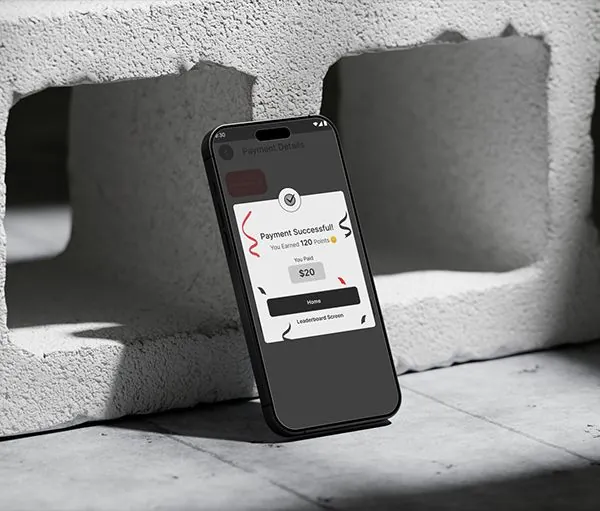
Purpose Payment website designed by our team

Mobile app · Fintech · United States

Purpose Payment

A fintech platform connecting merchants, customers and charities in a single payment flow.

purposepayment.com
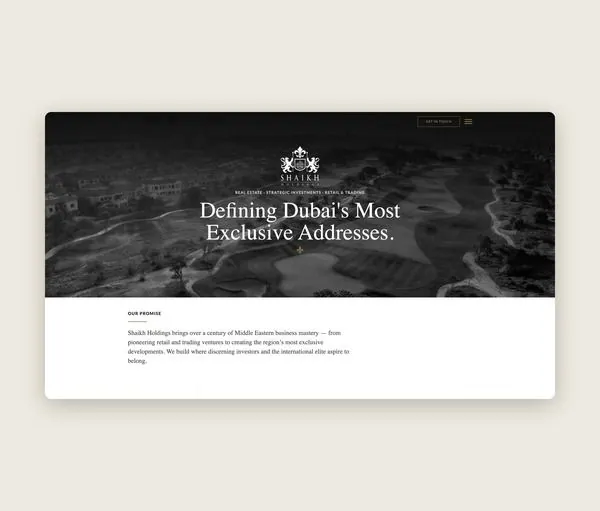
Shaikh Holdings website designed by our team

Website · Corporate · Dubai

Shaikh Holdings

A Dubai investment house with a century of business behind it. The site speaks to institutional investors, not shoppers.

shaikhholdings.com
Star Cinemas website designed by our team

Web app · Ticketing · UAE

Star Cinemas

The UAE cinema chain operated by Phars Film. Every screening, offer and payment in one place customers can use on a phone.

starcinemas.ae

Straight answers

Frequently asked questions

Should the site list every service we offer, from penetration testing to SOC monitoring?

Each core service, such as penetration testing, managed detection, compliance consulting or incident response, works better as its own page than as one long list, since a buyer usually arrives searching for one specific service.

Can we publish case studies naming client organisations?

Only with the client's explicit permission, and many security clients will not allow it because the engagement itself is confidential. An anonymised case study describing the problem, approach and outcome is a common and safer alternative that still shows real capability.

How do we show credibility without inventing certifications?

List only certifications, accreditations or standards the business genuinely holds, name the certifying body, and keep the list current as it changes. An unverifiable claim is one of the fastest ways to lose a security buyer's trust.

Should the site itself demonstrate good security practice?

Yes, a cybersecurity company's own website is scrutinised more than most. Basic hygiene such as a valid certificate, sensible headers and a clear privacy policy matters here more than for an unrelated business.

How much does cybersecurity website design cost in Dubai?

Every project gets a fixed written quote scoped to your service list and any client portal requirements, sent within 45 minutes during business hours with no obligation.

Fixed price, in writing

Send your brief. Get a scope and a price within 45 minutes.

  • One fixed number, agreed in writing before work starts
  • No obligation, and no pressure to sign
  • English and Arabic work, with proper right to left layout
  • One team for design, marketing, web, media and copy

Get your fixed price quote

Written scope and price within 45 minutes in business hours. No obligation.

By sending this you agree to be contacted about your enquiry. Privacy policy

Call WhatsApp Get a quote