
Dental website booking by dentist and treatment
Patients want to see which dentist has an opening this week and for which treatment, not fill a generic contact form and wait for a call back.
Web Design by Industry
Dental website design in Dubai for practices that live on cosmetic and elective enquiries, built around treatment pages, bookable slots and advertising content that stays inside Dubai Health Authority guidelines.
A person searching for a dentist in Dubai rarely reads five practice websites before deciding. They compare two or three, and the deciding factor is usually how quickly they can see an available slot and how much they can learn about a specific treatment without picking up the phone. Dental website design in Dubai has to close that gap: clear treatment pages, a slot the visitor can actually see and hold, and enough on cost and insurance to make calling feel like the last step, not the first.
Dental practices differ from a general clinic in one important way. A large share of enquiries are cosmetic and elective work, whitening, veneers, implants, orthodontics, where the visitor is actively comparing photos and practices before booking a consultation. The site has to support that comparison honestly, inside the limits set for medical advertising, without promising an outcome it cannot promise. This sits alongside our wider healthcare website design work and the website development behind every build.
What the site has to do
These are the pages and features that decide whether a Dubai dental website turns a visit into a booking.
Patients want to see which dentist has an opening this week and for which treatment, not fill a generic contact form and wait for a call back.
Routine care, cosmetic work, orthodontics and implants each attract a different search term and a different kind of visitor, so each needs its own page.
Patients ask about cost early. The page cannot publish a price list, so it needs a short path from a treatment to a written quote request.
Whether a specific insurer is accepted is one of the first things a Dubai patient checks, often before looking at anything else on the site.
A toothache does not wait for office hours. An emergency contact belongs in the header and the footer, not buried on a contact page.
Many Dubai patients research in one language and prefer to call in the other, so both need to read naturally, not as a machine translation.
Advertising rules
Dental advertising in Dubai sits with the Dubai Health Authority, and the DHA Guidelines for Medical Advertisement Content on Social Media set out conditions that apply just as much to a website page as to a social post. Before and after photographs are treated with particular care: the guidance requires the same individual, the same camera angle, no photo editing, and a statement that results vary from patient to patient.
The same guidance lists content that should never appear, including any claim that a treatment promises full recovery, unrealistic or unwarranted claims about how effective a treatment is, and a patient testimonial published without that patient’s written consent. This is not legal advice. Treat it as a starting point, and check current DHA requirements before any smile gallery or treatment claim goes live, not only once at launch.
Patient behaviour
Two things send a visitor back to the search results. The first is not being able to tell whether their insurance is accepted without calling to ask. The second is a contact form that gives no sense of when they might actually be seen, so the enquiry feels like the start of a slow process rather than a booking. Dental website design in Dubai fixes both by putting insurance status and an actual available slot in front of the visitor before they have to type anything.
Dental website design in Dubai also has to speak the patient’s language: a common problem we see is a treatment page written for the practice’s own terminology rather than the patient’s. A page titled only “restorative dentistry” misses a visitor typing “tooth filling” or “cracked tooth” into Google, even though the practice offers exactly that.
By treatment
Dental website design in Dubai does not give every treatment page the same content: cosmetic and elective pages carry more comparison content than a routine care page.
| Page type | What it needs | Common visitor question |
|---|---|---|
| Routine and preventive care | Short, clear descriptions, insurance note, how to book | Do you take walk ins or same day slots |
| Cosmetic, whitening and veneers | Process explanation, consent based photo gallery, consultation booking | What will this look like and how long does it last |
| Orthodontics | Options compared plainly, typical timeline described in general terms, consultation form | How long does treatment usually take |
| Implants and oral surgery | Who the treatment suits, aftercare summary, specialist dentist profile | Who is actually doing the procedure |
Build process
Dental website design in Dubai follows the same website development process, with steps specific to a dental practice added in.
We list every dentist, treatment and the insurance panel with you, and confirm which booking system, if any, the site needs to connect to.
A fixed written quote covering treatment pages, booking integration and any Arabic content, sent within 45 minutes during business hours.
Treatment pages, dentist profiles and the booking flow are built, with any before and after content held to the consent and labelling rules above.
You approve the full site, including a check that every clinical claim and photo meets the conditions in DHA guidance, before development is signed off.
Handover of domain, hosting and CMS logins, training for reception staff who will keep the insurance panel and dentist list current, and a support window.
New treatments, dentists and photo galleries get added as the practice grows, which is where our SEO services and UI UX design work continue.
Related industries: healthcare website design, hospital website design and plastic surgeon website design follow the same DHA principles with different page structures. See the full range under web design by industry.
Elective demand
A general medical clinic mostly serves patients who already know they need care. A Dubai dental practice, particularly one leaning towards cosmetic work, spends a large part of its marketing budget convincing someone who was not actively looking for treatment that they want it, whitening before a wedding, veneers before a big event, an aligner course that fits around work travel. Dental website design in Dubai for that audience has to do more selling than a routine care page ever needs to, while staying inside the same DHA rules on outcome claims that apply to every clinical page on the site.
The practical result is a different kind of page structure for elective treatments compared with routine ones. A filling or a cleaning page can be short and functional, since the patient has already decided. A veneer or a smile makeover page needs to do the convincing itself, through process explanation, a properly consented photo gallery and a clear path to a consultation, because the visitor comparing two or three practices at this stage is comparing exactly that content, not the practice’s reputation alone.
Treatment pages by procedure
Every procedure a Dubai dental practice offers attracts a different kind of search and a different kind of visitor, and folding them into one long services page usually serves none of them well.
A visitor searching for whitening wants to compare in office and take home options and see a realistic result, not scroll past implants and root canals to find it.
Porcelain and composite veneers suit different budgets and different expectations, and a page that explains the difference plainly earns more trust than one that skips straight to a gallery.
Aligner treatment is a multi month process with its own scan or impression step, and a page describing that journey, not just the end result, sets expectations correctly from the start.
Implant patients want to know who actually performs the surgical stage, so this page carries a named specialist profile rather than a generic “our team” reference.
A parent searching for a children’s dentist reads differently to an adult comparing veneers, and mixing the two into one general dentistry page undersells both.
A visitor with a toothache searches and books completely differently to someone researching a smile makeover, and that page needs to be found fast, not buried under treatment menus.
The gallery, under DHA conditions
The DHA Guidelines for Medical Advertisement Content on Social Media set out specific conditions for before and after images, and reading the actual clause matters more than a general summary. The guidance states that before and after pictures should be of the same individual, using the same lens, with no photo editing or equivalent software, and should carry a statement that the result cannot be assured to be the same, since it may vary from one individual to another, written in the same font size as the rest of the content, not in fine print. Dental website design in Dubai treats a smile gallery as this exact standard applied consistently across every image on the page, not a one time check at launch.
The same guidance requires documented, written consent for any patient shown in this kind of content, and sets out that absolute or exaggerated claims, words such as unique, assured success, the best or immediate results, should not appear anywhere near the gallery. A dental practice that wants a gallery of any real size needs a simple internal process for collecting and storing that consent per patient per image, not a verbal agreement remembered by whoever took the photo.
This is not legal advice, and the guidance is written for social media advertisement content specifically, so the safer working assumption for dental website design in Dubai is that a website gallery should meet the same bar rather than a lighter one, since a website page is at least as public and as easily shared as a social post. Content should be checked against current DHA guidance before it is published, and again periodically, rather than assumed to still be compliant simply because it was correct when it first went live.
Insurance panels
Dental cover varies more between individual policies than general medical cover does, since many plans separate preventive, restorative and cosmetic treatment into different reimbursement tiers.
| Treatment category | Typical cover pattern | What the page should say |
|---|---|---|
| Preventive and routine care | Usually the most consistently covered category across plans | State clearly, since it drives volume booking decisions |
| Restorative work such as fillings and crowns | Cover varies more by plan tier | Direct to an eligibility check rather than a blanket claim |
| Orthodontics | Often a separate limit or excluded entirely | State plainly if a plan type is unlikely to be covered |
| Cosmetic and elective treatment | Rarely covered by standard medical insurance | Say so directly, since patients budget differently once they know |
Dental website design in Dubai that is honest about which categories are rarely covered saves the practice a difficult conversation at the treatment chair, and saves the patient a surprise on the invoice.
Chair and dentist availability
A dental practice runs into a scheduling constraint that a general clinic with consultation rooms does not always share as tightly: a dentist being free does not automatically mean a treatment chair is free, particularly in a practice where hygienists, associate dentists and a principal dentist share a small number of surgeries. Booking logic built only around the dentist’s calendar can happily offer a slot that the practice cannot actually deliver, and the mismatch surfaces only when the patient arrives.
For most Dubai dental practices, this does not need a complex resource scheduling system. A short internal rule, which dentist uses which chair on which session, reflected honestly in the online booking calendar, is usually enough to prevent the clash without adding real complexity to the site. Practices running several dentists across more than one or two chairs benefit from confirming this logic with reception before the booking screen is built, rather than discovering the conflict once the site is live.
The buyer
At most Dubai dental practices, the person approving the site is the principal dentist or practice manager, not a marketing department.
What this buyer is measured on tracks closely to chair utilisation and new patient volume for elective work specifically, since routine care tends to arrive through insurance referral and repeat visits regardless of the website. The questions we hear first from this buyer are practical: can the site actually show which dentist has an opening this week, will a smile gallery hold up if DHA rules are checked, and does the insurance section reduce the number of calls reception fields every day asking whether a specific plan covers a specific treatment. Dental website design in Dubai succeeds with this buyer when those three things work, not when the homepage photographs well.
The visitor journey for a dental practice splits more sharply than most healthcare fields between two very different patients arriving on the same site. One is in pain or has a broken tooth and wants same day or emergency care, reading almost nothing beyond the emergency page and a phone number. The other is planning an elective treatment weeks or months out, reading treatment pages carefully, comparing galleries across two or three practices, and taking real time before booking a consultation. Dental website design in Dubai that only builds for one of these visitors loses the other. The point where the elective visitor drops off most often is a treatment page that jumps straight to a booking form with no process explanation or gallery, since that visitor is still deciding whether this is the right treatment, not yet ready to commit to a time.
Search behaviour
The words a person types reveal which of the two patients above they are, and dental website design in Dubai can be structured around that difference without guessing at search volumes.
| Search style | Typical phrasing | What should answer it |
|---|---|---|
| Ready to act, routine or urgent | A symptom plus “dentist” and “near me” or “today” | An emergency page with same day availability and a direct number |
| Research stage, cosmetic | A treatment name plus “cost” or “how does it work” | A treatment page with process explanation and a consultation path |
| Ready to act, cosmetic | A treatment name plus “Dubai” or a specific practice comparison | A gallery, consultation booking and a clear next step |
No search volumes are claimed here, since none have been measured for this site. The structural point is that a single treatment page cannot answer a research question and a ready to book question equally well, so dental website design in Dubai plans for both stages within the same page rather than assuming one visitor type.
Content that goes missing
Many practices have plenty of clinical photography but no signed consent tying specific images to specific patients, and that gap has to be closed before a gallery can go live, not after.
A general “we accept most insurance” line is not the same as knowing which categories each accepted insurer actually covers, and that detail usually needs a conversation with whoever manages billing.
Session patterns are often kept informally between reception and the practice manager rather than written down anywhere the website build can reference directly.
Phasing
| Stage | What launches | What waits |
|---|---|---|
| Phase one | Treatment pages, dentist profiles, booking or request form, insurance category guidance | A full smile gallery, automated reminders |
| Phase two | A properly consented before and after gallery, SMS or WhatsApp reminders | A returning patient login, if the practice wants one |
Launching without a gallery is a perfectly reasonable first phase for dental website design in Dubai, since a small, badly consented gallery does more harm than none at all, and consent collection can continue properly once the site is already live and booking.
Arabic for a dental audience
Reception’s own language ability matters as much as the pages themselves for a dental practice, the same as it does at a general clinic, but the elective side of dental work adds a second consideration. Good dental website design in Dubai treats this carefully. A patient comparing cosmetic treatment options often reads in whichever language they are most comfortable making a significant personal decision in, so a smile gallery and its surrounding text need the same careful, natural Arabic as the English version, not a shorter translated summary. Insurance and treatment category pages are the other place worth checking specifically, since a patient deciding whether cosmetic work is covered wants that answer in their own language, not a partial one.
The mistakes we see most often on existing Dubai dental sites cluster around the gallery and the insurance page. A before and after gallery with no visible variability statement, or with images taken at different angles that make the comparison look more dramatic than it should, is the single most common compliance gap. An insurance page that lists insurer logos without saying which treatment categories they actually cover leaves patients to find out by calling, defeating much of the point of publishing the list at all. Neither mistake needs a rebuild to fix, but both need someone at the practice checking the site against current DHA guidance on a schedule, not just once when it first launched.
Measuring it
Overall site traffic says little on its own about whether dental website design in Dubai is doing its job.
What matters more is consultation bookings by treatment type, since a site performing well overall but poorly for cosmetic enquiries specifically usually means the gallery or the treatment pages need attention, not the homepage. A drop in calls asking whether a specific insurer covers a specific treatment is a second, more informal signal that the insurance breakdown is doing its job. Chair utilisation, tracked by the practice itself rather than the website, is the number that ultimately tells a principal dentist whether online booking is actually filling the schedule. None of this is a promised outcome. It is what we recommend a dental practice track using its own booking numbers, not a figure we would publish here.
Integrations
A dental practice usually runs more day to day software than a general clinic once digital treatment planning enters the picture, and mapping what each system solves matters before the website is built around it. Practice management software handles the actual appointment book, patient records and billing, and where one is already in use, the website’s booking widget connects to it rather than duplicating a separate calendar. A digital scanning workflow for aligners or crowns typically sends files to an external laboratory or aligner provider, a step the website does not need to touch directly, but it does affect how a treatment page describes the process, since a patient benefits from knowing a scan replaces a physical impression before they book.
A patient recall system, the reminders a practice sends for a six month check up, usually lives inside the practice management software already, and the website’s role is limited to capturing accurate contact details at booking so those reminders actually reach the right patient. A payment plan enquiry route, common for higher value elective treatment, is worth building as its own short form rather than folding it into the general consultation request, since a patient asking about payment options is at a different decision stage to one just booking a first consultation.
The elective journey, step by step
Dental website design in Dubai for cosmetic work is built around a longer decision than a routine appointment, and the site needs to carry a visitor through every stage of it.
A search often starts from a specific frustration, discolouration, a chipped tooth, crowding, rather than a treatment name the visitor already knows.
The visitor reads treatment pages and galleries across a small number of practices, usually within a single session rather than over days.
Without a published price, the site’s job is to make a written quote feel like a fast, easy next step rather than a barrier to finding out.
Many visitors check anyway, even where cosmetic treatment is rarely covered, so the page should answer that honestly rather than staying silent.
The booking step at this stage should ask for a consultation, since the actual treatment plan is confirmed by the dentist in person, not decided on the website.
Referral inside the practice
Many Dubai dental practices now run a general dentist alongside an orthodontist, an endodontist or an oral surgeon under one roof, and the site can support that referral pattern directly.
Where a general dentist regularly refers a patient to a specialist colleague in the same practice, a short page explaining what happens next reduces the patient’s uncertainty about being passed along.
A patient referred for root canal treatment wants to see the endodontist’s specific training, not a general practice biography that does not mention the specialty.
A referred patient booking with a specialist benefits from a form that already carries the referring dentist’s name and the treatment discussed, rather than starting the conversation from scratch.
Content review
At a single dental practice, content review usually sits with the principal dentist directly rather than a separate compliance team, but that only works if it happens consistently rather than only at launch. Dental website design in Dubai works best with a short, repeated sequence: whoever drafts a new treatment page or gallery caption uses only factual, descriptive language, the treating dentist confirms the clinical detail is accurate, and the same dentist, or whoever holds that responsibility, checks the wording and any image against current DHA guidance before it publishes, not after a patient has already seen it.
This matters more for a practice with more than one dentist publishing content, since a newer associate dentist may not be as familiar with the advertising rules as the principal dentist who has been checking pages for years. A short written note of what to avoid, kept somewhere the whole team can see it, closes that gap more reliably than assuming everyone already knows.
It is worth being plain about what a small dental practice does not need to build on day one. Dental website design in Dubai for one or two chairs rarely needs a resource scheduling system, a multi language gallery in more than Arabic and English, or a payment plan integration before launch. What earns its place first is a working booking flow, honest insurance guidance and treatment pages that explain the process clearly, since those three things are what actually move a visitor from comparing practices to booking a consultation. Everything else, a larger gallery, a recall system tied into the website rather than the practice management software, a referral network page, is worth adding once the core site is proven rather than bundled into a first launch date that keeps slipping while every extra is finished at once.
What actually changes
A dental practice has less data to manage than a hospital, but it changes fast enough that a site left unattended for a few weeks starts to mislead patients.
| Data | How often it changes | Who usually owns it |
|---|---|---|
| Dentist and hygienist schedule | Weekly, sometimes daily around leave or sick days | Reception, confirmed against the practice management software |
| Insurance and TPA acceptance | Monthly at most, but treatment category cover can change with plan renewals | Whoever manages billing |
| Before and after gallery | Added occasionally, tied to consent collection rather than a fixed schedule | The treating dentist, with consent recorded per patient |
| Treatment pricing enquiries routed to a quote | Continuous, since no price is ever published on the page itself | Reception or the practice manager |
Dental website design in Dubai for a single practice needs one person with regular access to the site and a habit of updating it the same week something changes, rather than treating the website as a project that ends at launch.
Growing past one practice
Everything above assumes one practice at one address, which is where most dental website design in Dubai starts and where many practices stay. A practice that opens a second branch moves closer to the pattern we cover on our wider healthcare website design page: a branch selector before a dentist or treatment is shown, an insurance panel that can differ by address, and a consultant or associate roster that spans more than one location. Building that structure into a single practice site before a second branch is a real, funded plan usually adds cost and complexity the practice does not yet need, so we would rather scope a focused single practice site first and plan the branch structure properly when expansion is confirmed.
Where a second branch is already agreed, it is worth building the booking flow with a branch step from the start, since retrofitting branch logic into a calendar built for one address later is more disruptive than including it from the first version of the site.
A small, badly consented gallery does more harm to a dental practice than no gallery at all.
Related industries
Shares the same appointment and intake pattern, for a general outpatient practice rather than a dental specific one.
For a multi department facility rather than a single practice, with a different structure entirely.
Shares the same gallery and consent challenge for a non surgical cosmetic brand rather than a dental one.
Relevant where a dental practice also refers patients for facial cosmetic procedures beyond the mouth.
Relevant for a practice selling take home whitening kits or oral care products online alongside treatment.
Selected work
Work across sectors, with the closest to this industry shown first. Every one is a live site, not a mockup.
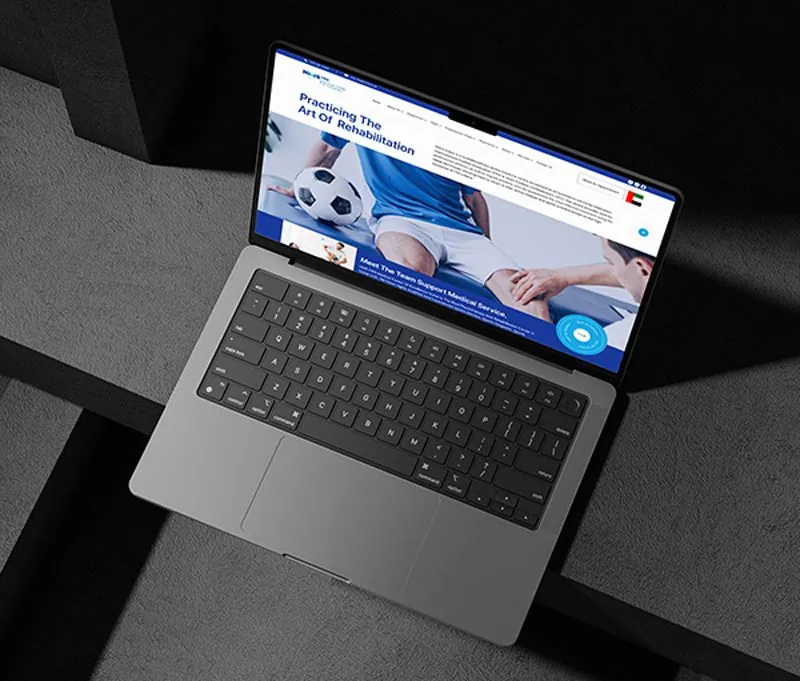
Website · Healthcare · Dubai
A Dubai rehabilitation and physiotherapy practice with one properly bilingual site in English and Arabic.
hmsfmce.com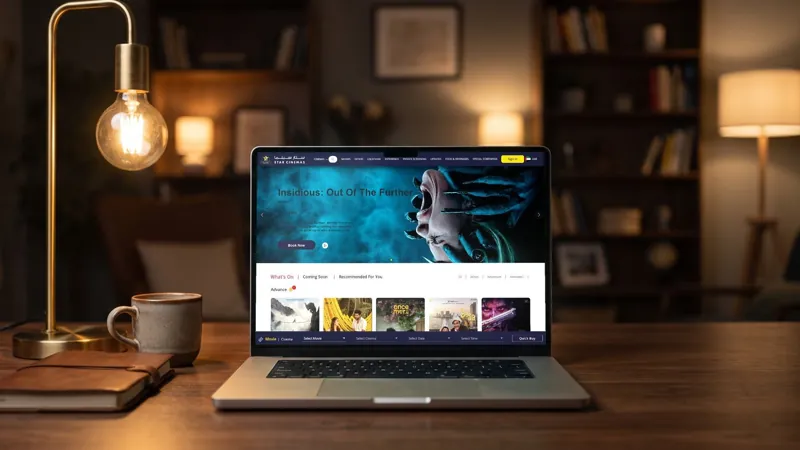
Web app · Ticketing · UAE
The UAE cinema chain operated by Phars Film. Every screening, offer and payment in one place customers can use on a phone.
starcinemas.ae
E-commerce · Retail · Dubai
A Dubai floral boutique on WooCommerce, built around a fast checkout for a gift driven market.
thegorgeousflower.comStraight answers
Yes, either through a booking widget connected to the practice management system you already use, or a request form that names the dentist and treatment, which your reception team confirms. The right option depends on your existing software.
Dubai Health Authority guidance sets conditions for this: written patient consent, the same camera angle for both images, no editing, and a visible statement that results vary between patients. This is not legal advice, and content should be checked against current DHA guidance before it is published.
Yes, and it is one of the first things a prospective patient checks before calling. Keeping that list current is usually more valuable than adding new pages elsewhere on the site.
No, our pages never publish prices. What we build instead is a fast route from a treatment page to a written quote request, so cost questions get answered without a public price list.
Every project gets a fixed written quote scoped to your brief, sent within 45 minutes during business hours with no obligation. The number of dentists, treatments and languages are the main cost drivers.
We connect the site to the booking or practice management system you already use where an integration exists. If none does, we build a request form that routes straight to reception with the treatment and preferred dentist attached.
Sources
Fixed price, in writing
Got it. Your quote is being written now.
In business hours you will have it within 45 minutes. Check your inbox for the confirmation.