
Training institute course calendar
Upcoming dates, format and seats remaining, pulled from your booking system so the page never shows a date that has already passed.
Web Design by Industry
Training institute website design in Dubai for course providers, built around a live schedule, trainer profiles and a corporate enquiry path separate from individual enrolment.
A course provider’s website lives or dies by one thing: whether the schedule on the page matches reality. A visitor who finds a course date that has already passed, or a booking form that does not say whether a seat is still available, moves on to the next search result within seconds. Training institute website design in Dubai has to treat the course calendar as the centrepiece of the site, not a static list buried under a general services page, alongside clear paths for the two very different visitors who arrive, an individual choosing their own course and a company booking a group.
This page covers the pages a training provider in Dubai needs, where KHDA’s permit process touches the site’s content, and what we ask for before a build starts. None of this is legal advice, and current requirements should always be checked directly with KHDA.
Training institute website design in Dubai also has to cope with a course list that changes more often than most service businesses ever update their site. New cohorts open, older courses are retired, and a trainer might run three different subjects across a single term, so the underlying structure needs to make those updates something your own team can do without waiting on a developer each time.
Core pages
A course catalogue on its own rarely converts. Training institute website design in Dubai works better when the schedule, the trainer and the outcome are all visible together.
Upcoming dates, format and seats remaining, pulled from your booking system so the page never shows a date that has already passed.
Background and specialism for each trainer, since prospective learners often choose based on who teaches the course as much as the syllabus itself.
What a course actually covers session by session, and what a learner walks away able to do, rather than a vague paragraph of marketing language.
A separate enquiry form for group bookings, capturing invoicing details and preferred dates without forcing a company through the individual checkout.
A plain description of what a completion certificate covers and how it is issued, without implying a formal accreditation that has not been confirmed.
Bilingual course pages for providers whose learners include Arabic speaking professionals and companies.
The permit that shapes the site
Vocational and professional training in Dubai sits under KHDA, the Knowledge and Human Development Authority, rather than under the schools framework used for K to 12 education. KHDA’s own service listing describes the Educational Services Permit as covering individuals or institutions applying to establish and operate a training institute in Dubai, and it requires a list of course names and descriptions as part of the application, along with approval from the awarding body for any course that leads to a professional certification.
The same listing notes that specialised courses, such as medical or cosmetic training, need prior approval from the relevant authority before KHDA issues the permit. For a training institute website in Dubai, the practical takeaway is that the courses shown on the site should match what the institute is actually permitted to deliver, and any claim of accreditation or certification needs to trace back to a real, checkable approval rather than a phrase copied from a competitor’s site.
Two very different visitors
An individual signing up for one seat and an HR manager booking a team have almost nothing in common as visitors.
| Individual learner | Corporate booking |
|---|---|
| Pays personally, usually by card | Needs an invoice, often with a purchase order |
| Chooses a single date that suits them | May need a private cohort on a custom date |
| Wants to see the trainer and syllabus | Wants a summary suitable for forwarding to a manager |
Training institute website design in Dubai that forces both audiences through the same short form usually loses the corporate enquiry, since a group booking rarely fits a single seat checkout built for one person.
Build and content
A training site build moves quickly once this is ready.
The current list of courses you are permitted to run, so the site never advertises something outside your approval.
Backgrounds, specialisms and photographs for anyone who should appear on a course page.
Whether course dates are already managed in a system we can connect to, or whether the calendar needs building from scratch.
Exactly what a completion certificate represents, confirmed with the relevant awarding body before it is written into the site.
Building the site, along with hosting and handover, sits under website development, and the calendar and dual booking paths are planned as part of UI UX design. After launch, ranking for course and subject searches continues under SEO services.
Training institute website design in Dubai is rarely approved by one person alone. On a standalone training provider, the person approving the brief is often the general manager or academic director who personally holds the KHDA permit, and who is directly accountable if a course page claims something the institute is not actually approved to deliver. On a larger group running training as one arm of a wider education business, a marketing manager usually owns the day to day site while the academic director signs off anything touching course content, accreditation wording or the permit scope. On the buying side, a corporate learning and development manager is the person who has to justify a booking internally, and they are typically measured on cost per trained employee and whether the course was actually delivered on the date promised, not on how polished the course page looked.
In a first meeting, expect three questions from whoever signs off the site: whether the course calendar can be kept accurate without a developer involved every time a date changes, whether a corporate booking path exists separate from an individual one, and whether certificate wording can be reviewed before it goes live, since that is the page most likely to draw scrutiny if it overstates what the certificate actually represents, and getting it right is one of the harder parts of training institute website design in Dubai.
Two visitors, two journeys
An individual learner typically starts on a subject or category page, filters by format and date, opens a single course page to check the trainer and syllabus, then books and pays for one seat. The point this journey breaks down most often is a course page that does not say clearly whether a specific upcoming date still has room, forcing a visitor to fill in an enquiry form just to find out, which most will not bother doing.
A corporate buyer’s journey looks different from the first click. They are usually comparing a shortlist of providers on behalf of a team, need a way to request a private cohort or a custom date rather than book a single public seat, and expect a proper quote or proposal rather than an instant online checkout.
Catalogue pages, concretely
A catalogue page is not a list of titles, it is a filtering and comparison tool a visitor uses to narrow a decision quickly, and it is where training institute website design in Dubai earns or loses a booking.
Subject area, delivery format, whether the course runs in English or Arabic, and date range, since a learner comparing options rarely wants to scroll a flat list of every course the institute offers.
Open with seats remaining, nearly full, fully booked with a waitlist, or a date to be confirmed, rather than a single static page that looks identical whether a course runs next week or was quietly cancelled months ago.
A short, specific outcome statement per course, rather than a paragraph of generic marketing language repeated across every subject.
Full day, evening, weekend or self paced online, with total contact hours, since this is frequently the deciding factor for a working professional choosing between two similar courses.
Visible on every course page, not just the corporate landing page, since a company representative researching options often lands on a single course page first through search.
Whether a course runs at the institute’s own premises, at a client site, or online through a named video platform, stated before booking rather than discovered afterwards.
Training institute website design in Dubai lives or dies on data freshness more than almost any other industry page we build. The course calendar itself typically changes weekly as cohorts fill, get rescheduled or are added at short notice, and needs a named owner inside the academic team who updates it directly rather than routing every change through a developer. Seat availability per date is the single most valuable piece of live information a training site can show, since it is the detail that turns a browsing visitor into a booking, and it needs to come from wherever bookings are actually recorded, not be maintained separately and left to drift out of sync.
Trainer rosters change less often but still need a clear owner, usually whoever manages delivery staff, since a trainer profile that still shows someone who left the institute months ago undermines confidence in everything else on the page. Certificate and accreditation status changes rarely, but when it does, typically at a renewal date with an awarding body, it needs updating everywhere it appears on the site, not just on the course it most obviously affects.
A course page that cannot say whether next week’s date still has room is asking a learner to enquire just to find out, and most will not bother.
Systems that come up
A learning management system is where course materials, assessments and completion tracking typically live once a learner is enrolled, and the marketing website should link a learner into it securely rather than attempt to rebuild any part of it. A booking or calendar system is what should actually drive the seats remaining figure shown on each course page, so the website reflects real capacity rather than a number someone remembers to update by hand. For online or hybrid delivery, a named video conferencing platform needs stating clearly on the course page, since a learner choosing between two similar courses often decides based on which platform they already have set up.
On the corporate side, a customer relationship or sales pipeline tool is usually where a training manager tracks a company enquiry from first contact through to a signed quote, and the corporate booking form on the website is the first thing that needs to feed cleanly into it. A payment gateway may be needed to take a deposit or full payment for an individual seat, while corporate invoicing almost always happens outside the public website through the institute’s own finance process.
How people search for training
A prospective learner searches very differently while still deciding than they do once they know which course they want.
| Research stage search | Ready to book search |
|---|---|
| Best [subject] course in Dubai | [Course name] course Dubai dates |
| Is [certification] worth it | [Course name] upcoming schedule |
| Online versus in person training Dubai | [Institute name] corporate training |
| Difference between certificate and accreditation | [Institute name] enrol or register |
The first column needs comparison content and honest explanations of what a certificate actually represents to be found at all. The second column needs the course page to load fast and state the date and format plainly. We structure the catalogue and our SEO services work around answering both, rather than optimising only for the searches closest to a booking.
Training institute website design in Dubai moves fastest when the academic team, admissions or sales team and finance team each supply their part before design starts. In practice, three things go missing most often. The first is a genuinely current course calendar, since many institutes are still working from a spreadsheet that has not been reconciled against actual bookings in weeks. The second is a clear, written statement of what each completion certificate represents, agreed with whoever holds the awarding relationship, since this is easy to leave vague until a learner or a corporate client asks directly. The third is trainer biography content with genuine specialism detail, since generic bios that could describe any trainer at any institute do little to help a learner choose between two similar looking courses.
Permit and accreditation documentation is a separate, ongoing gap. Institutes that keep their KHDA permit scope and any awarding body approvals documented and current find course pages far quicker to write and check than institutes reconstructing that information from memory each time a new course is added.
Phasing the build
Not every part of a training site needs to launch at once.
Course catalogue with real dates and seat status, individual booking, a separate corporate enquiry path, trainer profiles and accurate certificate wording.
Deeper learning management system integration, a self service corporate portal for repeat bookings, and an Arabic catalogue build if not delivered at launch.
Any feature depending on a booking or learning platform the institute has not yet chosen is better scoped once that decision is confirmed, rather than built around a guess.
A completion certificate and a formal accreditation or qualification are not the same thing, and the website is where this distinction most often gets blurred in training institute website design in Dubai, usually without anyone intending to mislead. A certificate of attendance or completion, issued by the institute itself, can be described plainly: what it confirms, who signs it, and what it does not confirm. A course that leads to a recognised qualification or professional certification, awarded by a separate body such as a professional institute or examination board, needs that relationship stated accurately, with the learner directed to verify current recognition with the awarding body rather than relying on the course page alone. Conflating the two, describing an in house completion certificate using language that implies a formal accreditation, is one of the fastest ways a training website creates a problem the institute then has to correct with an unhappy learner or corporate client.
This matters most for specialised subjects. KHDA’s own service listing notes that courses such as medical or cosmetic training need prior approval from the relevant authority before the permit is issued, so a course page in one of these areas should never go live on wording alone, it needs the underlying approval confirmed first. This is not legal advice, and current requirements for any specific course should always be checked directly with KHDA and, where relevant, the awarding body.
Arabic matters most in training institute website design in Dubai in two situations. The first is a course aimed at government sector employees or a workforce where Arabic is the working language, where course pages, corporate proposals and certificate wording genuinely need to exist in Arabic, not just a translated homepage. The second is corporate training sold to a company whose HR or procurement team operates in Arabic, where a bilingual corporate booking page and proposal template speed up an internal approval process that would otherwise need translating by the client themselves.
For subject areas taught mainly to an English speaking professional audience, such as many technical or international certification courses, prioritising English first and adding Arabic selectively for the courses that need it is often the more practical approach, rather than translating an entire catalogue evenly regardless of demand.
What we still see
Most of these are fixable without a full rebuild.
The single most damaging issue on a training site, since it signals the entire catalogue may be unreliable, not just the one stale date.
Forcing a corporate buyer through a single seat checkout built for an individual almost always loses the larger booking.
A completion certificate described as though it were a formal qualification, without the awarding relationship named or checkable.
Generic credentials with no real specialism stated, giving a learner nothing to actually choose between when comparing two similar courses.
A long flat list of course titles, forcing a visitor to scroll through subjects that have nothing to do with what they searched for.
A learner left to guess whether a course runs on a video platform they already use, discovered only after booking.
The institutes we work with judge training institute website design in Dubai by the number of genuine course enquiries and completed bookings it generates, split by individual and corporate, since the two have very different value and sales cycles. A useful secondary measure is how many corporate enquiries arrive through the dedicated corporate path rather than the individual booking form, since that split tells the sales team whether the site is correctly steering each audience to the right journey. We cannot promise enquiry volume or booking numbers in advance, since these depend on the institute’s own reputation, pricing and course relevance as much as the site, but they are the right numbers to track once the site is live, and we set up analytics against booking starts and corporate enquiry submissions specifically rather than generic page views.
A learner choosing between two similar sounding courses at different institutes is very often, in practice, choosing between two trainers, since the syllabus outline on the page rarely differs much across providers offering the same subject. A trainer profile that lists a name and a stock photo does almost nothing to help that decision. A trainer profile that states genuine specialism, the kind of organisations they have trained, and what makes their delivery style different gives a learner something concrete to compare.
This matters even more for corporate buyers, who are frequently booking a trainer to work with a specific team on a specific problem, not just to cover a generic syllabus. A corporate client deciding between institutes will often ask directly who is actually delivering the session, and a website that already answers this clearly shortens the sales conversation rather than leaving it to a follow up call.
Training institute website design in Dubai that stays silent on what happens if a course is cancelled, undersubscribed, or a learner needs to reschedule creates exactly the kind of uncertainty that stops a hesitant visitor from booking at all. This is not a legal document we draft on the client’s behalf, and any specific refund or cancellation terms need reviewing by the institute and, where relevant, checked against consumer protection obligations that apply generally in the UAE. What the website can do well is make sure whatever policy the institute has already decided on is visible before payment, not discovered afterwards in a confirmation email, since that is when it does the most damage to trust.
For corporate bookings specifically, cancellation and rescheduling terms are often negotiated separately as part of the proposal rather than published as a fixed public policy, and the corporate enquiry page should say so plainly rather than pointing a company buyer to individual learner terms that do not actually apply to them.
The corporate form itself
A corporate booking enquiry needs different fields to an individual one, and cramming both into a single short form usually means the corporate fields get skipped by someone who only wanted to check a single seat price. A dedicated corporate form should ask enough to let the sales team prepare a real proposal without a lengthy back and forth first.
What happens after submission matters here too. A corporate enquiry should trigger a different internal workflow to an individual booking, typically routing to a sales contact rather than straight into an automated confirmation, and the visitor should be told plainly that a proposal will follow rather than an instant booking confirmation.
A meaningful share of the learners and corporate buyers browsing training institute website design in Dubai are doing so on a work laptop through a corporate network, or a personal phone during a commute, rather than a fast connection on a new device. A catalogue page loaded with heavy, unoptimised imagery or a booking form that depends on a script failing silently on an older browser loses exactly the visitor most likely to convert, someone actively comparing options rather than idly browsing. Testing the course calendar, filters and both booking forms on a slower connection and an older device catches problems that never show up on a fast office connection during a design review.
Form accessibility matters just as much here as on any other lead generating page. A booking form with clear labels and error messages a screen reader can announce, rather than a colour change alone, avoids losing an enquiry from a learner or a corporate representative who relies on assistive technology.
KHDA’s own education directory currently lists over one thousand seven hundred registered training providers under its Training category, spanning everything from vocational skills academies to corporate professional development providers. For a new or growing training institute, this scale is worth taking seriously when planning a website, since a learner or corporate buyer researching a subject is very rarely choosing between two options, they are usually filtering a long list, and a course page that answers their specific questions quickly, format, date, cost structure and what the certificate represents, wins attention that a vague overview page does not.
This also means differentiation matters more on a training website than it might for a business with fewer direct local competitors. A generic “we deliver quality training” homepage does nothing to separate one institute from over a thousand others listed in the same directory. What does separate institutes, in the sites we build, is specificity: named trainers with real specialism, an honest description of what a certificate covers, and a course calendar a visitor can actually trust.
Beyond the classroom
Training institute website design in Dubai increasingly has to represent delivery that runs beyond a single physical classroom format, rather than defaulting to language written for in person courses only. A fully online course, a hybrid course with some sessions in person and some remote, and a self paced course a learner works through on their own schedule are three different products with different expectations around support, deadlines and what “attendance” even means for certification purposes.
Stating the format honestly on every course page, including how much of the course is live versus recorded, and whether a learner has direct access to a trainer or only pre-recorded material, avoids a learner discovering the real format only after paying.
A learner or corporate buyer comparing training providers often looks for evidence beyond the course description itself, and genuine reviews are one of the more persuasive things a training website can show, provided they are handled correctly. Google reviews, displayed through the institute’s own Google Business Profile rather than as text typed directly onto the site, carry more weight with a sceptical visitor than a quote block with no way to verify it. Where a corporate client agrees to be named as a reference, that agreement should be explicit and, ideally, in writing, since a company mentioned without permission on a training provider’s site can become a problem that has nothing to do with the course itself.
What we avoid building is a wall of unverifiable testimonials with no name, company or way to check authenticity, since a sceptical corporate buyer, the kind making a real purchasing decision on behalf of a team, tends to discount these entirely rather than be reassured by them.
A training group operating more than one branch across Dubai, or across the wider UAE, faces a version of the same problem a multi campus school does in education website design. A shared catalogue with a single location dropdown tends to hide the fact that course dates, seat capacity and even the specific trainers available genuinely differ by branch. A learner searching for a course near a particular part of the city wants to know that the date and seats shown apply to the branch they can actually reach, not a combined figure across locations they have no intention of visiting.
Where branches share a KHDA permit under one entity, that can be stated once, but everything a learner or corporate buyer needs to act on, the calendar, the trainer roster and the contact route, works better kept specific to each branch, with a clear indicator of which location a given course page refers to.
Standing out in search
The single biggest structural mistake we see in training institute website design in Dubai is a catalogue that never breaks down into individual course pages a search engine or a learner can actually land on directly.
A learner searching for a specific subject should land directly on that course, with its own dates and detail, rather than a category page that makes them hunt further.
When a course is discontinued, redirecting its page to the closest current alternative keeps any search visibility it built rather than losing it to a dead link.
The same fields, format, dates, outcome, trainer, in the same order on every course page, so a visitor comparing two options can scan rather than reread from scratch.
Related industries
The wider pattern for schools and nurseries under KHDA’s schools framework.
Shares the same corporate audience booking services on behalf of a company.
Another site built for a corporate HR audience, comparing options before committing budget.
See the full range of industry pages we design and build for.
A small number of education groups working across training institute website design in Dubai also operate a school or an early years centre, sometimes under the same brand, sometimes deliberately kept separate. Where these sit under one website, the two audiences should still be treated as distinct visitors with distinct journeys, a parent enquiring about their child’s education and a professional or corporate buyer enquiring about a course have almost nothing in common as visitors, and blending their content into one shared set of pages tends to serve neither well. Where the businesses are genuinely separate, even under common ownership, a shared site more often confuses a KHDA rating check or a permit lookup than it helps, since a visitor checking regulatory status for one arm should not have to work out which parts of a combined site actually apply.
Our own education website design page covers the schools and nurseries side of this in full, built around admissions and curriculum rather than a course calendar.
A course calendar that was accurate at launch drifts out of date within weeks unless someone inside the institute treats updating it as routine work rather than a one time setup task. Institutes that revisit their site each term, retiring finished cohorts, adding new dates and reviewing certificate wording as accreditation relationships change, keep the site useful to both a browsing learner and a corporate buyer checking whether a provider is still active. A training site left untouched after launch stops earning trust the moment its first listed date quietly passes.
We treat a training institute website in Dubai the same way we treat the calendar it publishes: something that needs a genuine owner past launch day, not a project that ends once the site goes live. Where a client’s own team wants to make small updates themselves, we set the course and trainer content up so that adding a date or a new trainer profile is something a marketing or academic coordinator can do directly, without waiting on a developer for routine changes.
Selected work
Work across sectors, with the closest to this industry shown first. Every one is a live site, not a mockup.
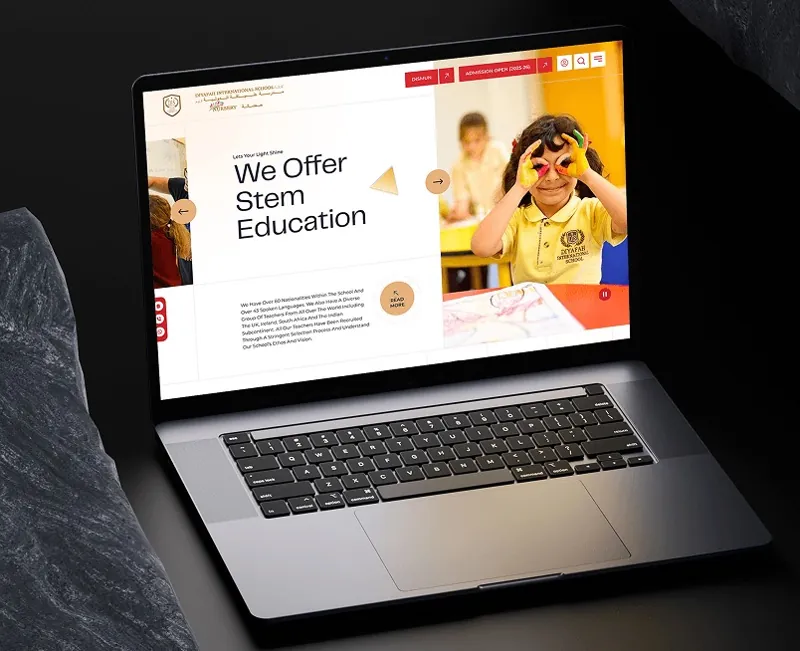
Website · Education · Dubai
One of Dubai's most diverse schools, 2,400+ students and 40+ nationalities, connected across campuses.
aldiyafah.com
Mobile app · Events · UAE
A UAE conference platform replacing printed programmes and email chains for delegates and organisers.
meecon.ae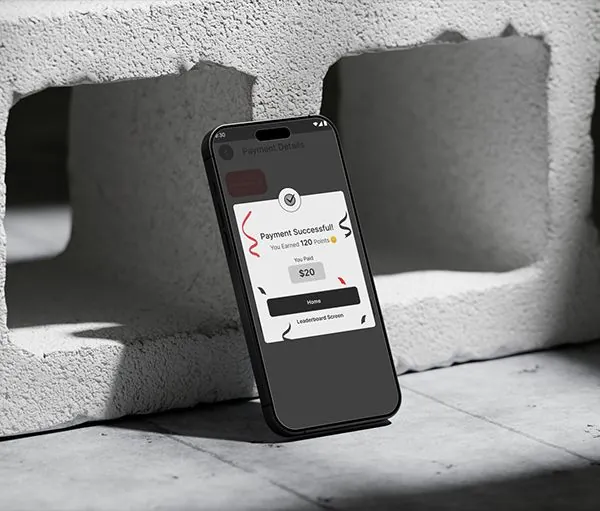
Mobile app · Fintech · United States
A fintech platform connecting merchants, customers and charities in a single payment flow.
purposepayment.comStraight answers
KHDA's Educational Services Permit service confirms it covers individuals and institutions applying to establish and operate a training institute in Dubai, and it lists course names and descriptions among the required documents. This page is not legal advice, and current permit requirements should be checked directly with KHDA before the site advertises any course.
Yes, and it is one of the more useful features on a training site. A calendar that pulls from your own booking system avoids the common problem of a page listing a date that has already passed.
Usually not. A company booking several seats needs different information, such as an invoice contact and a purchase order number, so a separate path avoids both sides filling in fields that do not apply to them.
A description of what a completion certificate covers is useful, but avoid presenting it as a formal accreditation or qualification unless that status is confirmed with the relevant authority for that specific course, since the rules vary by subject and by whether the course leads to a recognised certification.
Every project gets a fixed written quote scoped to your brief, sent within 45 minutes during business hours with no obligation. The number of courses, calendar and booking functionality and languages needed are the main cost drivers.
Sources
Fixed price, in writing
Got it. Your quote is being written now.
In business hours you will have it within 45 minutes. Check your inbox for the confirmation.