Consulting website service lines
A clear page per service line, describing what it involves and the type of client it suits, rather than one page trying to cover everything at once.
Web Design by Industry
Consulting website design in Dubai for advisory and professional services firms, built around case studies, a clear service menu and a proposal request that qualifies an enquiry properly.
A consulting firm sells judgement and experience, neither of which shows up well in a stock photo of people shaking hands. Consulting website design in Dubai works when the site proves capability through specifics, a named problem, the approach taken, and what changed, rather than a list of adjectives about strategic thinking and expertise. A prospective client reading the site is usually trying to answer one question before they book a call: has this firm actually solved a problem like mine before.
This page covers the pages a consulting or advisory firm in Dubai needs, the practical risks around naming clients and promising results, and what we ask for before a build starts.
Consulting website design in Dubai also tends to serve a smaller, more considered pool of visitors than most industries on this list. A firm might see a handful of genuinely qualified enquiries a month rather than a high volume of casual traffic, which changes the priority: the site has to convert almost every serious visitor it gets, rather than being optimised purely for volume. It also covers the difference between kinds of consulting firm, why insight publishing carries most consulting websites’ organic traffic, and why the sales cycle behind a consulting website design in Dubai is longer than almost any other industry on this list.
Core pages
A consulting site earns trust through evidence, not adjectives, so the structure should make that evidence easy to find.
A clear page per service line, describing what it involves and the type of client it suits, rather than one page trying to cover everything at once.
A named or anonymised account of a real engagement, structured around the problem, the approach and what changed, written to a standard your legal or client relationship team has approved.
Backgrounds and specialisms for the people a prospective client would actually work with, since consulting is sold on who does the work as much as the firm’s name.
A framework, checklist or short report available in exchange for an email address, useful for a visitor who is researching before they are ready to talk.
A form that asks enough to qualify the enquiry, industry, rough scope, timeline, rather than a bare contact form that tells your team nothing before the first call.
Bilingual pages for firms working with government entities or local businesses that prefer to read proposals and case studies in Arabic.
Who this is for
Consulting website design in Dubai is not one brief. A management consultancy, a technology consultancy and a specialist advisory practice each need a genuinely different structure.
Sell strategy, operations and organisational change to leadership teams. The site leans heavily on named or anonymised outcomes at a business level, and on the seniority of the people a client would actually be assigned, since the buyer is evaluating judgement as much as method.
Sell systems selection, digital transformation and technical advisory work, often alongside implementation. The site needs to show technology and platform expertise clearly, distinguish advisory work from build work if the firm does both, and speak to a technical buyer alongside the commercial one.
Narrow, deep expertise in one area, tax, regulatory, HR, sustainability or a single sector. The site works harder when it goes deep on that one specialism rather than trying to look like a generalist firm, since a narrow buyer is usually searching for exactly that specialism by name.
None of these categories are fixed, and many Dubai consultancies blend two of them, a technology consultancy that also runs strategy engagements, or a specialist practice that has grown into broader advisory work. Consulting website design in Dubai works best when the site is honest about which of these the firm actually is today, rather than trying to read as all three at once to widen the audience.
The practical effect on the website is strongest in navigation and homepage structure. A management consultancy usually leads with outcomes and sectors, a technology consultancy usually leads with platforms and capabilities, and a specialist practice usually leads with the specialism itself in the first line a visitor reads. Getting this emphasis wrong, for example leading a specialist tax advisory practice with generic language about business strategy, buries the exact phrase a searching client is looking for under language that could describe almost any firm.
This distinction is worth working through at the brief stage rather than the design stage, since it changes which pages exist at all, not only how they are ordered. A technology consultancy that also does light strategy work may not need a separate strategy service page if that work is always sold alongside a platform engagement, while a specialist practice usually benefits from a dedicated page for the one thing it does, even where that duplicates some content from a broader overview page.
Practical risk
The most common problem on a consulting site has nothing to do with search engines or design, it is a case study published before the client agreed to it. Professional bodies such as the Institute of Management Consultants USA set out in their code of ethics that confidential client information should not be used without the client’s permission, and most engagements sit under a similar confidentiality clause, and even a friendly former client can be unhappy to see specific figures or project details online without being asked first. A quick check with whoever holds the client relationship, before a case study goes live, avoids a conversation nobody wants to have after launch.
The second common problem is overreaching on results. A number that was true for one client, in one sector, in one year, reads as a general promise once it sits on a homepage, and a prospective client who does not get the same result will remember that gap. Consulting website design in Dubai holds up better long term when it describes the method honestly and lets past outcomes speak for themselves as examples, not a promise of what happens next. This is not legal advice, and confidentiality obligations vary by engagement and by contract, so specific wording should be checked with whoever manages that client relationship, or with legal counsel where the engagement is large or sensitive.
Who is actually reading
A consulting site is usually read by two different people before a deal happens, and both need something specific.
| The commissioning manager | The person who signs off budget |
|---|---|
| Wants proof of relevant experience | Wants to know the firm is established and low risk |
| Reads case studies closely | Skims for scale, client list and years in the market |
| Books the first call | Often only sees a proposal document, not the site itself |
A downloadable proposal summary, built to be forwarded internally, is often as important as the website itself, since the person approving budget rarely visits the site directly.
A consulting website rarely closes the deal on its own. Its job is to survive being forwarded.
The buyer
The commissioning manager who first contacts a consultancy is rarely judging the website on its own merits. They are judging it against what they will have to defend internally.
Most commissioning managers are measured on whether the engagement they recommend actually solves the problem they were given, and on how much internal credibility they spend backing a particular firm. Recommending a consultancy that turns out to be a poor fit is a visible, personal risk to them, which is why relevant, specific evidence of past work in a similar situation carries more weight on a consulting website than almost anything else on the page.
In the first meeting, this person is far more likely to ask about the consultant who would actually run the engagement, how similar past work has gone, and what a typical engagement timeline looks like, than to ask about the firm’s size or history in general terms. A consulting website design in Dubai that answers these questions clearly on the relevant service and case study pages gives the commissioning manager the specific material they need to make their own internal case, rather than leaving them to invent it from a generic overview.
Consulting website design in Dubai that treats the commissioning manager as the only reader, and ignores the person who ultimately signs off budget, tends to win first meetings but lose a share of engagements at the final stage instead, which is a harder problem to notice and fix than a low volume of enquiries in the first place.
Credibility
Credibility on a consulting site is built from specifics, not from a page that simply states the firm is experienced and trusted.
A prospective client scanning a consulting website is looking for evidence that maps to their own situation: a case study in their sector, a consultant with relevant background, or an insight piece that shows the firm understands a problem they are currently living with. Generic claims about expertise do the opposite of what they intend, since a reader who cannot find specifics tends to assume there are none to show.
The strongest form of credibility a Dubai consultancy can publish is a detailed, honestly written case study, but where client agreement makes that difficult, a well argued piece of original insight on a real industry problem does similar work. It shows how the firm thinks, without needing anyone’s permission to publish it, and it is the content most likely to be found by a prospect who is still researching rather than ready to talk.
Credibility content also has to hold up under scrutiny from a sceptical reader, since a consulting buyer is often evaluating several firms in parallel and comparing claims directly. A case study or insight piece that reads as vague or padded stands out badly next to one that names a specific method, a specific problem and a specific outcome, even where the outcome is described qualitatively rather than as a number. Specific, checkable detail is what separates content that builds trust from content that merely occupies space on the page.
Behind the scenes
A consulting website rarely runs alone. It usually needs to connect to the tools a firm already uses to manage the sales process once an enquiry arrives.
Proposal request and gated resource forms can post directly into a CRM your team already uses, so a new enquiry arrives with the page it came from and which resource, if any, it followed, attached to the record.
A calendar booking link on the proposal request page, rather than a promise to call back, removes a step for a prospect who is ready to talk and reduces the back and forth of arranging a first call.
A gated resource download usually needs to trigger an automatic email and, often, a short follow up sequence, which the website hands off to whichever email platform the firm already runs.
We confirm which CRM, scheduling and email tools your firm already uses before proposing an integration, since what can be connected directly, and what needs a simpler manual step instead, varies by platform. None of these integrations replace a consultant actually reading and qualifying an enquiry, they only remove the manual copying between systems that otherwise eats into a consultant’s time. These integrations sit behind the scenes of consulting website design in Dubai, invisible to a visitor but central to how quickly an enquiry actually gets a reply.
People
Consulting is sold on who does the work, more than most industries on this list. A prospective client wants to know who would actually be in the room, and a profile that lists a job title and a generic description of experience does not answer that. A useful profile names the sectors and problem types a consultant has actually worked on, states their background honestly, and links to any genuinely published insight pieces they have authored, since that is verifiable in a way a claimed specialism is not.
Partner level profiles usually carry more weight than junior consultant profiles for a client deciding whether to engage, since the partner is often who they would be dealing with directly on a senior engagement. Where a firm’s actual delivery team is more junior than the partner who sold the engagement, being straightforward about who does what on a project avoids a mismatch between the sales conversation and the site.
Photography and formatting matter less here than the substance of what is written, and a plain, well written paragraph naming real sectors and real problem types will outperform a polished but generic bio every time a prospect actually reads it closely, which for a consulting decision, they usually do. Consulting website design in Dubai gets more value from an hour spent improving a partner bio than from most design changes made to the same page.
Lead source
A consulting firm rarely wins new business through paid advertising in the way a retailer or a restaurant might. Most consulting enquiries in Dubai start with someone researching a problem, not searching for a firm by name.
This is why regularly published, genuinely useful insight content, an article on a regulatory change, a framework for a common decision, a considered view on a sector trend, tends to carry more of a consulting website’s organic traffic than the service pages themselves. A prospect searching for how to approach a problem they are facing, rather than searching for a consultancy directly, is far more likely to land on a well written insight piece than on a page that simply describes the firm’s services.
The practical implication for consulting website design in Dubai is that the site needs a proper home for this content, not a neglected news section that gets three posts a year and then goes quiet. A firm that commits to publishing insight regularly builds a growing set of pages that keep bringing in research stage visitors long after each piece is written, which is a different kind of return than a service page ever generates on its own.
Who writes this content matters as much as how often it appears. Insight published under a named partner or consultant’s own byline, drawing on a real engagement or a real view the firm holds, reads as far more credible than unattributed articles that could have come from any firm in the sector. It also does double duty for the consultant profile pages mentioned earlier, since a visitor who reads a strong article by a named consultant arrives at that consultant’s profile already halfway convinced.
Site structure
Most consulting firms sell a handful of service lines into several sectors, and a website that only lists services, or only lists sectors, forces a visitor to do work the site should be doing for them.
| Service line A | Service line B | Service line C | |
|---|---|---|---|
| Sector one | Case study or insight | Case study or insight | Service description only |
| Sector two | Service description only | Case study or insight | Case study or insight |
| Sector three | Case study or insight | Service description only | Service description only |
This is the structure worth mapping before a single page is written: which service and sector combinations already have a strong case study or insight piece behind them, and which currently have nothing beyond a generic description. The gaps are not necessarily a problem to fix immediately, but they should be a conscious decision, not something the site structure hides by only navigating one dimension at a time. Consulting website design in Dubai that is planned this way tends to make it obvious where the firm’s next case study or insight piece should focus.
Navigation usually needs to pick one dimension as primary, sectors for a firm whose clients mainly search by industry, services for a firm whose clients search by problem type, with the other dimension available as a filter rather than a second top level menu competing for attention. Trying to give both dimensions equal weight in the main navigation tends to leave visitors unsure where to start, particularly on a firm’s first visit before they know the site’s structure.
A consulting website design in Dubai built around this matrix also makes future content planning simpler, since a new case study or insight piece can be slotted against a specific cell rather than added as a loose addition to a growing, unstructured list of past work.
Long sales cycles
A consulting engagement, particularly at management or strategy level, can take months from a first visit to a signed contract, moving through several internal conversations the firm never sees directly. This is unlike a service where a single visit often ends in a purchase, and it means the website’s job is not only to convert a first time visitor, it is to give that visitor something worth returning to, and something worth forwarding to a colleague who was not on the first call.
A gated resource, a genuinely useful framework or short report, plays a specific role here: it captures a research stage visitor who is not ready to talk, and gives the firm a reason to follow up later in the cycle rather than losing the visitor entirely. A consulting website design in Dubai built only around an immediate contact form misses most of this audience, since a visitor three months from a decision is unlikely to fill in a proposal request on a first visit.
The long cycle also means a single visit rarely tells the whole story of how a prospect found the firm. Someone booking a first call in month three may have read an insight article in month one and downloaded a framework in month two, with the website doing quiet work at every stage rather than converting in one visit. Consulting website design in Dubai that is judged only on immediate contact form submissions misses most of this slower moving value.
Search behaviour
A consulting buyer’s search changes as they move from researching a problem to evaluating who might solve it, and the site needs pages built for both stages.
Early stage searches tend to describe the problem itself, a regulatory change, an operational issue, a decision the business is facing, rather than naming a service or a consultancy. This is the search an insight article answers, and it is often the first point of contact a firm has with a future client, long before that client is ready to compare consultancies directly.
Later stage searches name the service and the sector together, and increasingly compare firms directly. This is where service pages, sector pages and case studies do the work, giving a visitor who already knows roughly what they need enough specific evidence to shortlist the firm. Consulting website design in Dubai that only builds for one of these two stages misses either the prospects who are still forming their view of the problem, or the prospects who are ready to decide, and a firm cannot usually afford to ignore either group.
A third pattern worth planning for is a search that names a competitor directly, a prospect comparing a firm they already know against alternatives. This is one of the reasons a clear, specific service and sector matrix matters: a visitor arriving to compare options needs to find a concrete answer quickly, not a homepage full of general claims that could belong to any consultancy in the market.
Build and content
A consulting build moves quickly once this information is ready, and certain items are the ones that most often hold a project back.
What you offer, and how it differs from the generalist consultancies competing for the same enquiries.
Draft write ups of past engagements, plus confirmation of what each client will allow you to publish.
Backgrounds and specialisms for anyone who should appear as a named point of contact.
Any articles, reports or frameworks already written internally, even informally, which often only need editing and design rather than writing from scratch.
What your team actually needs to know before a first call, built into the proposal request form.
Case study sign off is the item most often missing at the brief stage, and the one most likely to delay a launch if it is left until review. A firm that starts requesting sign off from recent clients as soon as the brief is agreed, rather than waiting until the site is nearly built, rarely finds this step holding up launch. This one habit does more for a smooth consulting website design timeline in Dubai than almost anything else on this list.
Launch and phase two
A consulting website does not need every service, sector and case study live on day one to start generating qualified enquiries.
| Launch first | Sensible phase two |
|---|---|
| Core service lines and the sectors you serve most | A fuller sector and service matrix as more content is approved |
| The case studies already signed off by clients | New case studies as later engagements are agreed and closed |
| Partner profiles for the people who sell engagements | Profiles for wider delivery consultants as the team grows |
| A proposal request form that qualifies enquiries properly | A gated resource and a regular insight publishing schedule |
| English content, Arabic where clients expect it now | Arabic coverage extended across case studies and insight content |
Insight publishing in particular rewards patience. A firm that launches with three strong pieces and adds to them steadily tends to outperform one that rushes twenty thin ones live at once, and a consulting website design in Dubai built this way keeps giving the firm new pages to point prospects toward for years after launch.
Arabic content
Arabic matters most for consulting firms working with government entities, semi government organisations, or family owned Dubai businesses that prefer to review a proposal in Arabic before a decision is made internally. A firm working primarily with multinational corporates and English speaking leadership teams may need far less, sometimes only a professionally translated about page and a translated proposal summary rather than the full site.
Where Arabic is genuinely needed, the priority is the proposal summary and the service pages a decision maker would actually read before a meeting, not necessarily every case study or insight article, since insight content aimed at a research stage audience is often read in whichever language that audience searches in day to day. Bilingual consulting website design in Dubai follows proper right to left layout for Arabic content rather than a mirrored English template with the text swapped in.
A machine translated proposal summary sent to a government client is one of the more visible ways a consultancy can undermine its own credibility, since a poorly translated document reads as careless in exactly the setting where precision matters most. Where Arabic content genuinely matters for a client relationship, it is worth having it properly written rather than translated as an afterthought once the English site is finished. Bilingual consulting website design in Dubai is worth budgeting for properly rather than treating as a late addition.
Common mistakes
These are specific, recurring problems, not a general observation about design quality.
A service page listing words like strategic, innovative and results driven, with no description of what actually happens during the engagement, tells a prospect nothing they can act on.
A write up that describes the problem and the approach but never says what changed leaves the reader to assume the engagement did not go anywhere in particular.
A headshot, a job title and a single sentence gives a prospective client nothing to judge, when a specific sector and problem history would do far more work.
A news or insights page with three posts from over a year ago signals a firm that has stopped publishing, which is a worse impression than having no section at all.
A site with only a contact form gives a visitor who is months from a decision no reason to engage now, and no way for the firm to stay in view until they are ready.
A single overview page that lists everything the firm has ever done reads as unfocused rather than comprehensive, and rarely ranks well for any specific search.
Measuring success
Consulting website design in Dubai is not measured well by raw traffic, given how small and specific the buying audience usually is.
The more useful figures are how many genuinely qualified proposal requests the site generates in a given period, how many gated resource downloads convert into a later conversation rather than sitting unread, and which insight articles or case studies a prospect mentions having read before their first call. That last signal, informal as it is, tells you more about which content is actually doing work than a page view count on its own.
We do not publish invented benchmark numbers for any of these, since what counts as a healthy volume of enquiries depends entirely on the size of the firm and how many engagements it can actually take on at once. A firm with capacity for a handful of new engagements a quarter should be looking for quality and fit in its enquiries, not volume, and a consulting website design in Dubai built for that firm should be judged the same way.
It is also worth tracking which insight articles a prospect mentions on a first call over time, since a pattern here tells you which topics are actually resonating with the kind of client you want more of, information that is easy to lose if nobody on the team is writing it down after calls. This kind of informal feedback loop, fed back into what the firm chooses to publish next, tends to matter more over a year than any single change made to the website itself, which is a further reason consulting website design in Dubai should be treated as an ongoing programme rather than a project that finishes at launch.
Build process
The same six stage process behind every build applies here, with case study sign off and insight content planned into the brief rather than left until the site is nearly finished.
We map your service lines, sectors, existing case study and insight material, and who needs to approve what before it can go live.
A fixed written quote covering service pages, the sector and service matrix, case studies, consultant profiles and any gated content, sent within 45 minutes during business hours.
Service, sector and case study pages are built together, with the proposal request form scoped to actually qualify an enquiry.
You approve the full site, including a check that every case study has proper client sign off, before development is signed off.
Handover of domain, hosting and CMS logins, training for whoever publishes new insight content, and a support window.
Ongoing insight publishing and new case studies over time, alongside SEO services and UI UX design work. Building the site sits under website development.
Related industries
A firm’s actual business model sometimes fits a neighbouring page better than this one.
Shares the same corporate audience and a similar proposal led enquiry process, and a closer fit where courses or certification are the main product.
A regulated sibling industry where case study and claim wording is checked even more carefully.
A better starting point where the firm sells a product or a defined deliverable to other businesses, rather than advisory judgement itself.
Worth a look for a sole practitioner or small advisory shop not yet ready for a full case study and insight publishing programme.
See the full range of industry pages we design and build for.
For the online booking or event side of a training led consultancy, see mobile app development if the firm delivers its own tools, or ecommerce solutions for a firm selling packaged courses or reports directly.
Selected work
Work across sectors, with the closest to this industry shown first. Every one is a live site, not a mockup.
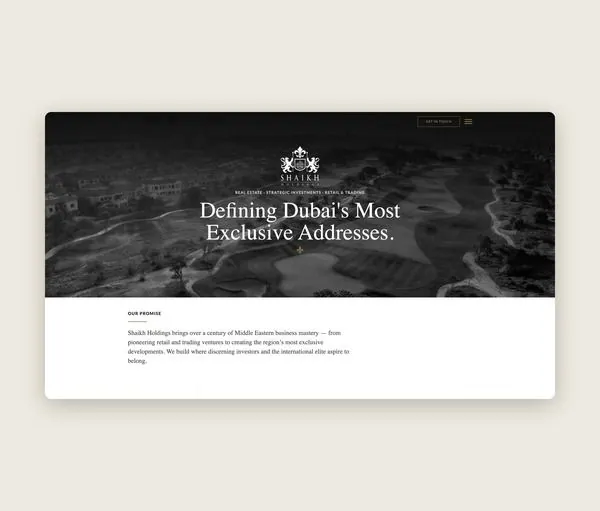
Website · Corporate · Dubai
A Dubai investment house with a century of business behind it. The site speaks to institutional investors, not shoppers.
shaikhholdings.com
Website · Property development · Abu Dhabi
An ADX listed holding company building master planned communities, with a site that holds investors and residents at once.
modon.com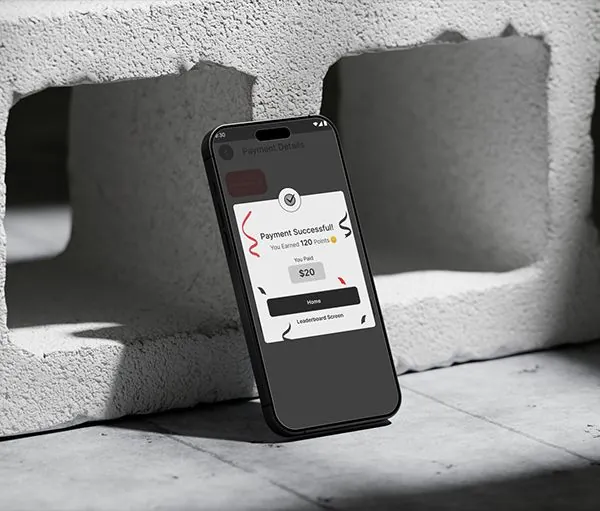
Mobile app · Fintech · United States
A fintech platform connecting merchants, customers and charities in a single payment flow.
purposepayment.comStraight answers
Only with their agreement, and usually with sign off on the exact wording used. Many consulting engagements are covered by a confidentiality clause, so a case study built without checking the contract first can create a problem that has nothing to do with the website itself.
An anonymised case study, described by industry and problem rather than company name, still shows how you work and what changed, and is often safer to publish quickly since it does not need a separate approval each time.
No. Results vary by client, sector and starting point, so a consulting website reads more credibly when it describes the approach and the type of outcome achieved for past clients, rather than a specific percentage presented as typical for every engagement.
Yes, a gated resource in exchange for an email address is a common way to start a relationship with a prospect who is not ready for a call yet, provided the resource itself is genuinely useful rather than a thin summary of the sales pitch.
Every project gets a fixed written quote scoped to your brief, sent within 45 minutes during business hours with no obligation. The number of service lines, case studies and any gated content are the main cost drivers.
Sources
Fixed price, in writing
Got it. Your quote is being written now.
In business hours you will have it within 45 minutes. Check your inbox for the confirmation.