
Fashion website collection pages that tell a story
A seasonal or capsule collection page groups related pieces with a short styling note, rather than dumping everything into one flat catalogue view.
Web Design by Industry
A fashion website in Dubai has to solve sizing doubt and return worry before a shopper adds anything to a bag. We build fashion sites around collections, accurate product data and a checkout people trust.
Fashion website design in Dubai has to overcome one problem before anything else: a shopper cannot try the item on. Every other decision, from photography to the return policy wording, exists to close that gap. A label with beautiful lookbook imagery but no size chart, no fabric detail and a vague delivery promise will still lose the sale to a competitor who answers those questions plainly.
Dubai’s fashion market is also genuinely bilingual and cross border. Shoppers switch between Arabic and English mid session, and many buy from labels based elsewhere in the Gulf, so a fashion website design in Dubai needs product data that holds up in both languages and a checkout that does not assume every buyer is local.
What the site has to do
A fashion catalogue is not a stack of identical product pages. It is a set of different jobs, each with its own content.
A seasonal or capsule collection page groups related pieces with a short styling note, rather than dumping everything into one flat catalogue view.
Sizing varies between labels sold in the UAE, so a single universal chart misleads shoppers. Each brand or product line needs its own measurements shown on the product page.
Fashion shoppers browse before they buy. A wishlist keeps them coming back, and a restock notification recovers sales lost to a sold out size.
A literal translation of a fit description often reads oddly in Arabic. Product copy needs writing for each language, not machine converting.
Eid, weddings and seasonal gifting drive real fashion demand in Dubai. Curated occasion pages help a shopper who is buying for someone else, not themselves.
Since fit cannot be checked before delivery, the returns and exchange process needs to be easy to find, not buried in a policy page nobody opens.
Fabric and fit
A returns rate that looks like a marketing problem is often a content problem: the site never told the shopper enough to choose correctly.
A shopper deciding between two similar dresses often chooses based on how a fabric feels and drapes, which a plain material name does not convey. Short descriptive notes, written from the actual spec sheet, close that gap.
Stating the model’s height and the sample size worn in a photograph gives shoppers a reference point they can compare themselves against, which reduces guesswork on fit.
Especially for occasion wear, care instructions affect whether a shopper trusts the piece will still look right after the event it was bought for.
A WhatsApp or chat link next to the size guide catches the shoppers who are close to buying but still unsure, before they leave to check a competitor instead.
Product data
Many Dubai fashion brands eventually advertise their catalogue through Google Shopping, which pulls listings from a product feed rather than the website page directly. Google’s own product data specification states that the main image must accurately display the product without added promotional text, watermarks or borders, and that a merchant cannot submit a placeholder or scaled up thumbnail in place of a real photograph.
Building fashion website design in Dubai with a proper product feed from day one, rather than retrofitting one later, avoids a rebuild when the brand is ready to advertise. Approval for any advertising account is the platform’s own decision, so we scope the feed to their published specification rather than promising an outcome.
The buyer
A label’s founder and a retail operations manager brief a fashion website differently, even when they work for the same business.
For an independent Dubai label, the founder is usually measured on how well the collection sells and how the brand looks against competitors on the same screen. Their first meeting question is almost always whether the site will do the photography and styling justice, since the collection is the whole business.
In a larger fashion retailer, a merchandising or ecommerce manager is measured on sell through rate per size and how quickly a new drop reaches full price sales. Their first question is usually about how fast the catalogue can be updated for a new collection, since a slow update process costs sales in the first critical days of a launch.
Both roles want the same underlying outcome from fashion website design in Dubai: a shopper who arrives unsure about fit or fabric leaves confident enough to buy, without the founder or the merchandising team fielding the same size question by direct message every day.
The visitor’s journey
A fashion visit rarely follows a straight line from homepage to checkout. It usually follows one of these paths, and a fashion website design in Dubai has to answer all of them.
Most fashion traffic in Dubai arrives already knowing roughly what it wants, from an Instagram or TikTok post, a search for a named item, or a friend’s recommendation. If the linked product is out of stock or the page loads slowly on a phone, the visitor leaves within seconds rather than browsing further.
Before adding to a bag, a shopper checks whether the piece will actually fit, using whatever size guide, model measurement or fabric note the product page provides. A thin size guide sends the shopper searching a review site or a size forum instead, and many never come back.
Because fit cannot be confirmed before delivery, a shopper often checks the returns policy before checkout, not after. A vague or hard to find policy adds exactly the hesitation fashion website design in Dubai is meant to remove.
Card details, delivery estimate and order confirmation need to work cleanly on a phone, since most fashion browsing and buying in the UAE happens on mobile rather than desktop.
Sizing data
Sizing is the single biggest source of returns in fashion, and it is a content problem more than a design one. The site needs somewhere to hold this data properly, per product, not as one static page nobody updates.
| Sizing data the product page needs | Why it matters for a Dubai shopper |
|---|---|
| Body measurements per size, not just a letter or number | UK, EU, US and regional labels sold in the UAE all size differently, so a plain “medium” tells a shopper very little on its own |
| Garment measurements, laid flat, for structured pieces | Especially useful for outerwear, abayas and tailored pieces where body measurements alone do not capture the fit |
| Model height and the sample size worn | Gives a shopper a real reference point rather than an abstract number |
| Fit notes such as true to size, runs small, or oversized | Written from experience with that specific style, not copied across the whole catalogue |
| A size conversion note between UK, EU and US | Removes the need for a shopper to open a separate tab to work out their size |
This sits alongside, not instead of, the size guide already described for fashion website design in Dubai. The size guide is the display; this is the data that has to sit behind every product for the guide to be trustworthy.
Plus size and extended ranges
Where a label carries an extended or plus size range, the site needs to treat it as part of the core catalogue structure rather than a separate afterthought category.
Showing extended sizes on the same product page as the rest of the range, with the same photography standard and the same fit notes, matters more to a shopper than any label on the category itself. A separate, thinner category for extended sizes, with fewer images and shorter descriptions, tells a shopper the range is a lesser priority, even when that is not the intention behind it. Fashion website design in Dubai handles this best by building size range into the product data model from the start, so the same page simply shows more size options rather than needing a parallel structure maintained separately.
Drops and seasons
Dubai fashion retail runs on a mix of traditional seasonal collections and faster, single item drops, often timed around Ramadan, Eid, back to school or a specific event. A fashion website in Dubai needs a structure that can hold a current collection clearly separate from an archive, and a way to build anticipation for a drop without the site looking empty in the days before it goes live.
A coming soon state that collects interest ahead of a drop, rather than showing an empty category page, converts far better than silence. Once a drop sells through, moving pieces cleanly into an archive or a final sale section, instead of leaving broken sold out listings live, keeps the catalogue feeling current rather than picked over.
Modest wear
Modest wear and abayas are a distinct category within Dubai’s fashion market, not a variation on Western cut clothing, and a fashion website design in Dubai serving this category needs its own structure.
An abaya catalogue typically needs length options, sometimes made to a specific height on request, and sleeve style as a distinct filter, since these change the fit far more than a standard size label suggests.
Fabric weight and opacity matter more for modest wear than for most other fashion categories, and a short note on how a piece behaves as an outer layer over daywear answers a question that photography alone cannot.
Eid and wedding season drive strong demand for modest occasion wear in Dubai, and a dedicated occasion category, separate from everyday abayas, helps a shopper buying for a specific event find the right piece faster.
Embroidery, beading and trim are often the differentiator between similar abaya styles, so close up detail shots and a short written note on the trim matter as much as the overall silhouette photograph.
Some Dubai abaya houses offer made to measure or alteration on a standard piece. Where this applies, the site needs a clear enquiry route separate from the standard add to bag flow, since it is a different transaction with a different timeline.
Category and style names in Arabic need to match the terms a Gulf shopper actually types, not a literal translation of the English style name, which is a detail specific to this category more than general fashion retail.
A fashion website earns trust the way a good sales assistant does: by telling a shopper honestly whether a piece will fit, before they hand over payment details.
Building the catalogue structure
A fashion catalogue is not a flat list of products. It is parent styles, each carrying a size range and a colour range underneath, and the quality of that structure decides how well filtering, stock accuracy and search all work later.
A single dress is rarely one thing to sell online. It is a parent style with several sizes and, often, several colourways underneath it, each combination carrying its own stock count and sometimes its own barcode. Fashion website design in Dubai has to model this properly from the outset, because retrofitting a variant structure onto a catalogue built as flat, single listings is one of the more expensive corrections a fashion retailer can ask for once the store is already trading.
Where a business already runs a point of sale system in a physical boutique, that variant structure usually exists there already, and the website should inherit it rather than someone recreating it by hand in a second system. Where it does not exist yet, building it properly once, even for a small first collection, pays off the first time a specific size in a specific colour needs to be marked sold out without hiding the whole style from the catalogue.
Occasion and bridal crossover
A meaningful share of fashion demand in Dubai is occasion driven rather than everyday: weddings, Eid, graduation season and corporate events all create short, predictable spikes in demand for a specific kind of piece.
A shopper buying for Eid or a wedding is thinking in terms of the event, not a product attribute, so a curated occasion page that groups relevant pieces together converts better than expecting a shopper to build that grouping themselves through filters.
Where a piece needs alteration or is made to order, showing a realistic lead time on the product page itself, rather than only after an enquiry, avoids disappointing a shopper who is buying against a fixed date they cannot move.
Fashion labels that also sell bridal or heavily embellished occasion wear often sit closer to our wedding website design work than a standard fashion catalogue, particularly where appointments or fittings are part of the buying process. We plan which model fits during scoping rather than assuming a standard ecommerce catalogue is always the right shape for an occasion heavy range.
Multi brand versus single label
A boutique carrying several external brands and a label selling its own collection are both fashion retailers, but the site behind each looks different in practice.
Needs brand filtering as a first class category, since a shopper often arrives loyal to a specific label rather than the boutique itself, and each brand’s own size chart needs to stay distinct rather than being averaged into one general guide.
Can lean harder on storytelling, a consistent size chart across the whole range, and a tighter, more curated catalogue, since every product carries the same brand voice and the same fit logic throughout.
Fashion website design in Dubai for a multi brand boutique usually needs more product data fields from the start, since brand, supplier and size chart all vary per item, while a single label build can invest more of the early budget in photography and storytelling once the catalogue structure itself is simpler to manage.
What stops a sale
Sizing doubt is the biggest one. Without a confident answer on fit, a shopper adds an item then abandons the basket rather than risk a return. Slow checkout on mobile is the second, since most fashion browsing in the UAE happens on a phone. The third is an unclear delivery window, since a shopper buying for an occasion needs to know the item will arrive in time.
Build
The catalogue structure decides how well the site scales as a collection grows, so it gets settled before any design work.
Specification sheets, measurements, fabric detail and photography are collected and checked against what is actually in stock before a single product page is built.
The catalogue, checkout and account areas are built as part of our wider ecommerce solutions work, on a platform matched to catalogue size and payment needs.
Payment gateway, delivery tracking and a product feed for future advertising are connected once the catalogue structure is confirmed.
The current season’s collection goes live first with complete sizing and delivery information. Archive and lookbook pages follow once the store is proven.
Fashion imagery is usually shot separately from the build. See ecommerce product photography for that side of the work.
Social and shoppable content
A large share of fashion discovery in Dubai now starts on Instagram or TikTok rather than a search engine, and the website has to be built to receive that traffic properly, not treat it as an afterthought to a homepage designed for direct visits.
A social post should link directly to the exact product shown, with size and colour pre selected where possible, rather than dropping a shopper on a general category page to search for what they just saw.
Tagging products in posts and stories relies on a product catalogue feed built the same way as the one used for shopping ads, so building fashion website design in Dubai with a proper feed from the start supports this without extra work later.
Many fashion sales in Dubai still start as a WhatsApp or direct message asking about a piece seen on social media, so a visible WhatsApp link on the product page catches that shopper without forcing a full checkout for a simple question.
Paid promotion of a collection through an influencer or a content creator based in the UAE can fall under a UAE Media Council advertiser permit requirement, which sits with the influencer or creator publishing the content rather than with the website itself. We have not opened the primary regulation ourselves to confirm current detail, so this is general awareness rather than legal advice, and our guide to UAE advertiser permit rules for influencers and brands is the place to check before running a paid collaboration.
Photography
No other category on the site needs as many images per item as fashion, and underestimating that volume is one of the most common reasons a launch date slips.
A single fashion product typically needs a front, back and side view at minimum, a detail shot of fabric and trim, and increasingly a short video or a 360 degree turn for pieces where drape and movement matter, such as flowing dresses or abayas. Multiply that by every colourway in a collection and the true image count for a modest sized drop runs into the hundreds, not the dozens a founder often expects when scoping a first build.
Consistency across that volume matters as much as the individual shots. A model shoot for one drop and a flat lay for the next, shot under different lighting, makes a catalogue look assembled rather than curated. Fashion website design in Dubai works best when the photography brief, background, lighting, angles and retouching limits, is agreed once and applied to every collection after that, rather than decided fresh each season.
Returns and exchanges, not legal advice
Because fit cannot be checked before delivery, the returns and exchange process carries more weight on a fashion site than almost any other category, and it has a legal side worth understanding alongside the design side.
The UAE Federal Law on Consumer Protection requires a provider to honour a warranty against a flaw in a commodity and to repair, replace or refund it, and separately requires labelling that discloses the commodity’s components, which for fashion means fabric composition and care information genuinely need to be accurate on the page, not approximate. The same law requires Arabic to be used in data provided to the consumer alongside any other language. This is general information, not legal advice, and a fashion retailer should confirm its own returns, exchange and labelling wording against the current law and its executive regulation.
On the design side, a returns and exchange process that states the time window, condition requirements such as tags attached and unworn, and whether a return results in a refund, exchange or store credit, stated on the product page itself rather than buried in a footer link, is one of the most valuable content additions most fashion website design in Dubai projects can make.
Data the site handles
A fashion catalogue is one of the faster moving data sets on the whole site, and knowing who updates what, and how often, decides whether the site stays trustworthy after launch.
| Data | How often it changes | Who usually keeps it current |
|---|---|---|
| Stock per size and colour | Several times a day during a drop or a sale | Merchandising or a connected point of sale system |
| Current collection versus archive | Each season or drop | The founder or a merchandising manager |
| Pricing and markdown status | Weekly to seasonal | Merchandising, following the returns policy for reduced stock |
| Size guide and fit notes | Per new style, rarely per existing one | Whoever holds the specification sheets |
| Delivery and returns terms | Occasionally, but needs to stay accurate | Operations or customer service |
Integrations
The website is rarely the only system involved in running a fashion catalogue, and connecting the right ones early avoids duplicate manual work once the site is live.
None of these need to exist on day one. Fashion website design in Dubai usually starts with whichever system already runs the business, connects that first, and adds the rest as the online side grows. Where a label already lists on a marketplace, our guide to selling on noon or Amazon.ae and the accompanying product listing checklist cover what that feed needs separately from the website itself.
Search behaviour
Fashion search splits fairly clearly into a research mood and a ready to buy mood, and fashion website design in Dubai needs to answer both without forcing one visitor down the wrong path.
A research search looks broad: a style, an occasion, or a category like modest occasion wear, often browsed without a specific product in mind yet. A ready to buy search is specific: a brand and style name together, or a search that already includes a colour or size. The first group needs collection and category pages with enough real content, styling notes, fabric detail, occasion framing, to be useful browsing on their own. The second group needs the exact product page to be findable directly, with a title and description that matches how they actually search rather than only an internal style code.
We do not publish invented search volumes for any fashion term, since real search demand varies by brand, season and category far more than a generic figure would suggest. Structuring the site so both moods are answered, rather than chasing a specific keyword count, is the more reliable approach for fashion website design in Dubai.
Content to gather
Most delays on a fashion build trace back to one of these being incomplete when design begins.
Of these, complete photography across every colourway and finished specification sheets are the two most likely to hold up a launch, since both usually depend on a supplier or production team outside the website project itself.
Phasing
Launching a full catalogue, every archive season and every planned feature at once usually delays launch without adding much value on day one.
| Phase one, at launch | Phase two, once the core is proven |
|---|---|
| Current collection with complete sizing and delivery detail | Archive and lookbook pages |
| Mobile checkout and a payment gateway | Marketplace and social shopping feed |
| A clear, specific returns and exchange policy | Wishlist accounts and saved sizes |
| Notify me on sold out sizes | Loyalty or repeat purchase tools |
Arabic content
Not every part of a fashion catalogue needs the same translation effort, and the parts that matter most for fashion specifically are not always the obvious ones.
Fit and fabric descriptions are worth writing properly in Arabic rather than translating literally, since a phrase that reads naturally in English, describing how a fabric drapes or feels, often reads oddly when converted word for word. For modest wear and abaya ranges, the Arabic category and style names need to match how a Gulf shopper actually searches, which is frequently not a direct translation of the English name used internally by the brand. Occasion and gifting pages, particularly around Eid, benefit from Arabic copy written for that moment rather than adapted from a generic product description.
Layout needs the same attention as the words. Size charts, filters and the checkout flow need to mirror correctly right to left, not simply carry translated labels inside an English layout, or the Arabic experience reads as secondary rather than genuinely built for the shopper using it.
Mistakes we see
These come up repeatedly enough across fashion site reviews to be worth naming directly.
Applied across a multi brand catalogue, a single chart quietly misleads shoppers on brands that size differently, and drives returns that a per brand chart would have prevented.
Deleting a sold out listing loses the sale entirely and the data on which sizes to reorder. A held page with a notify me form keeps both.
Buried three clicks away, when it is one of the details most likely to decide a first time purchase in a category where fit cannot be checked first.
Heavily edited photography creates a gap between the site and the parcel that arrives, driving returns and eroding trust in future purchases from the same brand.
Fit and fabric language in particular loses meaning in a literal translation, which matters more here than on almost any other product category.
A shopper who cannot find a product they already know exists assumes it is not stocked, even when it is sitting one category away.
Measuring success
The right numbers depend on whether the business is a single label or a multi brand store, but a few apply broadly across fashion website design in Dubai.
Tracking sales against stock per size, not just overall units sold, shows whether sizing and stock allocation match real demand.
A high return rate concentrated on specific styles usually points at a sizing or fabric description problem worth fixing on that product page directly.
Since most fashion traffic in Dubai arrives and buys on a phone, tracking where mobile shoppers drop out of checkout matters more here than desktop behaviour.
Tracking is connected as part of every build so these numbers are available from launch, rather than relying on an invented benchmark. What counts as a good return rate differs sharply between occasion wear and everyday basics, so a fashion website in Dubai is judged against its own trend over time.
Related
Sites for beauty and lifestyle brands selling alongside a fashion range.
A frequent companion catalogue for a fashion label’s occasion range.
Sites for bridal and occasion wear, a close relative of fashion retail.
Shares the same emphasis on stock accuracy and a mobile checkout.
For the wider industry list, start from the web design by industry hub. The catalogue and checkout itself follow our ecommerce solutions and UI and UX design work, ongoing visibility for collections and categories sits with SEO services, and a label wanting a dedicated shopping app alongside the website can see mobile app development.
Selected work
Work across sectors, with the closest to this industry shown first. Every one is a live site, not a mockup.
E-commerce · Fashion · Dubai
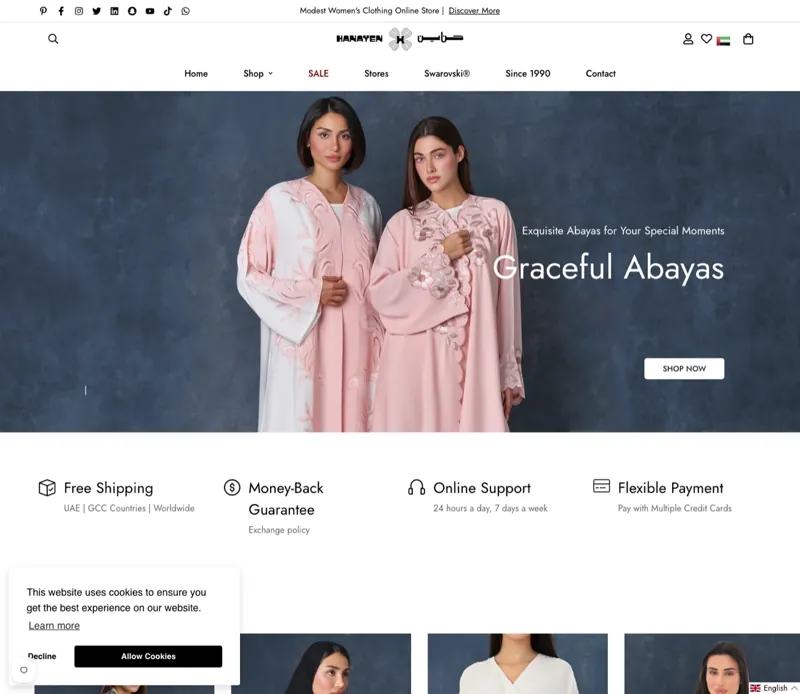
A Dubai luxury abaya house trading since 1990, carrying its craftsmanship into a quick mobile checkout.
hanayen.com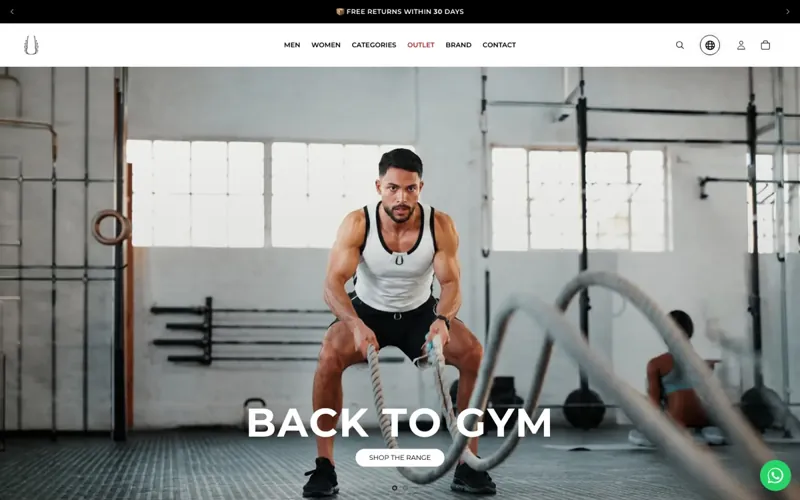
E-commerce · Fashion · UAE
A sustainable clothing label whose customers shop on a phone and expect the store to feel considered.
egosustainable.com
E-commerce · Retail · Dubai
A Dubai floral boutique on WooCommerce, built around a fast checkout for a gift driven market.
thegorgeousflower.comStraight answers
Yes. A tight first collection with complete sizing and fabric detail on every item outperforms a large catalogue with thin descriptions. More products can be added once the structure and photography workflow are proven.
We can draft them from the specification sheets and measurements you provide, in both Arabic and English. We never invent fit notes or fabric claims we have not been given.
A notify me form captures interest on a sold out size and feeds a restock list, which is better than removing the product or leaving a dead link. It also tells you which sizes to reorder first.
It depends on which system you use. Many modern point of sale tools offer an ecommerce connection or an API a developer can build against, which we confirm during scoping rather than assuming upfront.
Every project gets a fixed written quote scoped to your brief, sent within 45 minutes during business hours with no obligation. Catalogue size, languages and any point of sale integration are the main cost drivers.
Sources
Fixed price, in writing
Got it. Your quote is being written now.
In business hours you will have it within 45 minutes. Check your inbox for the confirmation.