
The urgent callout
A phone number and WhatsApp button visible immediately, with coverage areas stated plainly so the visitor knows in seconds whether you serve their location.
Web Design by Industry
A technical services website in Dubai has to serve three different visitors at once: someone with an urgent breakdown, a facilities buyer comparing annual maintenance contracts, and a contractor asking for a project quote. We build these sites around separating those three paths.
A technical services website design in Dubai covers a wide range of businesses under one label: electromechanical contractors, HVAC specialists, electrical and low current firms, and general technical maintenance providers working across offices, villas and industrial sites. What they share is a visitor split into three very different needs. One wants a fault fixed today. One is a facilities manager comparing annual maintenance contracts before renewal season. One is a contractor asking for a quote on a defined project scope. A site written for only one of them loses the other two.
This page covers how we split those paths, what a trade page needs to earn a click from search, and the practical risks worth planning for rather than a specific regulatory claim, since technical trade work in Dubai spans several licensed activities with no single rulebook covering all of them. It sits inside our wider web design by industry work, alongside pages for related trades such as facility management and handyman services.
A technical services website in Dubai often replaces a business card and a phone number handed around a building site, which is a low bar to clear on paper but genuinely difficult to get right, because the business behind the site has three separate workflows running at once. A dispatcher is trying to get a technician to a breakdown. An account manager is chasing a facilities buyer for a renewal signature. A quoting team is pricing a project from drawings a contractor just sent over. The website has to feed all three without becoming a fourth thing someone has to manage on top of the actual work.
Three visitors, one site
Treating these three visitors as one audience is the most common reason a technical services site underperforms.
A phone number and WhatsApp button visible immediately, with coverage areas stated plainly so the visitor knows in seconds whether you serve their location.
A facilities manager or owners association comparing annual maintenance contract terms, coverage and response commitments before renewing or switching provider.
A contractor or developer with a defined scope, wanting a quote route that captures drawings, specifications or a site visit request properly.
These three rarely arrive on the same day by coincidence. A property manager comparing AMC providers ahead of a renewal deadline often searches the same week a resident in the same building reports an urgent fault, and a technical services website design in Dubai that only shows one path risks losing both because neither visitor can find their own route in.
The buyer
The person who signs off a technical services website design in Dubai is rarely the person calling about a broken air conditioner. For a corporate contract, it is usually a facilities manager, a procurement lead or an owners association board member, and they are measured on uptime, budget adherence and whether a renewal goes smoothly rather than on how the site looks. They will ask about coverage, response handling and whether the trades you list match your trade licence, often before the first call happens.
For a villa owner or a smaller commercial tenant, the decision sits with one person who wants the job done without becoming a procurement exercise. They are not measured by anyone. They just want to know quickly whether you cover their area, whether you do electrical or mechanical work specifically rather than general handyman jobs, and how fast someone can come out. A technical services website design in Dubai that only speaks to one of these two buyers loses the other before the first question is even asked.
There is a third reader worth naming separately from the three visitor types above: the person who scopes and signs off the website project itself. On a corporate technical services business this is often an operations director or the owner, briefing the site once and then handing day to day updates to an office manager, which is exactly why the build has to leave that office manager able to add a new trade page or update a coverage area without calling a developer every time a small change is needed.
A facilities buyer checks whether your trade licence activities match the scope you are pitching before they check anything else about the site.
Trade pages
A single page listing electrical, HVAC, plumbing and fire systems together reads well to you, because you already understand your own business. It reads poorly to a search engine and to a visitor searching for one specific trade, since neither can tell how deep your capability actually goes in that area. Technical services website design in Dubai works better with a dedicated page per trade, covering what the service includes, the building types you typically work in, and how a callout or project enquiry for that trade specifically should be raised.
This also makes it easier to add or retire a trade later without rebuilding the whole site, since each page stands on its own rather than being one section of a long combined list.
Air conditioning, electrical work and general mechanical contracting behave differently enough on a page that treating them the same is a missed opportunity, not just a stylistic choice. An air conditioning page benefits from naming the system types you service, split units, central and chilled water systems for example, since a facilities manager running a mixed portfolio wants to know that before enquiring. An electrical page benefits from separating low current and low voltage work, since these attract different specialist approvals and a buyer with a fire alarm or access control need is looking for that distinction specifically. A mechanical contracting page covers pumps, plumbing systems and general mechanical maintenance, and reads better when it states plainly which of those it actually covers rather than a single word like mechanical doing all the work.
Two buyers, one site
Technical services website design in Dubai has to hold both a corporate procurement process and a single homeowner’s phone call, and the two rarely overlap.
| What the visitor wants | Corporate or facilities buyer | Villa or small business owner |
|---|---|---|
| First question | Does the scope match our building portfolio | Can someone come today |
| Contact route | An AMC enquiry form with building and contract fields | Phone or WhatsApp with a photo of the fault |
| What builds trust | Coverage across similar buildings, licence activities, named service categories | A quick reply and a plain description of what a visit involves |
| Paperwork expected | A written scope, contract dates, invoicing to a company | A written quote, nothing more formal than that |
| Decision timeline | Weeks, often against a renewal date or tender deadline | Minutes to hours, driven by the fault itself |
| Who else sees the site | A board, a procurement colleague, sometimes a consultant | Usually nobody else |
A single generic contact page tries to serve both and usually satisfies neither, which is why the trade pages above split into an AMC route and a callout route rather than one shared form. A technical services website design in Dubai that gets this split right tends to convert better on both sides, simply because neither visitor has to wade through content written for the other one.
Annual maintenance contracts
An AMC page is not a services list with a longer name attached. A facilities buyer reading it wants to see how many planned visits are included across a contract year, which trades sit under the one agreement, whether reactive callouts are included within the contract or charged separately, and how a renewal is reviewed rather than quietly rolled over. None of this needs a specific price on the page, since the actual figures depend on portfolio size and scope, but the structure of the offer should be clear enough that a buyer can compare it against a competitor’s proposal without a phone call first.
Planned preventive maintenance and reactive work are worth naming as separate ideas on the page, since a buyer comparing providers is often trying to work out how much of the contract is scheduled visits and how much is unplanned response, and a technical services website design in Dubai that blurs the two looks less organised than one that states it plainly.
Renewal is where an AMC page earns its keep long after the first sale. Most facilities buyers revisit the same website a year later when deciding whether to renew, switch or retender, often triggered by the same board or procurement contact who signed the original agreement. A page that explains how a scope review works ahead of renewal, what happens if a building’s needs have changed, and how to add or remove a trade from the contract, reassures a buyer that renewing is a proper decision rather than an automatic rollover they have not actually reviewed.
An AMC covering several trades under one contract, air conditioning, electrical and general mechanical work together for example, is worth describing as a single coordinated service rather than three separate agreements stapled together. A facilities buyer managing a building often prefers one contract and one point of contact over chasing three separate technical services companies for three separate renewal dates, and a technical services website design in Dubai that makes this coordination clear has an advantage over one that reads like three businesses sharing a homepage.
The emergency path
A caller with a live fault moves through the site in seconds, so every step between search and phone call matters.
A visitor searches for the trade and their area, for example an urgent electrical fault in a specific Dubai community, and lands on the matching trade page rather than a generic homepage.
They confirm within seconds whether their location is served, since a technical services website design in Dubai that hides coverage area forces a call just to find out, and many visitors will not make that call.
Phone and WhatsApp sit above the fold, with the WhatsApp option often preferred for sending a photo of the fault before anyone speaks.
Whether the fault is urgent or can wait, and a brief description, so whoever answers can prioritise before calling back rather than starting from nothing.
A long form requested before any contact detail is shown, or a phone number buried below a project gallery, sends this visitor to the next search result instead.
Once contact is made, the site’s job is largely done, but stating plainly on the page that a technician will confirm arrival by phone or WhatsApp sets an honest expectation without promising a specific arrival window the business cannot control.
The same path applies whether the fault is electrical, mechanical or air conditioning, but the search term and the urgency behind it usually differ by trade, which is one more reason a shared trade page rather than a single generic emergency page tends to perform better.
Behind the enquiry
The website does not run your rota, but it has to hand off an enquiry to whoever does without losing the detail that matters.
A callout form should tag the trade and area requested so whoever schedules technicians can match the job to someone qualified nearby, rather than reading free text and guessing.
Not every technician on a technical services team is approved for fire and life safety or high voltage electrical work, so the site should route those enquiries distinctly rather than mixing them into a general request.
For most technical services businesses in Dubai, the website’s job is to get a complete enquiry to the person who schedules technicians quickly, not to replace the scheduling tool they already use.
Since scheduling depends on which technicians are free and where, the site should describe how requests are handled rather than promise a fixed callout window it cannot control.
Enquiries that land in a shared inbox nobody is responsible for checking are the single most common reason a technical services website loses a job it should have won, regardless of how well the site itself is built.
Where a business already runs a digital job scheduling tool, connecting the website’s forms into it is usually a smaller task than it sounds, since most job scheduling tools accept a webhook or an email based intake. Where jobs are still logged on a whiteboard or a spreadsheet, the website can still work well, it just needs a named person checking the inbox regularly rather than a technical integration.
Data behind the site
Beyond the pages a visitor reads, a technical services website design in Dubai touches several pieces of information that change at different speeds. Coverage areas rarely change and can sit on the trade pages directly. AMC renewal dates and contract scope change constantly and belong with whoever manages client accounts, not written into the site itself. A record of completed jobs, useful for the project quote path, needs someone on the technical team to actually save decent photographs rather than relying on whatever was taken on site in a hurry.
Technician certification and specialist approval expiry is worth tracking somewhere even if it never appears publicly on the site, since it is exactly the kind of detail a facilities buyer asks about directly, and having an answer ready matters more than publishing it.
None of this data belongs inside the website’s own database as a rule. Coverage areas and trade descriptions are genuinely static content and sit happily as ordinary pages. Everything that changes weekly, an AMC’s renewal date, a technician’s current certification, which vehicles are on the road today, belongs in whatever system your operations team already trusts, with the website simply pointing an enquiry at the right person rather than trying to hold that information itself.
Spare parts and equipment brands serviced are worth a mention too, in general terms rather than an exhaustive catalogue. A facilities buyer with a specific brand of chiller or electrical panel installed sometimes searches for a contractor who already knows that equipment, and a trade page that names the brands and system types you regularly service, without listing every part number you stock, answers that question without turning into an inventory list that goes stale within weeks.
Integrations
None of these replace a proper field service system. They connect the website to the tools a technical services team is already likely to use.
Letting a caller send a photo of the fault before a technician arrives helps with parts and time planning, and is often the fastest channel for an urgent job.
A separate tracked number per trade page shows which page actually produces calls, useful once advertising spend is added on top of organic search.
Enquiry forms posting into a CRM or helpdesk tool mean a lead lands with a named owner instead of sitting in a shared inbox nobody checks first thing.
Where a technical services business already runs job scheduling or computer aided facilities management software, the site’s job is usually to feed it a clean enquiry, not to replace it. Building a public facing link into that system is a larger, separately scoped piece of app development work.
Keeping the areas set on your Business Profile aligned with what the website states avoids a caller being told two different things depending on where they looked first.
A dedicated WhatsApp Business number, set up correctly, keeps job photos and enquiries out of a personal phone and gives more than one team member visibility. Our guide to WhatsApp Business API integration covers how that connects to a website.
We connect what a technical services business already runs rather than replacing it. A firm using a spreadsheet to track technicians today does not need to buy a new system before the website can work, and one running an established CAFM platform does not need the website to duplicate what that platform already does well.
Practical risks
Technical trade work in Dubai sits across several licensed activities and specialist approvals rather than one regulator, so we treat this as a set of practical risks to plan around rather than a single rule to cite.
Dubai’s trade licence activity register lists a specific activity for each type of technical work, from air conditioning installation and maintenance to electromechanical and general maintenance work, and the trades named on your website should match the activities on your actual licence, since a mismatch is one of the first things a serious buyer or a regulator checks.
Fire and life safety, lift and certain electrical work often need a specific approval beyond a general trade licence, sometimes from a body such as Dubai Civil Defence for fire fighting and fire alarm systems. We only publish what you can confirm and supply documentation for, never an assumed certification, and we ask you to confirm current approval status directly with the relevant authority before it goes on the site.
The Ministry of Human Resources and Emiratisation’s own guidance sets an outdoor work ban during the hottest hours through the summer months, which is worth reflecting in how your site describes callout and site visit scheduling during that period.
Specific response time promises are easy to write and hard to defend if a job is missed, so we keep this to a general description of how requests are handled rather than a fixed promised figure.
None of this is legal advice. Licence activities, specialist approvals and site safety rules should be confirmed with the relevant authority for your specific trades, including the Ministry of Human Resources and Emiratisation’s guidance on occupational health and safety for anything affecting technicians working on client sites. That guidance states plainly that work under the sun and in open places is restricted between 12:30pm and 3:00pm from 15 June to 15 September each year, which is a useful line to reflect honestly in how a site describes scheduling during those months rather than something to gloss over.
Build and content
A technical services build moves quickly once this information is ready.
Each trade you cover, written in plain language rather than only a technical name, plus typical building types served.
Which parts of Dubai and the wider UAE you actually serve for a callout, so the site never implies coverage you cannot deliver.
Current trade licence activities and any specialist approvals, so content matches what you can confirm rather than what sounds impressive.
Photographs or descriptions of completed work you are able to share, for the project quote path specifically.
Who receives urgent callouts versus AMC and project enquiries, and how quickly each is realistically answered.
The two things that most often delay a technical services build are a firm confirmation of which areas are genuinely served, and permission to publish photographs of completed jobs where a client’s premises are visible. Settling both early keeps the rest of the build on schedule.
Development, hosting and handover are covered on our website development page, and the enquiry paths are planned under UI UX design before any build work starts. Once the site is live, SEO services covers ranking for trade and location searches. A technical services website in Dubai is only ever as good as the content and coverage information behind it, which is why we ask for this list before opening a design file rather than midway through the build.
Search behaviour
Two different kinds of search bring someone to a technical services website in Dubai, and neither is served well by the same page.
Terms such as how often air conditioning needs servicing, or whether an annual maintenance contract is worth it compared with paying per visit, come from someone still deciding, not ready to call. A trade page answering the practical question, without turning into a sales pitch, is what earns that click and keeps the visitor on the site. This kind of visitor is also frequently a facilities buyer earlier in their process, not just a curious homeowner, so the page still needs a route to an AMC enquiry once the question has actually been answered.
Terms that pair a trade with a location and urgency, an emergency electrician in a named Dubai area, or a maintenance company for a specific trade nearby, come from someone close to calling. These searches should land directly on the matching trade page, with contact details immediately visible, not on a general homepage they then have to navigate away from. A visitor who has already decided rarely reads more than the first screen before acting.
Structuring the site around a page per trade, described earlier, is what lets both kinds of search land somewhere relevant, since a research question and a ready to buy call rarely belong on the same page. There are no invented search volumes on this page, only the general pattern we see across the technical services websites we build and audit in Dubai, and actual volumes for your specific trades and areas are worth checking properly before content is prioritised.
Launch and after
A technical services website design in Dubai does not need every feature at launch to start earning enquiries. The trade pages, a working AMC enquiry route, a clear emergency callout path and an honest coverage area cover most of what a first time visitor needs, and getting those right matters more than adding features nobody has asked for yet.
A second phase makes more sense once the site has real traffic and a working enquiry flow to build on. A client facing service history log, an online AMC renewal reminder, or a tighter connection into whatever scheduling or CAFM system the business already runs, are all reasonable additions once the basics are proven rather than starting assumptions.
The order matters more than the total feature count. A technical services website design in Dubai launched with five well built trade pages, a working AMC route and an honest emergency path will usually outperform a twelve page site where every page is thin, simply because the pages that exist actually answer the question a visitor arrived with.
Arabic content
Arabic is not needed evenly across a technical services site, and it helps to be specific about where it earns its place.
An urgent callout page is usually read in whichever language the visitor was already searching in, and speed matters more than translation for that path. AMC content read by an owners association board or a landlord, on the other hand, often benefits from an Arabic version, since procurement decisions for a shared building are frequently discussed in Arabic even when the enquiry form itself is filled in English. Bilingual work follows the same process as our wider website development service, with English content approved first and Arabic built to match it properly, not machine translated afterwards.
A technical services company working with government or semi government facilities also tends to need Arabic content further along, since tender documentation for that kind of client is frequently issued in both languages, and a website that only exists in English can look underprepared next to a competitor who thought about this earlier.
Even where full bilingual build is not the first priority, having Arabic versions of the core AMC and coverage pages ready to switch on saves real time later, since it avoids the site being rebuilt around Arabic support after the fact rather than designed to hold it from the outset.
Mistakes we see
The same handful of problems come up repeatedly when we review a technical services company’s current site.
A single generic enquiry form asks an urgent caller the same questions as a facilities buyer scoping an annual contract, which slows down the caller who needed speed most.
A specific promised callout window looks reassuring until the one time it is missed, at which point it becomes the reason a client leaves rather than a detail nobody noticed.
Claiming coverage across the whole UAE when the team realistically works within a handful of Dubai communities wastes both the caller’s time and the marketing spend that reached them.
Electrical, mechanical and general maintenance folded into one paragraph tells a specialist buyer nothing about how deep your capability actually goes in the trade they need.
A last updated date visibly years old on a project or news section signals a business that has stopped investing, even when the actual work has not slowed down at all.
A site written entirely for procurement language reads cold to a homeowner, and a site written for a homeowner rarely satisfies a facilities buyer checking scope and registration.
Measuring success
The numbers worth watching are ones your team can already see, not a figure invented for a proposal.
Which trade pages actually produce calls and WhatsApp messages, once call tracking is connected per page.
The mix between planned contract enquiries and single callouts tells you which content is doing the work, and where to invest next.
Ranking for the trade and location searches described above, tracked over time through an optional SEO retainer once the site has real traffic.
Not something the website measures directly, but a site that gives a board or facilities buyer clear renewal information tends to support the number your account managers actually track.
None of these numbers appear on the site itself, and none are benchmarks we invent for a proposal. They are simply the figures your own team is already in a position to watch once the site is live, and comparing them month to month tells you far more than a single snapshot ever could.
Related industries
For a company offering integrated hard and soft services under one contract, rather than trade work sold on its own, often to the same corporate buyer.
Shares the urgent callout pattern, aimed more at small residential jobs than commercial AMC contracts.
Relevant for technical services companies that also tender for larger fit out or new build projects across Dubai.
A single trade built out in more depth, useful where plumbing sits alongside your electrical and mechanical work as part of the same technical services business.
Selected work
Work across sectors, with the closest to this industry shown first. Every one is a live site, not a mockup.
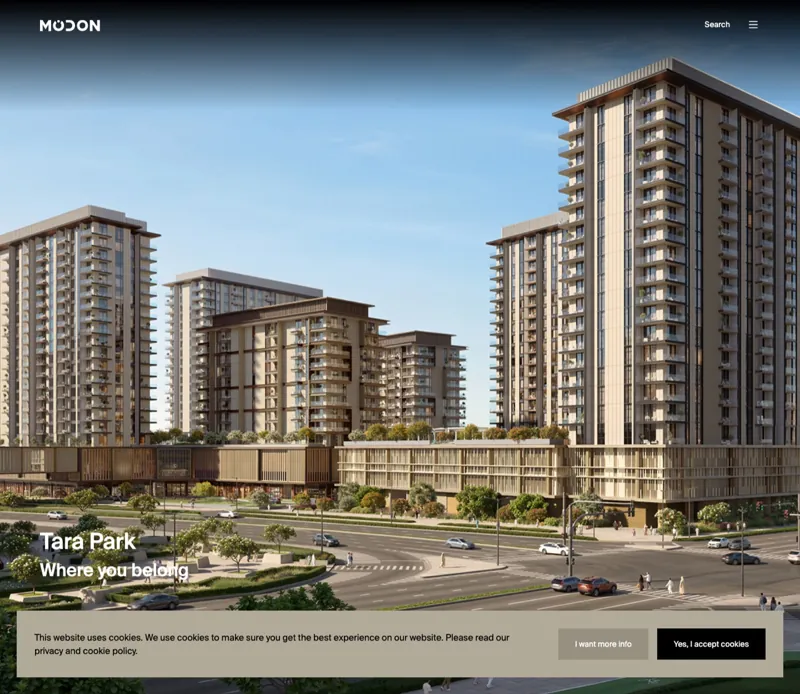
Website · Property development · Abu Dhabi
An ADX listed holding company building master planned communities, with a site that holds investors and residents at once.
modon.com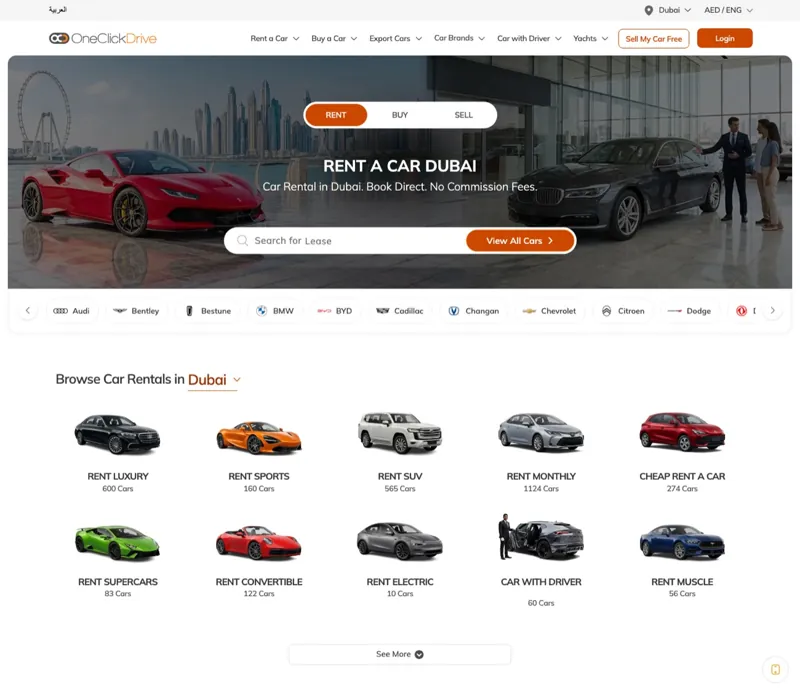
Platform · Car rental · UAE
A car rental marketplace where suppliers list fleets and renters compare and book, under real traffic.
oneclickdrive.com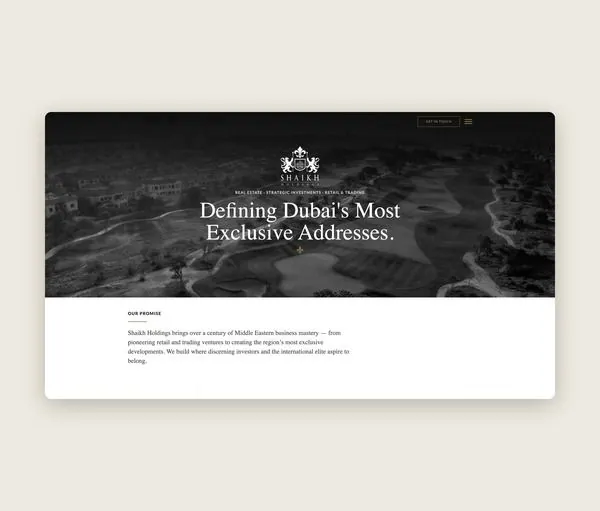
Website · Corporate · Dubai
A Dubai investment house with a century of business behind it. The site speaks to institutional investors, not shoppers.
shaikhholdings.comStraight answers
Yes, and it usually should. A visitor with a breakdown wants a phone number in seconds, while a facilities buyer comparing annual maintenance contracts wants scope, coverage area and a proper enquiry form. We build separate paths for each rather than one shared contact page.
A short overview page works for the homepage, but each trade such as electrical, HVAC or plumbing usually deserves its own page, since a buyer searching for one specific trade wants to land directly on relevant content, not scroll through an unrelated list.
Yes, stating your trade licence activity and any specific approvals plainly is common practice and something a facilities buyer or contractor may check before enquiring. We do not invent certifications, so we only show what you can confirm and supply documentation for.
Yes, through separate forms. A one off project enquiry needs different information from an annual maintenance contract renewal, such as contract dates and existing scope, so we keep those questions apart even when both sit on the same website.
Every project gets a fixed written quote scoped to your brief, sent within 45 minutes during business hours with no obligation. The number of trades covered, project galleries and any enquiry routing are the main cost drivers.
Sources
Fixed price, in writing
Got it. Your quote is being written now.
In business hours you will have it within 45 minutes. Check your inbox for the confirmation.